
November 8, 2025
Address: Carrera 10 #96A-40, Bogotá
Hours: Check restaurant website for current hours
Price Range: $$$$
Cuisine: Spanish / Seafood
Google Maps: https://maps.app.goo.gl/9kCv7QpUz3rybgdBA?g_st=ic
Where Legacy Still Feels Alive
 Stepping into Pajares Salinas feels like entering Bogotá’s collective memory. The air hums with nostalgia — the scent of garlic, the echo of wine glasses clinking, and the low murmur of conversations between regulars who’ve been coming here for generations. Founded in 1953 by Saturnino Pajares, a Spanish immigrant who arrived with little more than discipline, recipes, and conviction, this restaurant has become an institution that refuses to bend to trends.
Now under the command of his son, chef José Augusto Pajares, the kitchen continues to uphold a style of cooking rooted in patience and excellence. This isn’t the place for innovation gimmicks or tasting menus designed for Instagram. Pajares Salinas is the antithesis of fleeting gastronomy — it’s a place where food, service, and ritual still matter.
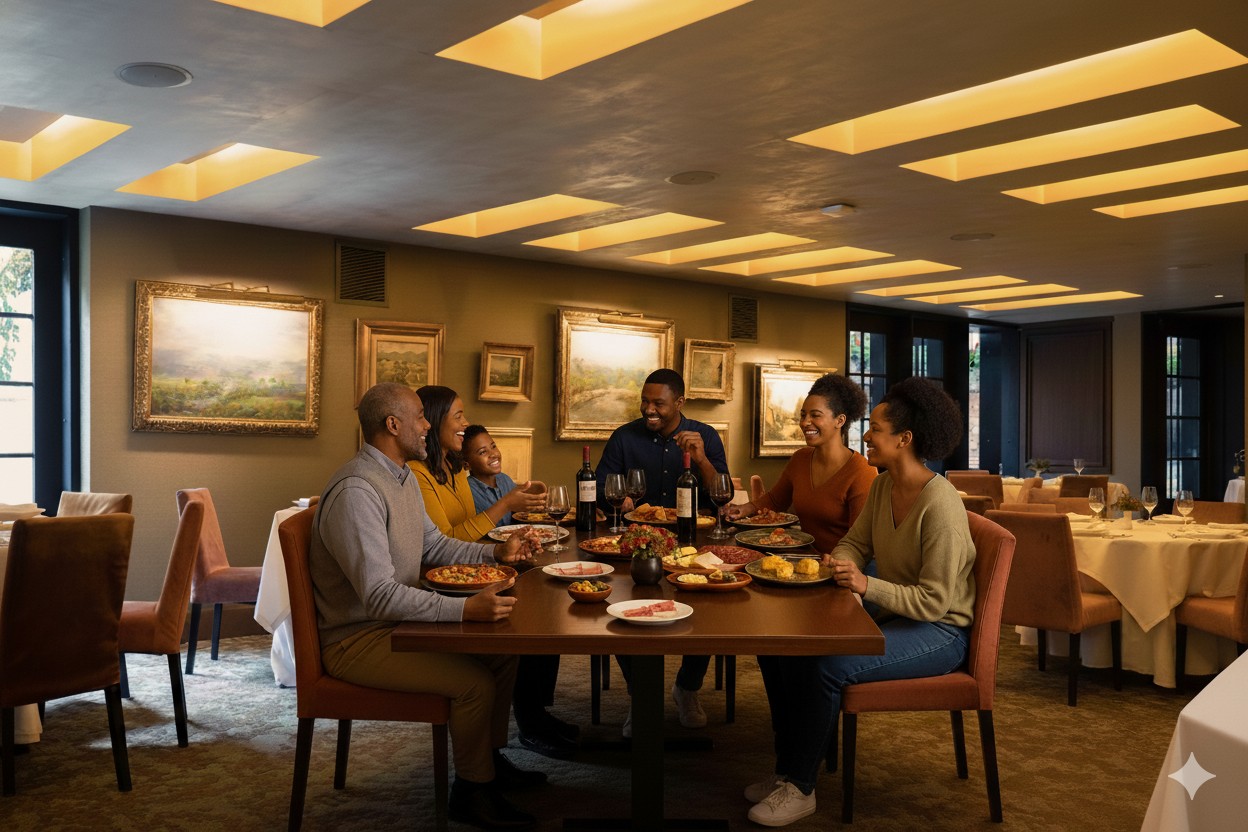
The space itself speaks to that permanence. Think classic wooden panels, cream-colored tablecloths, and servers who know exactly when to appear and when to disappear. Even before your first sip of Rioja, you understand you’re in the hands of professionals who’ve spent a lifetime refining the choreography of fine dining.
The Tapas That Define a Philosophy
There’s something timeless about beginning a meal here with tapas. Not as appetizers, but as a slow conversation between dishes. The Gambas al Ajillo arrive bubbling in olive oil, sending up a scent so deep and comforting you can almost taste it before your fork touches the plate. Each shrimp bursts with garlic and spice — a straightforward preparation elevated by precision.
Then there’s the Tortilla Española, its golden crust giving way to a custardy interior, proof that simplicity demands mastery. The Boquerones en Vinagre, gleaming in white wine vinegar, cut through the richness like a palate cleanser disguised as nostalgia. And for those who like boldness on the plate, the Txistorra delivers — spicy, juicy, unapologetically rustic.
Among the cold selections, the Jamón 100% Puro Ibérico de Bellota Gran Reserva (240,000 COP) deserves its reputation. It’s sliced so thin you can see the light through it, the fat melting into silk on the tongue. You taste the patience — the curing, the craft, the heritage.
Between Courses and Conversations
 What makes Pajares Salinas so disarmingly elegant is its pacing. There’s no rush, no pressure to turn tables. The servers move with discretion, resetting cutlery like a ritual. Your next course doesn’t just arrive — it’s presented. The wine, poured with quiet reverence, is discussed like an old friend.
The Sopa Castellana comes next — a humble dish elevated by years of repetition. Rich with garlic, paprika, and poached egg, it’s a lesson in restraint and balance. It tastes like comfort and ceremony at once. If you’re feeling indulgent, the Sopa de Pescados y Mariscos is Pajares’ nod to the sea — dense with flavor but never heavy, each spoonful revealing another layer of the broth’s depth.
Every dish reinforces a belief this restaurant has never abandoned: excellence lies in doing the same thing perfectly for decades.
The House Specialties
This is where Pajares Salinas reveals its real artistry. The Rabo de Buey, an oxtail stew slow-cooked to gelatinous perfection, is rich, tender, and unapologetically Spanish. It doesn’t perform — it simply exists in mastery. The Cochinillo al Horno, its golden skin shattering under the fork, manages to be both crisp and melting, a dish that reminds you how much technique hides in apparent simplicity.
And then, the Paletilla de Cordero. Served whole and falling off the bone, it’s a dish you commit to. There’s nothing hurried or delicate about it — it’s primal, fragrant, and deeply satisfying. You could share it, but you’ll regret it halfway through the first bite.
If there’s one truth at Pajares, it’s that the kitchen cooks with time as its primary ingredient. Everything feels deliberate, measured, and impossible to replicate in a rush.
Of Steaks, Seafood, and Flawless Execution
 For the meat lovers, the Rib Eye Certified Angus (240,000 COP) showcases how even imported cuts find their place in this Spanish narrative. Perfectly charred outside, tender inside, and accompanied by sauces that actually enhance rather than drown, it’s the restaurant’s quiet flex.
The Chuletas de Cordero remain a house classic — seared, fragrant, and paired with roasted vegetables that taste like they came out of a grandmother’s garden. There’s also Secreto Ibérico, beautifully marbled pork cooked just past pink, the kind of dish you only find in kitchens that understand heat as an instrument, not a hazard.
Seafood isn’t secondary here. The Mero a la Vasca — hake in a saffron-tinged sauce — embodies coastal Spain on a Bogotá plate. The Langostinos a la Riojana bring a touch of Rioja wine and garlic to the mix, while the Paella Marinera (270,000 COP, for two) delivers the theatrical centerpiece: saffron rice, briny shrimp, tender calamari, and a depth that only comes from patience and high-quality stock.
Every plate confirms what the Pajares family has preached for decades: precision is not negotiable.
The Service That Time Forgot (and That’s a Compliment)
Service here isn’t just good — it’s orchestral. Every member of the staff plays their part with quiet dignity. They’re not there to perform; they’re there to ensure your meal unfolds without friction. When you pause, they’re there. When you converse, they vanish.
A simple recommendation for wine turns into a dialogue about regions, vintages, and personality — never a sales pitch. The level of professionalism is rare in Bogotá’s evolving dining landscape, where many restaurants have forgotten that hospitality is as much an art as cooking.
It’s also generational. Many of the waiters have been here for years, even decades. They remember your face, your favorite dish, your drink of choice. That continuity mirrors the family running the kitchen — both driven by the same devotion to constancy.
Sweet Endings That Carry Memory
Dessert at Pajares Salinas is where nostalgia becomes edible. The Milhojas de la Casa, crisp layers of pastry and custard, feels like a family heirloom. The Tarta de Queso Vasca is dense yet airy, with just the right amount of burn on top. And for those who prefer understated classics, the Crema Catalana remains unmatched — its caramelized crust cracking with that satisfying sound before giving way to creamy warmth beneath.
Even the Tabla de Quesos, priced at 110,000 COP, feels more celebratory than practical — a final glass of wine, a slow bite, a lingering conversation that refuses to end.
Why Pajares Salinas Still Matters
 Bogotá has changed. Its restaurant scene is younger, louder, bolder. But Pajares Salinas continues to stand with quiet authority — a reminder that refinement doesn’t age, it deepens. Its presence is not nostalgic; it’s necessary.
In a world obsessed with novelty, this restaurant insists that tradition, when mastered, is timeless. It’s not trapped in the past — it has simply chosen its era and perfected it.
Pajares Salinas doesn’t chase Michelin stars or influencers. It doesn’t need to. Its currency is consistency, its language is craft, and its philosophy is love served with discipline.
Leaving the restaurant, we caught a glimpse of José Augusto Pajares through the kitchen window — a chef still tasting sauces, adjusting heat, perfecting the same recipes his father brought from Spain. Seventy years later, the fire hasn’t dimmed. It’s just learned how to burn quietly.
Part of our round-up of the best restaurants in Bogotá.