
+ 1.200 verified five-star reviews for Cielo.Travel on Google and TripAdvisor.
Duration
Tour Type
Pricing
Languages
Overview
Itinerary
Highlights
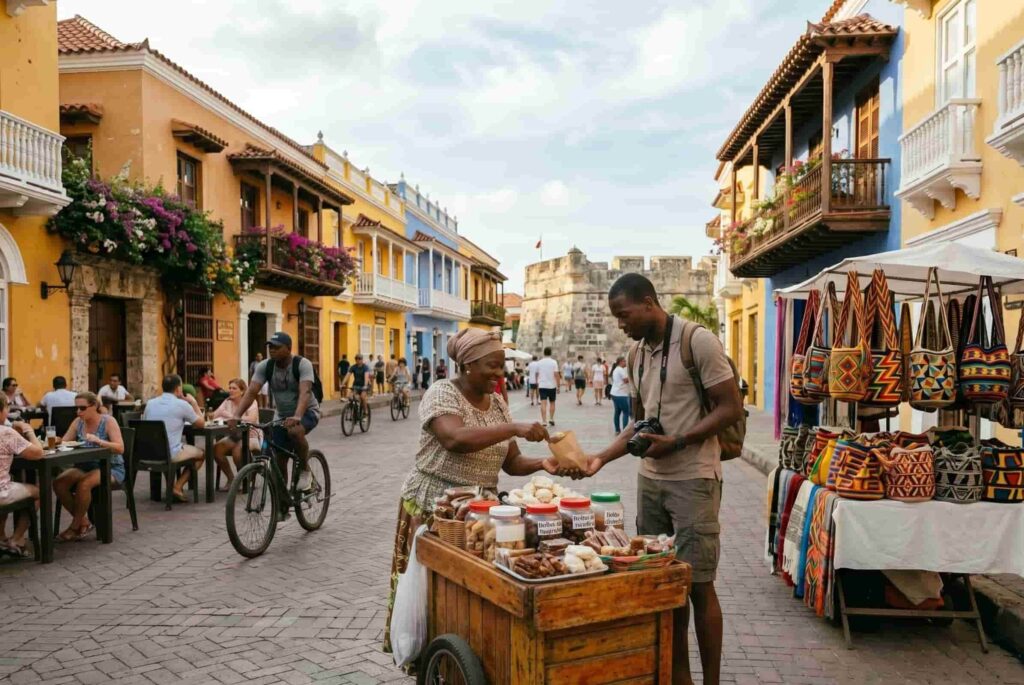
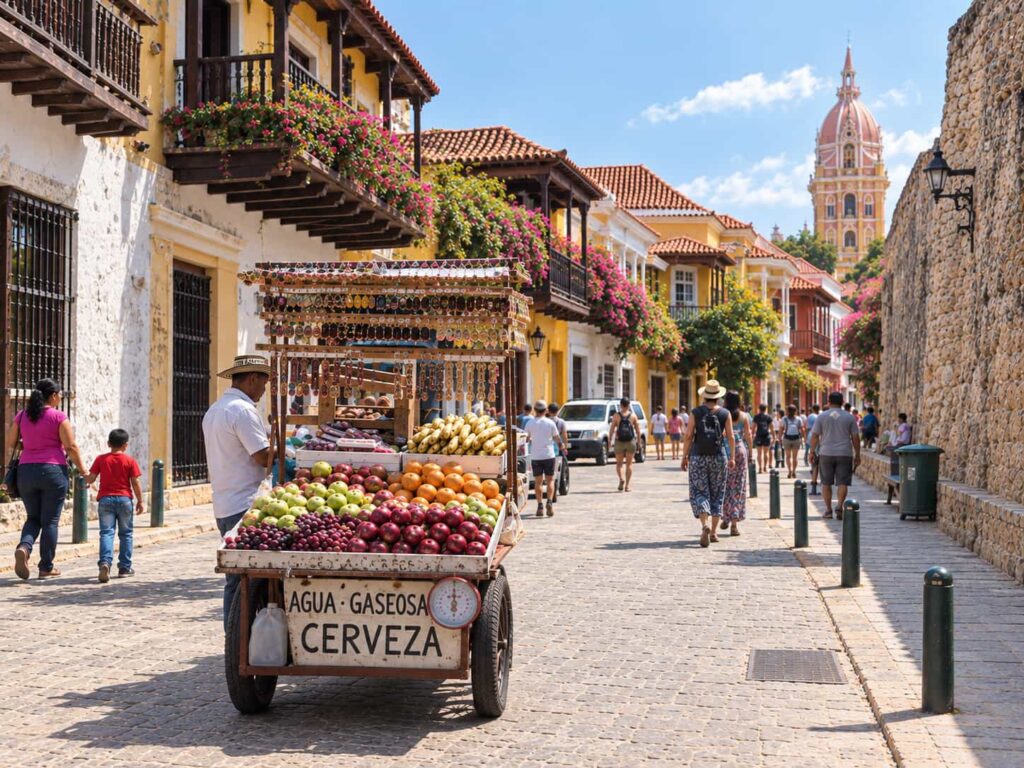
Walk through the Walled City of Cartagena — a UNESCO World Heritage Site — with a local guide who uses its colonial streets as the backdrop for explaining how three centuries of indigenous, Spanish, and African influences produced one of the most distinctive food cultures in Colombia.
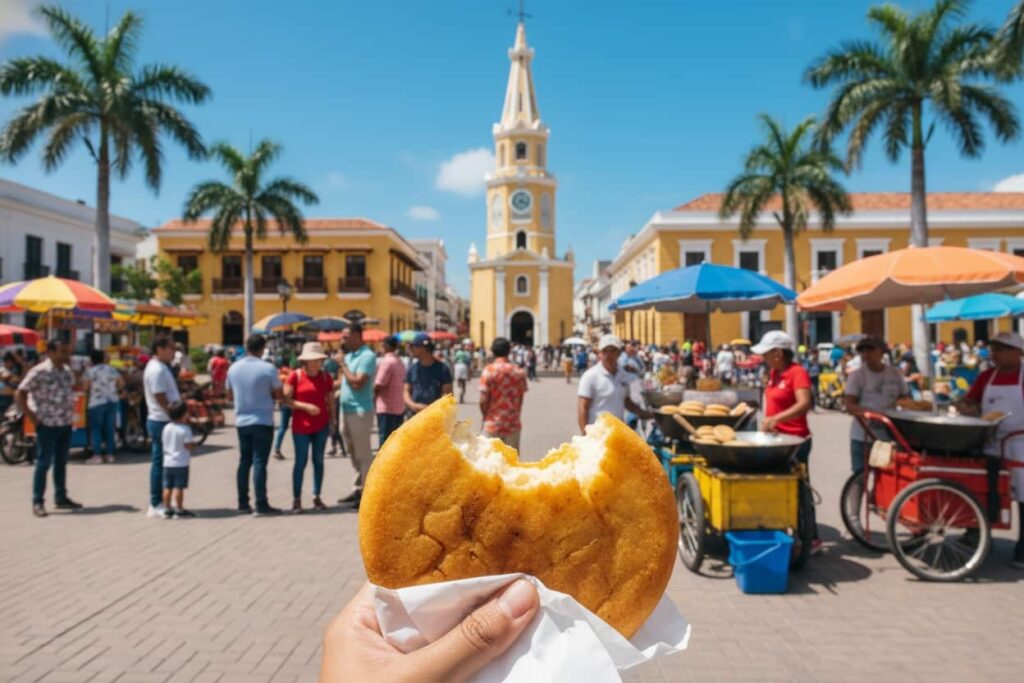
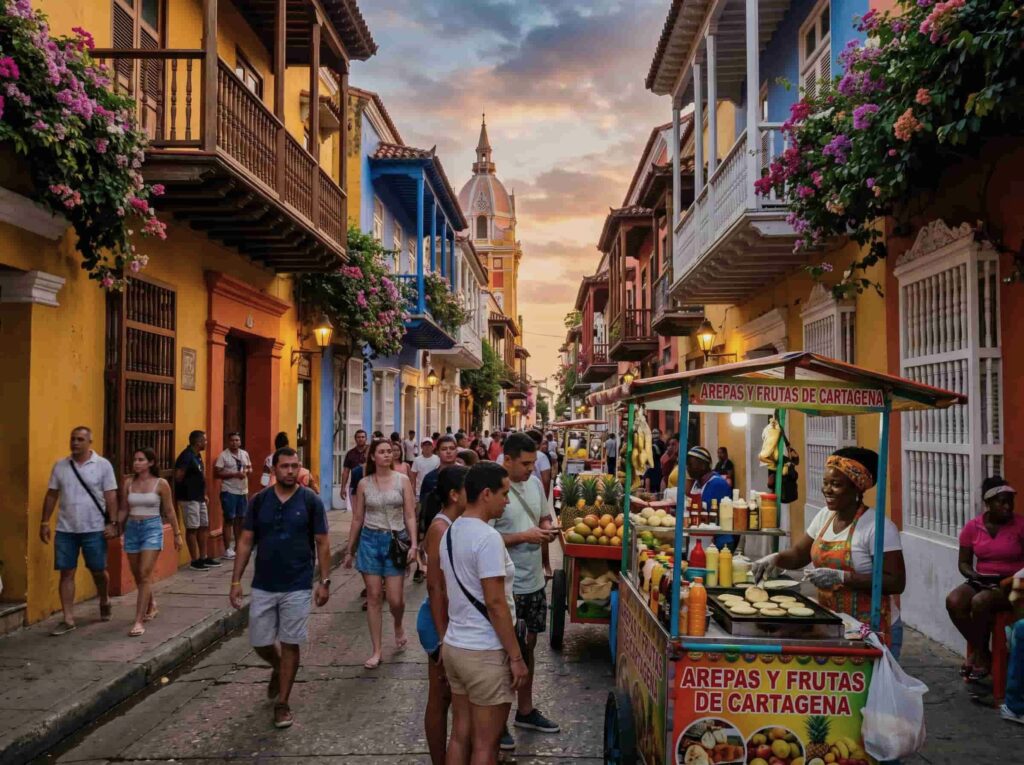
Try the arepa con huevo — a deep-fried corn tortilla stuffed with egg that is one of the most iconic street foods of the Caribbean coast — at a local food stand rather than a restaurant menu.
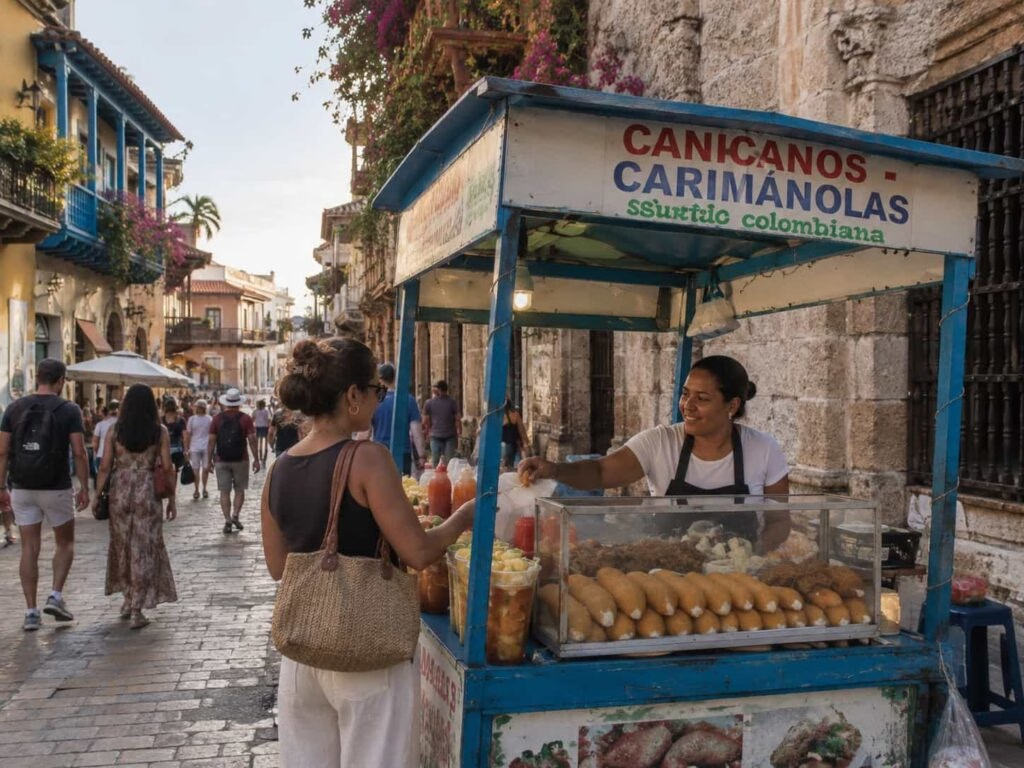
Visit local food stands and taste the shrimp cocktail and carimañola: a yucca and cheese finger food that is specific to Cartagena's coastal culinary tradition and almost impossible to find anywhere else in the country.
Finish the sweet section of the tour with cocadas — cookies made from dried coconut, a recipe with direct roots in the African culinary heritage brought to the Caribbean coast during the colonial period — alongside other traditional sweets and candies with family histories attached.
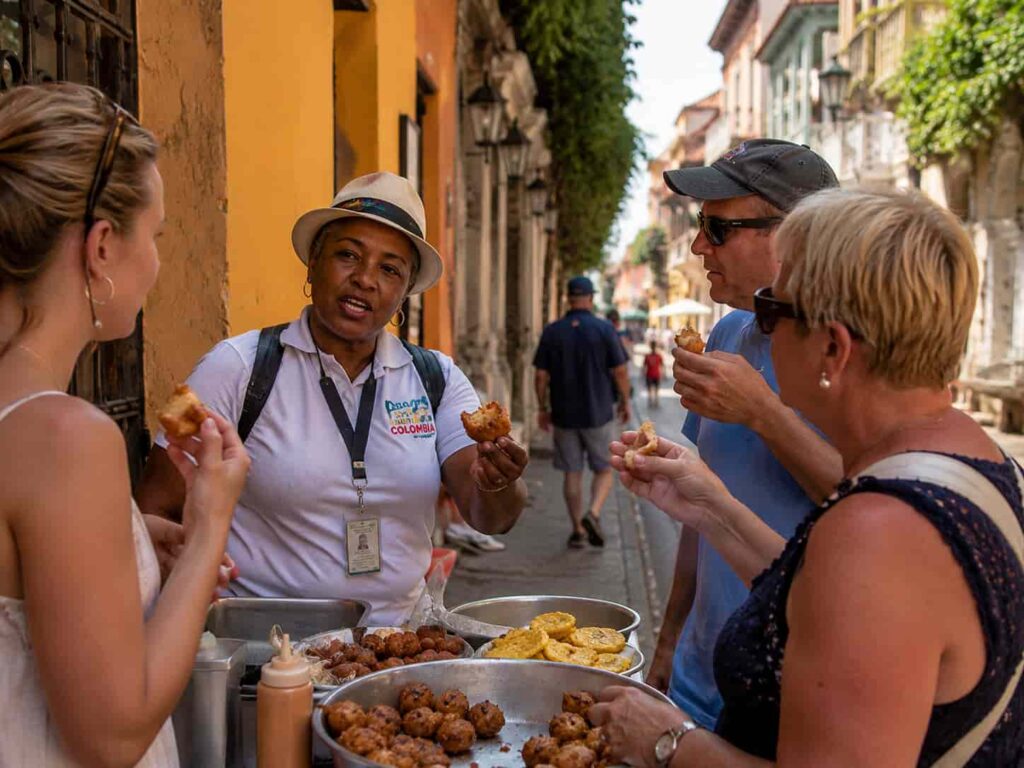
End with a cup of high-quality Colombian coffee or a cold local beer, hearing the locals share their best recipes and the life stories behind the food you've just eaten.
What's Included
Private English-speaking guide (full 4 hours).
Private hotel pickup and drop-off in Cartagena.
5 food and drink tastings (salty snacks, local desserts, typical beverages — see itinerary for detail).
Brief introduction to Cartagena's culinary history and cultural context.
Risk insurance.
What's Excluded
Additional food and drinks beyond the included tastings.
Personal purchases.
Vegan options.
Gratuities (appreciated but not required).
Know before you book
If you have any food restrictions or allergies, please tell your guide or write them in the booking notes. The tour involves fried foods, seafood (shrimp), cheese, yucca, and coconut-based sweets.
This tour does not currently offer vegan options. Vegetarian options may be possible — confirm with the operator before booking.
Cartagena is hot and humid year-round, with average temperatures between 28°C and 33°C (82°F–91°F). Wear light, breathable clothing — linen or cotton — and bring sunscreen, sunglasses, and a hat.
Wear comfortable, flat-soled shoes — the tour involves walking on cobblestones through the Walled City for approximately 3 hours.
The tour runs in all weather conditions. If you are coming from a cruise ship, be sure to select the cruise-only rate from the booking options.
Bring cash in Colombian pesos for any personal additional purchases — tipping street vendors and your guide is always appreciated.
More Info
Cancellation Window
12 hours before starting date.
Difficulty
Easy
Cancellation policy
Free cancellation up to 12 hours before departure. Cancellations made within 12 hours of the tour start time are non-refundable.
Guest Reviews
Why Book With Cielo
1,200 five-star reviews from real travelers — read them before you book.
Best Price Guarantee — find this tour cheaper elsewhere and we'll match it.
Private tours only — your guide focuses entirely on you and your group, not on managing a crowd of strangers.
Booking directly with us means your money goes to a Colombian-owned company, not a platform commission.
Our guides are English-speaking Colombian locals — people who know the vendors, the recipes, and the families behind the food you're tasting.
Other Info
Food Tour in Cartagena’s Walled City: Three Cultures, Five Centuries, and the Streets Where It All Still Lives
A food tour in Cartagena’s Walled City gives you the most direct access available to a culinary tradition that most visitors to Colombia never fully encounter. Cartagena de Indias was founded in 1533 and became the primary Caribbean port of the Spanish colonial empire — the point through which gold, silver, and other resources extracted from the interior of South America were shipped to Europe. The city’s food culture developed in this context: a meeting point for the indigenous peoples of the Colombian coast, the Spanish colonisers who built the walled city, and the hundreds of thousands of enslaved Africans brought to the region by the slave trade, whose culinary knowledge, techniques, and ingredients became inseparable from Caribbean cooking over three centuries. Understanding Cartagena’s food means understanding that history — and a guide who can explain it while you’re standing at the vendor’s table is worth more than any restaurant review.
The Walled City as Kitchen
The Walled City — Ciudad Amurallada — was declared a UNESCO World Heritage Site in 1984 for its colonial fortifications and historic architecture. The streets inside the walls are cobblestoned, the houses painted in the Caribbean palette of yellow, coral, and turquoise, the balconies draped with flowers. It is one of the most visually striking historic centres in Latin America, and it is also one of the best places in Colombia to eat street food — because the population that has always lived and worked in these streets has maintained its food culture precisely here, in the plazas and on the corners, rather than in restaurants.
The same streets covered on the Cartagena City Tour for their military history, colonial architecture, and political significance are the streets this food tour covers for what they produce and sell. The two tours are designed to complement each other: one reads the city through its walls, fortifications, and independence story; this one reads it through its vendors, ingredients, and culinary inheritance. Together they give you the most complete picture of what the Walled City actually is — a place where four centuries of history are visible simultaneously in the stone above you and the food in your hand.
Arepa con Huevo: The Coast’s Signature Street Food
The arepa con huevo is the food most associated with the Caribbean coast’s culinary identity. The corn dough is formed, partially fried, a raw egg is inserted through a small opening, and the arepa goes back into the hot oil for the final fry — which sets the egg and creates a pocket of protein inside a crispy, savoury shell. It is eaten everywhere on the coast, but the coastal version is fundamentally different from the thin grilled arepas of Bogotá or the thick corn cakes of Antioquia. Your guide explains why these regional differences exist and what they reveal about the different agricultural histories and indigenous food traditions of each part of Colombia.
The same regional logic runs through the Santa Marta Food Tour, the Barranquilla Food Tour, and the Food Tour in La Candelaria in Bogotá — each one a different expression of the same argument: the food tells you where you are, who was here before you, and what they brought with them. The Cartagena version is the most layered of all, because the city’s history as the primary entry point of the Atlantic slave trade into South America means that more distinct culinary traditions converged here than anywhere else on the Colombian coast.
Carimañola: A Pre-Columbian Staple That Survived Everything
The carimañola is less well known internationally but equally embedded in the coastal tradition. Made from yucca — cassava — that is boiled, mashed, formed into an oval around a filling of seasoned cheese or meat, and deep-fried, it is a food that connects Cartagena’s Caribbean culinary tradition to the wider Afro-Caribbean cultural heritage shared with Venezuela, Panama, and the Colombian Pacific coast. Yucca was a staple crop of the indigenous Zenú people who inhabited this part of Colombia before the Spanish arrived, and its continued central role in coastal cooking is one of the clearest instances of pre-Columbian food culture surviving through four centuries of colonial history. Your guide traces this survival directly — the same food, the same technique, the same crop, eaten in the same city where the Spanish colonial administration built its Caribbean headquarters.
Cocadas and Sweets: Where the African Influence Is Most Direct
The sweet section of the tour is where the African influence on Caribbean cooking is most visible. Cocadas are made from grated dried coconut combined with sugar and cooked into dense, chewy rounds — a recipe that arrived in the Caribbean with enslaved Africans during the colonial period and has been adapted into the local pantry so completely that it is now considered quintessentially Cartagenero. The family vendors who sell cocadas in the Walled City often have recipes that have been in their households for generations, and the variations — in texture, sweetness, and additional ingredients like tamarind, guanábana, or panela — reflect family histories rather than standardisation. The alegría, another sweet made from caramelised coconut with African roots, was being made in Cartagena before Colombia existed as a country.
The African culinary inheritance in Cartagena is also the inheritance behind the food of Getsemaní — the working-class neighborhood outside the walls whose residents forced Colombia’s declaration of independence in 1811, covered on the Cartagena City Tour. The same community whose political act gave Cartagena its independence day also carried the coconut recipes, the yucca traditions, and the cooking knowledge that defines what Caribbean food actually is.
How Cartagena Drinks
Colombian coffee is an Andean product that arrived on the Caribbean coast through trade rather than cultivation. Cartagena’s coffee culture is not the same as the specialty coffee scene of Bogotá or the producing regions of the Eje Cafetero — it is more practical, more social, and consumed in smaller, stronger cups throughout the day. Ending the tour with a proper Colombian coffee or a cold local beer is a choice between two equally authentic expressions of how Cartagena drinks.
Why Private Matters Here
What a private guide adds to this tour above a shared one is the ability to stop where the food is interesting rather than where the tour schedule allows. The best arepa vendor in the Walled City is not always at the same corner. The cocada with the best family recipe is not the one nearest the tourist plaza. A guide who works these streets regularly knows which vendors are worth the detour and why — and in a private tour, that knowledge is applied entirely to your group. The same principle applies across every private tour in this series — the Bogotá Food Tour takes you to the chocolate santafereño at La Puerta Falsa rather than the nearest café; the Barranquilla Food Tour takes you to the vendor who has been making the best bollo for thirty years. Local knowledge applied to your group is what separates a food tour from a walk that happens to pass restaurants.
Plan Your Time in Cartagena
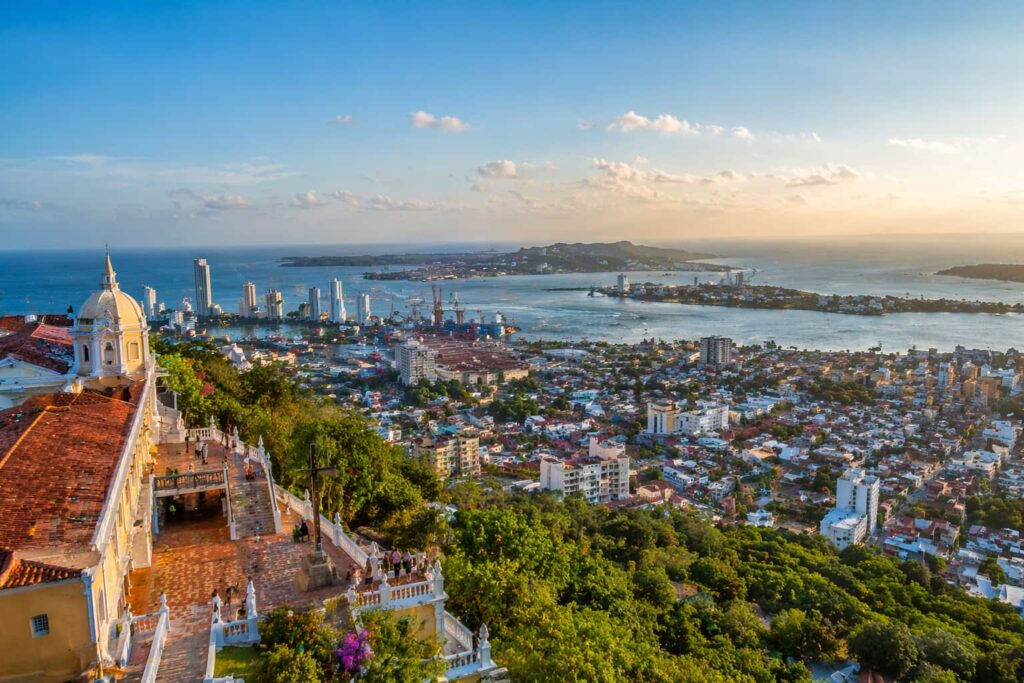
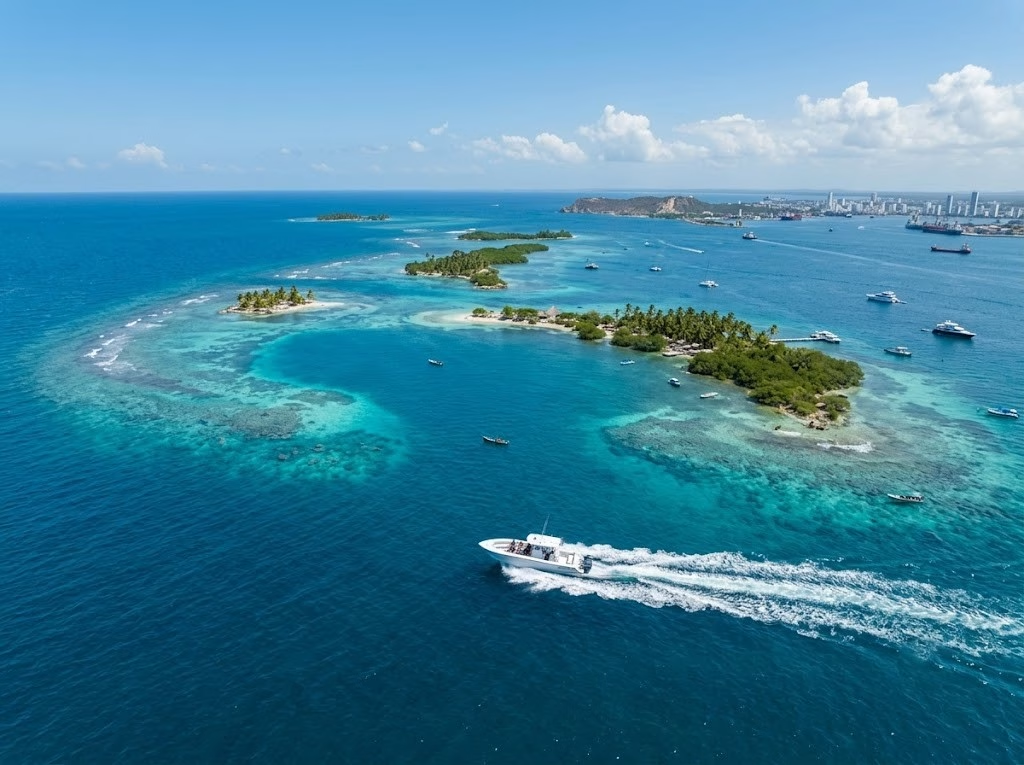
The food tour works best as a morning or early afternoon experience, leaving time for the Cartagena City Tour in the other half of the day — the military history, the independence story, and La Popa’s hilltop view covering the same streets from a completely different angle. For travelers spending more than one day in the city, the Rosario Islands Day Trip takes you offshore to the coral islands of the national marine park — clear water, white sand, and Caribbean seafood at a beachside restaurant on Isla Barú. The Cartagena Sunset Private Boat Tour closes a Cartagena day in the most visually satisfying way available — from the water, as the colonial stone turns orange and the bay goes gold before the first stars appear.
Ready to eat your way through five centuries of Caribbean history? Book the Food Tour in Cartagena’s Walled City above and your guide will handle everything from hotel pickup to the final coffee — all you have to do is show up hungry.
See the rest of what we run there: all our tours in Cartagena.
Before you go: our Cartagena guides
Written by the team that runs this tour.
FAQs
In Colombian gastronomy there is a mixture of various international cuisines, from indigenous ingredients, Spanish seasoning, and African influences. On this tour you will be tasting 5 types of food, including salty snacks, local desserts, and typical beverages. Specific items include arepa con huevo, shrimp cocktail, carimañola (yucca and cheese finger food), cocadas (dried coconut sweets), and Colombian coffee or local beer.
Yes, any person can take part in this food tour in Cartagena. If you have any food restriction or allergy, please tell the guide or write it in the booking form. Note that this tour does not currently offer vegan options.
Wear light, breathable clothing — cotton or linen — and comfortable flat shoes suited for walking on cobblestones for several hours. Bring sunscreen, sunglasses, and a hat. Cartagena is hot and humid year-round with average temperatures between 28°C and 33°C (82°F–91°F).
The tour includes tastings of 5 types of food and drink — salty snacks, local desserts, and typical beverages — at multiple stops through the Walled City. Your guide selects the vendors and ensures you eat at places chosen for quality and local authenticity, not for tourist proximity.
Yes — if you are arriving in Cartagena from a cruise ship, you can book this tour. Be sure to select the cruise-only rate from the booking options when you reserve.
Cartagena's food culture reflects its history as a Caribbean port city where indigenous Colombian, Spanish colonial, and African culinary traditions met and mixed over three centuries. The result is a coastal cuisine built on fried foods, seafood, coconut, tropical fruits, and techniques that exist nowhere else in the country — and a street food scene that is best understood with a guide who knows which vendors have been here for generations.
Related Tours


Cartagena City Tour: San Felipe Fortress, Walled City, Getsemaní & La Popa
Cartagena
Private
A Private Cartagena City Tour: The Fortified City, the Independence Neighborhood, and the View That Makes It All Make Sense…
$$$
6.5 hours

Getsemaní & San Felipe Castle Walking Tour in Cartagena
Cartagena
Shared
Cartagena Walking Tour Through Getsemaní and San Felipe Castle: Two Neighborhoods, Three Centuries of History A Cartagena walking tour through…
$$$
3 hours

Day Trip to Playa Tranquila Beach and Aquarium in Cartagena
Cartagena
Private
A day trip to Playa Tranquila is one of the best ways to experience the Caribbean coast beyond the walls…
$$$
8 hours