
+ 1,200 verified five-star reviews for Cielo.Travel on Google and TripAdvisor.
Duration
Tour Type
Pricing
Languages
Overview
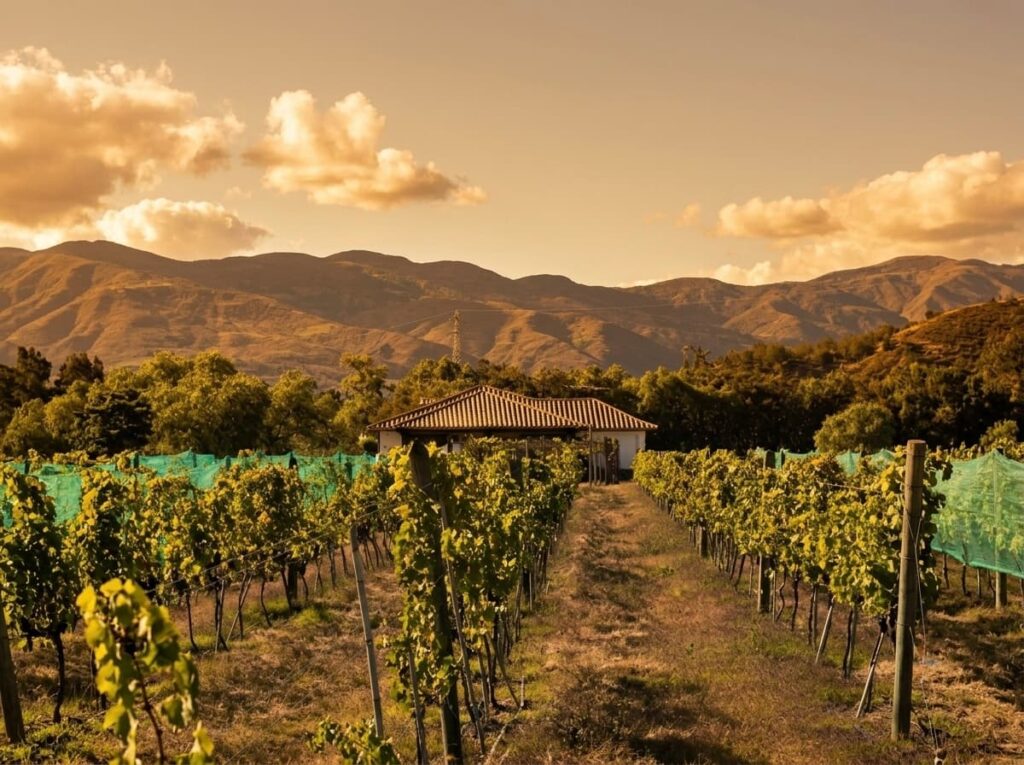
Most travelers don’t think of wine when they think of Colombia — they think of coffee. But the high Andean plateau of Boyacá, where Villa de Leyva sits at 2,100 meters above sea level, has been growing grapes since Franciscan monks planted the first vines here in the 17th century, and the conditions that make the landscape look the way it does — arid, open, intense sunlight, cool nights, low humidity — turn out to be productive conditions for viticulture. The contemporary estate you visit on this tour represents a newer generation of producers applying modern winemaking techniques to four centuries of local history, and the guided walk through the vines and the cellar is a working conversation with people who have staked their professional lives on the idea that this specific place can produce wine worth drinking.
The tasting session that closes the tour presents a curated selection of the estate’s premium wines alongside foods chosen to bring out each wine’s character, with explanations accessible whether you drink wine regularly or almost never. A practical note worth knowing in advance: alcohol affects the body more strongly at 2,100 meters than at sea level, arriving faster and with more intensity than you may be used to. Eat before the tour, stay hydrated, and pace yourself through the session. A light jacket for the drive out in the morning, comfortable shoes for the vineyard terrain, and an appetite for something unexpected are the only things you need to bring — everything else is handled.
Itinerary
Highlights
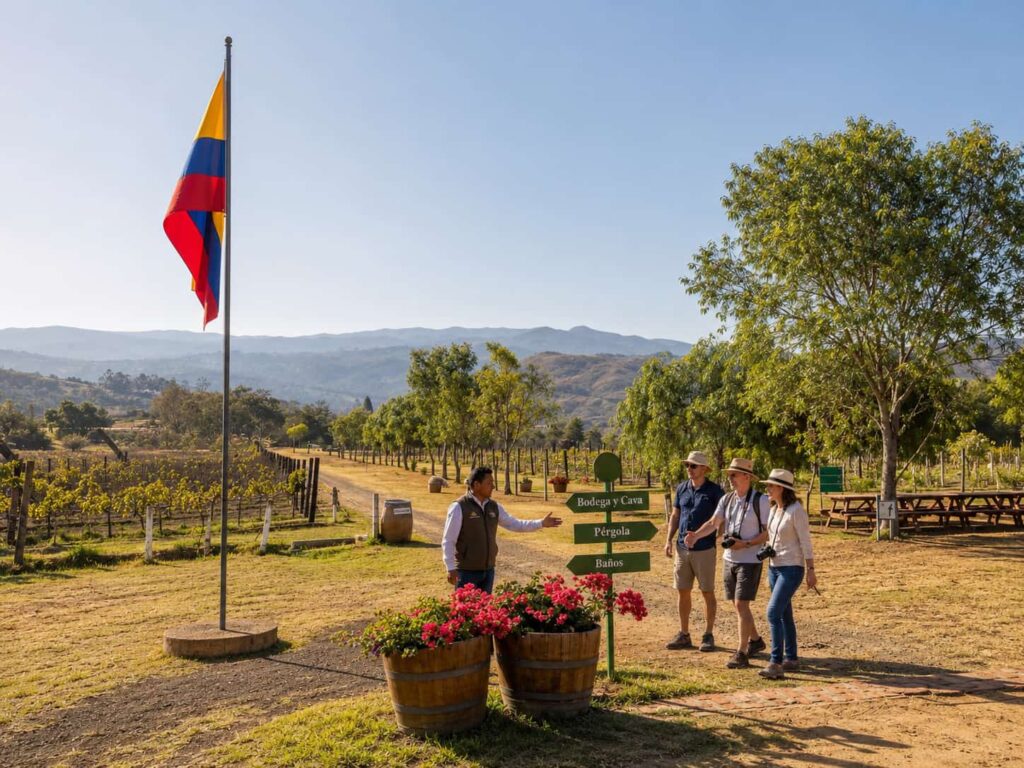
Take a guided tour of a local vineyard with expert vintners — walking the vine rows, visiting the wine cellar, and going hands-on with the winemaking process from grape to glass.
Sit down to a curated wine tasting and food pairing session, sampling a selection of premium wines produced on-site alongside local foods chosen to bring out the character of each wine.
Drive through the Andean countryside between Villa de Leyva and the vineyard, with open views of the rolling hills and colonial landscape that make Boyacá one of Colombia's most distinctive regions.
What's Included
Private English-speaking guide.
Hotel pickup and drop-off in private transportation.
Entry to the vineyard.
Wine and pairing experience.
All-risk insurance.
What's Excluded
Breakfast and lunch.
Extra purchases.
Know before you book
Most of this tour involves walking through the vineyard and wine cellar. Comfortable shoes are recommended — the terrain can be uneven on the vine rows and in the cellar areas.
The tour operates in all weather conditions. Villa de Leyva's climate is dry with occasional cloud cover and light showers. Bring a light jacket and dress in layers.
The wine tasting includes alcohol. If anyone in your group does not drink, let us know in advance and we can arrange a non-alcoholic alternative for the tasting portion.
Villa de Leyva sits at approximately 2,100 meters above sea level. Alcohol can feel stronger at altitude than at sea level — pace yourself during the tasting and stay hydrated.
Breakfast and lunch are not included. The tour runs 3 hours, so plan meals around the pickup time. Your guide can recommend good spots in Villa de Leyva before or after the tour.
More Info
Cancellation Window
12 hours before starting date
Difficulty
Easy
Cancellation policy
Free cancellation up to 12 hours before departure. Cancellations made within 12 hours of the tour start time are non-refundable.
Guest Reviews
Why Book With Cielo
1,200 five-star reviews from real travelers — read them before you book.
Best Price Guarantee — find this tour cheaper elsewhere and we'll match it.
Private transportation door-to-door — no shared shuttles, no waiting around for strangers.
Booking directly with us means your money stays with a Colombian-owned company, not a platform commission.
Our team coordinates everything — pickup timing, pilot briefing, and return logistics — so you focus only on the flight.
Other Info
The Villa de Leyva Vineyard Tour is one of the more surprising things you can do in this part of Colombia — and surprising in a good way. Most travelers don’t think of wine when they think of Colombia. They think of coffee. But the high Andean plateau of Boyacá, where Villa de Leyva sits at around 2,100 meters above sea level, turns out to be a productive environment for viticulture: consistent temperatures, low humidity, intense sunlight at altitude, and dry air that concentrates the character of the grape. The wines produced here are not international award-winners, but they are genuinely local, genuinely made, and genuinely worth understanding — products of a landscape and a history that most visitors to Villa de Leyva leave without knowing exists.
Colombia and Wine: A History Most Travelers Don’t Know
Colombia’s relationship with viticulture is four centuries old and almost entirely unknown outside the country. The first vines near Villa de Leyva were planted in the 17th century by Franciscan monks who recognized in the high plateau of Boyacá some of the conditions that viticulture requires: altitude, consistent temperature, and the particular quality of light that concentrated sunlight at elevation produces. The colonial wine industry that developed around those early plantings was small and entirely local — wine for religious ceremony and domestic consumption, never for export, never for international recognition.
That pattern persisted for centuries. While Colombia became globally known for its coffee and its flowers, its wine industry remained minimal and largely invisible — a regional curiosity rather than a commercial proposition. The contemporary estate you visit on this tour represents a newer generation of producers who have approached that history with modern viticulture knowledge and a serious question: what does this specific place — this altitude, this soil, this light, this rainfall pattern — actually produce when you apply contemporary winemaking techniques to it? The answer they have arrived at is the wine you taste at the end of the tour, and understanding the question makes the answer more interesting.
The Drive from Villa de Leyva: A Landscape Worth Paying Attention To
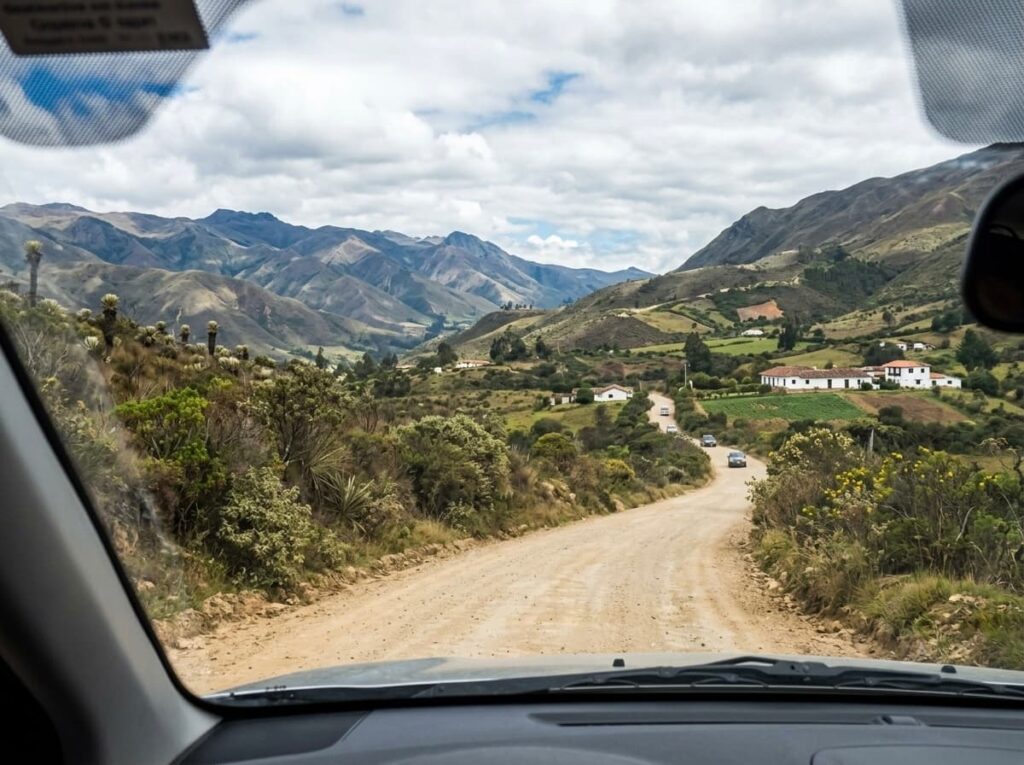
The tour runs three hours from hotel pickup to drop-off, and the drive from the town to the estate takes about fifteen minutes through the Andean countryside. This journey is worth paying attention to rather than sleeping through. The landscape around Villa de Leyva is arid and open in a way that surprises visitors who arrive expecting the green Andean hillsides that characterize most of Colombian mountain country. The plateau here is dry — the rain shadow effect of the surrounding ranges keeps humidity low and temperatures consistent — and the rolling hills with their pale scrub, colonial-era stone walls, and occasional farms give the region a quality that is closer to certain parts of Spain or the high plains of Argentina than to the lush coffee region further south.
This landscape is directly relevant to the viticulture you’re about to learn about. The same aridity that makes the Boyacá plateau look the way it does is one of the conditions that makes growing grapes here viable. Low humidity reduces the fungal diseases that destroy vines in wetter climates. Consistent temperatures — cool nights, warm days — slow the ripening process in ways that allow flavor complexity to develop. Intense sunlight at 2,100 meters provides the energy for photosynthesis that the shorter growing season at altitude requires. The drive is your first visual introduction to the conditions the vineyard is working with.
The Vineyard: A Working Conversation With People Who Believe in This Place
At the vineyard, the guided tour begins with the vines themselves. Expert vintners lead you through the rows, explaining how the altitude affects the growth cycle, how the rainfall patterns in Boyacá differ from those in more conventionally wine-friendly regions, and how the estate has adapted its winemaking approach to the specific conditions of this particular piece of land. The conversation is not a standard tourism briefing. It is a working discussion with people who have staked their professional lives on the idea that Colombia can produce wine worth drinking — people who know the specific challenges of their location in detail and who have developed practical responses to each of them.
Growing at Altitude: What the Vines Experience
The altitude affects the vines in ways that are both challenging and productive. The growing season is shorter than at lower elevations, which means that the winemaker has less time to work with and less room for error in the harvest decision. The temperature swings between day and night are more pronounced than in warmer wine regions, which stresses the vines in ways that, managed correctly, concentrate the flavors in the fruit. The intense ultraviolet radiation at 2,100 meters thickens the grape skins — which affects the tannin structure of the red wines and the aromatic intensity of the whites. Your guide explains each of these dynamics as you walk the rows, connecting the visual evidence in the vines to the flavors you will encounter in the tasting room.
The Varieties: What Grows Here and Why
The grape varieties planted at the estate reflect a combination of tradition and experiment. Some varieties were introduced during the colonial period and have been adapted over centuries to the specific conditions of the Boyacá plateau. Others are more recent introductions, chosen by the current generation of winemakers based on their known performance in high-altitude conditions elsewhere in the world — in Argentina’s Mendoza at altitude, in Spain’s Castilla y León, in the mountain wine regions of northern Italy. Your guide explains the reasoning behind the variety selection and what each one contributes to the estate’s portfolio.
The Wine Cellar: From Harvest to Bottle
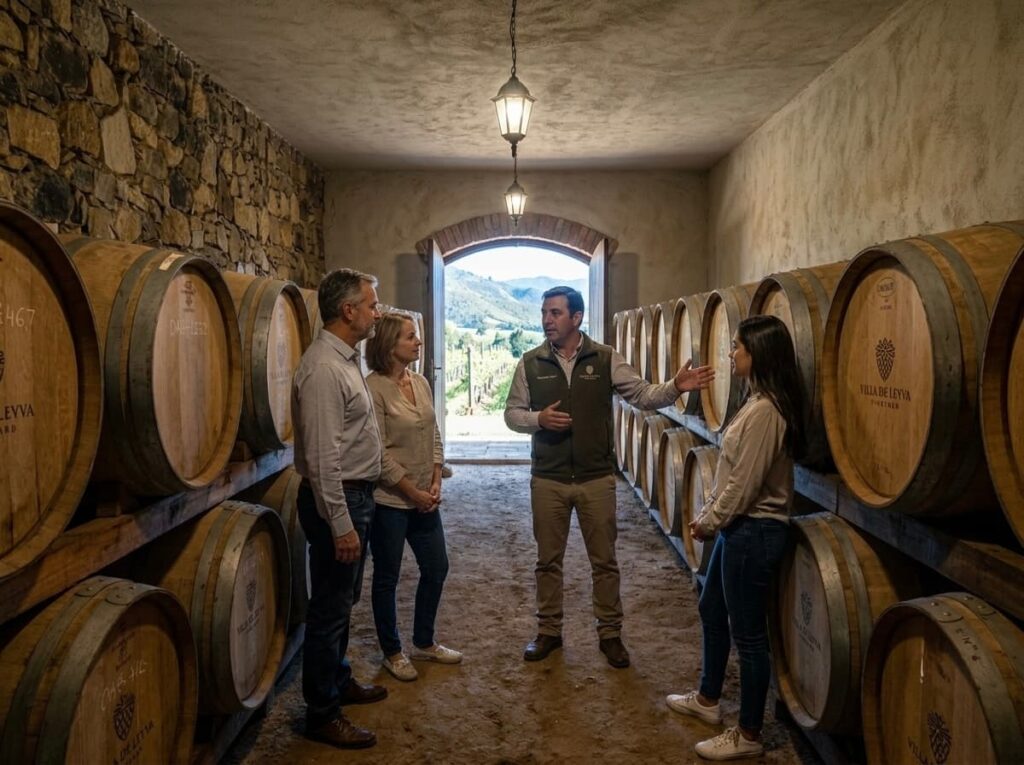
The vineyard walk is followed by the wine cellar visit, where you see the equipment and infrastructure that moves the wine from harvest to bottle. The cellar environment — cool, dim, smelling of oak and fermentation — is one of those spaces that makes abstract knowledge concrete. The barrels where the wine ages, the tanks where fermentation happens, the bottling equipment, the storage systems: your guide walks you through each stage of the process and explains the decisions that the winemaker makes at each point — when to press, how long to ferment, how long to age, when to bottle, when the wine is ready to open.
The cellar visit also covers the specific challenges of winemaking at altitude. Temperature management is more demanding when the ambient temperature swings more dramatically. The thinness of the air at 2,100 meters affects the fermentation process in ways that lower-altitude winemakers don’t have to account for. The logistics of moving equipment and supplies to a vineyard in the Colombian highlands requires a different kind of operational planning than a winery in a more established wine region. These are the practical realities of making wine in an unlikely place, and the people who do it have interesting things to say about how they manage them.
The Tasting Session: Learning to Read What the Place Produces
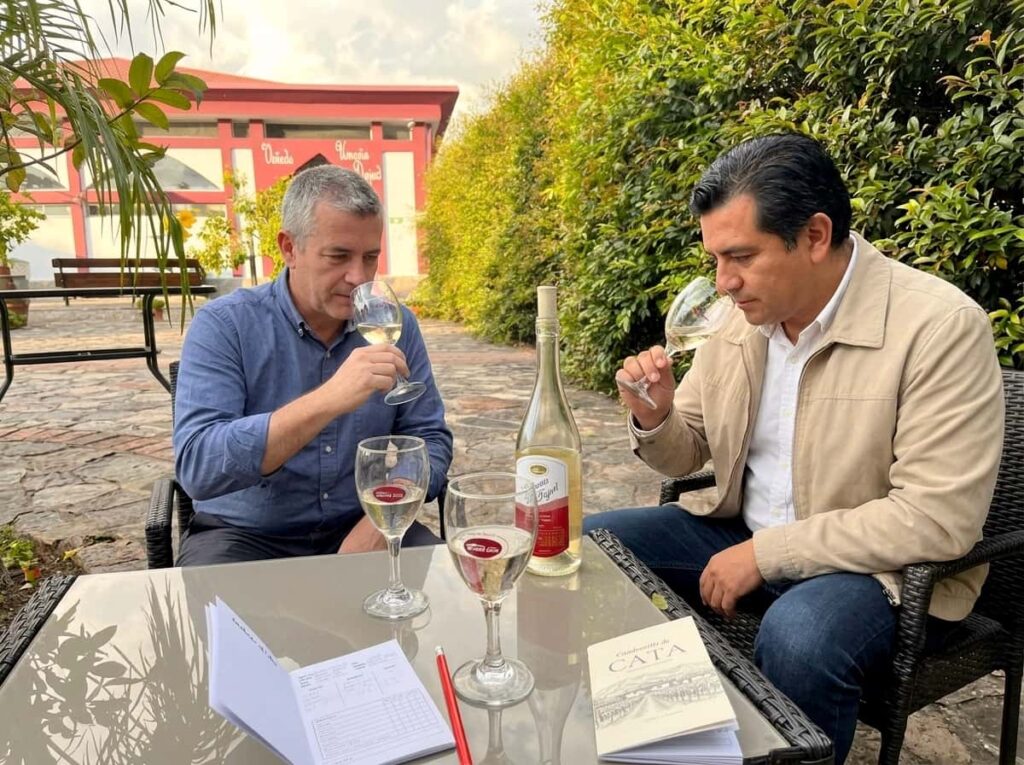
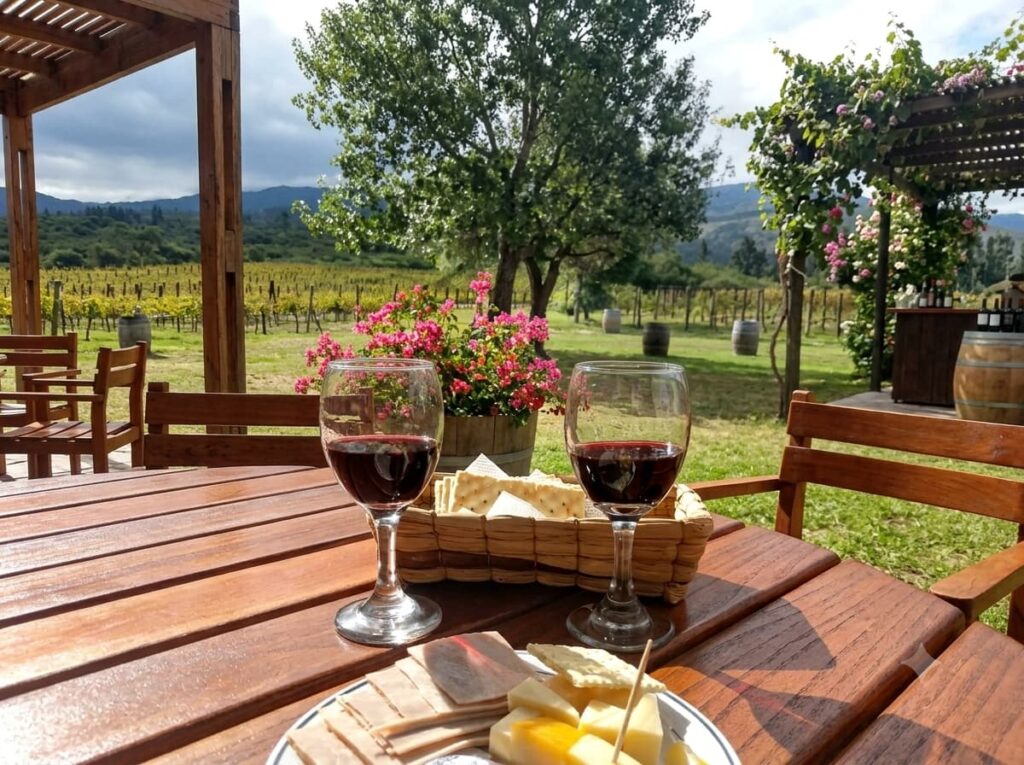
The tasting session closes the tour, and it is where everything you have seen and heard in the previous two hours becomes experiential rather than informational. A curated selection of the estate’s premium wines is presented alongside foods specifically chosen to bring out each wine’s character — local cheeses, cured meats, breads and accompaniments that reflect the food culture of the Boyacá highlands as much as the wine culture.
Your guide explains what you’re tasting at each pour: the fruit notes that the altitude and the variety produce, the acidity that the cool nights preserve in the finished wine, the finish that the oak aging contributes, the logic of each food pairing and why the combination works. The explanation is accessible whether you drink wine regularly or almost never — the goal is not to produce wine experts but to give you enough framework to taste consciously rather than casually, to notice what is actually in the glass rather than simply drinking it.
By the end of the session, most guests report that they know something they didn’t know when they arrived — about Colombia, about Boyacá, about the specific piece of land they’ve spent the afternoon on, and about what wine actually is when it comes from a place that is trying to figure out what it can do rather than reproducing what has already been established elsewhere.
A Practical Note on Altitude and Alcohol
Villa de Leyva sits at 2,100 meters above sea level, and alcohol affects the body differently at altitude than at sea level. The effect is typically stronger and arrives faster. This is not a reason to avoid the tasting — it is simply a reason to eat something before the tour begins, stay hydrated throughout, and pace yourself through the session. Your guide will flag this on the day. The effect is not dramatic for most people, but it is real, and being aware of it in advance is the practical preparation that makes the afternoon comfortable rather than unexpectedly intense.
Practical Notes: What to Wear and When to Go
The tour operates in all weather conditions — Villa de Leyva’s climate is mild and dry with occasional light showers, and the vineyard visit runs regardless. A light jacket is useful for the morning, when the temperature can be cool before the sun clears the surrounding hills. Comfortable shoes are recommended for the vineyard terrain — the rows between vines are uneven ground, and footwear with grip is more practical than anything flat-soled. The tour runs three hours door to door and fits comfortably into half a day.
Continue Exploring Villa de Leyva
For those who want to combine this with a broader look at Villa de Leyva’s history and architecture, the Villa de Leyva City Tour covers Plaza Mayor, the Fossil Museum, the Ecce Homo convent, and the colonial historic center in a separate half-day itinerary — the two tours together give you the full range of what the region contains, from its geological past to its colonial present to its agricultural character. For a more active experience in the surrounding landscape, the La Periquera Hiking Tour takes you into the hills beyond the town, following the Cebada River through three waterfalls and the fog forest transition that most visitors never reach.
Ready to taste what Boyacá produces? Book the Villa de Leyva vineyard tour above and your private guide will handle everything from hotel pickup to the return — all you need to bring is an appetite and a jacket.
See the rest of what we run there: all our tours in Villa de Leyva.
Before you go: our Colombia guides
Written by the team that runs this tour.
FAQs
You'll walk the vineyard rows alongside expert vintners who explain how the high-altitude Boyacá climate shapes the wine produced here. You'll visit the wine cellar, see the production equipment, and get a first-hand look at the grape-to-glass process. The tour ends with a curated tasting of premium wines produced on-site, each paired with a specific food to bring out its character.
Villa de Leyva has a dry, mild climate with occasional cloudy days and light showers. The tour operates in all weather conditions. Bring a light jacket and comfortable shoes — the morning can be cool and the vineyard terrain is uneven in places.
No prior knowledge is needed. Your guide explains everything from the ground up — how grapes are grown at this altitude, what makes Colombian wine distinctive, and how to identify what you're tasting during the pairing session. Wine enthusiasts will go deeper; complete beginners will leave with a solid foundation and a few bottles to think about.
The tasting features a curated selection of premium wines produced at the vineyard. The specific wines available change based on production. Your guide will describe each one and walk you through the food pairing choices. If you'd like to know more about the current selection before booking, contact us and we'll find out.
Additional wine purchases are available at the vineyard but are not included in the tour price. If you find something you enjoy during the tasting, your guide can help you arrange a purchase directly with the estate.
Related Tours


Villa de Leyva Tour: Plaza Mayor, Fossil Museum & Colonial Historic Center
Villa de Leyva
Private
The Villa de Leyva tour gives you something that most visitors to this region never quite manage on their own:…
$$$
5 hours
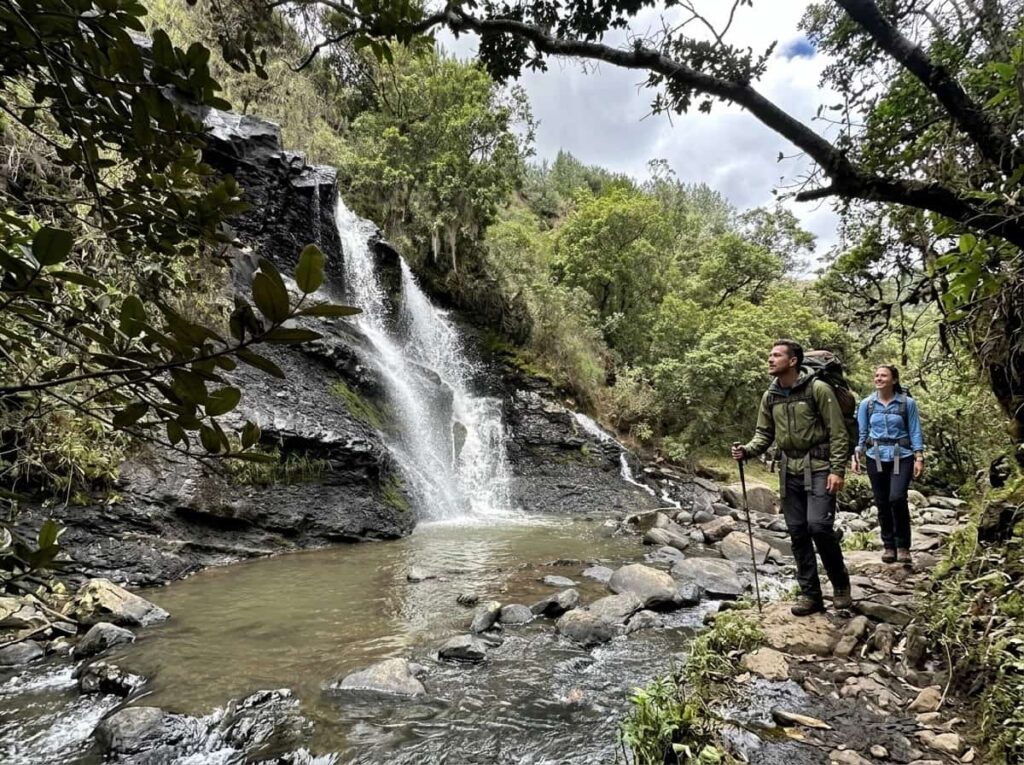
La Periquera Hiking Tour from Villa de Leyva: Three Waterfalls & Cebada River Swim
Villa de Leyva
Private
The La Periquera Hiking tour from Villa de Leyva takes you into one of the most striking aspects of this…
$$$
5 hours
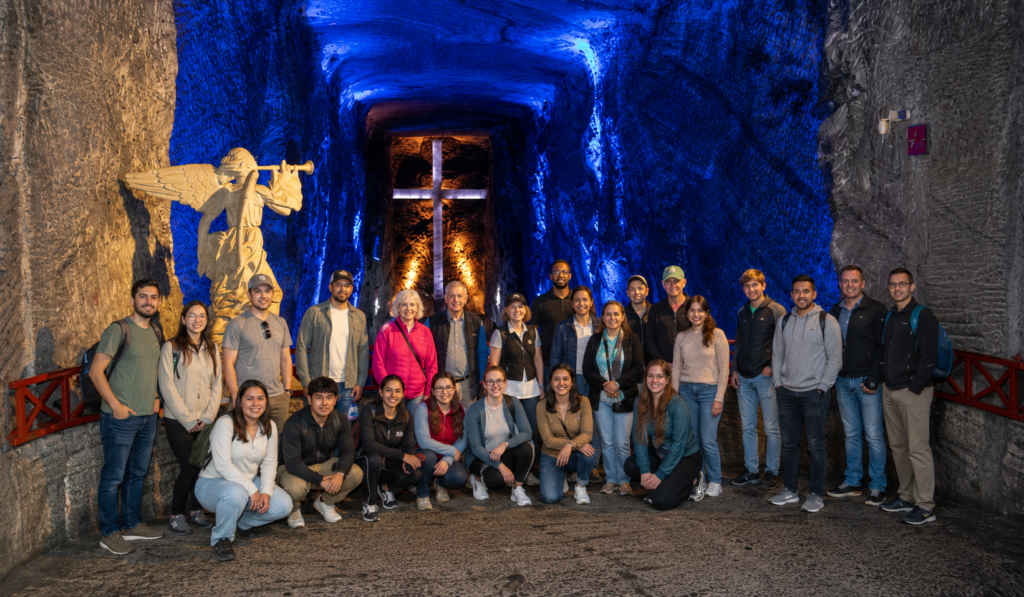

2-Day Tour: Zipaquirá Salt Cathedral & Villa de Leyva
Bogota
Multi-Day, Private
Two Days From Bogotá to Colombia’s Highlands A 2-day tour from Zipaquirá to Villa de Leyva takes you from Bogotá…
$$$
2 Days