
+ 1,200 verified five-star reviews for Cielo.Travel on Google and TripAdvisor.
Duration
Tour Type
Pricing
Languages
Overview
This tour puts two of Colombia’s most historically charged sites into a single private or shared day — and the combination works in ways a single-site visit simply doesn’t. You go underground first, into the carved darkness of a working salt mine turned cathedral, and then out into the open highland sky above a lagoon that inspired the most enduring myth in South American history.
What carries both experiences is context. The Salt Cathedral isn’t a tourist reconstruction — mass is held here, and understanding how miners’ rough-hewn crosses became a functioning underground church changes what you see when you’re inside it. At Guatavita, your guide tells the story of the Muisca gold ritual at the rim of the crater where it actually originated — not the European fantasy of a city of gold, but the ceremony itself, and what was lost when the Spanish turned a spiritual practice into a treasure hunt.
Important to Know
This itinerary describes the full private day, which combines the Salt Cathedral of Zipaquirá and Guatavita Lagoon in one experience with a private guide. If you’d rather see just one site, or prefer a shared option, here’s what each format includes:
- Private: Zipaquirá + Guatavita (Full Day) — Private guide, round-trip private transport from Bogotá, lunch, and entrance to both the Salt Cathedral and Lake Guatavita. Departs at 7, 8, 9, or 10 AM.
- Private: Only Zipaquirá — Private guide, round-trip private transport from Bogotá, lunch, and Salt Cathedral entrance. Departs hourly from 8 AM to 12 PM.
- Shared: Only Zipaquirá — Round-trip transport from Bogotá and Salt Cathedral entrance. No guide or lunch included. Departs hourly from 8 AM to 12 PM.
- Shared: Zipaquirá + Guatavita — Round-trip transport from Bogotá and entrance to both sites. No guide or lunch included. Departs at 8 AM.
All four options run Tuesday through Sunday. If a Monday is a public holiday, the tour operates that Monday, but not the following Tuesday.
Itinerary
Highlights
Pick the format that fits your trip — the full Zipaquirá and Guatavita day, a shorter visit to just one site, or a shared option for either.
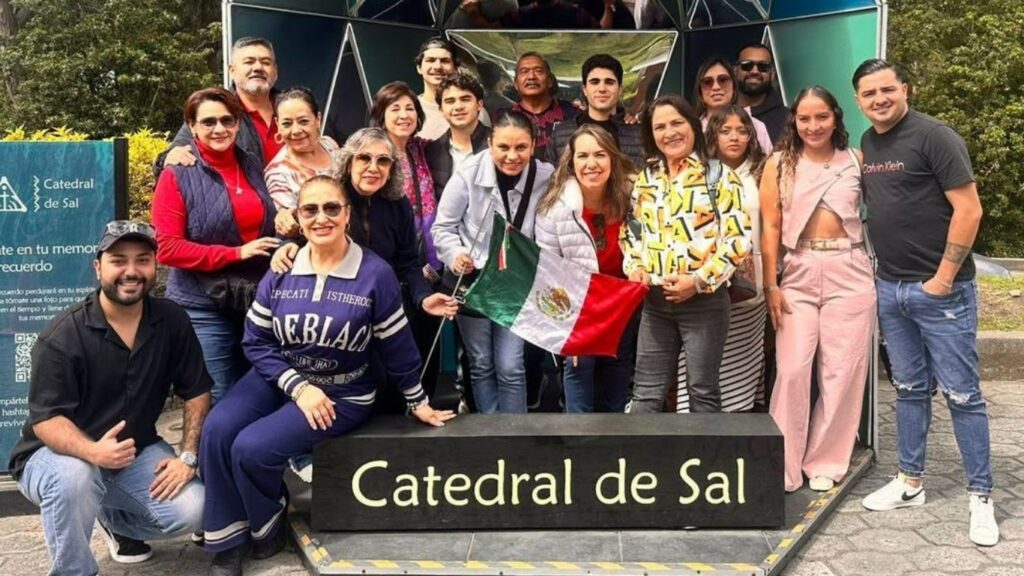
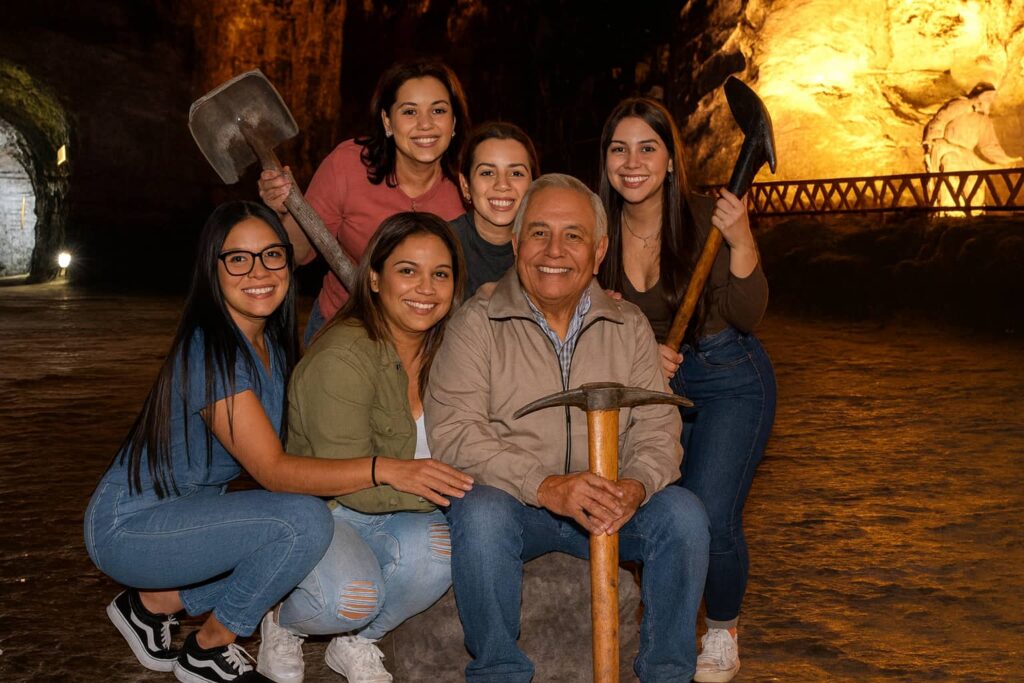
Descend 180 meters into the Salt Cathedral of Zipaquirá—the world's only subterranean Catholic church—where carved tunnels open into vaulted chambers and salt altars lit in shifting color.
Walk Zipaquirá's colonial town center after the cathedral, exploring cobbled streets, local cafés, and artisan shops at your own pace.
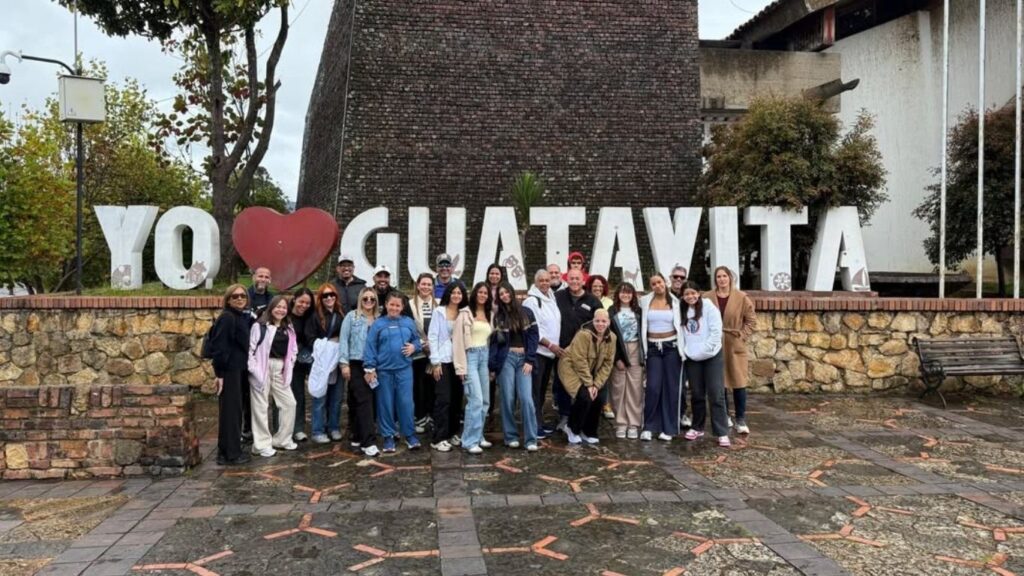
Visit the rebuilt town of Guatavita, constructed in the 1960s after the original was submerged to form the Tominé Reservoir—its white-walled streets and mountain views carry a story of resilience.
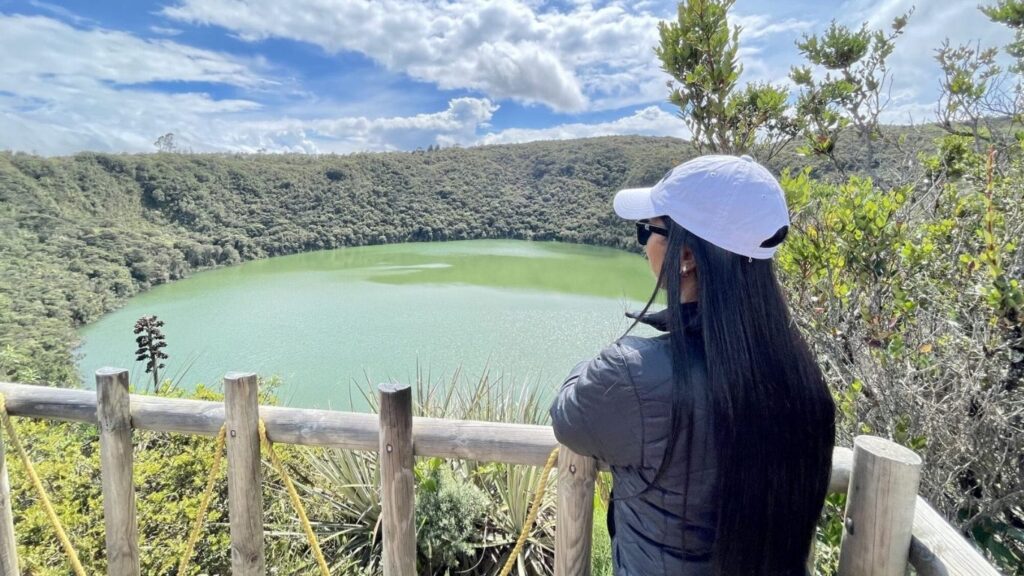
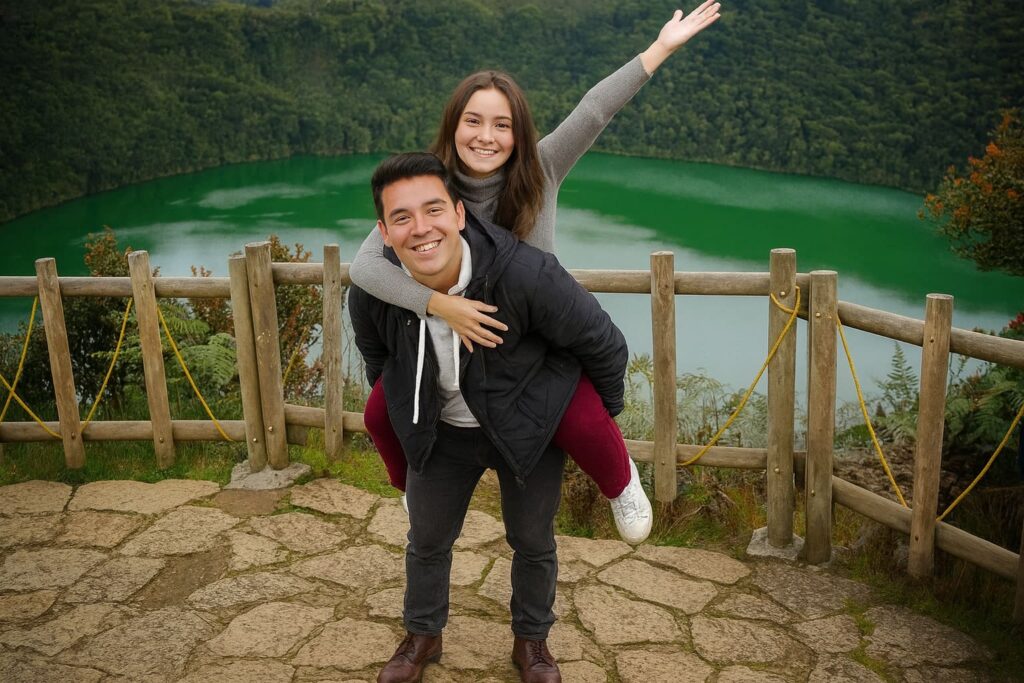
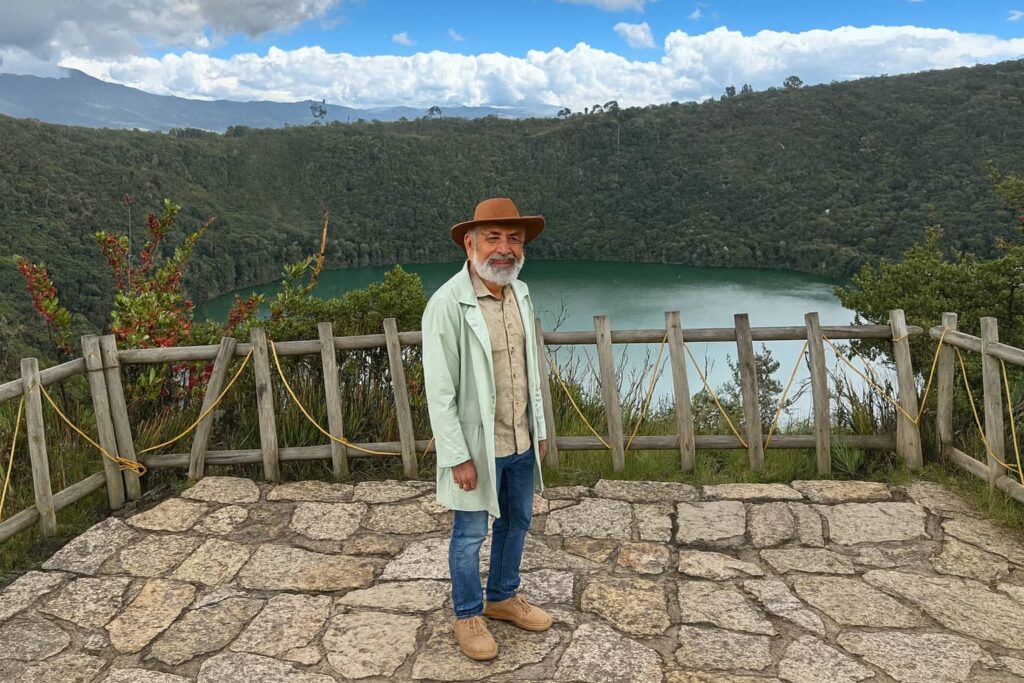
Hike the forest trails of Guatavita Natural Park to the edge of the sacred crater lake at 3,100 meters, where crisp highland air and still emerald water mark the site of ancient Muisca ritual.
Hear a complete, context-rich account of the El Dorado legend from your English-speaking guide—not a summary, but the full history of the Muisca ceremony, the gold offerings, and how this lagoon shaped global myth.
Enjoy a Colombian-style lunch at a local restaurant between stops, with your guide on hand to explain the menu and make ordering easy.
What's Included
Private English-speaking guide (Private Tours options).
Round-trip transportation from Bogotá — private vehicle on Private options, shared transport on Shared options.
Lunch - Menu of the day available at the restaurant. (Private Tours).
Entrance fee for Salt Cathedral (Private & Shared options) and Lake Guatavita (If chosen).
What's Excluded
Breakfast, extra food and drinks.
Souvenirs and personal purchases.
Gratuities for your guide (appreciated but not required).
Know before you book
Wear comfortable closed-toe walking shoes. The Salt Cathedral involves flat underground walking on even surfaces; the Guatavita trail is a moderate hike at 3,100 meters (10,170.6 ft) with natural terrain underfoot.
Bring a light jacket or layer—the cathedral stays cool underground and Guatavita Lagoon sits at high altitude where temperatures drop quickly, especially if clouds roll in.
Carry water and sunscreen. The trail to Guatavita Lagoon is at elevation, where sun intensity and dehydration risk are higher than at Bogotá's altitude.
Lake Guatavita is closed on Mondays, and on Tuesdays when Monday falls on a national holiday. If your booking date falls on a closure day, we'll adjust the itinerary or offer a comparable cultural alternative.
A valid passport or Colombian ID is required for entry to the Salt Cathedral.
This tour is not wheelchair accessible and is not recommended for travelers with heart conditions due to the high-altitude hiking segment. The pace is otherwise easy, with built-in rest stops and guidance throughout.
This experience is offered in four formats: a private full day (Zipaquirá and Guatavita), a private or shared visit to just Zipaquirá, and a shared full day (Zipaquirá and Guatavita).
Shared options include round-trip transport and entrance tickets but do not include a guide or lunch.
All options run Tuesday through Sunday; if a Monday is a public holiday, the tour operates that Monday but not the following Tuesday.
More Info
Cancellation Window
12 hours before starting date.
Difficulty
Easy
Only
1
spot left
Cancellation policy
Free cancellation up to 12 hours before departure. Cancellations made within 12 hours of the tour start time are non-refundable.
Guest Reviews
Why Book With Cielo
1,200 five-star reviews from real travelers — read them before you book.
Best Price Guarantee — find this tour cheaper elsewhere and we'll match it.
Private tours only — you're not sharing your guide with a group of strangers. Your pace, your questions, your day.
Our guides are English-speaking Colombian locals who know these routes, these sites, and these stories firsthand — not contractors hired for the season. When you ask a question off-script, they have a real answer.
Other Info
The Salt Cathedral and Guatavita tour from Bogotá puts two of Colombia’s most historically charged sites into a single private day — and the combination works in ways that a single-site visit simply doesn’t. You go underground first, into darkness and carved rock, and then out into the open highland sky. The contrast alone makes the day feel full. But what carries both experiences is context, and that’s what this tour is designed to give you.
Most travelers who visit Zipaquirá or Guatavita know the headline: one is an underground cathedral, the other is the lake tied to the El Dorado legend. What’s harder to find on your own is the full picture — why the mine became a cathedral, how that transformation happened across decades, who built it and under what conditions, and what the Muisca gold ceremonies at Guatavita actually looked like versus how European colonizers distorted the story into a treasure hunt. Your guide covers all of this — not as a walking encyclopedia, but as a Colombian who grew up with these stories and knows how to make them land.
Why the Salt Cathedral Earns the Drive
The Salt Cathedral of Zipaquirá sits 180 meters below the surface of a working salt mine — or what was once a working mine. Miners began carving shrines into the walls in the early 20th century as a way of marking the dangers of the work and asking for protection. What started as rough-hewn crosses became elaborate stations of the cross, and over decades, the space evolved into the functioning underground church that exists today. It’s not a replica or a tourist reconstruction. Mass is held here. People worship here. That distinction matters when you’re standing inside it.
The scale surprises most visitors. Photos don’t fully prepare you for the size of the main nave or the weight of the rock around you. The light shifts as you move between sections — blue in some chambers, deep red in others — and the silence in certain parts of the cathedral carries differently than above-ground silence. Your guide walks you through the history of the salt mine, the indigenous Muisca people who worked the salt trade long before Spanish colonization, and the specific engineering and artistic decisions that shaped the space over time. The Muisca relationship with salt is the same relationship that shaped the civilization whose gold rituals you will see referenced at Guatavita later in the day — understanding it underground, in the rock itself, is the right preparation for the open-air story that follows.
Zipaquirá Town: The Part Most Tours Rush
After the underground, you have time in Zipaquirá’s colonial center before the drive north to Guatavita. This part of the day gets compressed on group tours — you’re usually back on the bus in 20 minutes. On a private tour, you move at your own pace. The main square is lined with cafés, and if you want a coffee and 30 minutes to sit in the sun before driving into the highlands, that’s available to you. The artisan shops around the square stock handwoven bags, carved wood pieces, and local ceramics — your guide can help you understand what you’re looking at and where things are made.
Zipaquirá is also where the day shifts register — from the contained, underground world of the cathedral to the open highland landscape of the drive toward Guatavita. The colonial square, the mountain air, and the unstructured time between the two major sites are a deliberate part of the pacing. The Private Bogotá City Tour covers the Gold Museum’s Muisca collection and the founding history of the Sabana de Bogotá in depth — if you’ve done that tour first, the Zipaquirá stop will have additional resonance as a continuation of the same indigenous and colonial story.
Guatavita: Two Sites, One Story
The Guatavita portion of the day covers two stops: the rebuilt colonial town and the lagoon itself. The town’s history is worth understanding before you arrive. The original Guatavita was flooded in the 1960s when the government created the Tominé Reservoir, displacing the entire population and submerging the original settlement. The town you visit today was purpose-built on higher ground in a colonial architectural style. The result is a quiet, clean, somewhat surreal village — white walls, cobblestone streets, mountain views — that exists specifically because the old one no longer does. Your guide explains this without romanticizing it.
The Lagoon: Where the El Dorado Story Actually Happened
The lagoon sits roughly three kilometers from town along a hiking trail through high-altitude forest. The walk takes you above 3,100 meters — higher than most of Europe’s peaks — and the air is noticeably thinner. Your guide paces the hike with this in mind; it’s not a race. At the crater’s rim, you look down at still emerald water surrounded by steep forested walls. There’s a reason this place lodged itself so deeply in Muisca spiritual life. The Muisca ruler — the Zipa — would cover himself in gold dust and wade into the lagoon to make offerings. Spanish conquistadors heard fragments of this ritual, inflated it into a myth of an entire city of gold, and spent two centuries searching for something that was never what they imagined. Your guide tells this story at the site where it originated.
The Muisca Raft at the Gold Museum in Bogotá — the tiny golden figure that is widely believed to depict the Zipa’s gold-dust ceremony — was made to represent exactly what you are standing above. If you’ve seen it in the museum before this tour, the lagoon is where that object’s meaning becomes fully three-dimensional. If you haven’t, it’s worth adding the Private Bogotá City Tour to your itinerary for the day before or after.
Practical Notes Before You Go
Bring a layer for the lagoon — the temperature at 3,100 meters can shift quickly, especially under cloud cover. Wear walking shoes with grip, bring water, and apply sunscreen before the Guatavita hike. The cathedral requires a valid passport for entry. The tour runs rain or shine: the cathedral is underground and entirely weather-protected, and the lagoon trail can be done in light rain — your guide will advise on gear and conditions the morning of your departure.
Plan Your Time Around Bogotá
This tour pairs naturally with other day trips from the capital for travelers spending multiple nights in Bogotá. The Villa de Leyva Full Day Tour takes you three hours north into the Boyacá highlands for a completely different experience — colonial architecture intact since 1954, a fossil valley from the Cretaceous period, the artisan streets of Ráquira, and the sapphire mineral pools of Pozos Azules. For those who want to see the city itself in depth before heading out of it, the Private Bogotá City Tour covers La Candelaria, Monserrate, the Gold Museum, and the Botero Museum in a full private day — and the Muisca context it provides makes both the Salt Cathedral and the Guatavita lagoon more legible afterward. For travelers arriving in Bogotá with limited time, the Bogotá Layover Tour covers the city’s essential arc between flights.
Ready to spend a day between underground cathedrals and highland lagoons with a guide who knows both stories inside out? Book the Salt Cathedral and Guatavita Tour above and we’ll take care of everything.
See the rest of what we run there: all our tours in Bogotá.
Before you go: our Bogotá guides
Written by the team that runs this tour.
FAQs
Included: private hotel pickup and drop-off, your English-speaking guide for the full day, entry tickets to both the Salt Cathedral of Zipaquirá and Guatavita Natural Park, a Colombian-style lunch at a local restaurant, and all-risk insurance. Not included: breakfast, extra drinks beyond the included meal, souvenirs, and guide gratuities.
The Salt Cathedral is flat, underground walking on even surfaces — accessible for most fitness levels. The Guatavita Lagoon section involves a trail hike above 3,000 meters, so some cardiovascular effort is involved. Your guide keeps the pace easy, builds in rest stops, and offers practical altitude tips throughout. Wear walking shoes and bring water.
The lagoon is closed on Mondays — and on Tuesdays when Monday falls on a national holiday. If your chosen date lands on a closure day, we'll adjust the schedule or substitute with a comparable cultural stop. The rest of the tour runs rain or shine; the cathedral is underground and fully protected from weather.
Yes. Your guide leads in English from pickup to drop-off and stays with you throughout every stop — at the restaurant to explain the menu, at artisan stalls if you want to ask questions, and at the park for any interactions with staff. You won't need Spanish to have a confident, full experience at any point in the day.
This is a private tour, meaning the vehicle, guide, and itinerary are yours alone — no shared departure times or other groups joining. It works well for couples, families, small friend groups, and solo travelers. If you have specific requests around pacing or stops, let us know at the time of booking.
Related Tours
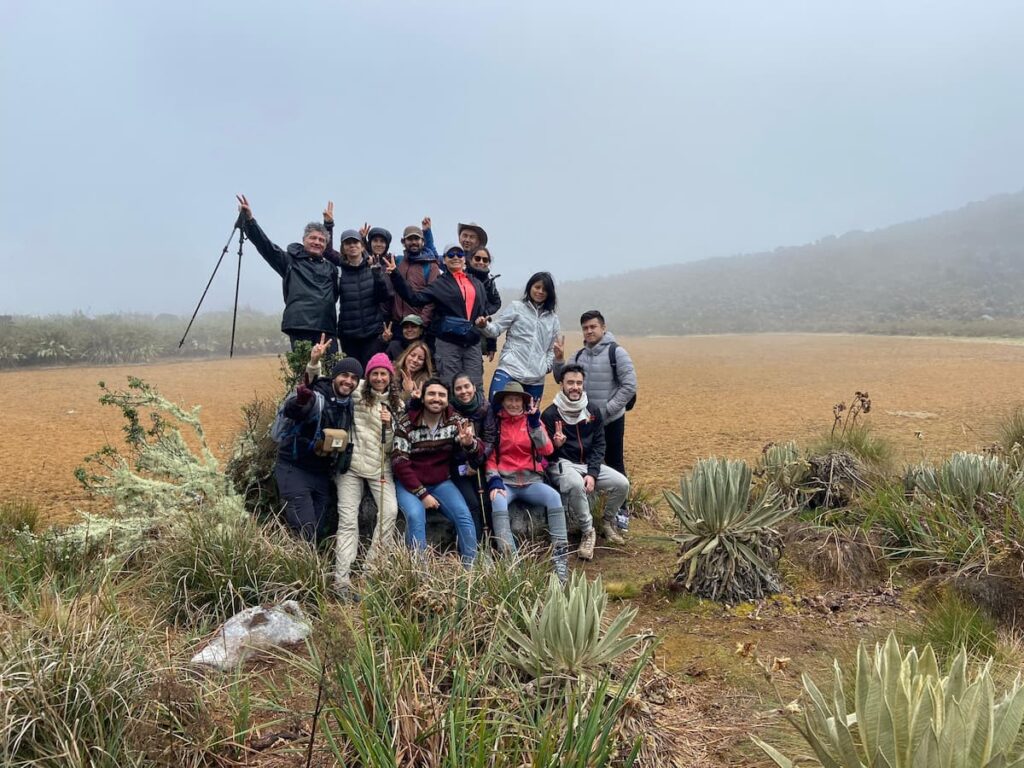

Sumapaz Guided Tour: Private Eco-Luxury Nature Escape in Bogota
Bogota
Private
An Ecopalacio Chingaza Hiking Tour: From Active Quarry to Andean Sanctuary An Ecopalacio Chingaza hiking tour is one of the…
$$$
8 hours
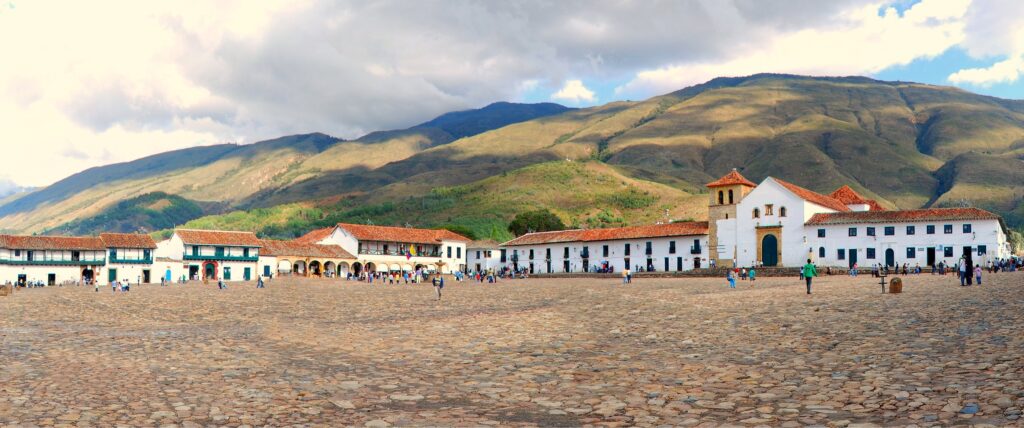

Villa de Leyva Tour from Bogotá: Sisga, Ráquira, Fossils & Pozos Azules
Bogota
Private, Shared
A Villa de Leyva Day Trip from Bogotá: Colombia’s Colonial Heart, Geological Past, and Living Craft Tradition A Villa de…
$$$
12 hours
Las Moyas Hike Tours Bogota: Sunrise Trail Above the City
Bogota
Private
Las Moyas Hike: A Real Mountain Morning Ten Minutes from the City Las Moyas Hike gives you something most visitors…
$$$
3 - 4 Hours