
+ 1,200 verified five-star reviews for Cielo.Travel on Google and TripAdvisor.
Duration
Tour Type
Pricing
Languages
Overview
Finca Luger has been a working coffee farm for over a hundred years, set in the green hills of the Eje Cafetero — the cultural landscape that earned this part of Colombia a UNESCO World Heritage designation and still produces some of the most complex highland coffee in the world. This tour doesn’t position you as an observer. You plant a seed in the seedling beds, pick ripe cherries from bushes in full production, and follow the harvest through pulping, drying, and roasting until you’re holding the finished bean you watched transform under heat an hour earlier.
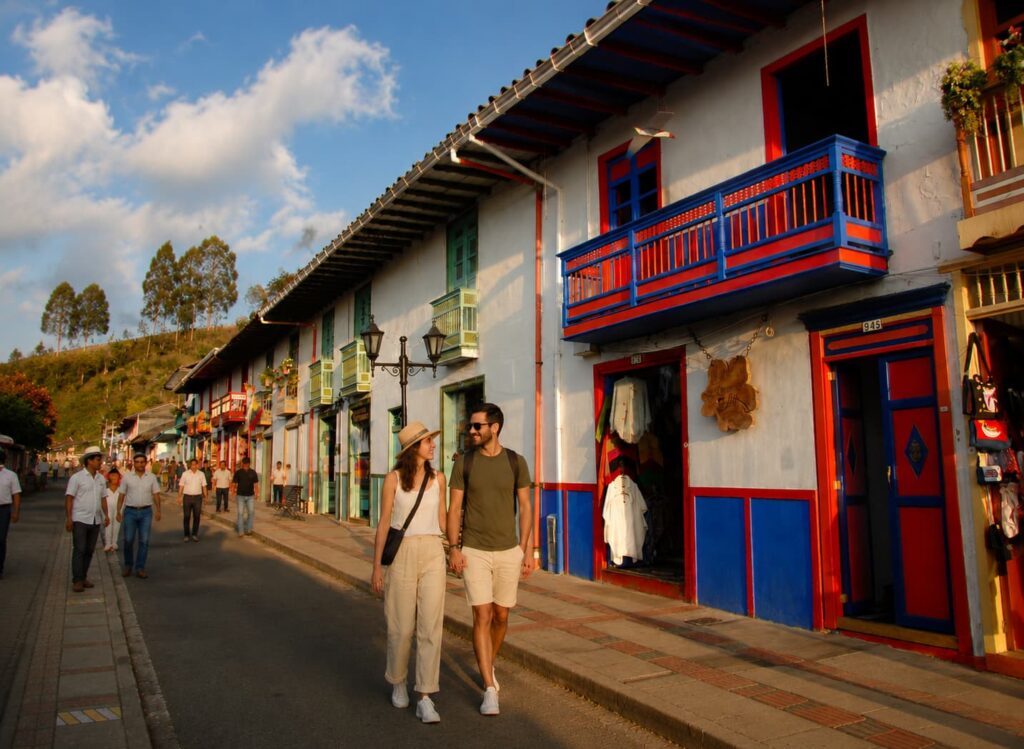
The day also takes you into Salento, the most visited of the region’s Paisa coffee towns, where painted two-storey facades in yellow, blue, and red line streets that still feel like a functioning town rather than a set piece. It closes with a structured tasting session at the farm — not a coffee break but a guided lesson in recognizing altitude-driven floral notes, washed-process acidity, and roast-level finish, using the same beans you just watched being processed.
Itinerary
Highlights
Arrive at Finca Luger — a working coffee farm with over 100 years of history — and meet your expert guide and coffee specialist who will walk you through every stage of production.
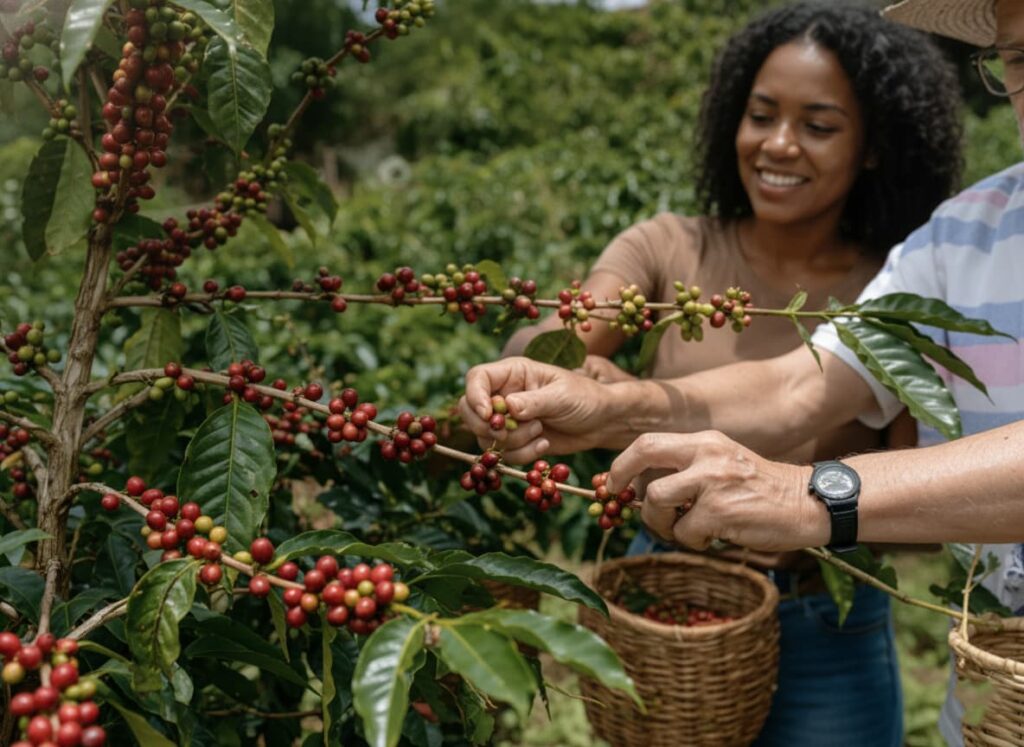
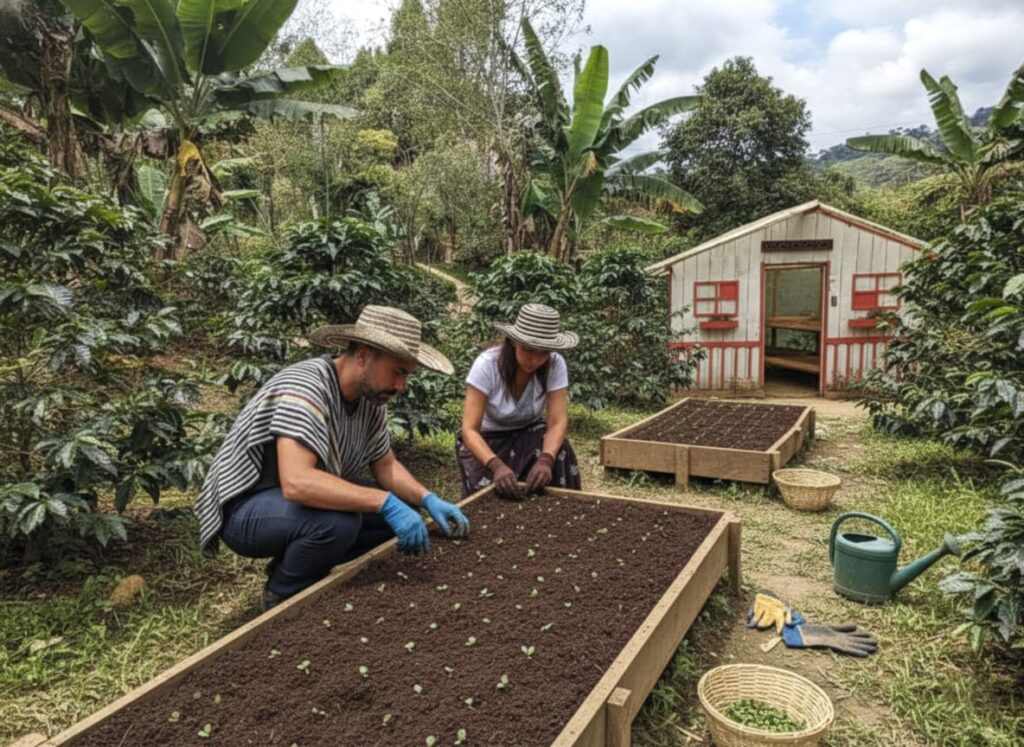
Plant a coffee seed directly into the seedling beds and pick ripe coffee cherries from the bushes, taking an active role in the process that most visitors only read about.
Follow the bean from harvest to cup — watch and participate in the roasting process, and sometimes grinding, to understand exactly what transforms a cherry into your morning coffee.
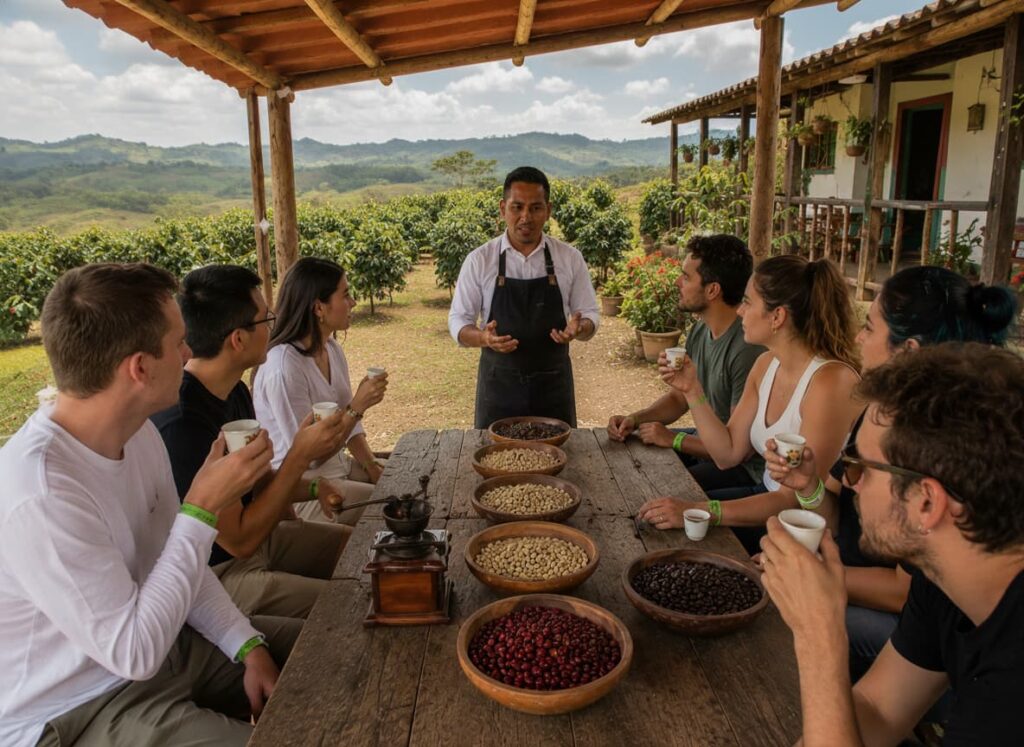
t down with the farm's baristas for a focused coffee tasting lesson, learning to identify the characteristics of high-quality Colombian coffee while enjoying a fresh, flavorful cup.
Walk through the picturesque streets of Salento — the most admired coffee town in the region — exploring its Paisa architecture and local handicraft shops before heading back.
What's Included
Private transportation to and from Finca Luger.
Expert guide and coffee specialist for the full farm tour.
Hands-on participation in coffee planting, picking, and roasting.
Coffee tasting session with barista instruction.
Guided walking tour of Salento town.
What's Excluded
Personal Purchases and Gratuites.
Breakfast and Lunch.
Know before you book
Wear comfortable, closed-toe shoes — the farm involves walking through uneven terrain and soft soil on the coffee plantations.
Dress in layers — the Eje Cafetero region is known for variable weather, with cool mornings that warm up through the day and the occasional afternoon shower. A light jacket is recommended.
This tour involves light outdoor activity at moderate altitude. If you have any health concerns, please contact us before booking so we can advise.
The tour visits Salento town, which is a short drive from the farm. Bring a small amount of cash if you'd like to browse the local craft shops — they don't always accept cards.
The tour runs in all weather conditions. Coffee farming happens rain or shine, and your guide will keep the experience engaging regardless of the forecast.
More Info
Cancellation Window
12 hours before starting date.
Difficulty
Easy
Cancellation policy
Free cancellation up to 12 hours before departure. Cancellations made within 12 hours of the tour start time are non-refundable.
Guest Reviews
Why Book With Cielo
1,200 five-star reviews from real travelers — read them before you book.
Best Price Guarantee — find this tour cheaper elsewhere and we'll match it.
Private transportation door-to-door — no shared shuttles, no waiting around for strangers.
Booking directly with us means your money stays with a Colombian-owned company, not a platform commission.
Our team coordinates everything — pickup timing, pilot briefing, and return logistics — so you focus only on the flight.
Other Info
A Coffee Farm Tour at Finca Luger: Plant, Pick, Roast, and Taste in the Heart of the Eje Cafetero
A coffee farm tour in Colombia’s Eje Cafetero puts you inside a world that most travelers only see from a distance — the actual fields, the actual process, and the people who have maintained it for generations. This tour, set at Finca Luger in the heart of the Coffee Region, goes further than a standard farm visit: you’re not an observer here. You plant, you pick, you roast, and you taste what results from the work.
Finca Luger has been operating as a working coffee farm for over a hundred years. It sits in the green hills that define the Eje Cafetero landscape — the same terrain that earned this part of Colombia a UNESCO World Heritage designation for the cultural landscape created by coffee farmers across generations. The farm is a functioning unit, not a museum piece, and that distinction matters on the ground. The coffee growing in the fields is the same coffee being processed, roasted, and prepared for the tasting session at the end of your visit.
Walking the Farm: From Seedling Bed to Ripe Cherry
The morning begins with a walk through the different areas of the farm guided by a coffee specialist who has worked here long enough to know every corner of the operation. You start in the seedling beds, where the cycle begins — young plants just starting their long journey from seed to harvest. You’ll plant a seed yourself here, which gives you a tangible connection to the process before you move further along the chain.
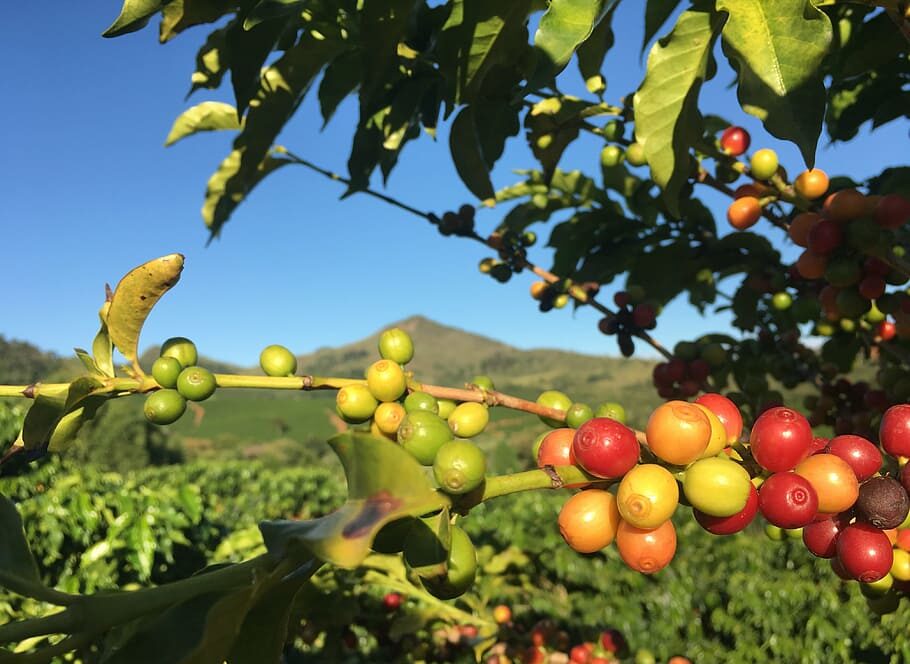
From there, you reach the coffee bushes in full production, laden with cherries in various stages of ripeness. Your guide explains how to identify a ripe cherry — color, texture, the way it gives under pressure — and then you pick them, filling your basket the same way workers do during harvest season. The picking section is where the labor economics of Colombian coffee become visceral: the rate at which a skilled picker fills a basket, the weight of the harvest, and the relationship between that physical work and the price of a cup in a European café are things your guide addresses directly.
For travelers who want to understand the regional variation of Colombian coffee production across multiple farms and microclimates, the Secret Coffee Tour in Quindío covers three towns, three farms, and three brewing methods in a single day — the comparative version of what Finca Luger delivers in depth at a single estate. The Cocora Valley and Coffee Farm Private Tour combines the farm experience with the wax palm valley and Salento in a full private day — the natural extension of this tour for travelers who want both the agricultural and the ecological story of the region.
How a Cherry Becomes a Cup: The Processing Stages
After the picking, you follow the harvest toward the processing stages. Coffee cherries don’t become coffee automatically — they pass through pulping, drying, and eventually roasting, each step changing the flavor profile of the final cup. You’ll watch and participate in the roasting stage, where the green beans transform under heat into the darker, aromatic product you recognize. Watching the whole chain in sequence — from seed in soil to roasted bean — makes the economics and the craft of Colombian coffee genuinely legible in a way that no café menu or travel article can quite replicate.
The processing logic explained here is the same logic behind the Coffee Farm Hacienda La Coloma Day Tour just outside Bogotá — de-pulping, washing, drying, roasting, applied to a different microclimate and a different variety. Travelers who do both tours come away with a comparative understanding of how geography shapes coffee flavor that neither tour provides alone. Hacienda La Coloma operates at the warmer, lower altitude of Fusagasugá; Finca Luger operates at the cooler mid-altitude of the Eje Cafetero. The difference is in the cup, and the tasting session at the end of this tour is where that difference becomes experiential rather than theoretical.
Salento: The Town That Shaped the Region’s Identity
The Salento portion of the tour offers a different kind of context. Colombia’s coffee towns are as much a part of the Coffee Region’s identity as the farms themselves, and Salento is the most photographed and visited of them for good reason. The town’s streets are lined with painted Paisa-style buildings in yellow, blue, green, and red — the architectural tradition brought to the region by Antioqueño settlers in the 19th century. The central square is quiet enough to feel like a real town rather than a set piece, and the handicraft shops along the main street carry local textiles, leather goods, and coffee-related products worth browsing. Your guide walks you through with enough commentary to make the architecture and history meaningful, not just scenic.
The Paisa architectural tradition visible in Salento’s painted wooden balconies and colorful facades is the same tradition that produced the heritage towns of Jardín and Santa Fe de Antioquia — and that the Full Day Filandia, Salento and Cocora Valley Tour covers alongside the wax palm valley for travelers who want both the towns and the natural landscape in a single extended day.
The Tasting Session: The Same Coffee You Just Roasted
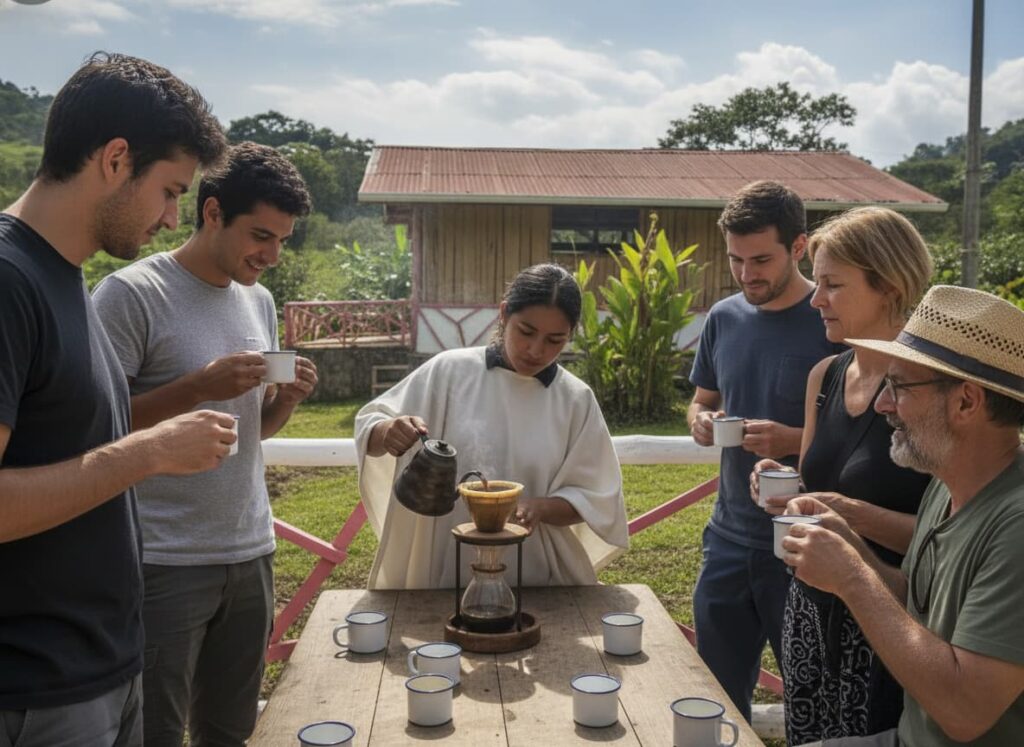
The tour closes with a coffee tasting session led by Finca Luger’s baristas. This is not a casual coffee break — it’s a structured lesson in recognizing the specific qualities of Colombian highland coffee: the floral notes that come from altitude, the clean acidity that distinguishes washed-process beans, the body and finish that vary depending on the drying method and roast level. You’ll taste the same coffee you just watched being roasted, which gives the session a continuity that a café tasting can’t replicate. By the end, most guests report that they will never drink coffee quite the same way again.
The specialty coffee movement that has brought high-quality Colombian beans back into domestic consumption is the same movement whose urban expression you encounter at the neighborhood café at the end of the Food Tour in La Candelaria in Bogotá, or in the final coffee stop on the La Candelaria Walking Tour. Finca Luger is the source end of that story — the farm whose production philosophy, roasting decisions, and quality standards determine what ends up in the cup two thousand kilometers away.
What to Wear and What to Expect
The Eje Cafetero sits at moderate altitude — typically between 1,400 and 1,800 meters above sea level. The climate is mild and humid, days are warm and evenings cool, and afternoon showers are common. The farm terrain involves soft soil and uneven ground, so closed-toe shoes and comfortable clothing are the right call. The tour is appropriate for most fitness levels — there’s no serious hiking involved, just the natural movement of working a farm on gentle slopes.
Continue Exploring the Coffee Region
For travelers spending more time in the Eje Cafetero, the Cocora Valley and Coffee Farm Private Tour extends your time in the region with the iconic wax palm forests of the Cocora Valley added to the itinerary — Colombia’s national tree at its full height, reached on foot through the valley that the UNESCO designation was partly built around. The Secret Coffee Tour in Quindío covers the towns that most Eje Cafetero visitors never reach — Buenavista, Pijao, and Córdoba — in a day that covers three farms and three brewing methods for travelers who want the regional breadth rather than the single-estate depth. The Manizales City Tour takes you to the coffee region’s most undervisited city — a neo-Gothic cathedral you can climb, a working cable car transit system, and the snow-capped peaks of Los Nevados visible on clear afternoons.
Ready to spend a morning working a coffee farm at the source? Book the Finca Luger Coffee Farm Tour above and your guide will take care of everything from hotel pickup to the final drop-off — all you have to do is bring closed-toe shoes and show up ready to work.
See the rest of what we run there: all our tours in the Coffee Region.
Before you go: our Coffee Region guides
Written by the team that runs this tour.
FAQs
You'll take an active part in the entire production process at Finca Luger. That means planting seeds in the seedling beds, picking ripe coffee cherries from the bushes, and following the bean through roasting — and sometimes grinding. At the end, you'll sit with the farm's baristas for a tasting session where they explain what makes Colombian coffee distinctive. This is hands-on, not just a walk-through.
None at all. The tour is designed for curious travelers with zero farming background. Your guide and the farm's coffee expert explain everything clearly as you go, and all activities are appropriate for adults and older children.
Salento is a small, colorful Paisa town widely considered one of the most charming in Colombia — and it sits at the heart of the Coffee Region. Including it gives you a feel for local life beyond the farm: the painted facades, the craft shops, the town square. It's a short visit, but it adds real context to the coffee landscape you've just spent the morning inside.
Yes. The tour is led in English, and your guide can also help you interact with baristas and local vendors during the Salento portion so you can ask questions and get genuine answers.
Closed-toe shoes are important — the farm has uneven soil and grass paths. Dress in layers for the Coffee Region's variable weather, and bring a light rain jacket. A small amount of cash is useful if you want to buy anything in Salento's craft shops.
Related Tours


Secret Coffee Tour Experience: Three Hidden Towns in Quindio
Coffee Region
Private
The Secret Coffee Tour in Quindío: Three Towns, Three Farms, and the Colombia Most Travelers Never Reach If you’re searching…
$$$
8 hours

Exclusive Cocora Valley & Coffee Farm Private Tour
Coffee Region
Private
A Cocora Valley Tour is one of the most rewarding day trips you can take in Colombia — and doing…
$$$
8-10 hours

Paragliding Day At Buenavista
Coffee Region
Private
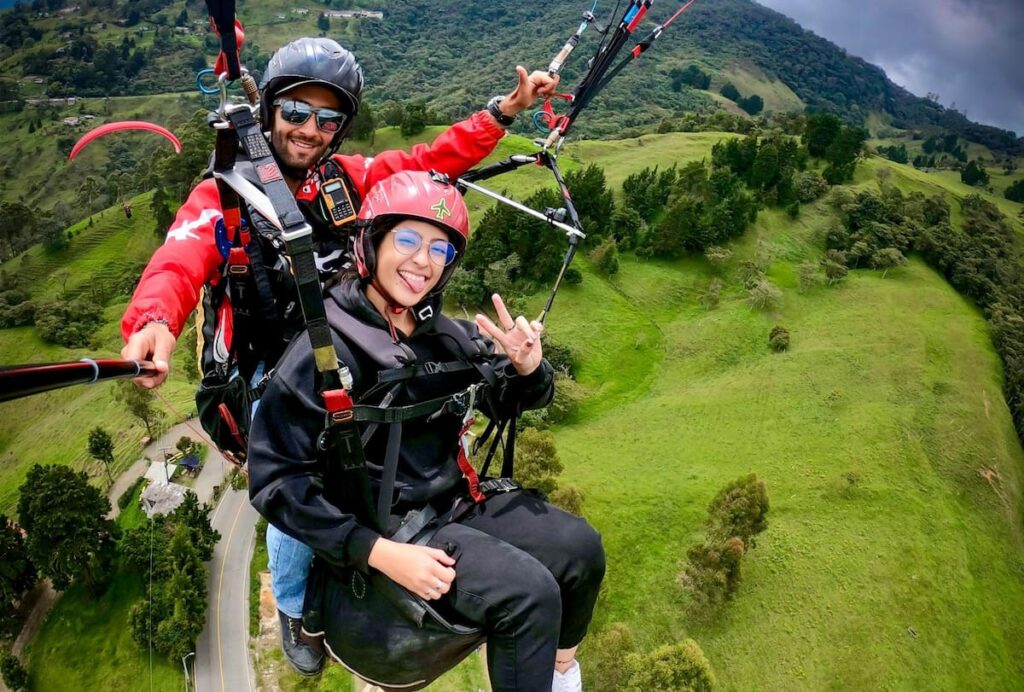
A Paragliding Day Tour to Buenavista: Flying Over the Coffee Region’s Ridgelines and Farms A paragliding day tour to Buenavista…
$$
3 hours