
+ 1,200 verified five-star reviews for Cielo.Travel on Google and TripAdvisor.
Duration
Tour Type
Pricing
Languages
Overview
Cali is Colombia’s third-largest city and one of its most misread — a place where the African diaspora shaped an entire musical form, where colonial history and urgent present-tense debates occupy the same block, and where salsa isn’t a genre but a posture, a footwork, a way of moving that the city developed independently and has never stopped defending. This private 4.5-hour tour is built to give you the actual city, not the postcard version.
From the altitude of Cristo Rey — where a monument to peace built after a decade of civil war looks out over the full Valle del Cauca — to the colonial hillside streets of San Antonio, where artists and writers have lived for generations, the tour moves through Cali’s layers with a guide who knows how to make them legible. The boulevard where salsa became a physical place, the bronze cat on the riverbank, the contested statue of the city’s Spanish founder: each stop carries more history than it appears to at first glance, and that’s exactly the point.
Itinerary
Highlights
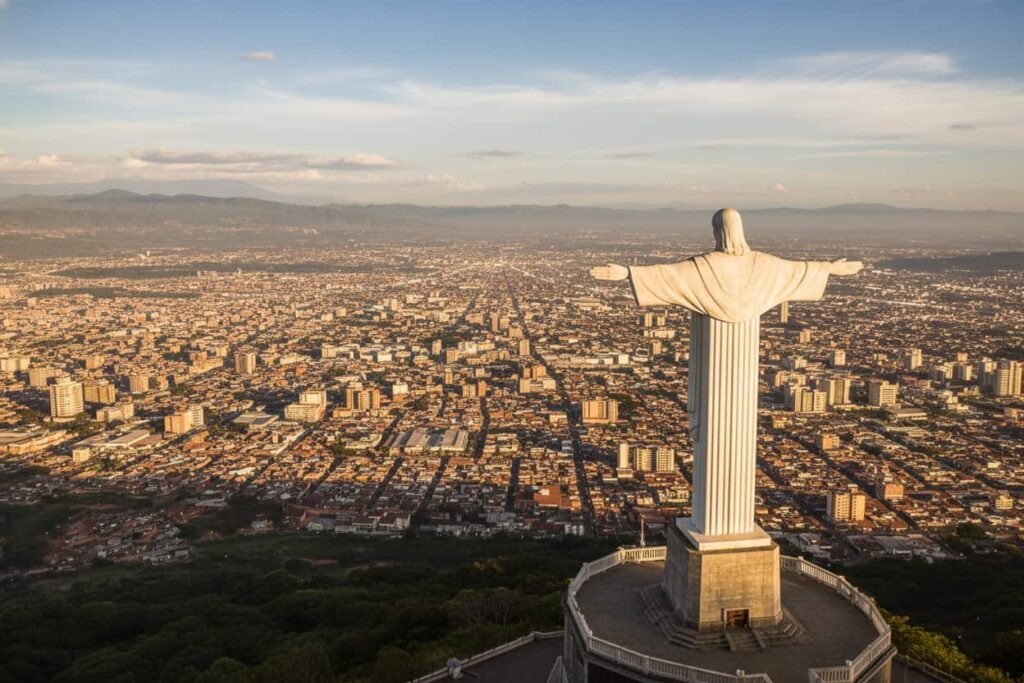
Ascend to Cristo Rey and take in the full sweep of Cali from above — the city spread across the Valle del Cauca with the Western Andes rising behind it.
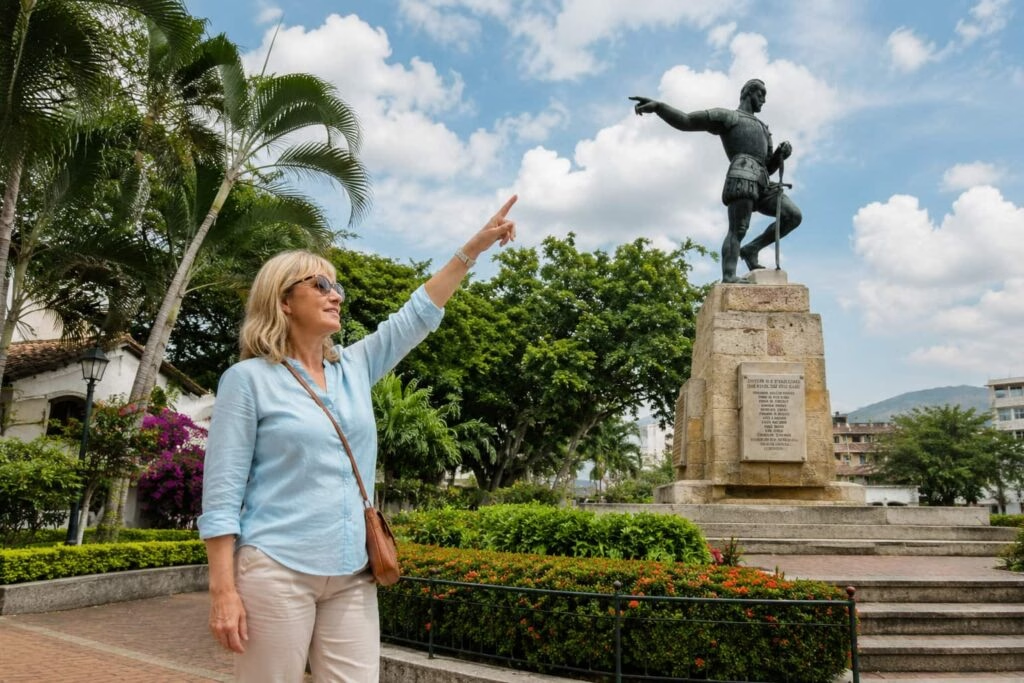
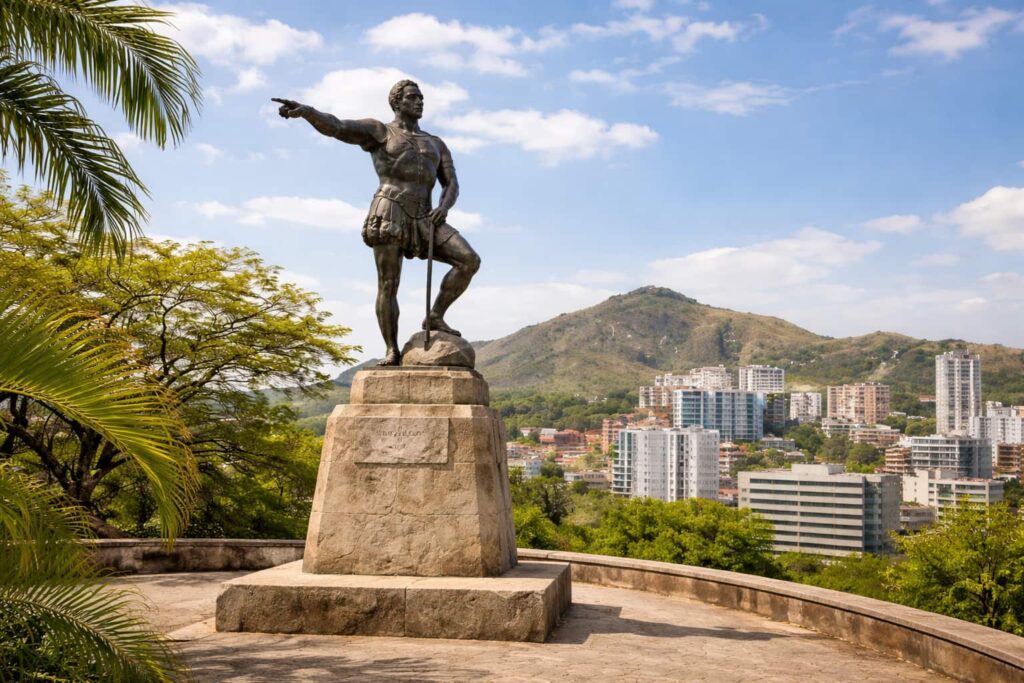
Visit the Sebastián de Belalcázar Hill, where the statue of Cali's Spanish founder overlooks the city he established in 1536, and your guide puts that founding story into honest context.
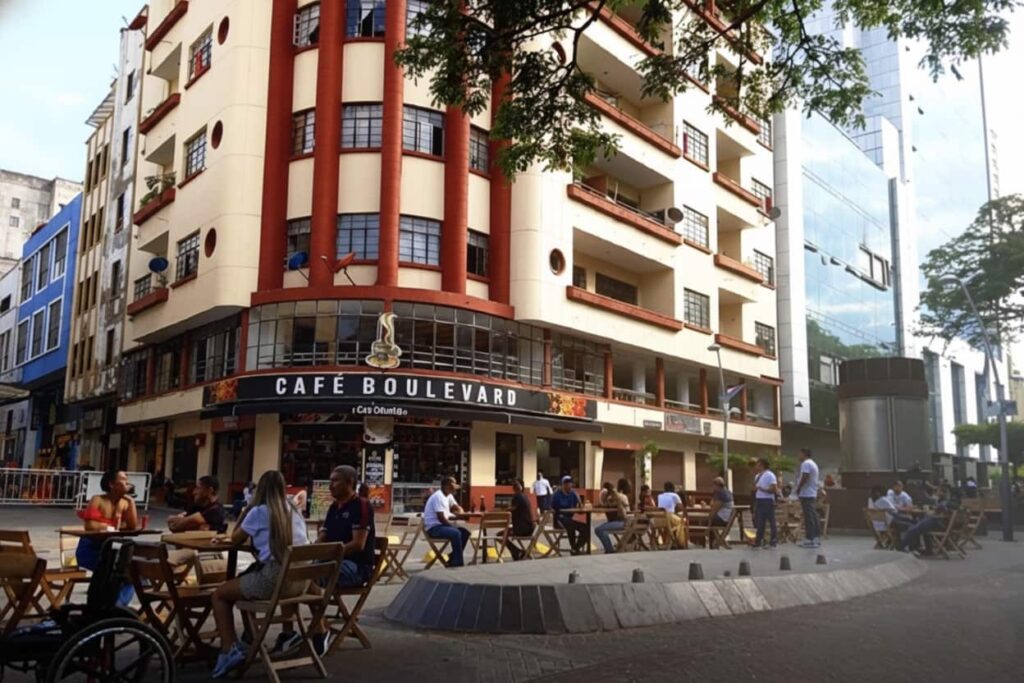
Walk Bulevar del Río — Cali's cultural and entertainment spine — where the salsa clubs, murals, and river-facing terraces show you why this city moves the way it does.
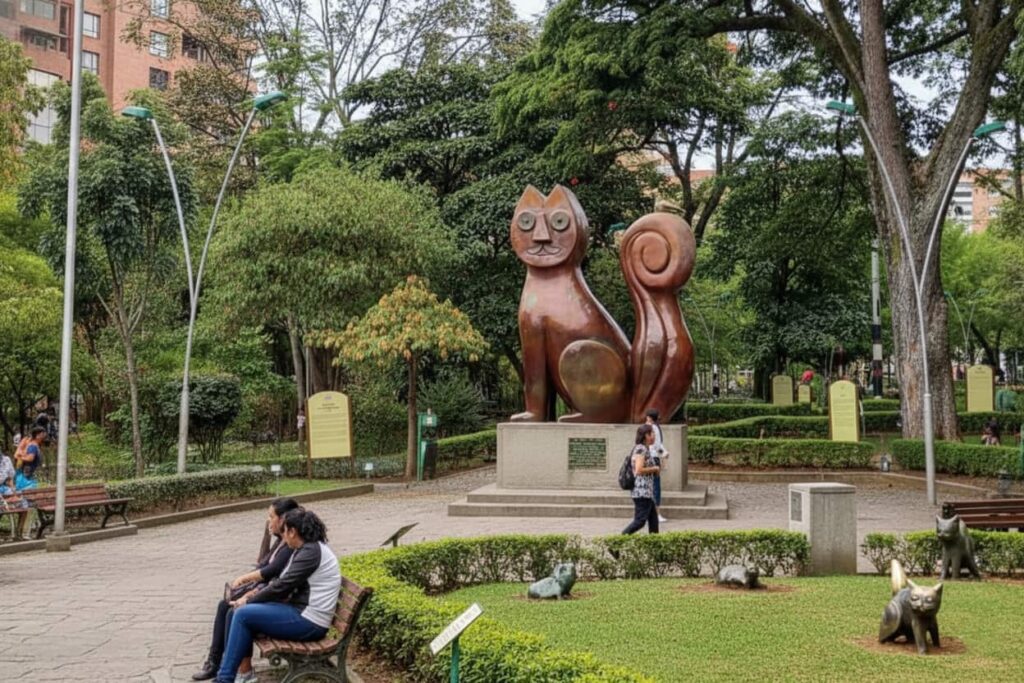
Meet the Gato de Tejada, Hernando Tejada's iconic 1996 bronze cat on the banks of the Cali River, surrounded by smaller sculptures made by other artists as a public art initiative.
Finish in San Antonio, Cali's bohemian colonial neighborhood — steep streets, painted houses, a hilltop chapel, and a pace that belongs to a different century entirely.
What's Included
Private certified bilingual guide (English/Spanish) for the full tour.
Private transportation for the city tour portion.
Visit to Cristo Rey viewpoint.
Visit to Sebastián de Belalcázar Hill.
Visit to Bulevar del Río and Gato de Tejada.
Walking tour through San Antonio neighborhood.
What's Excluded
Return transfer from San Antonio to your hotel (tour ends in San Antonio).
Food and drinks.
Tips and gratuities.
Personal Purchases.
Know before you book
The tour ends in the San Antonio neighborhood, not at your hotel. Return transportation to your accommodation is not included — your guide can recommend taxis or rideshare options from San Antonio.
Wear comfortable walking shoes. The Belalcázar Hill and San Antonio neighborhood both involve walking on uneven ground and inclines.
Cali sits at approximately 1,000 meters above sea level and has a warm, tropical climate year-round. Light, breathable clothing is recommended, with a layer for the morning if you start early.
The Cristo Rey area is much more exposed to sunrays — bring sunscreen and water.
This tour is conducted in English and Spanish. Your guide speaks both — let them know your preference at the start of the tour.
Morning departures are recommended for cooler temperatures and clearer views from the hilltop stops. The city gets busier and warmer through the afternoon.
More Info
Cancellation Window
12 hours before starting date.
Difficulty
Easy
Cancellation policy
Free cancellation up to 12 hours before departure. Cancellations made within 12 hours of the tour start time are non-refundable.
Guest Reviews
Why Book With Cielo
1,200 five-star reviews from real travelers.
Best Price Guarantee — find this tour cheaper elsewhere and we'll match it.
Every tour is private — your guide and vehicle are yours alone, not shared with strangers on a different schedule.
You are booking directly with a Colombian-owned company.
Our guides are English-speaking Colombian locals — people who know Cali personally, not contractors reading from a script.
Other Info
A Private Cali City Tour: Monument, River, Rhythm, and the Neighborhood That Stays Itself
Cali is Colombia’s third-largest urban center, a place where the African diaspora shaped an entire musical form, where the colonial past and the present sit on the same block, and where the word “salsa” refers to something specific — a style, a posture, a way of moving that Cali developed independently and has defended ever since. This private 4.5-hour tour moves through the city’s layers with a guide who knows how to make them legible: the monument built after a decade of civil war, the boulevard where salsa became a physical address, and the hillside neighborhood where the city’s artists and intellectuals have lived for generations — the part of Cali that most visitors never reach because they run out of time on the boulevard.
Cristo Rey and the Belalcázar Viewpoint: History on the Hill
Cristo Rey stands on Cerro de los Cristales at 1,440 meters above sea level — high enough above the city floor to see the full urban spread of Cali across the Valle del Cauca, with the Western Andes rising on the far side. The statue itself — 26 meters of reinforced concrete, constructed between 1950 and 1953 — was built in the aftermath of La Violencia, the decade of civil conflict that killed hundreds of thousands of Colombians and left the country fractured along political, regional, and class lines. It was meant as a monument to peace. Your guide explains that context, which changes how you look at it: this is not a decorative landmark but a scar in concrete, built by a society that had just survived something it needed to mark.
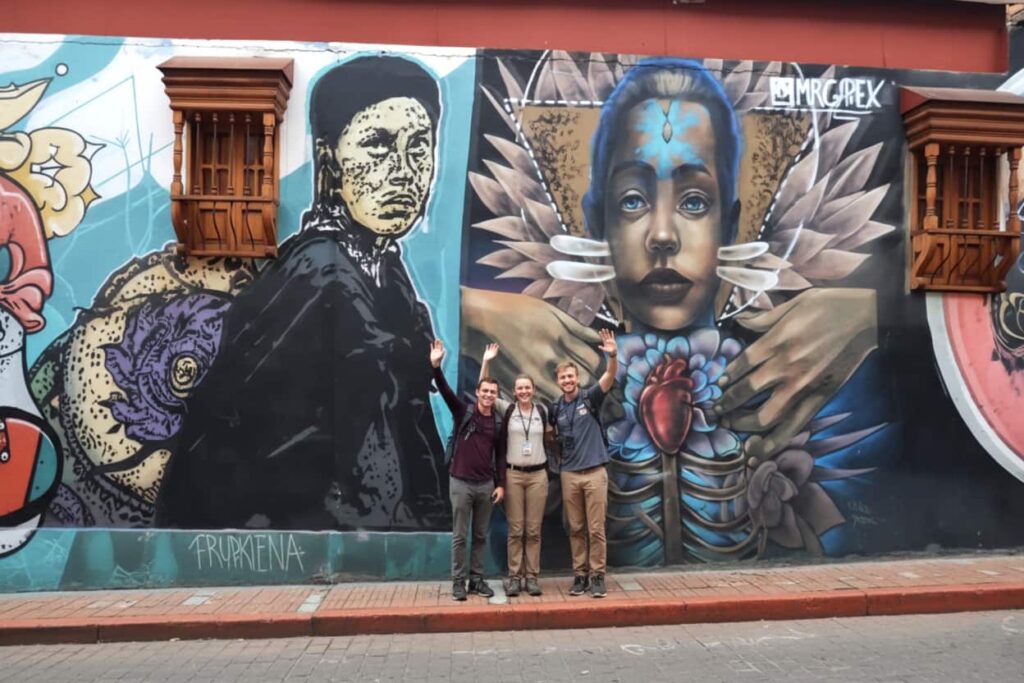
From the same hill, you move to the Sebastián de Belalcázar viewpoint. The equestrian statue of Cali’s Spanish founder has stood here since 1937. Belalcázar founded the city in 1536 on the territory of the Pubenza people — a fact that Colombians have debated with increasing directness in recent years, most visibly in 2020 when the statue was toppled by protesters and later restored. Your guide navigates that history honestly, because understanding the debate is part of understanding the city. The same tension between official monument and community memory runs through Getsemaní in Cartagena — covered in depth on the Cartagena City Tour — and through the murals of La Candelaria in Bogotá, read on the Bogotá Graffiti Tour. Cali’s version of that conversation is happening on this hill, and your guide is the right person to explain why.
Bulevar del Río: Where Salsa Became a Physical Place
Bulevar del Río is where Cali’s relationship with salsa becomes a physical place rather than an abstraction. The boulevard runs along the Cali River through the Centenario neighborhood — a stretch of clubs, open terraces, murals, and public plazas that functions as the city’s cultural main street. The Plazoleta Jairo Varela honors the founder of Grupo Niche, one of the most influential salsa orchestras in Latin American history, with the only musical monument in Colombia: a giant piano and trumpets installed in the plaza, at a scale that makes the instrument’s relationship to the music it produced physically present in a way that a museum exhibit never could.
Salsa caleña — the Cali style — arrived in the city in the 1950s and 1960s through records smuggled from Cuba and New York, and was transformed in the working-class barrios of Juanchito and Agua Blanca into something entirely local. The footwork is faster, the upper body quieter, the connection to the music more rhythmic than theatrical. Every city in Colombia dances salsa; only Cali dances it this way. Your guide explains the distinction in terms you can hear and see on the boulevard — not as musicology but as lived cultural identity, the way a Caleño explains it to someone who genuinely wants to understand. For travelers who want to go beyond understanding into participation, the Private Salsa Lesson in Cali takes you into a studio with a professional local instructor for two hours of footwork, timing, and the specific technique that makes the Cali style what it is.
A short walk from the boulevard brings you to the Gato de Tejada — Hernando Tejada’s bronze cat installed on the banks of the Cali River in 1996. The cat is large, serene, and surrounded by dozens of smaller sculptures created by other artists as part of a public art initiative to beautify the riverbank. It has become one of the most recognizable landmarks in the city and one of the best photo stops on any Cali tour.
San Antonio: The Neighborhood That Isn’t Performing for Anyone
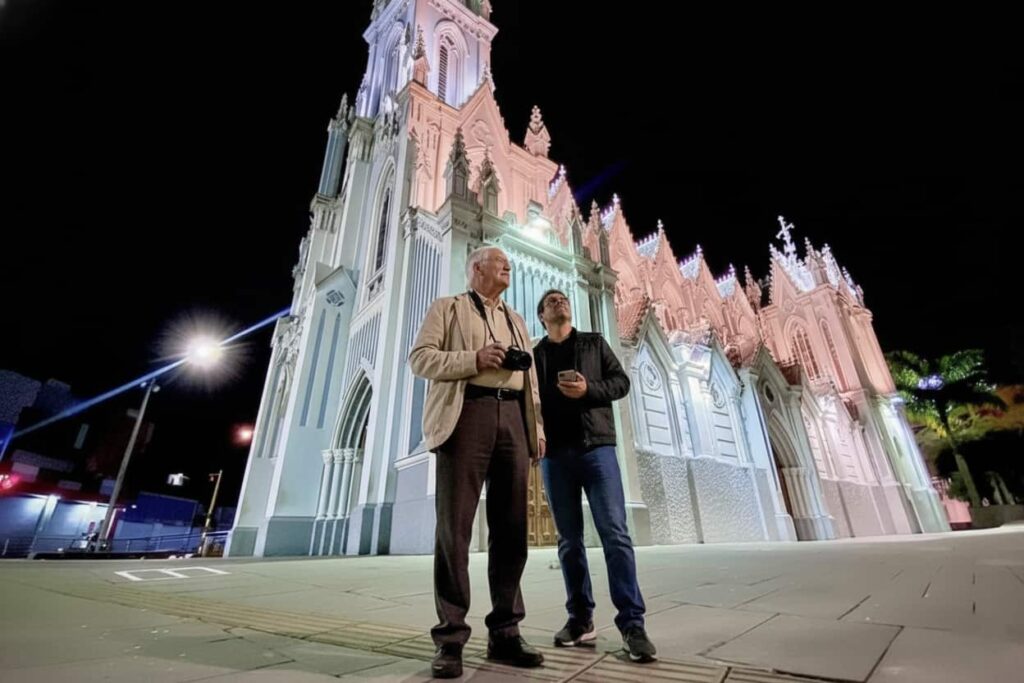
The tour ends in San Antonio, the neighborhood that most captures what Cali looks like when it isn’t performing for anyone. Declared an Urban Landmark in 2000, San Antonio sits on a hillside in the western part of the city. Its streets are steep and narrow, its houses are colonial-era and painted in warm colors, and the Iglesia de San Antonio — built in the 18th century — sits at the top of the hill above a small plaza where locals gather in the late afternoon. The combination of hillside position, preserved architecture, and unhurried daily pace gives San Antonio a quality that Cali’s more touristed areas don’t have: the feeling of arriving somewhere that exists for its own reasons rather than for yours.
San Antonio has been the home of Cali’s artists, writers, and intellectuals for generations. It has boutique hotels, coffee shops, galleries, and restaurants that cater to people who want to stay in the neighborhood rather than pass through it. Your guide walks you through the history of the barrio and the stories behind specific houses and corners before leaving you to explore on your own terms. If you want to extend your time in Cali’s salsa culture beyond the tour — lessons, live performances, late-night venues — ask your guide for specific recommendations while you’re still in San Antonio. They know the difference between tourist venues and where Cali actually dances.
Continue Exploring Cali and the Region
Cali rewards more than a single day, and the city tour pairs naturally with experiences that extend in different directions. The San Cipriano River Adventure Tour takes you two hours south into the Pacific lowlands — jungle, a river running cold from the Sierra Nevada, and the brujita, the motorcycle-powered rail platform that is the only way into the reserve — a completely different Colombia from the one you see on the boulevard. For travelers interested in the colonial agricultural history of the Cauca Valley, the Sugar Cane El Paraíso Hacienda Tour covers one of Colombia’s most beautiful historic landscapes. And for those heading further up the coast after Cali, the Cartagena City Tour continues the Caribbean story that Cali’s Afro-Colombian heritage connects to.
Ready to see what makes Cali worth a longer stay? Book the Cali City Tour above and your guide will handle the route, the stories, and the stops — all you have to do is show up curious.
See the rest of what we run there: all our tours in Cali.
Before you go: our Colombia guides
Written by the team that runs this tour.
FAQs
Your guide picks you up from your hotel or accommodation at the start of the tour. The tour ends in the San Antonio neighborhood, where you're free to stay and explore. Return transportation to your hotel is not included — your guide will help you arrange a taxi or rideshare from San Antonio before they leave.
The tour combines private vehicle transport between sites with walking sections at each stop. The most walking happens in San Antonio, where the neighborhood is best explored on foot. The terrain at Belalcázar Hill and San Antonio includes some inclines and uneven surfaces. Overall pace is easy and relaxed.
Access to Cristo Rey can occasionally be restricted. Your guide monitors access conditions and, if the summit is temporarily closed, will take you to the best available alternative viewpoint in the area — the views over Cali are still excellent. This is one reason having a local guide matters.
Yes — the Bulevar del Río and Plazoleta Jairo Varela stop puts you in the physical and cultural center of Cali's salsa scene. Your guide explains the history and distinct style of salsa caleña. If you want to go deeper into the salsa experience — lessons, live music, nightlife — ask your guide for recommendations while you're in San Antonio.
Light, comfortable clothing suited to warm weather — Cali is at 1,000 meters and stays warm year-round. Comfortable shoes with grip are important for the hillside stops and San Antonio's cobblestone streets. Bring sunscreen and water for the outdoor viewpoints.
Because it's a private tour, your guide can adjust the pace and time at each stop based on your group's interests. If you want more time in San Antonio or at Bulevar del Río, just say so at the start of the day.
Related Tours

Cali City Tour: the Salsa Capital’s Secret Corners
Cali
Private, Shared
A Private Cali City Tour: Monument, River, Rhythm, and the Neighborhood That Stays Itself Cali is Colombia’s third-largest urban center,…
$$$
4 - 5 hours

Arvi Park Tour: Cable Car and Water Streams in Medellín
Medellín
Private, Shared
The Arví Park Tour in Medellín: Cable Car, Indigenous Trails, and the Forest Above the City The Arví Park Tour…
$$$
6 hours
Bogotá Graffiti Tour: 3-Hour Street Art Walk Through La Candelaria
Bogota
Private
A Bogotá Graffiti Tour: Three Hours Reading La Candelaria’s Walls A graffiti tour in La Candelaria is one of the…
$$
3 hours