
+ 1,200 verified five-star reviews for Cielo.Travel on Google and TripAdvisor.
Duration
Tour Type
Pricing
Languages
Overview
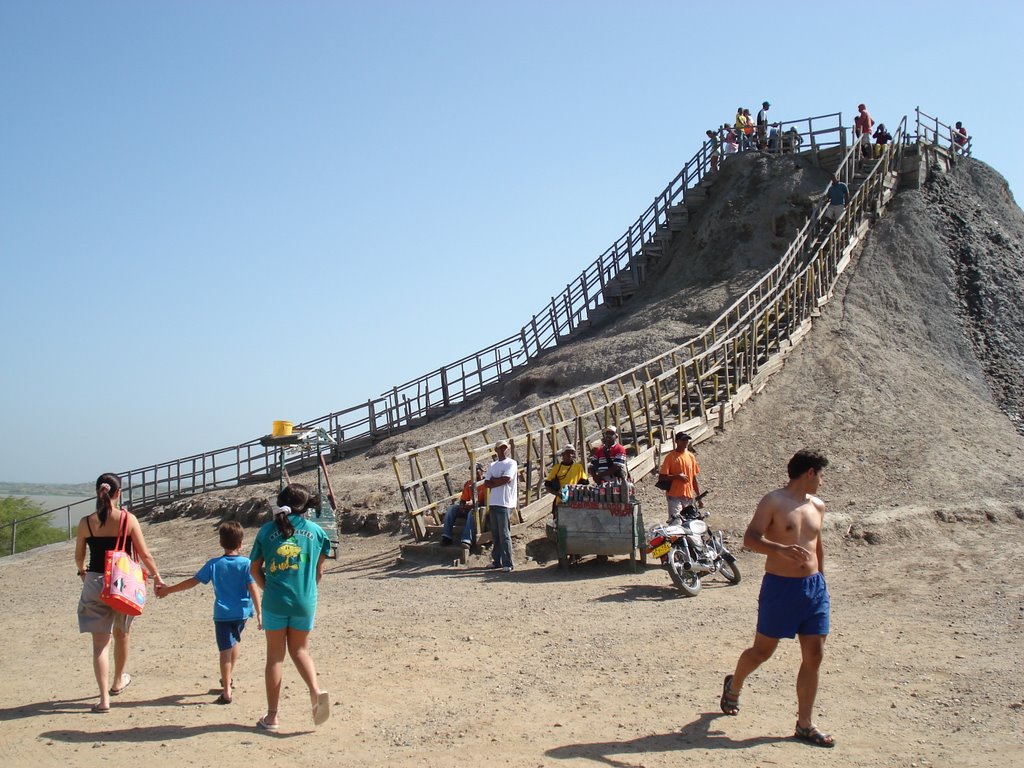
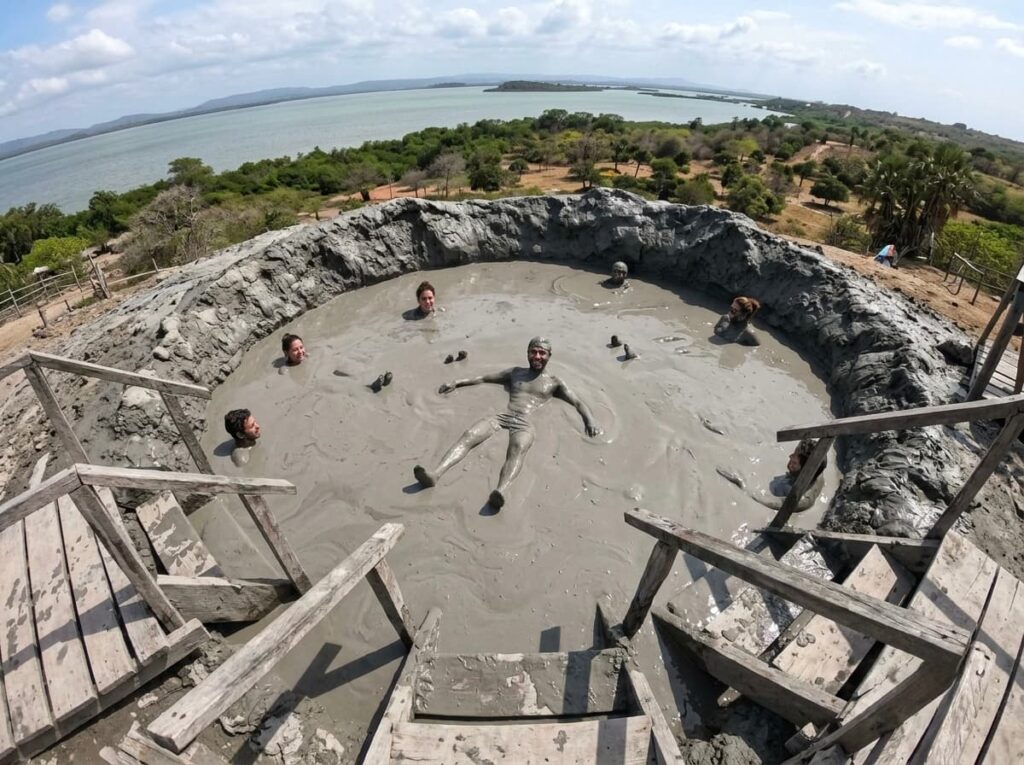
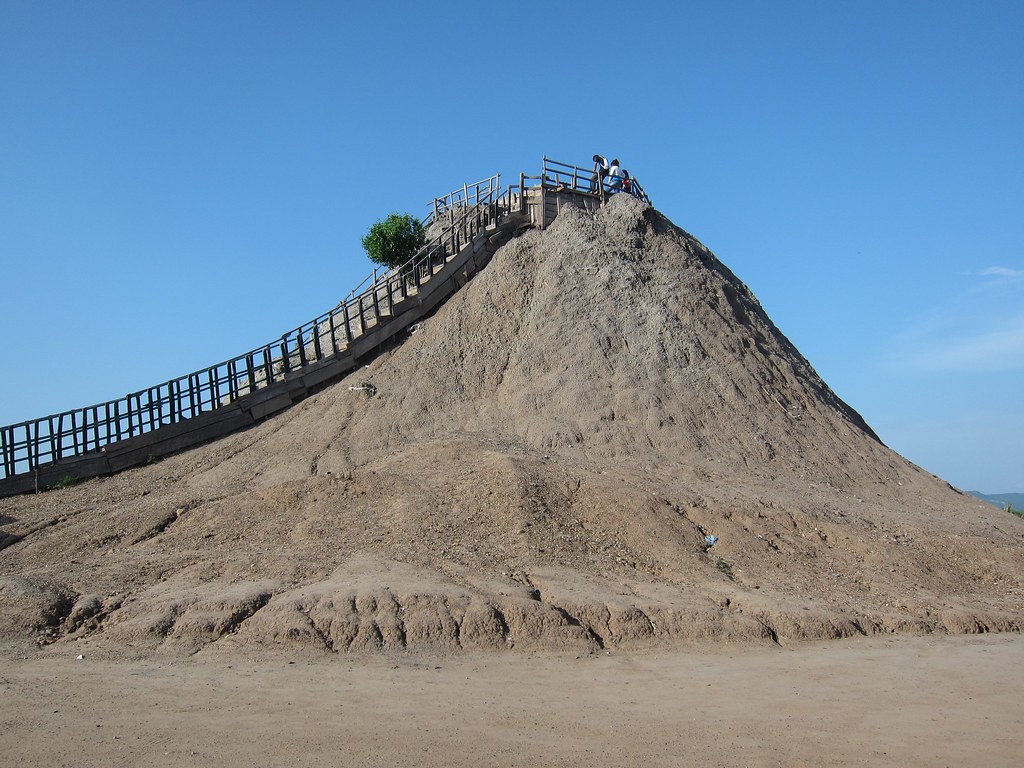
El Totumo is a real volcano — a 15-meter cone of hardened clay that produces warm, mineral-dense mud instead of lava, pushed up from the earth by the same geological pressure that drives conventional volcanism. You climb a wooden staircase to the rim and step into a crater where the mineral content of the mud is high enough that your body floats at the surface regardless of how you move. Local masseurs work the edges. The sulfur, calcium, and mineral compounds in the clay act as a natural exfoliant, and the skin softness after the rinse-off in the Totumo lagoon — conducted by local women who have been washing mud off visitors for decades — is noticeable and immediate. The crater is a public space shared with other visitors; the guide, transport, lunch, and beach time are entirely private.
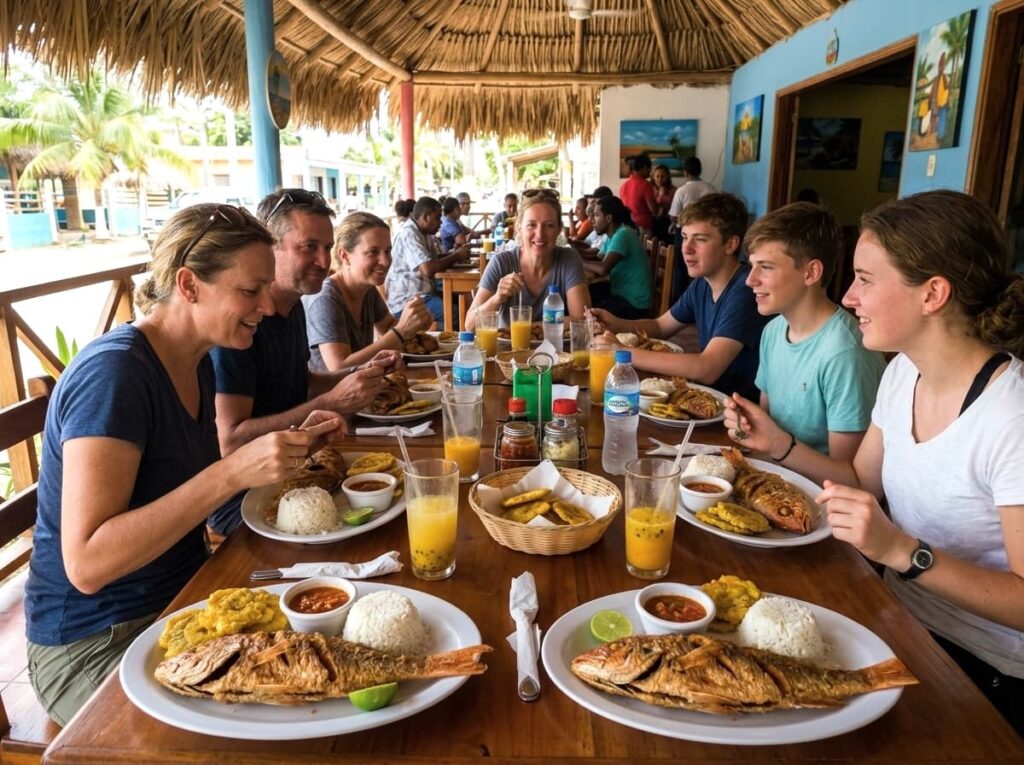
The day extends an hour north of Cartagena into the flat Caribbean lowlands that most visitors to the city never reach. A traditional lunch in Manzanillo — fried or stewed fish, coconut rice, patacones, at a local restaurant with local prices and local portions — is followed by four and a half hours on a stretch of coast with fewer vendors, fewer tourists, and more space than the beaches closer to the city. What the tour gives you that a standard Cartagena day doesn’t is movement and contrast: the colonial walls and the tourism infrastructure of the Walled City are a genuine experience, and so is the ordinary coastal landscape an hour up the road. Bring a swimsuit, a change of dry clothes, a towel, and old clothes you don’t mind getting muddy.
Itinerary
Highlights
Bathe in El Totumo — Colombia's smallest volcano — a mud crater whose warm, thick, mineral-rich mud works as a natural exfoliant for the skin and is said to improve circulation and ease muscle and joint pain.
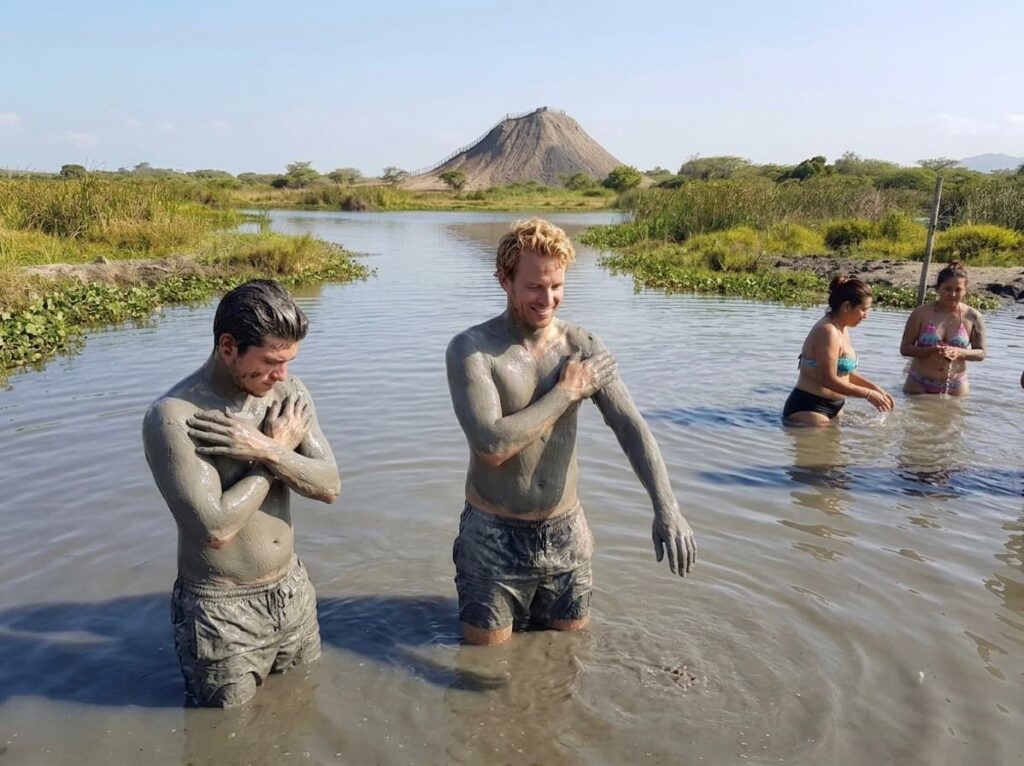
Rinse off in the Totumo swamp lagoon at the base of the volcano, where local women help wash the mud from your hair and body — an essential and entertaining part of the experience.
Eat a traditional Caribbean lunch in the town of Manzanillo: fried or stewed fish, rice with coconut, salad, and patacones — a crunchy green plantain snack that is a staple of Colombia's Caribbean coast.
Spend the afternoon at Manzanillo beach — quieter and less crowded than the beaches inside Cartagena, and a genuine look at the less-touristic side of this stretch of the Caribbean coast.
Get outside Cartagena for the day and see a completely different side of the Caribbean region — El Totumo, the swamp, and Manzanillo together form an experience that few visitors to the city ever take.
What's Included
Private English-speaking guide.
Pickup and drop-off in private transportation.
Traditional lunch.
Entrance to El Totumo volcano.
What's Excluded
Extra entrances.
All risk insurance.
Know before you book
Bring a swimsuit and a complete change of clothes — you will be covered in mud at El Totumo and will rinse off in the swamp before continuing to Manzanillo. Dry clothes for the beach and the return are essential.
El Totumo is a public place and is maintained by the local community. The volcano crater may have other visitors inside at the same time as your group — the rest of the tour (guide, transport, lunch, beach time) is entirely private.
This tour does not offer vegan options for the traditional Caribbean lunch. The meal is based on local seafood and meat dishes. If you have dietary restrictions, let us know when you book.
The weather in Cartagena is warm year-round — typically above 27°C. Bring sunglasses, a hat, and sunscreen, especially for the beach section at Manzanillo. Comfortable sneakers or sandals are suitable footwear.
The drive from Cartagena to El Totumo takes approximately one hour each way. The full day runs 7 hours from hotel pickup to drop-off.
More Info
Cancellation Window
12 hours before starting date
Difficulty
Easy
Cancellation policy
Free cancellation up to 12 hours before departure. Cancellations made within 12 hours of the tour start time are non-refundable.
Guest Reviews
Why Book With Cielo
1,200 five-star reviews from real travelers — read them before you book.
Best Price Guarantee — find this tour cheaper elsewhere and we'll match it.
Private transportation door-to-door — no shared shuttles, no waiting around for strangers.
Booking directly with us means your money stays with a Colombian-owned company, not a platform commission.
Our team coordinates everything — pickup timing, pilot briefing, and return logistics — so you focus only on the flight.
Other Info
The El Totumo mud Volcano tour from Cartagena is one of those experiences that travelers either know about before they arrive in Colombia or discover the day before they leave and regret not booking earlier. El Totumo is a real volcano — just not the kind that erupts with lava. Instead of magma, it produces warm, mineral-dense mud that pushes up from the earth and fills a crater at the top of a 15-meter cone. You climb a wooden staircase to the rim, step in, and immediately understand why the place has been drawing visitors since long before the tourism industry noticed it. The day extends beyond the volcano into the flat Caribbean lowlands north of Cartagena — a traditional lunch in Manzanillo and an afternoon on a stretch of coast that most visitors to the city never reach.
El Totumo: What a Mud Volcano Actually Is
El Totumo is not a geological metaphor or a tourist construction. It is a real volcano — a cone of hardened clay and sediment, 15 meters high, produced by the same tectonic forces that create conventional volcanoes. The difference is what comes up through the vent. Where a lava volcano produces magma from the mantle, El Totumo produces mud: warm, mineral-saturated clay pushed up from the earth by gases and geological pressure in a process that has been continuous for as long as the local community can remember. The cone has the classic volcanic shape — steep sides, a crater at the summit — and it sits in the flat Caribbean lowland landscape north of Cartagena with the improbable authority of something that has been here for a very long time.
The geological explanation for mud volcanoes involves the same basic mechanics as lava volcanoes — pressure, heat, and material finding a path to the surface — but the material in this case is a mixture of water, fine clay, and dissolved minerals from deep in the earth. At El Totumo, the specific mineral composition of that mixture includes sulfur, calcium, and a range of other compounds that give the mud its particular density, temperature, and texture. The crater maintains a consistent temperature year-round — warm enough to be pleasant, not hot enough to be uncomfortable — and the mud level in the crater fluctuates slightly with the seasons and the underground pressure, but remains deep enough to float in regardless of when you visit.
The Mud Bath: Buoyancy, Minerals, and the Local Masseurs
The mud has a specific physical quality that surprises almost everyone who tries it for the first time: you cannot sink. The mineral content and density of the clay are high enough that your body floats at the surface regardless of how you position yourself or how much you move. This is counterintuitive — most people expect to sink into mud — and the moment of understanding, when you stop fighting the instinct to keep yourself up and simply let the mud hold you, is one of those small physical revelations that stays with you. You are being held by the earth.
Local masseurs work the edges of the crater and are available to help visitors relax into the experience fully — working the mud into the skin, moving limbs, and providing the kind of informal therapeutic treatment that the volcano’s properties are particularly suited to. The minerals in the mud — sulfur, calcium, and others — act as a natural exfoliant, drawing out impurities and leaving the skin with a softness that most guests notice immediately after the rinse-off. The volcano is said to improve blood circulation, stimulate muscle relaxation, and support skin health, and while therapeutic claims should always be approached with appropriate skepticism, the physical experience of floating in warm mineral mud for thirty minutes produces a genuine sense of relaxation that is difficult to replicate with more conventional spa treatments.
The crater is a public space maintained by the local community, which means other visitors may be in the mud at the same time as your group. This is the nature of the site — El Totumo is not a private pool, and the community that manages it has been sharing the experience with visitors for decades. The time in the crater is generally relaxed rather than crowded, and the local staff manage the flow of visitors with a practiced efficiency that keeps the experience from feeling congested. The guide, the transport, the lunch, and the beach time are entirely private — the shared element is limited to the crater itself.
The Rinse-Off: Local Women, the Totumo Swamp, and the Mud Coming Off
The rinse-off in the Totumo swamp at the base of the volcano is a different kind of experience, and often one of the more memorable parts of the day. Local women set up along the edge of the lagoon and help visitors wash the mud from their hair and bodies — a service that is both practical and social, conducted with the matter-of-fact warmth of people who have been doing this for a long time and who find genuine pleasure in the ongoing parade of mud-covered visitors arriving at the water’s edge. It is informal, efficient, and tends to produce the kind of laughter that cross-cultural encounters occasionally deliver when both parties are comfortable with the situation.
The mud does not come off immediately or easily — it is mineral clay, not topsoil, and it has had time to work into the skin and hair during the crater session. The women at the lagoon know this and approach the task accordingly. By the time you leave the water, the mud is gone, the skin is noticeably softer, and the experience has had its full social dimension. Bring a dry change of clothes for after the rinse-off, and accept that your hair will need proper washing later. These are minor logistics for an experience that earns them.
Manzanillo: Traditional Caribbean Lunch Away From the Tourist Circuit
From El Totumo, the tour continues to the town of Manzanillo for a traditional Caribbean lunch at a local restaurant that has nothing to do with the Cartagena tourism infrastructure. The food is the food of this coast: fried or stewed fish pulled from the same Caribbean waters visible from the table, rice cooked with coconut milk in the way that coastal Colombian communities have been cooking it for generations, salad, and patacones — thick-cut green plantains, fried until crisp on the outside and soft inside, served with the tomato and onion sauces that accompany almost everything on this stretch of the coast.
Eating in Manzanillo rather than in a Cartagena hotel dining room or a Walled City restaurant is a meaningful difference that is difficult to describe precisely but immediately obvious when you experience it. The prices are local prices. The portions are local portions. The other people eating around you are from the region rather than from the tourism circuit. The food has been made by someone who makes it every day for people they know, not calibrated for international palates or dietary preferences. If you have food allergies or dietary restrictions, tell your guide before departure so the restaurant can be notified in advance.
Manzanillo Beach: Four and a Half Hours on a Coast Most Visitors Never Reach
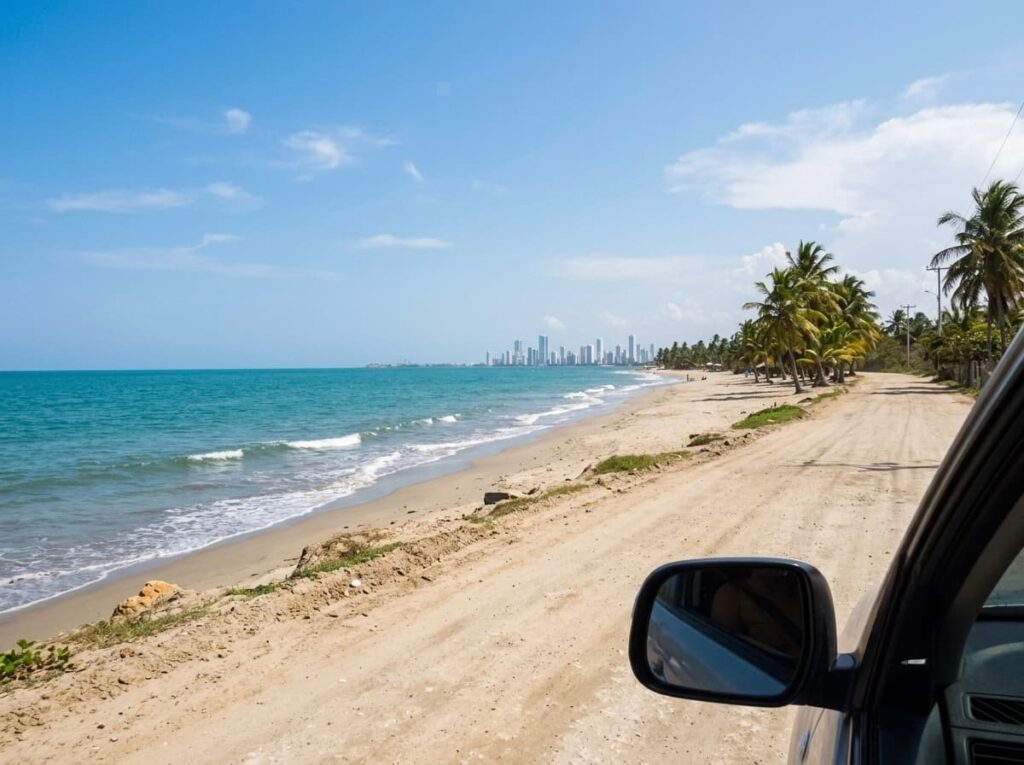
Manzanillo beach is where the afternoon goes, and it is one of the significant benefits of a day that takes you out of Cartagena rather than keeping you within the city circuit. The beaches here are less known than the resort beaches of Bocagrande or the day-trip beaches accessible from the Walled City — fewer vendors, fewer tourists, more space, and the particular quality of a coastline that has not been organized around its own attractiveness. After the mud bath and the lunch, four and a half hours at the water’s edge is the right pace for the rest of the day.
The Caribbean Sea at Manzanillo is the same Caribbean Sea as at Cartagena’s beaches, but the context around it is different. The flat lowland landscape behind the beach, the fishing boats on the shore, the local families and the occasional Colombian traveler who found out about the place the same way the locals did — all of it produces an atmosphere that is more ordinary and more genuine than the curated beach experiences available closer to the city. You can swim, walk the length of the beach, find a shaded spot under the palm trees, or simply sit and watch the sea at a stretch of coastline that most visitors to Cartagena never see.
Why This Day Works as a Cartagena Extension
What this tour gives you that a standard Cartagena day doesn’t is movement and contrast. Cartagena is a beautiful city, but it is also relatively small and well-documented — after a day in the Walled City and the Getsemaní neighborhood, most travelers have covered the main circuit. El Totumo and Manzanillo take you an hour north along the coast to a completely different landscape: the flat Caribbean lowlands, the community around the volcano, the fishing towns along the shore, and the open coastline that extends north toward La Guajira. It is the kind of day that fills in the picture of what this region actually is — not the colonial fortifications and the tourist economy of the city, but the coast and the communities that have been here longer than the walls.
Practical Notes: What to Bring and What to Expect
Bring a swimsuit, a change of dry clothes for after the rinse-off, and a towel. Old clothes are a better choice than anything you are attached to — the mud does wash out, but the rinse-off at the lagoon is imperfect, and the final cleaning happens in the shower at your hotel. Sunscreen is essential for the beach section, and a hat is useful throughout the day. The tour departs from your Cartagena hotel and returns to the same address in the late afternoon.
Continue Exploring the Caribbean Coast
For travelers who want to continue exploring the Caribbean coast after this tour, the Rosario Islands Private Day Trip takes you in the opposite direction — south of Cartagena to the coral islands of the Rosario archipelago, with clear water, snorkeling, and a completely different coastal environment. For those who want to stay in the city, the Cartagena City Tour covers the Walled City and its history with a private guide who knows the stories that most visitors walk past without knowing.
Ready to get in the mud? Book the El Totumo and Manzanillo private day tour above and your guide will handle everything from hotel pickup to the final return to Cartagena — all you need is a swimsuit and a change of clothes.
Building a longer itinerary? Start with our Cartagena tours.
Before you go: our Cartagena guides
Written by the team that runs this tour.
FAQs
Wear clothes that keep you cool and protect you from the sun. Sunglasses, a hat, sunscreen, and comfortable sneakers are the right kit. Bring a swimsuit for the mud bath and a complete change of clothes for after the swamp rinse — you'll want dry clothes for the lunch and the beach.
Cartagena is warm year-round with temperatures typically above 27°C. The tour operates in all weather conditions. The beach section and the drive to El Totumo are both exposed to sun, so sunscreen and a hat are worth having regardless of the season.
From Cartagena city, the drive to El Totumo takes approximately one hour. Your guide picks you up early in the morning so you arrive before the peak of the day's heat.
The natural minerals in the El Totumo mud are said to help improve blood circulation, stimulate muscle relaxation, and benefit skin health. The mud acts as a natural exfoliant. These are the properties that have made El Totumo a destination for Colombians and international visitors for generations.
Manzanillo is a stretch of Caribbean coastline with beaches that are less touristic and less crowded than the popular beaches inside Cartagena city. You have 4.5 hours there — time to swim, rest, walk the beach, and enjoy the afternoon at a more relaxed pace. After the mud bath and the lunch, most people find that the beach section is exactly the right way to end the day.
Related Tours


Cartagena City Tour: San Felipe Fortress, Walled City, Getsemaní & La Popa
Cartagena
Private
A Private Cartagena City Tour: The Fortified City, the Independence Neighborhood, and the View That Makes It All Make Sense…
$$$
6.5 hours

Rosario Islands Tour: Private Boat Day Trip from Cartagena
Cartagena
Private
Rosario Islands Private Boat Tour from Cartagena: Coral Reefs, White Sand, and a Full Day on the Caribbean Your Rosario…
$$$
8 hours

San Basilio de Palenque Tour – Colombia’s First Free Town
Cartagena
Private
A San Basilio de Palenque Tour takes you about an hour outside Cartagena to a place most visitors never see…
$$$
7 hours