September 9, 2026
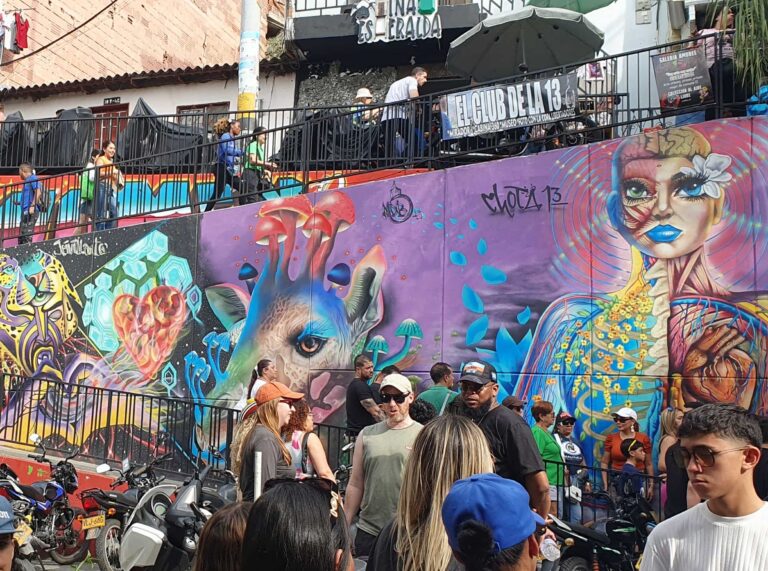
Comuna 13 is the most visited place in Medellín and the one most visitors understand least. It is a district of the city, one of sixteen, climbing the hills on the western edge of the valley; what people mean when they say they are “going to Comuna 13” is one neighborhood inside it, Las Independencias, where a set of outdoor escalators and a few hundred painted walls have turned the steepest streets in the city into its busiest attraction. We run tours there every week with guides who grew up on those streets, so this is the visit explained properly: what happened here, what you are looking at, how to get there, what it costs, and the hour that decides whether it is a good morning or a slow queue.
The short version
Go in the morning on a weekday, arrive by nine, and go with a guide from the neighborhood. Take the metro to San Javier on Line B and ride the Metrocable up for the view before you walk, or let a tour collect you at the hotel. Entry is free, the escalators are free, and the money you spend on the way up, on a coffee, a mango with salt and lime, a print from a local artist, is what the visit is for. Two hours is enough for the walk; five with a private guide and the neighborhood explained is what we would choose. Saturday afternoon is what people complain about.
What happened here
You cannot read the walls without the history, and the guides tell it. Through the 1990s and into the 2000s Comuna 13 was fought over by urban militias, guerrilla cells and paramilitary groups, and its residents lived between them. On October 16, 2002, the state answered with Operación Orión: more than 1,500 soldiers, police and agents, with helicopters and armored vehicles, moved into the comuna in what Colombia’s National Center for Historical Memory calls the largest urban military action of the country’s armed conflict. Residents hung white sheets from their windows asking for the shooting to stop. The Truth Commission, in its 2022 report, counted 92 people disappeared, 17 executed and 80 civilians wounded around the operation, and concluded that it was co-opted by the paramilitary blocs that took control of the district afterwards. Above the neighborhood sits La Escombrera, a construction rubble dump where families have searched for the disappeared for two decades; in December 2024 forensic teams working for the peace tribunal recovered the first human remains there.
The transformation that tourists come to see began a decade after Orión. In December 2011 the city opened six flights of outdoor escalators, 384 meters in all, replacing a climb it compared to 28 floors of stairs and cutting a 35-minute walk to six for the 12,000 people living above them. Around the same time a hip-hop collective that had formed in 2002 turned its music and its murals into the neighborhood’s own account of what it had lived through; in 2013 it opened Casa Kolacho, named for Héctor Pacheco, a member killed in 2009, and its school has since taught more than three thousand children. The graffiti tour that walks visitors past those murals grew out of that collective, and in 2024 nearly two million people came through the neighborhood to see them.
The escalators
The escalators are public transport, built for residents and used by them every day, and they run about sixteen hours a day at no charge. Six covered sections climb the hillside with landings between them, and the walls, roofs and stairs around each landing are where the murals concentrate. They are also machines with thirteen years of ten-thousand-visitor days behind them: the city began a phased maintenance program in November 2025 that stops one section at a time into 2026, with the ordinary stairs beside each section open while it is out. If a section is stopped when you visit, you climb that stretch; it is not long. At the top there is a viewpoint over the western half of the city, a row of small shops and cafés, and the streets continue upward for anyone who wants to keep walking with a guide.
The murals, and why a guide changes them
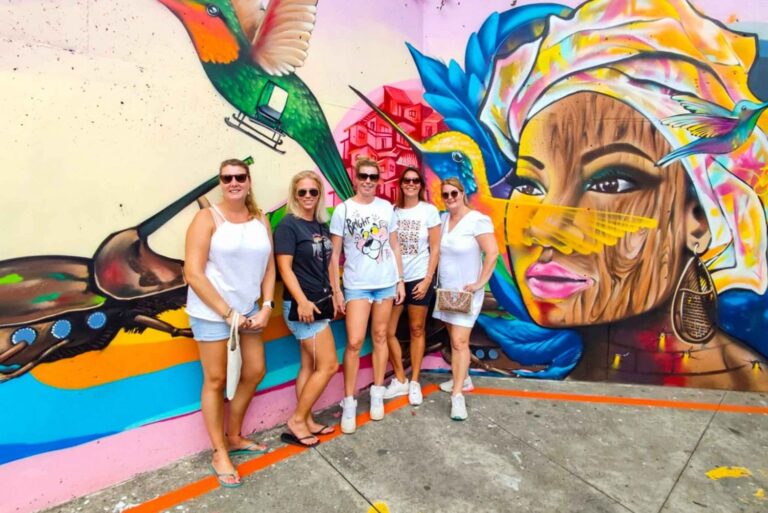
The walls of Las Independencias are painted, repainted and painted over by artists from the neighborhood, and most of what is on them is a language you will not speak on your own. The elephants that appear again and again are about memory, because an elephant does not forget. The white cloths are the sheets that hung from the windows during Orión. The portraits are of people who lived there, some of them killed, some of them the artists themselves. A guide who grew up on the hill reads that language for you, tells you which artist painted which wall and what it replaced, and, as important, takes you past the tourist strip into the streets where the neighborhood lives. Without that, the visit is an hour of photographing colorful walls, which is fine, and not the reason to have come.
Which tour: the shared graffitour or a private guide
There are two ways to do it. The shared graffiti tours, the original of which is run by the Casa Kolacho collective, gather groups at the bottom of the escalators, walk the main route for two to three hours and work on tips or a fixed fee paid to the collective; they are good, they are crowded, and the guides are from the neighborhood. Our private Comuna 13 graffiti tour is five hours with hotel pickup and a guide who lives in the district: the murals at your pace, the upper streets the groups do not reach, and a car back to the hotel. Alone or as a couple on a tight budget, take the shared tour and tip properly. As a family, a group, or anyone who wants the questions answered rather than the photos taken, take the private one.
Getting there
By metro. Take Line B west to San Javier, its last station; from El Poblado that is Line A to San Antonio, a change of platform, and about half an hour in total, for 4,400 pesos with the bearer card sold at the stations. At San Javier, Metrocable line J leaves from the same station and climbs 2.7 kilometers over the western hills through Juan XXIII and Vallejuelos to La Aurora, carrying around 35,000 people a day since March 2008, included in the fare you already paid. Ride it up and back for the best view of the comuna you will get, then take a taxi or one of the local buses the short, steep distance from the station to the foot of the escalators; the walk up from the station is not the pleasant part of the day.
With a tour. Pickup at the hotel and drop-off after. This is the difference for anyone with children, serious camera gear, or a flight that afternoon.
By taxi or app. Fine in daylight; ask for “las escaleras eléctricas de la Comuna 13” and expect twenty to thirty minutes from El Poblado. For the return, order the car from the bottom of the escalators, not from the upper streets.
Book a driver for the visit
Comuna 13 is up a hillside and the way out at the end of the afternoon is the part that catches people. A private car waits where it can and takes you straight back down.
Go with someone who can explain it: our private graffiti tour in Medellín. Every road out of the valley is on Medellín transfers.
The hour that decides everything
More than ten thousand people a day walk through a neighborhood built for the people who live in it, and the walkway is a few meters wide. Before ten on a weekday morning the escalators are shared with residents going to work and the murals are in the soft light; by early afternoon on a Saturday they are a slow, loud queue with reggaeton from every second door. The best two hours of the week are Tuesday to Thursday between nine and eleven. Sunday afternoons and the Monday holidays that Colombia moves most of its public holidays to are the worst. Rain here is an afternoon habit in every month, which is one more argument for the morning.
Is Comuna 13 safe to visit?
By day, with the crowds, yes, and it has been for years: the number of people who walk it daily is its own answer. The rules are the ones for any busy place. Keep your phone in your hand only while you are using it. Do not photograph residents, especially children, without asking; the murals are the attraction, the people are not. Stay on the visited streets unless you are with a guide, and do not go looking for the upper neighborhood after dark, which is not a tourism question but a courtesy one. Spend money where you walk; the popsicle stands, the cafés and the artists' shops are how the neighborhood earns from being looked at. And read the place as what it is: a community that survived the country's worst decade and turned its story into work, not a theme park about it.
For the city as a whole, the numbers, the neighborhoods and the rules that work are in our guide to whether Medellín is safe.
What it costs
Nothing to enter, nothing to ride the escalators, 4,400 pesos each way on the metro, and whatever you spend on the hill: a coffee, a mango biche with salt and lime, a beer at the top, a print or a T-shirt from one of the studios, and a real tip if you took a shared tour. Bring small notes. Cards are accepted in some of the cafés and none of the carts.
What to combine it with
The Museo Casa de la Memoria, free and just east of downtown, is the best thing to see before Comuna 13 rather than after: it puts the 1990s and Orión in order, and the murals make more sense afterwards. Downtown, Plaza Botero and the Museo de Antioquia fill the afternoon. Our private city tour does exactly that day, San Antonio Park, Plaza Botero, the Palacio de la Cultura and Comuna 13 with a car between them, and our guide to things to do in Medellín puts the rest of the city in order around it. If you are here for more than three days, the Guatapé day is the trip to add.
Questions travelers ask
Is Comuna 13 safe for tourists?
Yes, by day and on the visited streets, where thousands of people walk every day. Go in the morning, ideally with a guide from the neighborhood, keep your phone in your pocket when you are not using it, and do not wander into the upper streets alone or after dark.
How long do you need in Comuna 13?
Two hours for the escalators and the murals with a shared tour; four to five for the private version with the upper streets and the neighborhood explained. Add the Metrocable ride from San Javier if you come by metro.
Is the graffiti tour free?
The shared tours work on tips or a fixed fee paid to the collective that runs them; budget a real tip. Our private tour has a fixed price with hotel pickup and a guide who lives in the district.
What is the best time to visit Comuna 13?
A weekday morning, between nine and eleven. Saturday and Sunday afternoons and holiday Mondays are the crowded, loud version.
How do I get to Comuna 13 from El Poblado?
Metro Line A to San Antonio, change to Line B to San Javier, about half an hour, then a short taxi or bus ride up to the escalators. Or a taxi or app in twenty to thirty minutes, or a tour with hotel pickup.
Can I visit Comuna 13 on my own?
You can, by day, on the escalator route, and you will see the walls. You will not understand them, and you will not see the neighborhood beyond the route. The guide is the difference between a photo stop and the reason people talk about this place.
Plan it with us
Our Comuna 13 tours run every day, private, in English or Spanish, with hotel pickup and guides who live in the district. Write to us on WhatsApp with your dates, or see everything we run in the city on our Medellín tours page.