
September 9, 2026
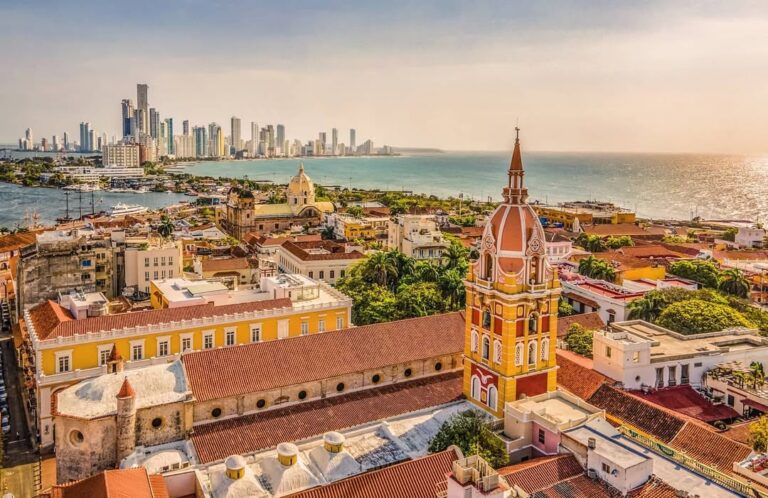
Cartagena is a city you plan by the clock, not by the map. Everything worth seeing sits within a few kilometers of the walls, so the question is never how to get there; it is when to be outside. The sun is a serious opponent from ten in the morning until four, and the visitors who come home raving are the ones who walked the walls at seven, spent the middle of the day in a museum, on a boat or under a fan, and came out again for the last hour of light. We run tours here every day, on foot, by car and by boat, and this is how we would spend the hours, including the things we would skip.
The short version
Two full days cover the city: one for the Castillo de San Felipe, the Walled City and Getsemaní, and one on the water at the Rosario Islands or Playa Blanca. A third day buys the best thing near Cartagena that most visitors never see, San Basilio de Palenque, or the mud volcano at El Totumo. Do the streets early, the museums and the food in the heat, the walls at sunset and Getsemaní after dark. Skip the party bus and the beaches inside the city if you have a boat day planned. Everything on this page is within reach of a hotel in the Old City, Getsemaní or Bocagrande. Which of them to choose, and the other neighborhoods, is in our guide to where to stay in Cartagena.
First light to ten: the city before the heat
Walk the walls. Cartagena’s fortifications are the most extensive in South America and the reason UNESCO listed the port, the fortresses and the monuments in 1984. The circuit of the Old City walls is free, open and empty at seven in the morning, when the stone is still cool and the sea is loud below the Baluarte de Santo Domingo. Walk from the Torre del Reloj, the clock-tower gate, along the sea side to Las Bóvedas, the twenty-three bomb-proof vaults finished in 1798 as barracks and stores and now a row of craft shops, and you have seen the shape of the city in an hour. The center inside the walls, plaza by plaza, with every museum’s 2026 hours and prices and the electric carriages’ fares, is in our Walled City guide.
Castillo de San Felipe de Barajas. The fort at the heart of what UNESCO calls the most extensive fortifications in South America sits on a hill just outside the walls, and it is a morning place: open every day from 7 a.m. to 6 p.m., and by ten the ramps are an oven. The tunnels cut into the hill, built, as the guides explain, so that a sentry could hear footsteps far down the passage and the whole fort could be blown up from inside if it fell, are the part worth a guide. Tickets are 38,000 pesos for foreign adults, 33,000 for Colombians and 16,000 for children from six to thirteen and students, with free entry for Colombian citizens on the last Sunday of most months. Our private city tour starts here at pickup time, includes the ticket, and moves you to the Walled City by car before the sun gets serious. The fort’s history, its batteries one by one and how to visit it well are in our Castillo de San Felipe guide.
The plazas while they belong to the city. Plaza de Bolívar under its trees, Plaza Santo Domingo before the restaurant tables go out, Plaza de San Pedro Claver with the bronze figures, and the arcade of Las Bóvedas. This is the hour for photographs with nobody in them, and for the palenqueras, the fruit sellers in bright dresses whose families come from San Basilio de Palenque; a photo with them is a transaction, so agree the tip first and pay it gladly.
Ten to four: the heat, and what to do in it
Museums with thick walls. The Palacio de la Inquisición on Plaza de Bolívar, now the Museo Histórico de Cartagena, opens Monday to Saturday from 9 to 6 and Sundays and holidays from 10 to 4, for 24,000 pesos, and covers the tribunal, its instruments and the city’s history in rooms that stay cool. Across the square, the Museo del Oro Zenú of the Banco de la República is free, open Tuesday to Saturday from 9 to 5 and Sundays from 9 to 2, closed Mondays, and its Zenú goldwork and the story of the flood-plain canals that fed the region are the best forty minutes of quiet in the city. The Santuario de San Pedro Claver, where the Jesuit who ministered to enslaved Africans for four decades is buried under the altar, opens its museum Monday to Friday from 9 to 4:30 and weekends and holidays from 10 to 4; foreign adults pay 30,000 pesos.
Eat, properly. The heat is the reason Cartagena’s food is what it is: fried things for the morning, seafood and coconut rice at midday, fruit and sweets to keep going. Our four-hour food tour of the Walled City is built around five tastings, including the arepa de huevo from a stall that has been frying them the same way for years, and it is a fine way to spend the hottest hours with a purpose. Without a tour, the rule is to eat where the office workers eat at noon and to try the fruit from the palenqueras’ bowls.
Or go to the water. If you are not doing a full island day, the bay answers the heat. Our day trip to Playa Tranquila and the aquarium is the calmer version of the Barú coast, and the aquarium in the Rosario Islands is the one stop that works for small children. The beaches inside the city, Bocagrande and El Laguito, are urban beaches with vendors and grey sand; they are fine for a swim from your hotel, and Bocagrande’s main strip was widened in 2026 by the coastal protection works, but they are not the reason to come. What the peninsula is, and what its beach is like now, is in our Bocagrande guide.
Every beach, from Bocagrande to Playa Blanca and the islands, is compared in our guide to Cartagena beaches, with what changed in 2026 and the rules that keep the bill honest.
Then do what the city does. A siesta is not laziness here, it is the schedule. Two hours in the shade between one and three makes the evening possible.
Four to sunset: the hour the city was built for
Cartagena’s sunset lands between roughly a quarter to six and half past six all year, and the walls face it. The Baluarte de Santo Domingo, where the Café del Mar was until the district evicted it in September 2024 and the Escuela Taller’s own kitchen is now, is the famous spot, and it is famous for a reason; the stretch of wall north toward Las Bóvedas is the same view with fewer people. From the water it is better still: our three-hour private sunset boat leaves from the Muelle de los Pegasos with your own captain and crew and a fridge with ice for whatever you bring, the colonial skyline on one side of the bay and the towers of Bocagrande on the other. It is the right first evening in the city, because it shows you the walls you will walk the next morning.
La Popa. The Convento de la Popa, founded by the Augustinian Recollects at the start of the seventeenth century on the 150-meter hill above the city, has the widest view there is, over the walls, the bay and the islands. Go by car, never on foot, and go in the late afternoon; the La Popa option on our city tour does exactly that.
After dark: Getsemaní
Getsemaní is the neighborhood outside the walls where the city’s independence was fought for in 1811 and where, two centuries later, the residents painted that history on their houses. It is one gate from the Old City and a different place: Plaza de la Trinidad fills every night with neighbors, musicians, street food and travelers sitting on the church steps, Calle de la Sierpe and the streets around it are the murals, and the bars are loud and cheap. Our walking tour of Getsemaní and the Castillo walks the murals and the fort with a guide who lives here, and our private graffiti tour goes deeper into the art and the artists. At night, the rule is the one from every Colombian city: keep the phone in your pocket, take a car back to Bocagrande rather than walking the causeway, and let the drink you did not see poured stay on the bar. The neighborhood on its own, with the 1811 story, the plaza, the murals, the nights and the rules for them, is in our Getsemaní guide.
The full list of what reaches visitors here, with the 2026 police numbers and the habits that work, is in our guide to whether Cartagena is safe.
The days out of the city
The Rosario Islands. The day everyone wants, and the one that rewards doing it privately. The archipelago is a national park about an hour by boat from the city, with living coral at Playa Grande, the floating bars of Cholón and the long white beach of Playa Blanca on Barú, which is not one of the Rosario Islands but a stretch of coast joined to the mainland by a bridge, so you can also drive to it. Our private Rosario Islands boat is eight hours with your own captain and crew, hotel pickup, an hour of snorkeling at Playa Grande, two at Cholón and four under a reserved, shaded spot at Playa Blanca; lunch is fresh seafood on the beach, paid on the spot. Since March 2026 every visitor to the park needs a mandatory accident insurance, separate from the park entrance fee, and the shared boats leave you to sort both out at the dock; ask us and we will tell you what the park charges on your date. Bring reef-safe sunscreen and small notes.
For the whole day in detail, private boat against shared boat, what it costs and the rules on the water, read our Rosario Islands guide.
San Basilio de Palenque. About an hour and a half inland is the first free town in the Americas, founded by Africans who escaped Cartagena’s slave port under Benkos Biohó, still speaking their own creole and recognized by UNESCO in 2005. Our Palenque day pairs our guide with a guide from the town, four hours walking it with the people who live there, from the Biohó monument to the monument to the boxer Kid Pambelé, and a homemade lunch of fish, coconut rice and plantain. It is the most affecting day trip on this coast and the one visitors most often tell us they did not know existed. The town, the documents and the visit hour by hour are in our San Basilio de Palenque guide.
El Totumo mud volcano and Manzanillo. An hour north, in the municipality of Santa Catalina, a cone of mud rises out of the flat land; you climb the wooden stairs, lower yourself into the crater and float, weightless, in warm mud, then rinse in the lagoon below. It is ridiculous and everyone loves it. Our private day adds a traditional lunch and the afternoon on the beach at Manzanillo del Mar, with the entrance included, so that the small charges at the crater are not your problem.
How many days, and how to shape them
Two days: morning one at San Felipe and the Walled City with the city tour, the afternoon in the museums, the sunset boat; day two on the water at the Rosario Islands and Getsemaní at night. Three days: add Palenque or El Totumo in the middle. Four or more: add the food tour, a second island day at a slower pace, and a morning with nothing planned, which in Cartagena is a plan. Cartagena sits at the end of most Colombia itineraries for a reason: after the altitude of Bogotá and the hills of Medellín, the sea is the right last chapter, and the Rafael Núñez airport has direct international flights, so check for one home before booking back through Bogotá. Our Colombia itinerary puts the pieces together.
When to come
The average temperature is about 28 degrees all year, with days at 31 to 32 and nights around 24 to 26, by the 1991 to 2020 normals of IDEAM, the national weather service; the difference between months is rain, not heat. December to April is the dry season and the first three months of the year are the driest, with the trade winds that make the walls bearable in the afternoon and the sea rougher for the island boats. May to November is the rainy season, October the wettest month, with storms that arrive in the afternoon and leave the evening washed and cooler. The city is fullest at Christmas and New Year, Holy Week and the long weekends Colombia moves to Mondays; the shoulder months, and any weekday morning, are when the walls are yours. The full month-by-month picture, with the sea’s calendar and the hurricane question, is in our Cartagena weather guide.
What we skip, and why
The carriages: the horses are gone, banned from the historic center by decree since December 29, 2025, and the electric carriages that replaced them cost 170,000 pesos for thirty minutes in low season by the district’s suggested list; walk the same streets at dusk instead. The chiva party bus: loud, and a bad way to see anything. The beaches inside the city as the main event: they are for a swim, not for the day, when the islands are an hour away. Bazurto market: the real market of the city, extraordinary, and not a place to wander alone with a camera; go with a guide who knows the stalls, in the morning. And the second visit to San Felipe at noon that people make because they were rushed the first time: go once, early, with someone who can explain the tunnels.
Getting around
The Old City and Getsemaní are walking places, and the heat makes them so between four and ten only. Bocagrande is a fifteen-minute walk or a five-minute taxi from the clock tower; agree the fare before you get in, because meters are not used here, or use a ride app. For the airport, the fort, La Popa and everything outside the walls, a car with a driver you know beats improvising, which is what our tours and our transfers, operated by Safe Transfers by Cielo.Travel, are for. The palenqueras, the vendors on the walls and the boat touts at the Muelle de los Pegasos are part of the city; a smile and a firm no cost nothing.
Landing at Rafael Núñez? Our Cartagena airport guide covers the taxi zone fares, the bus a street away, the apps and the transfer, with 2026 prices.
Book a driver for the day
Half of this list is inside the walls and half of it is not, and the half that is not means moving in the heat. A car by the hour waits while you do each one.
The guided version is our Cartagena city tour; the coast road is on Cartagena transfers.
Questions travelers ask
What is the best thing to do in Cartagena?
Walk the walls at first light, see the Castillo de San Felipe with a guide before ten, and spend one full day on the water at the Rosario Islands. Those three, plus an evening in Getsemaní, are the city.
How many days do you need in Cartagena?
Two full days for the city and the islands; three if you want Palenque or the mud volcano; four to add the food tour and a slow day. Most travelers put Cartagena at the end of a Colombia trip.
Is the Castillo de San Felipe worth visiting?
Yes, early in the morning and with a guide for the tunnels. It opens at 7 a.m. every day, tickets are 38,000 pesos for foreign adults, and by ten the ramps are too hot to enjoy.
Can you swim at the beaches in Cartagena?
Yes, at Bocagrande and El Laguito, which are urban beaches with grey sand and vendors. For the water you came for, take a boat to the Rosario Islands or drive to Playa Blanca on Barú.
What is there to do in Cartagena at night?
Sunset from the walls or from a boat, dinner in the Old City or Getsemaní, and Plaza de la Trinidad afterward, where the neighborhood gathers every night. Take a car back to Bocagrande rather than walking.
Is one day enough for the Rosario Islands?
One full day is right: about an hour each way by boat, with snorkeling at Playa Grande, a stop at Cholón and the afternoon at Playa Blanca. A private boat sets its own clock; the shared boats run to theirs.
Plan it with us
Every tour on this page is private, with hotel pickup in the Old City, Getsemaní, Bocagrande, Castillogrande and El Laguito, and a guide who lives here. Write to us on WhatsApp with your dates, or see everything we run on the coast on our Cartagena tours page. The city as a whole, from what it is to how many days it needs, is in our Cartagena travel guide. The mud volcano an hour north of the city, and the day we build around it, is in our El Totumo guide.