
+ 1200 verified five-star reviews for Cielo.Travel on Google and TripAdvisor.
Duration
Tour Type
Pricing
Languages
Overview
La Candelaria is where Bogotá began in 1538, and three hours in this neighborhood covers more Colombian history per block than anywhere else in the country — colonial churches, the plaza where the republic was declared, a market stacked with fruits most visitors have never encountered, and a presidential palace whose story runs through every major chapter of the country’s turbulent 20th century. This private tour moves through all of it on foot, with a guide who knows what each building was used for and what it cost.
The neighborhood holds its history in close and ordinary proximity — a baroque church beside a university café, a rebuilt Palace of Justice next to street vendors, a founding square now surrounded by buskers and handicraft stalls. What makes the difference between a walk through and an understanding is the guide who can read those layers aloud, including the episodes most tours pass over: the political violence, the guerrilla siege, the peace process, and what Colombia is still working through today.
Itinerary
Highlights
Start at Chorro de Quevedo, the foundational square of Bogotá, where the city was established in 1538 — and where street musicians, artisans, and storytellers still gather today.
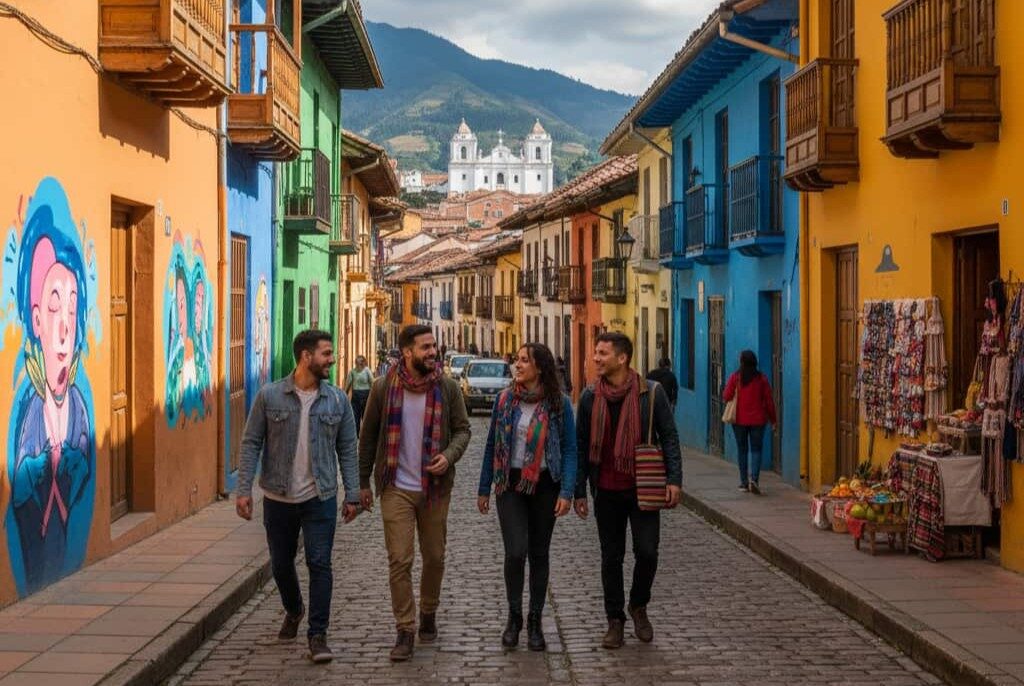
Stroll through La Candelaria on foot, taking in colonial houses, baroque churches, and art deco architecture alongside a guide who knows the history behind every façade.
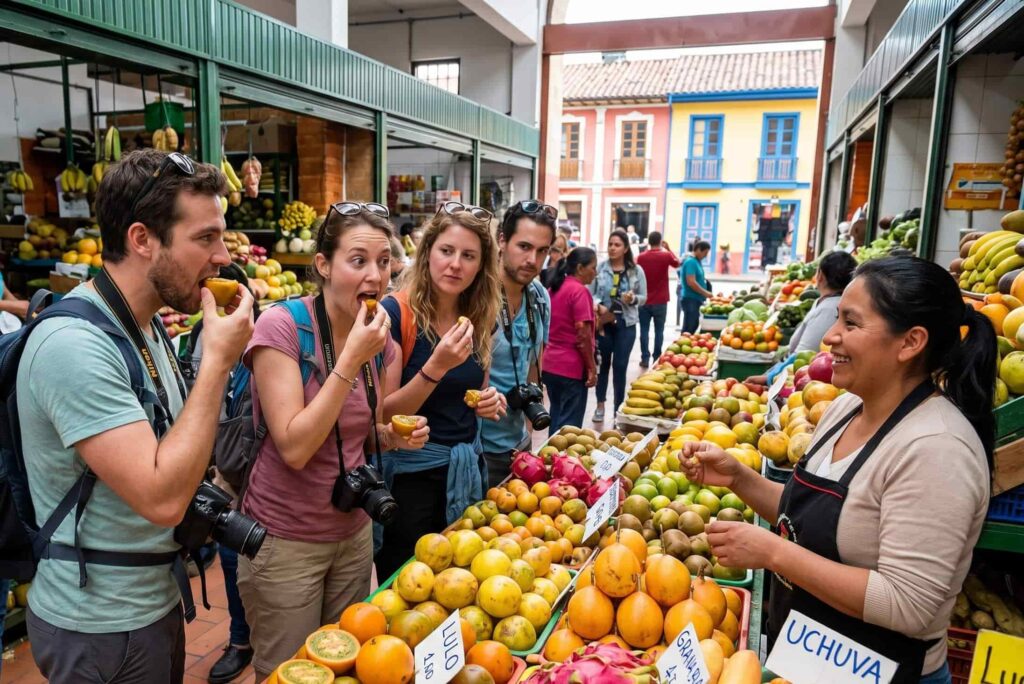
Stop at a local market to taste tropical fruits like Lulo and Guanábana — some of the most distinct flavours in Colombia's extraordinarily diverse produce landscape.
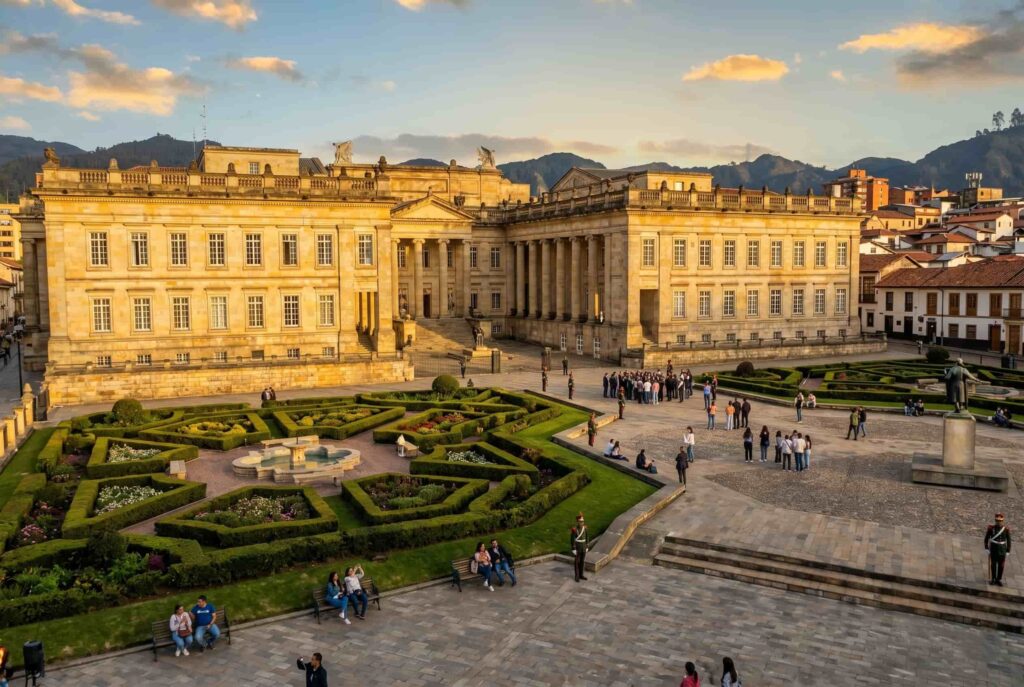
Walk down Seventh Avenue to Plaza de Bolívar and take in the Cathedral, the Palace of Justice, the National Capitol, and Liévano Palace — the city's civic heart, explained by someone who grew up nearby.
Visit Casa de Nariño, Colombia's Presidential Palace, and hear the guide's account of the complex relationship between the state, the drug trade, and the guerrillas that shaped modern Colombia.
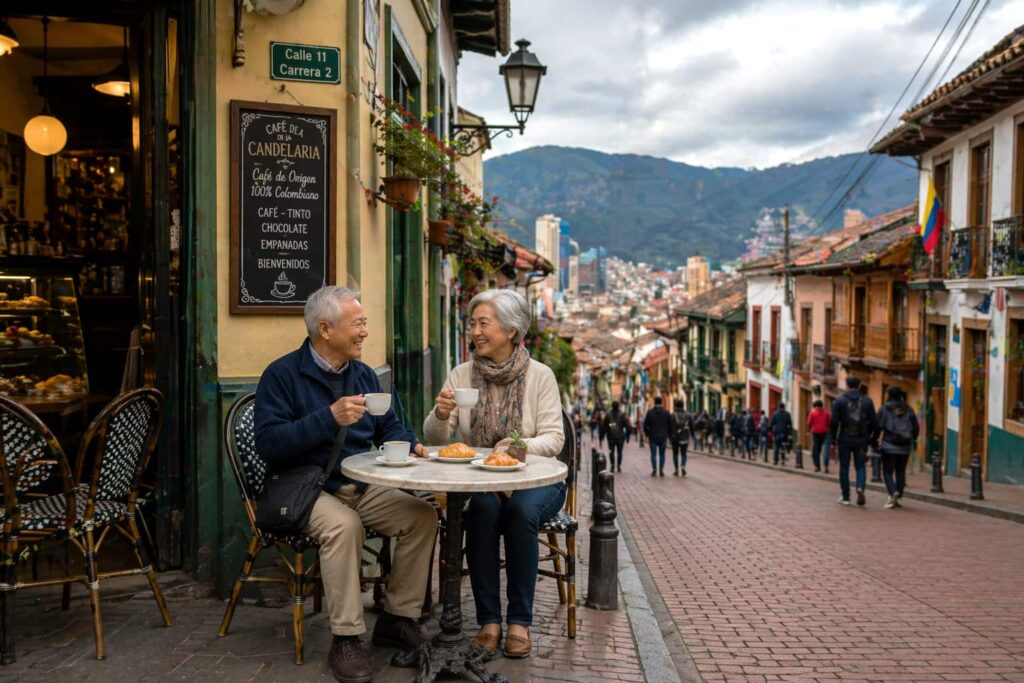
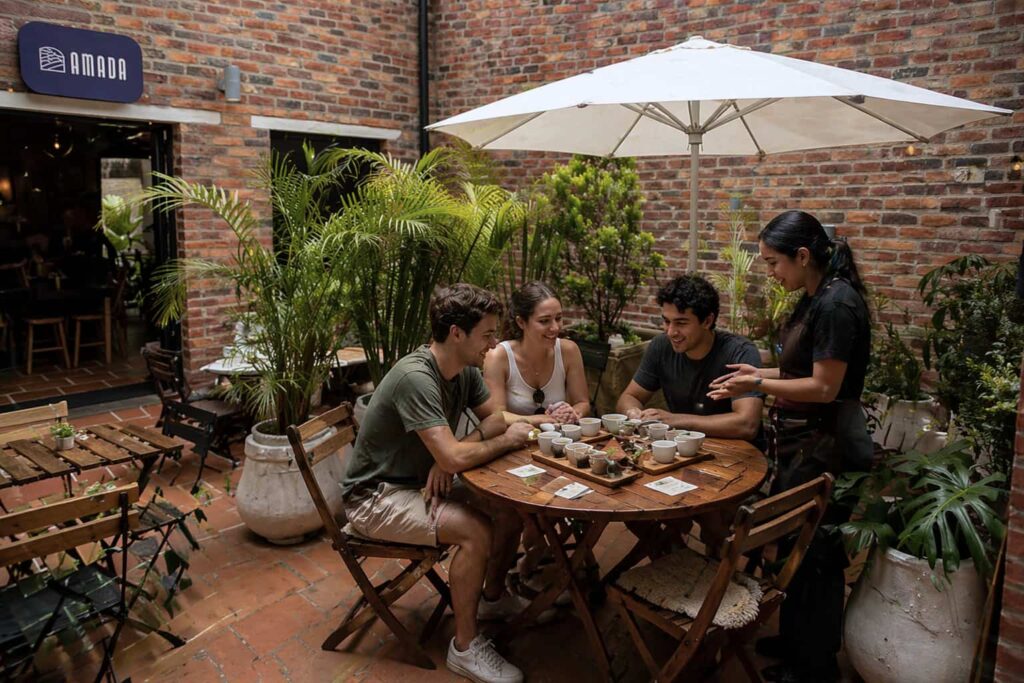
Finish with a coffee lesson at a local neighbourhood café — the origin of the beans, the growing process, and the difference between what Colombia exports and what it keeps for itself.
What's Included
Private English-speaking guide (full 3 hours).
Private hotel pickup and drop-off.
Local fruit tasting at La Concordia market.
Colombian coffee tasting at a local café.
Risk insurance.
What's Excluded
Meals and additional drinks
Personal purchases and souvenirs
Museum entry tickets (if any optional museums are added)
Gratuities (appreciated but not required)
Know before you book
Please keep in mind this is a walking tour on cobblestone streets — comfortable, flat-soled shoes are strongly recommended.
This tour operates in all weather conditions. Bogotá's weather shifts quickly, so dress in layers and bring a compact rain jacket or umbrella.
Bogotá sits at 2,640 meters above sea level. Take it easy, drink water throughout, and let your guide know if you feel any altitude discomfort.
The fruit tasting at La Concordia market may include varieties you haven't tried before — let your guide know about any allergies before the tour begins.
Casa de Nariño is an exterior visit — access to the grounds depends on official schedule and events. Your guide will adjust accordingly if access is restricted on your day.
Bring sunscreen — Bogotá's altitude amplifies UV exposure significantly, even when the sky is overcast.
More Info
Cancellation Window
12 hours before starting date.
Difficulty
Easy
Cancellation policy
Free cancellation up to 12 hours before departure. Cancellations made within 12 hours of the tour start time are non-refundable.
Guest Reviews
Why Book With Cielo
1,200 five-star reviews from real travelers — read them before you book.
Best Price Guarantee — find this tour cheaper elsewhere and we'll match it.
Private transportation door-to-door — no shared shuttles, no waiting around for strangers.
Booking directly with us means your money stays with a Colombian-owned company, not a platform commission.
Our guides are English-speaking Colombian locals — not contractors reading from a script. They know La Candelaria the way people know the neighbourhood they grew up in.
Other Info
La Candelaria Walking Tour: Three Hours in the Neighborhood Where Bogotá Began
La Candelaria walking tour gives you something that most visitors to the Colombian capital never quite manage on their own: the actual meaning of what you’re looking at. La Candelaria is where Bogotá began in 1538, and three hours in this neighborhood covers more Colombian history per block than anywhere else in the country — colonial churches, the plaza where the republic was declared, a market stacked with fruits most visitors have never encountered, and a presidential palace whose story runs through every major chapter of the country’s turbulent 20th century. This private tour moves through all of it on foot, with a guide who knows what each building was used for and what it cost.
Chorro de Quevedo: Where the City Started
The tour starts at Chorro de Quevedo Square, the spot where Gonzalo Jiménez de Quesada established the city on August 6, 1538, naming it after the town in Spain he had left behind. What is now a small plaza surrounded by bars, handicraft stalls, and buskers was the original heart of the settlement. Your guide starts here for the same reason locals always have — it’s the place you come back to when you want to understand where everything began.
The same square closes the Bogotá Graffiti Tour — that tour reads the neighborhood’s contemporary murals and political street art, ending at Café Herencia with coca leaf tea. This tour reads the same neighborhood’s historical architecture, ending with a specialty coffee at a local café. The two tours cover the same streets from entirely different angles and together give you the most complete picture of La Candelaria available in a single day.
Walking the Layers: Colonial Streets on Foot
From Chorro de Quevedo, the route moves through La Candelaria’s cobblestoned streets on foot. The neighborhood’s architecture tells its history in visible layers: 16th-century colonial construction, 18th-century baroque churches, and the art deco buildings that arrived with Bogotá’s first wave of modernization in the early 20th century. The streets were designed for a city that measured distances in feet rather than traffic lanes. Walking them with a guide who knows what each building was, who lived there, and what it was used for during different periods of the country’s history is a completely different experience from wandering through independently.
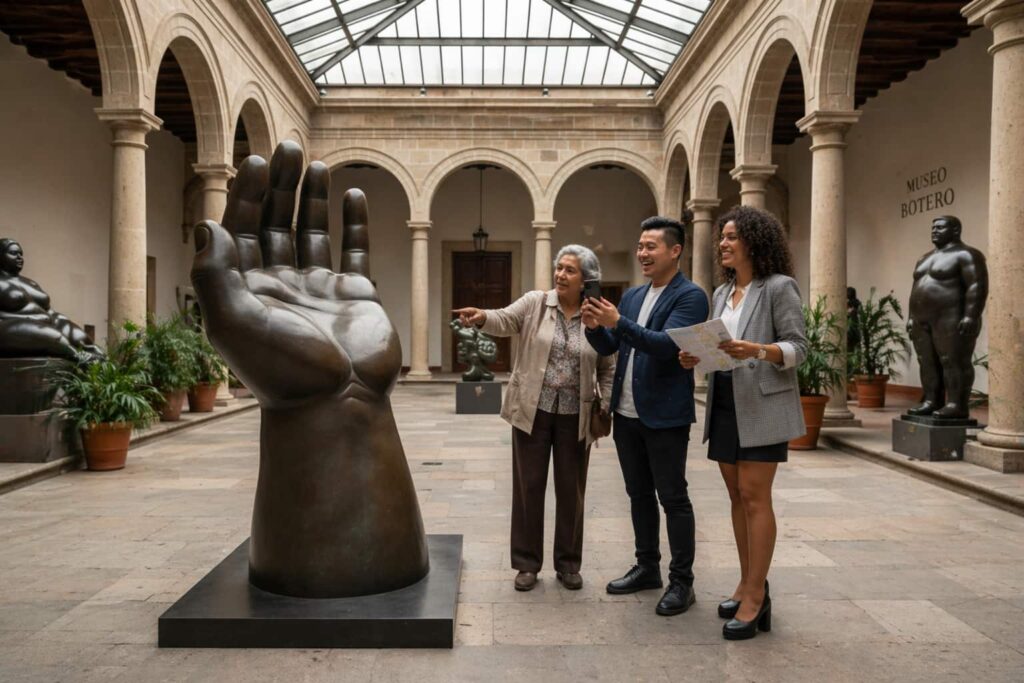
The Private Bogotá City Tour extends this walk into a full day — adding Monserrate’s summit views, the Gold Museum’s Muisca collection, and the Botero Museum — for travelers who want the complete arc of the city’s history in a single itinerary. This three-hour La Candelaria tour is the concentrated version: the founding neighborhood, read carefully, on foot.
La Concordia Market: Colombia’s Biodiversity on a Stall
La Concordia’s local market is one of the most direct introductions to Colombian biodiversity available anywhere in Bogotá. Colombia has more species of flora than almost any country on earth — a product of its geography, which spans coast, Andes, Amazon, and savanna — and the market reflects this in its produce. You’ll taste fruits like lulo, with its sharp citrus-tomato flavor, and guanábana, which is nothing like any fruit most visitors have encountered before. Your guide explains where these fruits come from in Colombia and why the country’s food landscape remains largely unknown to the outside world despite being extraordinary by any measure.
For travelers who want to go deeper into Bogotá’s food culture after this stop, the Food Tour in La Candelaria covers the same market alongside the arepa vendors, almojábana bakeries, oblea carts, and chocolate santafereño of the neighborhood in a dedicated food walk — the culinary layer of the same streets this tour covers historically.
Plaza de Bolívar: The Civic Center of a Country
Seventh Avenue leads to Plaza de Bolívar, one of the most significant public squares in Latin America. The plaza is bounded by the Cathedral of Bogotá, completed in the early 19th century on the site of the original chapel Jiménez de Quesada built; the Palace of Justice, rebuilt after the tragic events of 1985 when the M-19 guerrilla group seized the building and the army’s response destroyed it; the National Capitol, completed after decades of construction in 1926; and Liévano Palace, the city hall. Your guide covers the history of each building — including the episodes most guided tours pass over: the political violence, the hard decisions, and the way Colombia has tried to move forward from them.
The same square appears at the center of the Bogotá Layover Tour for travelers connecting through El Dorado — the guide uses Plaza de Bolívar to explain Colombia’s recent history in the limited time a layover allows. Here, with three hours in the neighborhood rather than forty minutes at a single stop, the guide can cover the full sequence: the founding chapel, the independence era, the 1985 siege, and the 2016 peace process, all visible in the buildings that frame a single square.
Casa de Nariño: The Weight of the Presidential Palace
Casa de Nariño, the Presidential Palace, closes the formal part of the tour. The building’s history is inseparable from Colombia’s turbulent 20th century — political assassinations, guerrilla bombings, and the administrations that negotiated both war and peace within its walls. Your guide addresses the relationship between the state, the drug trade, and the guerrilla movements directly, without sanitizing it. Understanding this is essential context for making sense of Colombia today: why the peace process of 2016 was such a significant moment, and why the neighborhood you’ve been walking through carries the weight that it does.
The story of Antonio Nariño — the man who translated the Declaration of the Rights of Man into Spanish in 1793 and was arrested for it — connects the presidential palace to the Villa de Leyva house museum where he died, covered on the Villa de Leyva Full Day Tour. Your guide draws that connection here: the colonial state that imprisoned Nariño, the republic that eventually honored him, and the palace that now bears his name.
The Final Coffee: Colombia’s Specialty Movement
The tour ends with coffee. Colombia produces some of the most celebrated beans in the world, but the ones that earn international recognition have historically been the ones that leave the country. That has changed — a Colombian specialty coffee movement is now producing serious quality for local consumption. Your guide takes you to a neighborhood café that is part of that movement and gives you a brief account of where the beans come from, how the growing process works, and why Colombian coffee tastes the way it does when it’s done correctly.
For travelers who want to follow that story to its source, the Secret Coffee Tour in Quindío covers three farms, three towns, and three brewing methods in the heart of the Coffee Triangle — the origin story of the cup you are drinking in La Candelaria.
Continue Exploring Bogotá
The La Candelaria walking tour works best as a first-day orientation — a three-hour walk that maps the neighborhood’s historical geography before you go deeper into any of its specific layers. The Bogotá Graffiti Tour returns to the same streets to read the murals and political street art — the contemporary arguments painted on top of the colonial history you’ve just walked through. The Private Bogotá City Tour extends the day with Monserrate, the Gold Museum, and the Botero Museum. For a day trip out of the city, the Salt Cathedral and Guatavita Tour offers one of Colombia’s most distinctive experiences 45 minutes north of the capital.
Ready to see La Candelaria properly? Book the private city tour above and your guide will take care of everything from hotel pickup to the final coffee — all you have to do is show up curious.
Before you go: our Bogotá guides
Written by the team that runs this tour.
FAQs
The most practical choice is layers you can add or remove as the temperature shifts. Hoodies, cotton t-shirts, comfortable sneakers, sunglasses, and a cap are ideal. Bring an umbrella or compact rain jacket — this tour operates in all weather conditions.
Bogotá's weather changes abruptly throughout the day — it can be sunny in the morning and raining by early afternoon. Come prepared for both sun and rain. Your guide carries this knowledge and adapts the pacing when weather shifts.
You'll visit important historical and cultural spots including Chorro de Quevedo Square, La Concordia's local market, Seventh Avenue, Simón Bolívar Square, the Cathedral of Bogotá, the National Capitol, Liévano Palace, and Casa de Nariño, the Presidential Palace.
This is a walking tour covering approximately 2–3 kilometres over 3 hours on cobblestones and flat ground. The pace is relaxed with regular stops. It suits most fitness levels. If you have mobility concerns, please message us before booking so we can advise.
Yes — the Colombian coffee tasting at the end of the tour is included. Your guide takes you to the café they personally use, explains the origin and growing process of the coffee, and closes the day in a way that's genuinely Colombian rather than tourist-facing.
Related Tours
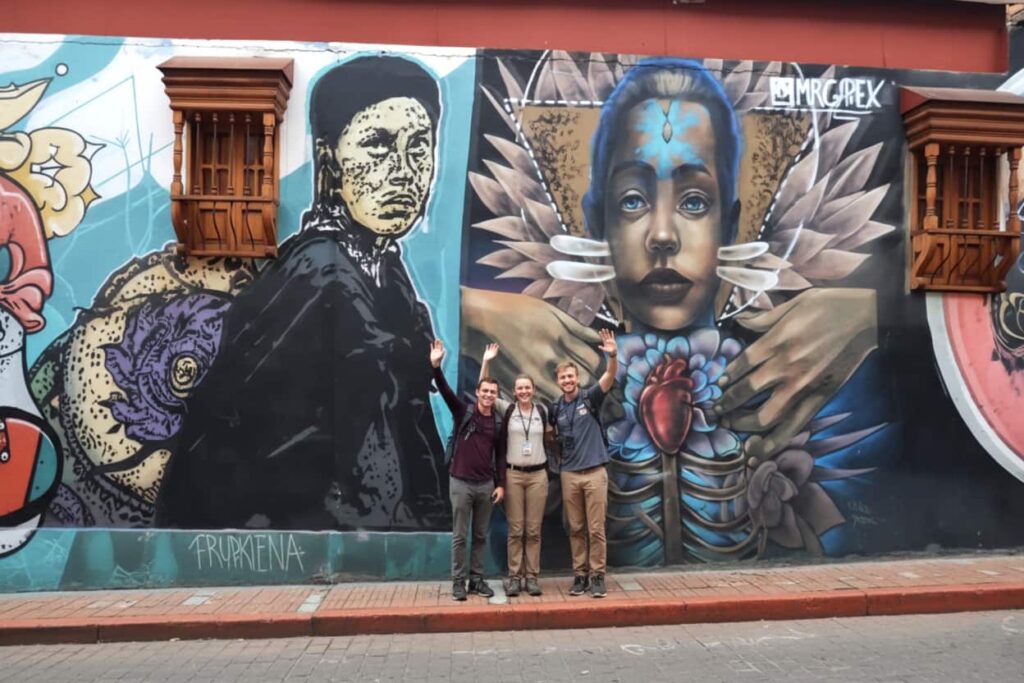

Bogotá Graffiti Tour: 3-Hour Street Art Walk Through La Candelaria
Bogota
Private
A Bogotá Graffiti Tour: Three Hours Reading La Candelaria’s Walls A graffiti tour in La Candelaria is one of the…
$$
3 hours


Bogotá Layover Tour: From the Airport to Monserrate & Old Town
Bogota
Private
Bogotá Layover Tour: From El Dorado Airport Into the Historic Center and Back El Dorado International Airport sits at the…
$$$
5 hours

Medellín City Tour: San Antonio Park, Botero Square, Palacio de la Cultura & Comuna 13
Medellín
Private
Medellín City Tour with Comuna 13: From the Most Violent City on Earth to UNESCO Creative City of Design A…
$$$
6 hours