

+ 1,200 verified five-star reviews for Cielo.Travel on Google and TripAdvisor.
Duration
Tour Type
Pricing
Languages
Overview
Medellín’s transformation is one of the most discussed urban stories in the world — and this tour is built around understanding it on the ground, not from a distance. It starts in the historic centre, where San Antonio Park holds two Botero sculptures side by side: one intact, one destroyed by a bomb in 1995, both left there by deliberate civic decision. From there, the route moves through the Palacio de la Cultura Rafael Uribe Uribe — Gothic Revival architecture with a chessboard facade and a political history as layered as the city around it — and into Plaza Botero, where 23 bronze figures donated by the artist occupy a completely open, completely free public space adjacent to the Museum of Antioquia.
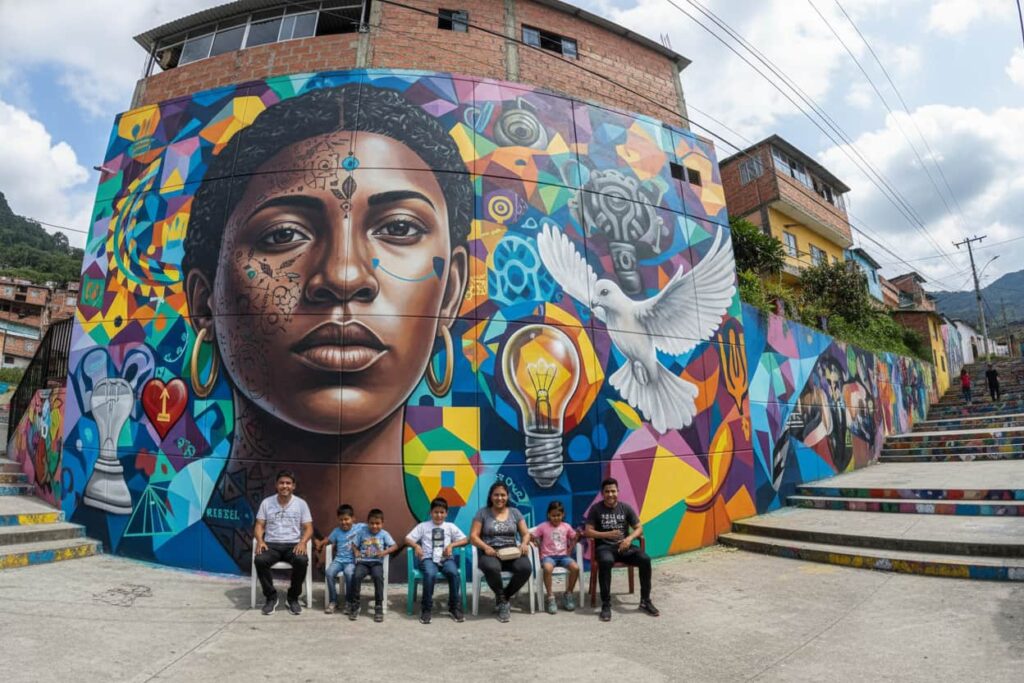
The second half of the tour shifts register entirely. Comuna 13 — the San Javier district on the western hillside of the Aburrá Valley — was the site of Operation Orion in 2002, the military operation that ended years of armed occupation but left deep damage in the community. What followed was a process of reclamation through art, music, and collective organisation that turned the neighbourhood into one of the most compelling examples of community-led urban recovery in Latin America. The outdoor escalators, the murals covering entire building facades, the local artists often present and willing to talk — all of it is legible with a guide who knows the neighbourhood’s story. Without that context, you’re just looking at walls.
Itinerary
Highlights
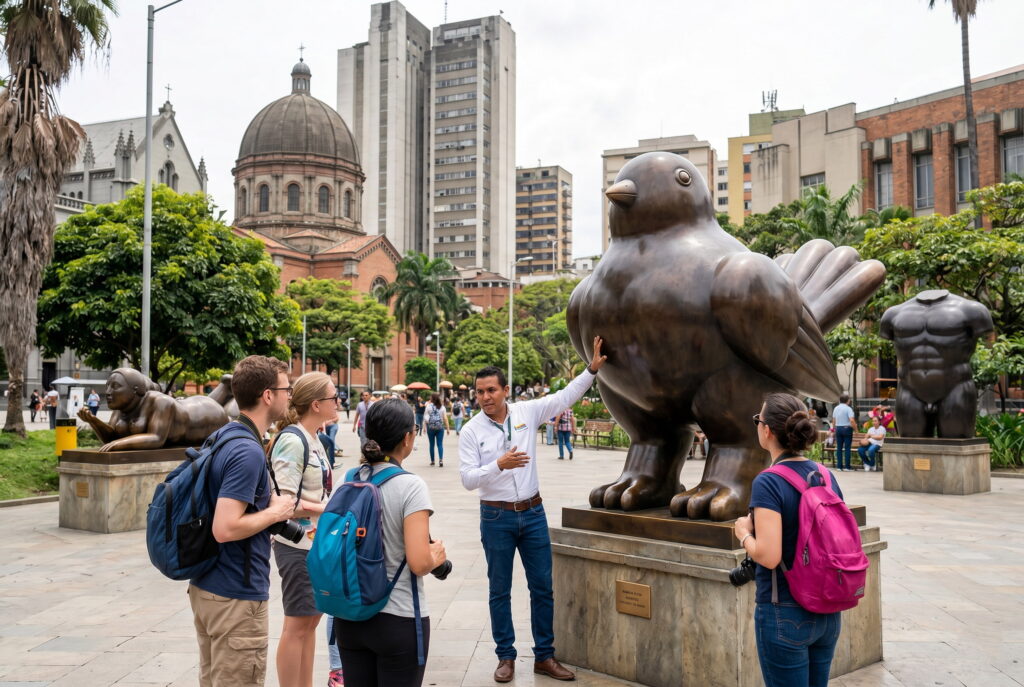
Start at San Antonio Park — an open-air gallery with a selection of Fernando Botero's voluminous bronze sculptures — and visit local gastronomic spots where your guide introduces you to Medellín's street food culture.
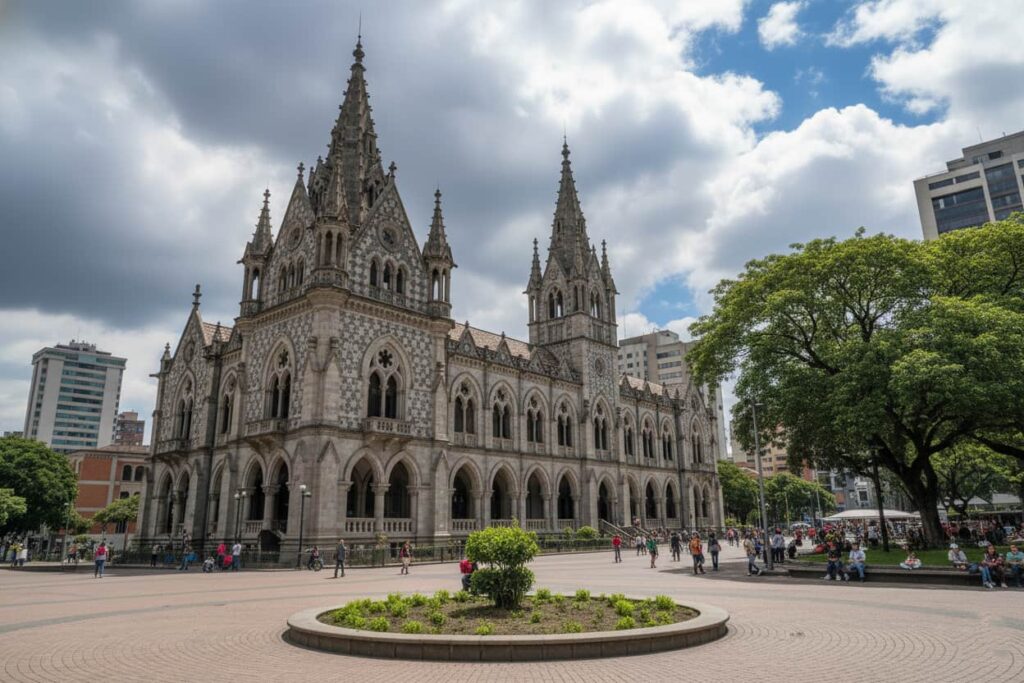
Visit the Palacio de la Cultura Rafael Uribe Uribe, one of the finest examples of Gothic Revival architecture in Colombia, built in 1928 — explore its grand interiors, cultural exhibitions, and the views it offers over Plaza Botero and the city centre.
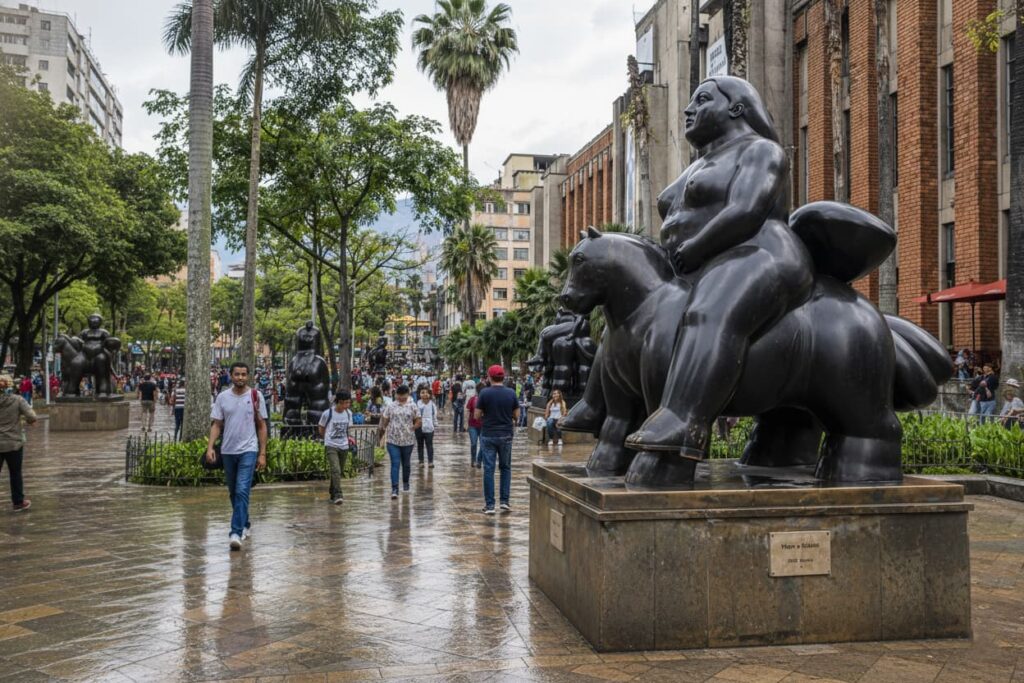
Walk through Plaza Botero — the only open-air space in the world featuring 23 sculptures by Fernando Botero — and hear your guide's account of the artist's life, his relationship with Medellín, and why the city became the permanent home of his most important public works.
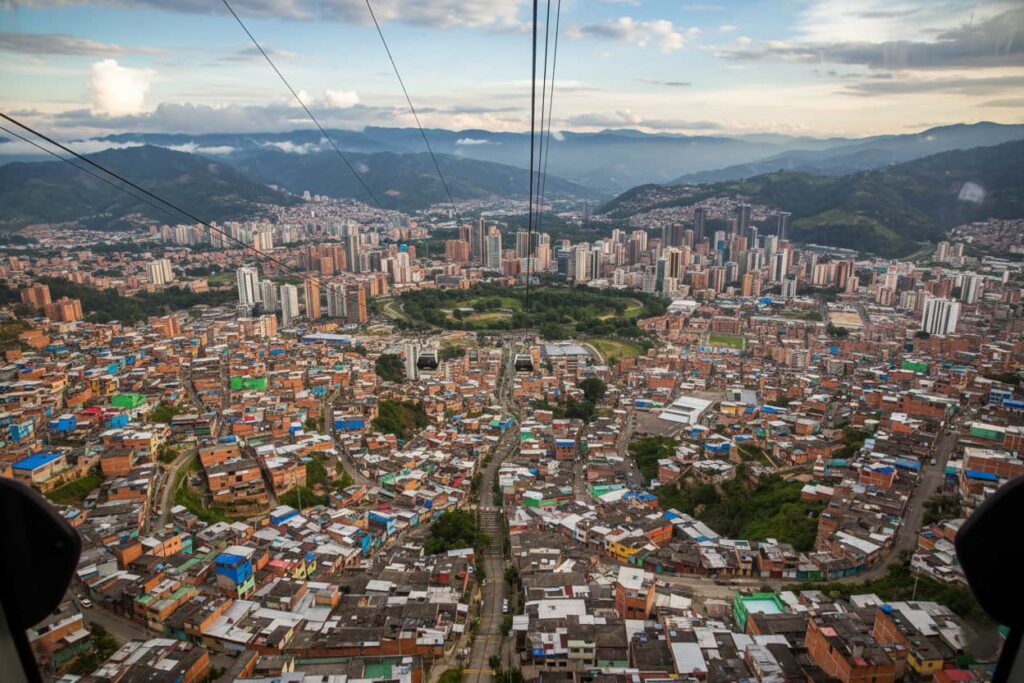
Take the Metro cable car up into the hillside communities to reach Comuna 13, the neighbourhood once considered the most dangerous in one of the world's most dangerous cities — now globally recognised as a model of community-led urban renewal through street art, music, and collective action.
What's Included
Private English-speaking guide (full 6 hours).
Private hotel pickup and drop-off in Medellín.
Metro cable car tickets for Comuna 13.
Local food tastings at gastronomic stops near San Antonio Park.
Risk insurance.
What's Excluded
Meals and additional drinks.
Museum of Antioquia entry ticket (if added on the day).
Personal purchases and souvenirs.
Gratuities (appreciated but not required).
Know before you book
Wear comfortable walking shoes — this tour involves several hours on foot across flat city streets, cobbled plazas, and the hilly streets of Comuna 13.
Dress in fresh, light clothing: cotton t-shirts, sneakers, sunglasses, and a cap are ideal. Bring a light jacket in case the day turns cool in the afternoon.
Medellín's temperature averages between 23°C and 30°C (73°F–86°F). Weather can shift during the day — a compact rain layer is useful.
The Comuna 13 section of the tour involves walking uphill on steep, narrow streets. This is moderate physical activity. If you have mobility concerns, please let us know before booking.
This tour can be taken any day of the week.
Bring a small amount of Colombian pesos for any personal purchases — tips for street performers or artists in Comuna 13 are always appreciated and go directly to community members.
More Info
Cancellation Window
12 hours before starting date.
Difficulty
Easy
Cancellation policy
Free cancellation up to 12 hours before departure. Cancellations made within 12 hours of the tour start time are non-refundable.
Guest Reviews
Why Book With Cielo
1,200 five-star reviews from real travelers — read them before you book.
Best Price Guarantee — find this tour cheaper elsewhere and we'll match it.
Private tours only — your guide and driver focus entirely on you. Your pace, your questions, your day.
Booking directly with us means your money goes to a Colombian-owned company, not a platform commission.
Our guides are English-speaking Colombian locals — people who can tell you Medellín's story from the inside, including the parts that don't appear in the standard version.
Other Info
Medellín City Tour with Comuna 13: From the Most Violent City on Earth to UNESCO Creative City of Design
A Medellín city tour with Comuna 13 gives you the most complete version of one of the most discussed urban stories in the world. Medellín was, for much of the late 20th century, the city most associated internationally with drug violence — the headquarters of Pablo Escobar’s cartel, the site of political assassinations, and by 1991, the city with the highest murder rate on earth. Today it is a finalist for UNESCO Creative City of Design, has won multiple international awards for urban innovation, and receives hundreds of thousands of tourists annually who come specifically to understand how the transformation happened. This private tour is built around exactly that question — not as a dark tourism exercise, but as a genuine encounter with the institutions, public spaces, and communities that rebuilt a city.
San Antonio Park: The Two Statues
The tour starts in Medellín’s historic centre, where the city’s formal public identity is most concentrated. San Antonio Park is an open-air gallery anchored by several of Fernando Botero’s bronze sculptures — the oversized, voluminous figures that became his signature style and one of the most recognisable visual languages in contemporary Latin American art. Botero was born in Medellín in 1932 and maintained his connection to the city throughout his career, donating significant collections of his own work and pieces from his personal collection to Medellín’s public spaces and museums.
One of the sculptures in San Antonio Park has a particular history: in 1995, a bomb was hidden inside it and detonated, killing 23 people. Rather than removing the damaged statue, the city left it in place and added an intact version beside it. Both stand there today — the intact and the destroyed — as a deliberate monument to the violence and the decision to remember it honestly rather than erase it. The two statues are one of the most quietly powerful things in Medellín, and your guide’s explanation of the decision behind them sets the tone for everything that follows on the tour. The same Botero whose sculptures stand in Bogotá’s Museo Botero — where free admission was his deliberate choice — made the same choice here: public space, free access, the city as the intended audience.
The Palacio de la Cultura Rafael Uribe Uribe: Architecture as Political Record
The Palacio de la Cultura Rafael Uribe Uribe is one of the finest examples of Gothic Revival architecture in South America. Built between 1919 and 1928, it sits at the corner of Plaza Botero and is visually impossible to miss — its chessboard-patterned black-and-white facade is unlike any other building in Colombia. The building was named after a Liberal politician and intellectual who was assassinated in 1914, and it has served as a cultural centre, archive, and exhibition space throughout its history. Your guide covers both the architectural significance and the political context — the building is a physical record of the complexity of Colombian public life in the 20th century, the same complexity that the Behind Pablo Escobar’s Steps Tour addresses through the cartel era and the Plaza de Bolívar stop on the Bogotá City Tour addresses through the Palace of Justice siege of 1985.
Plaza Botero: Public Art as Democratic Statement
Plaza Botero is the centrepiece of the downtown cultural district. The 23 sculptures Botero donated to the city stand in an open plaza adjacent to the Museum of Antioquia, which holds the largest permanent collection of his paintings and drawings in existence. The plaza is free to enter, designed to be accessible to all Medellín residents, and functions as a genuine public gathering space rather than a cordoned tourist attraction. Your guide explains Botero’s career chronology, his place in the international art world, and the specific decision to site this collection in the city’s most public space rather than behind museum walls.
The deliberate accessibility of Plaza Botero connects to the broader philosophy of Medellín’s urban transformation — the same philosophy behind the cable car infrastructure, the outdoor escalators of Comuna 13, and the Arví Park above the city. Public investment in public space, designed for the residents who needed it most, in the areas of the city most often overlooked. Your guide draws these connections across the tour, which is what makes the day cohere as an argument rather than a sequence of stops.
Comuna 13: Operation Orion, the Escalators, and the Murals
The transition to Comuna 13 is where the tour changes register. The neighbourhood — officially the San Javier district on the western hillside of the Aburrá Valley — was for years the site of territorial conflict between guerrilla groups, paramilitaries, and drug trafficking organisations. In October 2002, the Colombian military conducted Operation Orion, a large-scale urban operation to remove the armed groups from the neighbourhood. The operation succeeded militarily but left deep wounds in the community, and the years that followed saw residents begin the process of reclaiming their streets through art, music, and collective organisation.
The outdoor escalators installed in 2011 — connecting the hillside to the city below and reducing a 30-minute walk to a 6-minute ride — were one of the physical manifestations of the city’s investment in the community. The Metrocable infrastructure that connects Santo Domingo to Arví Park applied the same logic to the eastern hillside: infrastructure as social repair, mobility as dignity. The murals followed the escalators in Comuna 13: massive, technically accomplished works that cover entire building facades and tell the neighbourhood’s story in its own visual language.
The Graffiti Tour: Walking the Streets Where the Story Is Most Visible
The graffiti tour through the neighbourhood is led by your guide and takes you into the streets where the recovery process is most visible. The murals range from indigenous cosmology to portraits of community figures to abstract work by artists who have become internationally recognised. Local street artists are often present, willing to talk about their work and their neighbourhood.
The same genre of politically engaged mural work covered on the Bogotá Graffiti Tour in La Candelaria — artists using public walls to make arguments about history, identity, and power — is at work in Comuna 13, but the context is different. La Candelaria’s murals respond to 500 years of Colombian history on walls that are themselves 400 years old. Comuna 13’s murals respond to events that happened in this specific neighborhood within the last two decades, painted by people who lived through them, on walls that were previously controlled by armed groups. The warmth of the community toward visitors who engage genuinely — rather than treating the neighborhood as a spectacle — is one of the consistent observations of people who do this tour rather than the alternatives that keep you at a distance.
Plan Your Time in Medellín
This tour works well as a first full day in Medellín — the historic centre, the public art, and the neighborhood transformation in a single coherent itinerary that gives you the framework for everything else. The Behind Pablo Escobar’s Steps Tour covers the shadow side of the same transformation — the cartel era, the prison, the neighborhood Escobar built for the poor — in six hours with a guide whose personal connection to the city’s history makes the difference. The Botanical Garden and Arví Park Tour shows the green infrastructure side of the same recovery story — the living museum at the city’s centre and the protected forest reserve above it, connected by the cable car system the tour explains. For a day trip out of the city, the Guatapé and El Peñol Rock Tour takes you to one of the most visually striking landscapes in Antioquia — a complete change of register from the urban history you’ve been walking through.
Ready to understand how Medellín became the city it is today? Book the Medellín City Tour with Comuna 13 above and your guide will take care of everything from hotel pickup to the final return — all you have to do is show up curious.
Building a longer itinerary? Start with our Medellín tours.
Before you go: our Medellín guides
Written by the team that runs this tour.
FAQs
Wear fresh, comfortable clothing — cotton t-shirts, sneakers, sunglasses, and a cap are ideal. Bring a light jacket in case the day gets cool, particularly in the afternoon. The tour involves several hours of walking, so comfortable shoes are essential.
The weather in Medellín tends to be warm throughout the day, with average temperatures between 23°C and 30°C (73°F–86°F). Conditions can change, particularly in the afternoon. A light rain jacket is a sensible precaution.
The most representative places on this tour are San Antonio Park — where you see Botero sculptures and try local food — the Palacio de la Cultura Rafael Uribe Uribe, Plaza Botero with its 23 sculptures, and Placita de Flórez. The tour finishes with the graffiti tour in Comuna 13, which showcases art and culture through many different forms of expression.
You can take this Medellín and Comuna 13 tour any day of the week. There are no mandatory closure days that affect this itinerary.
Yes — the tour is specifically designed to give context to visitors seeing the city for the first time. Your guide connects the art, architecture, and community you encounter to the city's broader story: from the violence of the 1980s and 1990s through the social investment programmes that rebuilt it. No prior knowledge is needed.
The tour involves several hours of walking across flat city streets, cobbled plazas, and the hillside streets of Comuna 13. The pace is relaxed throughout. The Comuna 13 section requires walking uphill on steep terrain, which is moderate in difficulty. Wear comfortable shoes and stay hydrated.