
+ 1,200 verified five-star reviews for Cielo.Travel on Google and TripAdvisor.
Duration
Tour Type
Pricing
Languages
Overview
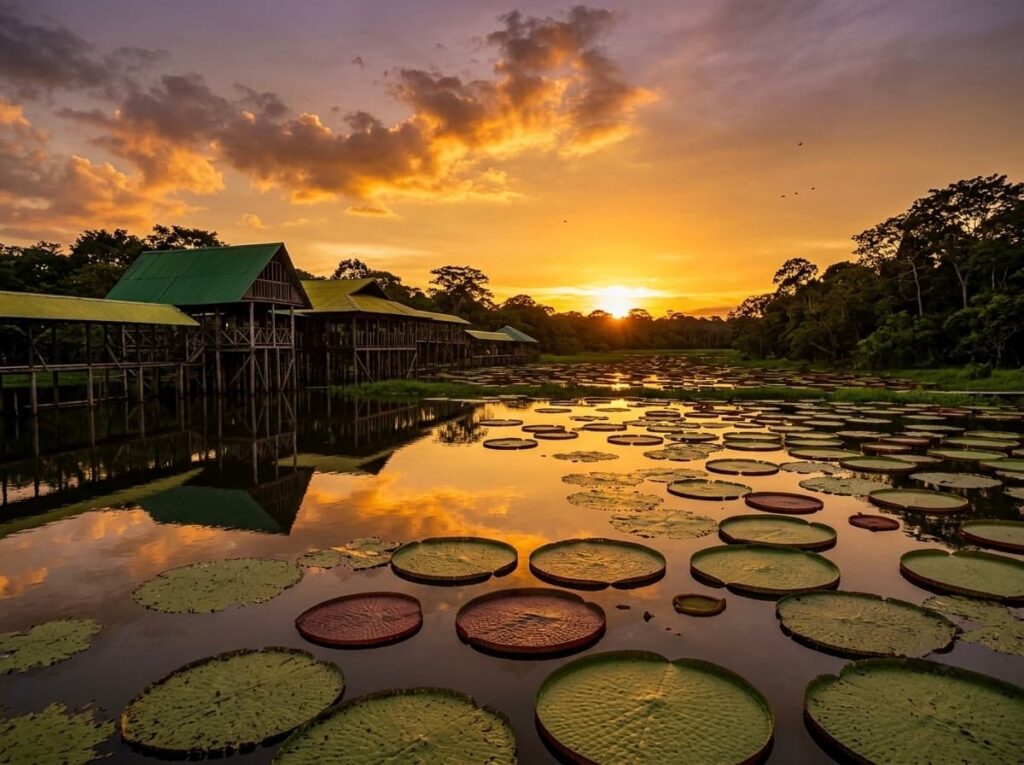
The Flor de Loto Natural Reserve sits just outside Leticia in the wetland and jungle ecosystem of the Colombian Amazon, and getting there is already part of the experience — a jungle hike through local communities in the dry season, or a kayak through the flooded forest canopy in the wet season, when the river rises into the trees and navigation happens through channels that were dry land a few months earlier. The seven-hour day covers five and a half hours of activities at the reserve: birdwatching on the lake in the ecosystem that holds the highest number of bird species on the planet, artisanal fishing with local methods, kayaking through the aquatic vegetation channels, and the Victoria Regia section of the lake — where water lily leaves up to three meters in diameter cover the surface, their raised rims and radiating underside ribs an engineering solution so effective that the largest can support a small adult. The flower’s two-day bloom cycle, shifting from white to pink as part of a beetle pollination mechanism that has been operating in this lake for millions of years, is the kind of detail that transforms observation into understanding.
A traditional Amazonian lunch is served at the reserve, followed by time to swim in the river and rest in a hammock — deliberate unstructured hours that the Amazon rewards more than most environments do. The return mirrors the arrival: hiking or kayaking back to Leticia depending on the season. Yellow fever vaccination is mandatory at least two weeks before arrival. Long sleeves, long pants, waterproof clothing, insect repellent, a swimsuit, and a dry bag for electronics are the right gear. The guide handles everything else.
Itinerary
Highlights
See the Victoria Regia water lily — the Amazon's most iconic plant — growing in its natural habitat at the reserve, and learn about the crucial ecological role it plays in the Amazonian ecosystem.
Spend a full 5.5 hours immersed in one of the most emblematic natural areas of the Colombian Amazon, with birdwatching, artisanal fishing, kayaking, and jungle hiking all in a single day.
Trek through lush jungle trails while your guide identifies the diverse wildlife around you — birds, frogs, primates, and the plants that sustain this ecosystem.
Cool off with a refreshing swim in the river at the reserve and rest in a hammock surrounded by the Amazon — a rare moment of genuine stillness in the world's most biodiverse rainforest.
What's Included
Private English-speaking guide.
Hotel pickup and drop-off.
Water and land transportation.
Lunch.
All-risk insurance.
What's Excluded
Extra purchases.
Know before you book
Yellow fever vaccination is required to visit the Amazonas department. Get vaccinated at least two weeks before your trip — the vaccine takes that long to reach full effectiveness.
Long pants, long-sleeve shirts, waterproof clothing, and mosquito repellent are strongly recommended. You will be in the Amazon jungle for the majority of the day.
A hat or cap and sunglasses are advisable, especially during the kayak section on the open lake.
The route to the reserve changes with the season — jungle hike from June to December (dry season), kayak or traditional raft from January to May (flood season). Both routes are guided and manageable for most fitness levels.
Bring a swimsuit — there is time to swim in the river at the reserve, and it is one of the highlights of the day.
More Info
Cancellation Window
12 hours before starting date
Difficulty
Easy
Cancellation policy
Free cancellation up to 12 hours before departure. Cancellations made within 12 hours of the tour start time are non-refundable.
Guest Reviews
Why Book With Cielo
1,200 five-star reviews from real travelers — read them before you book.
Best Price Guarantee — find this tour cheaper elsewhere and we'll match it.
Private transportation door-to-door — no shared shuttles, no waiting around for strangers.
Booking directly with us means your money stays with a Colombian-owned company, not a platform commission.
Our team coordinates everything — pickup timing, pilot briefing, and return logistics — so you focus only on the flight.
Other Info
The Flor de Loto Nature Reserve Day tour from Leticia is one of the most complete single-day experiences available in the Colombian Amazon. In seven hours, it covers the physical journey to the reserve — either through jungle trails or flooded forest by kayak depending on the season — five and a half hours of activities at the reserve itself, and the return to Leticia. What makes it distinctive is the combination: wildlife and ecology, swimming and rest, a traditional lunch, and the Victoria Regia water lily, which produces leaves up to three meters in diameter and which you cannot see anywhere else in this form. It is a day that covers more ground, in every sense, than most travelers expect from a single-day Amazon itinerary.
Leticia and the Colombian Amazon: The Starting Point
Leticia is Colombia’s southernmost city and the gateway to the Colombian Amazon — a port town at the point where Colombia, Peru, and Brazil meet at the river’s edge, built on commerce and ecology in equal measure. The streets near the waterfront hold the particular energy of a place that faces outward toward the forest and the water rather than inward toward a national capital: boats at the dock, market stalls selling jungle fruit and dried fish, the mix of indigenous faces and mestizo merchants and international researchers that gives Leticia its distinct character among Colombian cities.
The Colombian Amazon that surrounds Leticia holds nearly a third of all tropical rainforest remaining on Earth and is home to the highest number of bird species on the planet. The Flor de Loto Natural Reserve sits just outside the city in the forest and wetland ecosystem that characterizes this part of the basin — a protected area whose lake, channels, and surrounding jungle represent the Amazon at a scale and in a format that a single day can genuinely explore.
Getting There: Jungle Trail or Flooded Forest
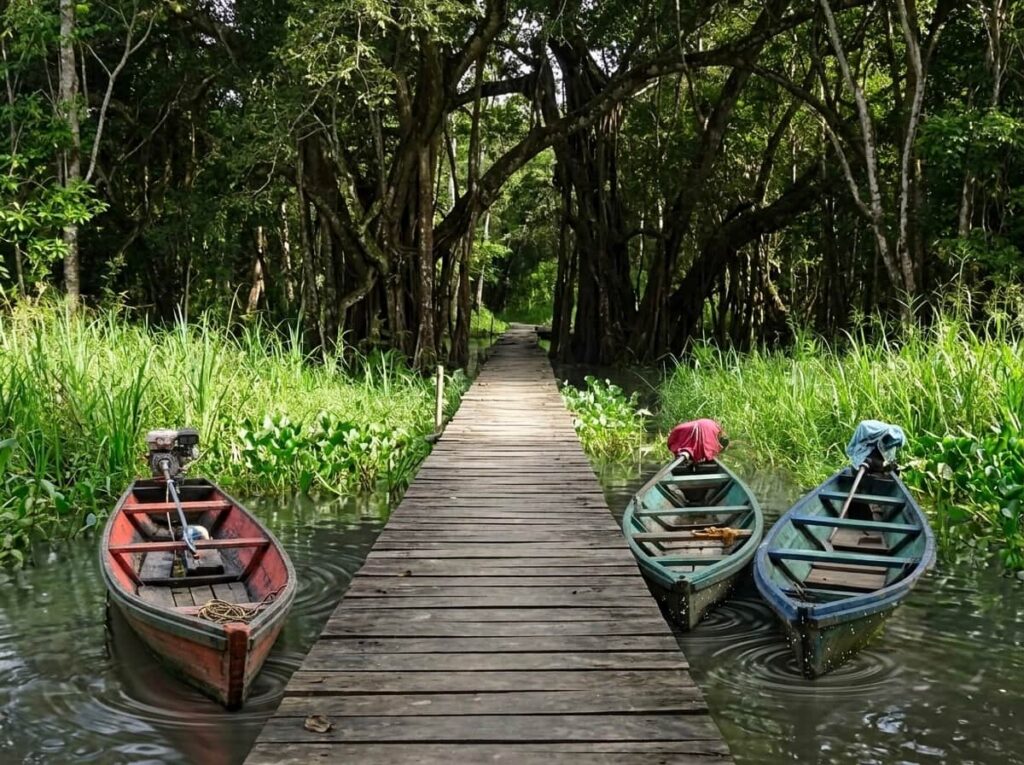
Getting to the Flor de Loto Reserve is not a simple transfer — it is the beginning of the experience, and the route changes with the season in a way that reflects one of the Amazon’s most defining ecological characteristics: the annual flood cycle.
The Dry Season Route: Jungle Hike
From June to December, when the water levels are lower, the route to the reserve is a jungle hike through local communities and forest scenery. The trail passes through the transitional zone between the managed land around Leticia and the protected forest beyond it — a walk that introduces the vegetation, the sounds, and the atmosphere of the Amazon at ground level before you arrive at the reserve. Your guide explains what you are walking through as you move: the plant communities, the bird calls, the evidence of the animal life that uses this corridor between the city and the forest. The hike takes approximately one hour each way and puts you inside the landscape rather than looking at it from a vehicle window.
The Flood Season Route: Kayak Through the Flooded Canopy
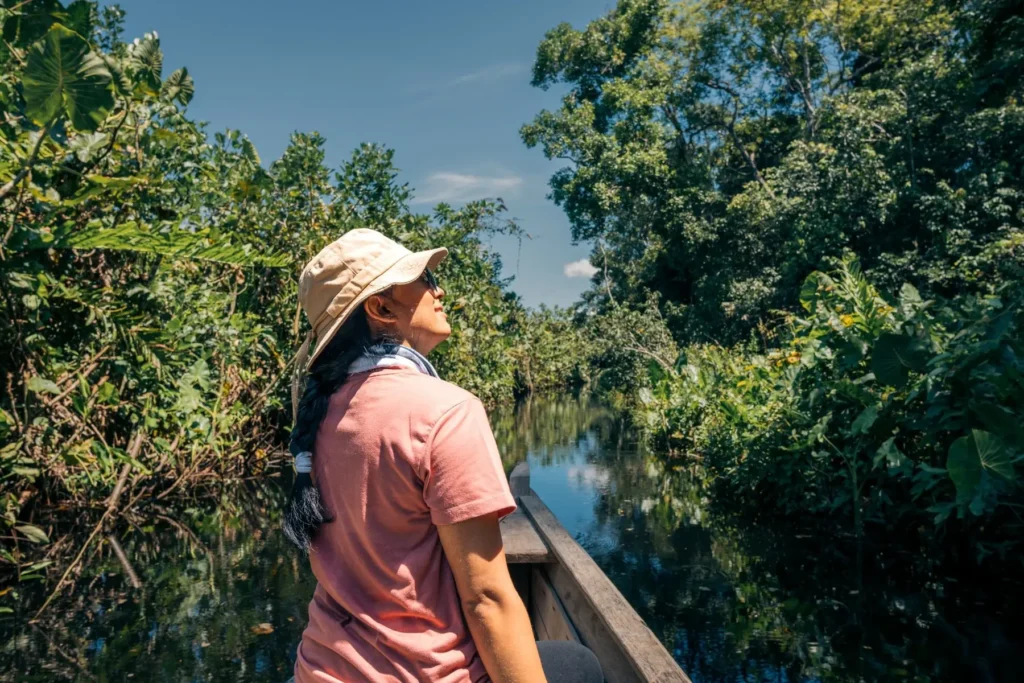
From January to May, the water rises into the forest — one of the most extraordinary seasonal phenomena in the Amazon basin — and the route to the reserve shifts accordingly. When the river floods the forest, the trees stand in water up to several meters deep, and navigation happens by traditional raft or kayak through channels that were dry land a few months earlier. Paddling through the flooded forest is one of the experiences that defines the Amazon for the travelers who encounter it: the canopy overhead, the tree trunks disappearing into the water below, the fish visible in the clear shallows, and the particular silence of a forest that has been transformed by water into something that has no equivalent in any other ecosystem on Earth. The flood season route is not a compromise for the dry season hike — it is a different and equally significant experience of the same landscape.
At the Reserve: Five and a Half Hours Across Multiple Activities
The five and a half hours at the reserve are structured to move through multiple activities without rushing any of them — a deliberate design that reflects the understanding that the Amazon rewards people who slow down enough to notice what is around them. The activities are sequenced to alternate between active and quiet, between movement and observation, between ecological education and physical pleasure.
Birdwatching on the Lake: The Amazon’s Extraordinary Avian Diversity
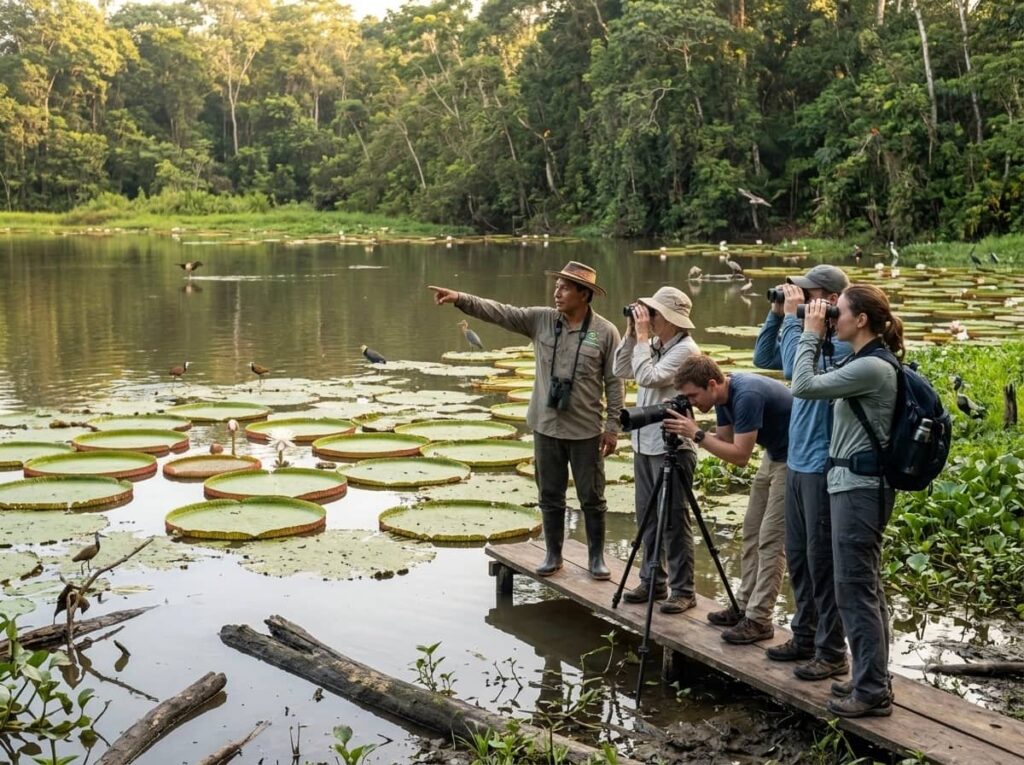
Colombia’s Amazon holds the highest number of bird species on the planet, and the Flor de Loto Reserve is a productive location for encountering them. The lake environment — open water, vegetated margins, flooded forest edges, and the transition between them — concentrates bird activity in ways that the dense interior forest does not. Herons stand in the shallows. Kingfishers work the water surface. Parrots cross the lake in pairs. Jacanas walk on the floating vegetation. Raptors circle above the canopy.
Your guide identifies species as you move around the lake, providing behavioral and ecological context that makes each identification more than a name on a list. The lake’s open character means that birds are visible at distances that would be impossible in the denser forest, and the reflections on the water surface add a visual dimension to the observation that the trail environment cannot provide. For travelers with a specific interest in birding, the reserve is a genuinely productive site. For those encountering Amazonian bird species for the first time, the guide’s explanations provide the framework that makes the encounter coherent rather than overwhelming.
Artisanal Fishing: How the Communities Around the Reserve Have Always Eaten
Artisanal fishing with local methods is one of the activities that connects the ecological experience of the reserve to its human dimension. The communities that have lived around this lake and these channels for generations have developed fishing techniques specific to the Amazon’s seasonal rhythms — methods that work with the flood cycle, with the behavior of the fish species that live in these waters, and with the materials available in the forest. Your guide demonstrates the technique and provides the equipment, and the fishing session gives you a practical understanding of the relationship between the reserve’s ecology and the livelihoods of the people who live alongside it.
The Amazon’s fish diversity is extraordinary — the basin holds more freshwater fish species than any other river system on Earth — and the species present in the Flor de Loto lake reflect the productivity of a protected ecosystem. Whether you catch anything or not, the session provides a different kind of attention to the water than birdwatching or kayaking: closer, more patient, more focused on what is happening below the surface rather than above it.
Kayaking the Lake Channels: Water-Level Navigation Through Amazon Vegetation
Kayaking on the lake through the channels lined with aquatic vegetation gives you the water-level perspective on the reserve that walking and birdwatching from the shore cannot provide. The channels between the vegetation masses are narrow enough that the kayak is the right size of vessel — a motorboat would be too large and too loud — and the paddling pace is slow enough that the flora and fauna on both sides are accessible to observation rather than blurred by speed.
The aquatic vegetation of the Amazon lake system is ecologically significant in ways that your guide explains as you move through it. The floating meadows of grass and sedge that cover sections of the lake surface provide habitat for juvenile fish, nesting birds, and the invertebrate communities that support the lake’s food web. The water chemistry changes in and around these vegetation masses in ways that affect which species can live there. The Victoria Regia, whose leaves you will see at the reserve’s most distinctive section, is part of this aquatic community — the largest member of a plant community that shapes the physical and chemical environment of the lake.
The Victoria Regia: The Amazon’s Most Extraordinary Water Lily
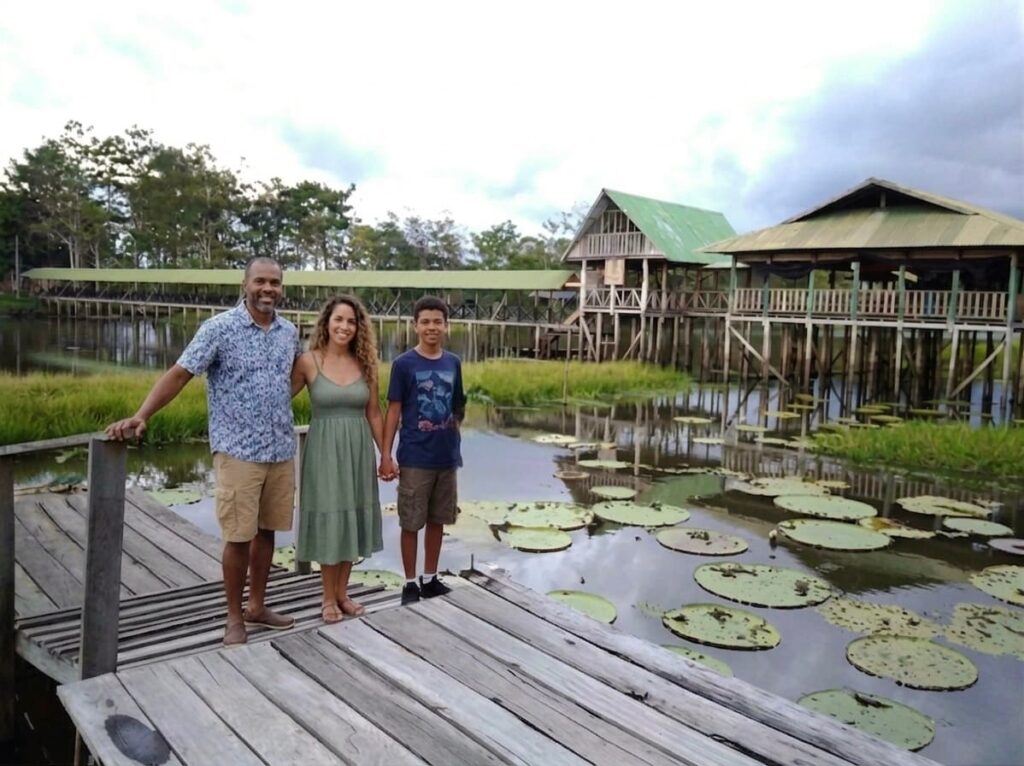
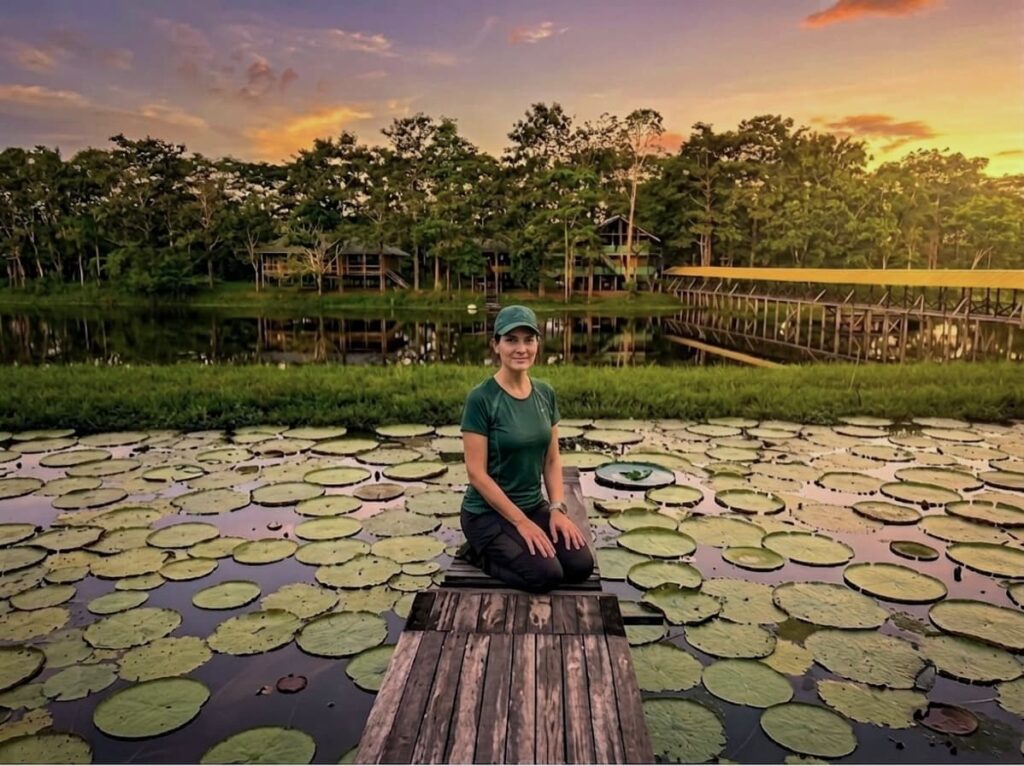
The Victoria Regia section of the lake is the visual centerpiece of the day and the feature that makes Flor de Loto distinctive among Amazon day tour destinations. This water lily — named for Queen Victoria in the 19th century by the British botanist who formally described it, but known to Amazonian communities for far longer under different names — produces leaves that can reach up to three meters in diameter. The leaves are circular, with a raised rim around the edge and a structure of radiating ribs on the underside that distributes weight across the surface — an engineering solution so effective that the largest leaves can support a small adult if the weight is spread evenly. The sight of them covering a section of the lake surface, their scale only becoming apparent when you paddle close enough to place your hand on the rim, is one of those experiences that photographs do not fully prepare you for.
The Flowers: Two Days, Two Colors
The Victoria Regia flower opens at night and closes by morning, and across its two-day bloom cycle it shifts from white on the first night to pink on the second — a color change driven by the plant’s pollination strategy. The white flowers of the first night attract scarab beetles with heat and scent; the beetles enter the flower, become trapped overnight, and emerge the following evening dusted with pollen. The flower, now pink and no longer producing heat or scent, is less attractive to new beetles — who are drawn instead to the fresh white flowers opening nearby — and the pollen-covered beetles cross-pollinate as they move. Your guide explains this process at the site, and the explanation transforms the observation: you are not looking at a beautiful flower. You are watching a pollination mechanism that has been operating in this lake for millions of years.
Traditional Amazonian Lunch and the Quiet Hours
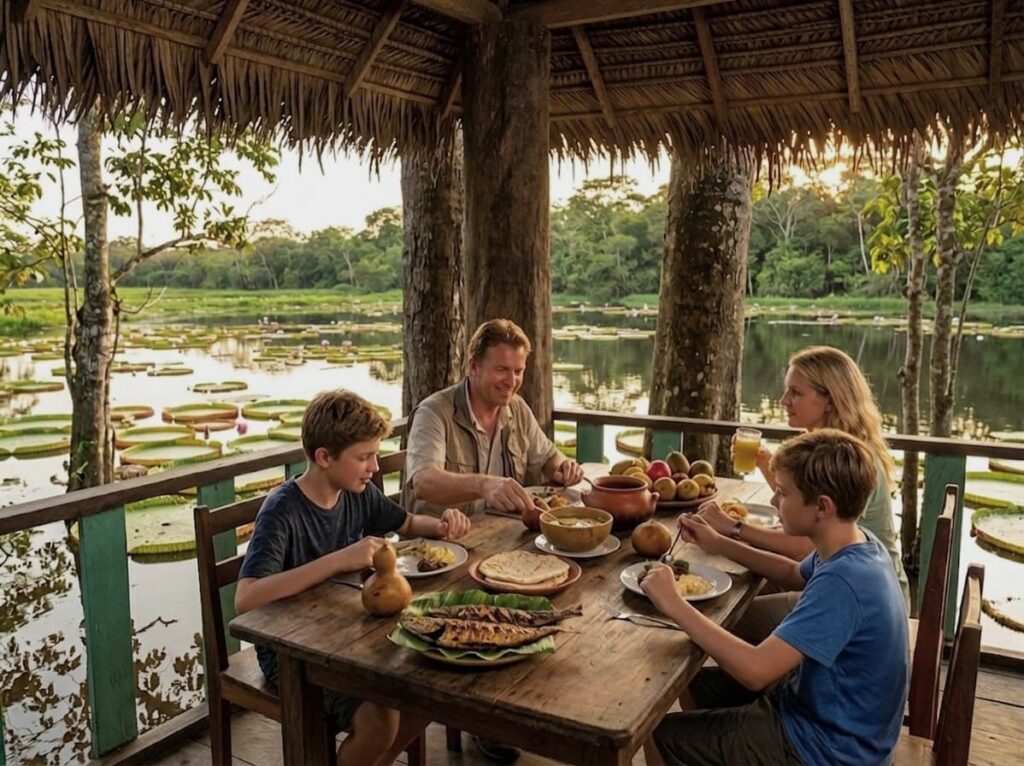
A traditional Amazonian lunch is served at the reserve — food prepared with local ingredients in the way that the communities around the reserve have always prepared it. The meal reflects the food culture of the Colombian Amazon: freshwater fish, yuca preparations, tropical fruits, and the particular flavors that the jungle’s agricultural and foraging traditions produce. Eating at the reserve rather than in a Leticia restaurant is a direct connection to the community and the ecosystem you have been moving through all morning.
After lunch, there is time to swim in the river and rest in a hammock — and these quieter moments are part of the itinerary deliberately. The Amazon rewards people who slow down enough to notice what is around them, and the hours after lunch at a hammock at the reserve’s edge are where many guests report their clearest perceptions of the environment: the sounds of the forest in the early afternoon, the quality of the light on the water, the particular combination of physical rest and sensory alertness that the Amazon produces when you stop moving through it and simply stay in it.
Practical Notes: Vaccinations, Gear, and What to Expect
Yellow fever vaccination is required for the Amazonas department — get it at least two weeks before you arrive. This is a hard requirement, not a recommendation, and you will be asked for your vaccination certificate. Long sleeves and long pants protect against insects in the morning and evening hours when mosquito activity peaks. Waterproof clothing or a light rain layer is essential — the climate averages 25°C year-round with frequent rain regardless of the season. Insect repellent, a swimsuit for the river swim section, a hat for the open water sections, and a dry bag for electronics complete the practical preparation. Rubber boots may be available depending on the season — confirm with your guide when booking.
Continue Exploring the Colombian Amazon
For those who want more time at the reserve and in the surrounding region, the Amazon Three Borders 3 Day Tour uses the Flor de Loto Reserve as its first-night base and then continues to Puerto Nariño and Cacao Island in Peru — a multi-day itinerary that covers the full range of what the Colombian Amazon and its cross-border region offer. For a day tour that focuses on wildlife and indigenous culture in a different format, the Amazon River and Monkey Island Day Tour covers a jungle trek and a visit to the Maloka Cuchira community.
Ready to spend a day at one of the Amazon’s most important natural reserves? Book the Flor de Loto tour above and your private guide will handle everything from hotel pickup to the final return to Leticia — all you need is your yellow fever certificate and the right clothes.
Building a longer itinerary? Start with our the Amazon tours.
Before you go: our Colombia guides
Written by the team that runs this tour.
FAQs
Long sleeves and long pants protect you from mosquitoes and other insects throughout the day. A hat or cap and sunglasses are advisable for sun protection. Bring waterproof clothing — you'll be in the rainforest for seven hours and rain can come at any point. A swimsuit is also worth packing for the swim at the reserve.
The Amazonas department has a warm, humid climate with high temperatures and frequent rain throughout the year. The average temperature stays constant at around 25°C (77°F). Pack light, breathable layers and always plan for some rain.
Yellow fever is endemic in tropical areas, and the Amazon is one of the primary risk zones. Vaccination is the most important preventive measure — it's safe, affordable, and offers effective immunity in 95% of vaccinated people within two weeks of the shot.
The Amazonas contains nearly a third of all tropical rainforests remaining on Earth. It covers 1% of the planet's surface and is home to approximately 10% of all known wildlife species. On this tour, you may spot macaws, toucans, freshwater dolphins, howler monkeys, and jaguars.
The Victoria Regia is the largest water lily species in the world and one of the Amazon's most iconic plants. Its leaves can reach up to 3 meters in diameter and are strong enough to support the weight of a small child. At the Flor de Loto Reserve, your guide explains the ecological role this plant plays in the Amazonian ecosystem — it's not just a visual highlight, it's a keystone of the lake's biology.
Related Tours

Private Birding Amazon Tour in Leticia
Amazonas
Private
A Birding Amazon Tour through Colombia’s southern jungle is one of the most rewarding experiences a nature lover can have…
$$$
10 hours

Amazon Three Borders 3-Day Tour: Leticia, Puerto Nariño & Cacao Island
Amazonas
Multi-Day, Private
The Amazon Three Borders Tour covers a piece of geography that very few travelers reach: the point where Colombia, Peru,…
$$$
3 Days
Private 5 Day Amazon Tour in Leticia
Amazonas
Private
Day 1: Arrival and the San Antonio Indigenous Reserve This five-day private tour starts the moment you land at Leticia’s…
$$$
5 days