

+ 1,200 verified five-star reviews for Cielo.Travel on Google and TripAdvisor.
Duration
Tour Type
Pricing
Languages
Overview
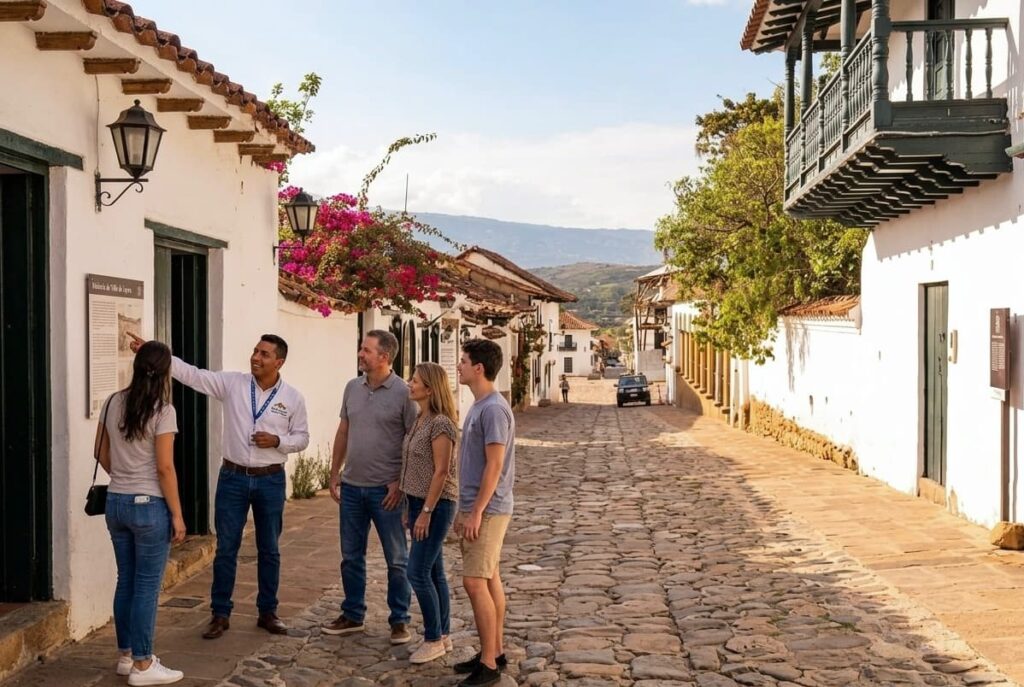
Villa de Leyva was declared a National Monument in 1954 — which means the entire historic center has been held in something close to its original state for over seventy years. The cobblestone streets, the whitewashed facades, the low-rise colonial architecture that frames Plaza Mayor, one of the largest cobblestone squares in South America: none of it is reconstructed. It is the original built environment of a town founded in 1572, and walking through it with a guide who knows the stories behind every building is a different experience from walking through it alone. The tour moves from the plaza outward through the specific institutions that represent distinct chapters of Colombian history — the 17th-century Ecce Homo convent, one of the finest examples of Spanish colonial religious architecture in the country; the house where Juan de Castellanos spent his final years after writing the longest poem in the Spanish language; and the house and museum of Antonio Nariño, the man who translated the Declaration of the Rights of Man into Spanish in 1793, got arrested for it, and spent the rest of his life becoming one of the central figures of Colombian independence.
The tour closes at the fossil and paleontological museums, where Villa de Leyva reveals a dimension that surprises most visitors. The valley floor was once the bottom of a shallow tropical sea, and the surrounding landscape has been yielding marine fossils — ammonites, plesiosaur fragments, and the kronosaurus skeleton discovered in the 1970s — ever since local farmers started turning the soil. Walking through these collections immediately after the colonial center creates an experience of time that few towns in the world can offer: from the Cretaceous period to the Spanish conquest to the birth of the Colombian republic, all within a few hours and a few kilometers. Comfortable flat-soled shoes are essential. Everything else is handled.
Itinerary
Highlights
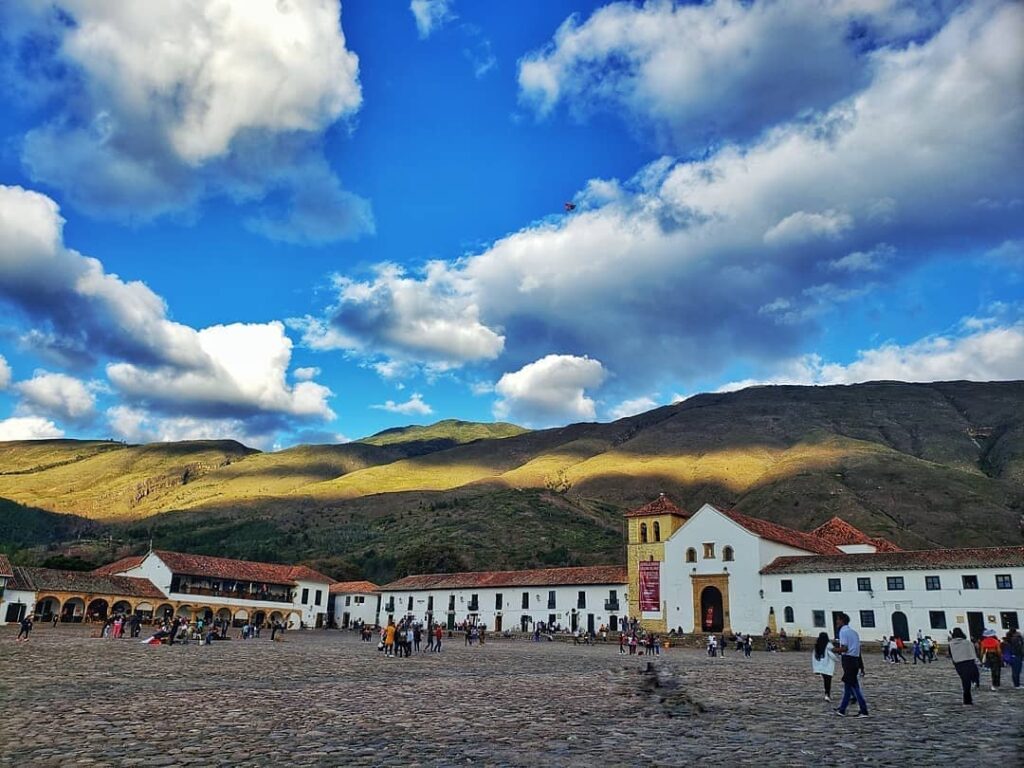
Stand in Plaza Mayor — the largest cobblestone square in Colombia and one of the most significant in South America — and hear the full story of Villa de Leyva's founding and its 400-year role in Colombian history.
Visit the top cultural and historical landmarks of the historic center, including the Holy Ecce Homo convent and the houses of Juan de Castellanos and Antonio Nariño — one of the fathers of Colombian independence.
Walk the paleontological and fossil museums to see the archaeological richness of this land — a region where marine fossils from 130 million years ago emerge from the same landscape as colonial churches.
Get insider recommendations from your local guide on where to eat, what to see next, and how to make the most of your remaining time in Villa de Leyva — turning a 5-hour tour into the foundation for an entire trip.
What's Included
Private English-speaking guide.
Hotel pickup and drop-off in private transportation.
Gastronomic experience.
Entry to all activities.
All-risk insurance.
What's Excluded
Breakfast and lunch.
Extra purchases.
Know before you book
The tour is a 5-hour walking tour of the historic center. Comfortable, flat-soled shoes are strongly recommended — Plaza Mayor and the surrounding streets are entirely cobblestoned.
Villa de Leyva sits at approximately 2,100 meters above sea level. The climate is mild and dry, with cooler mornings and evenings. A light jacket is advisable for early-morning pickups.
The Paleontological Museum and other sites may have individual entry fees. Your guide will advise on the day — confirm with Bokun whether all entry costs are already covered under 'entry to all activities.'
This tour suits most fitness levels. The walking sections are on flat cobblestone streets with regular stops. If you have any mobility concerns, contact us before booking so we can advise.
Villa de Leyva was declared a National Monument in 1954. Photography is permitted throughout the tour, and the architecture of the historic center is among the most photogenic in Colombia — bring a charged camera or phone.
More Info
Cancellation Window
12 hours before starting date
Difficulty
Easy
Cancellation policy
Free cancellation up to 12 hours before departure. Cancellations made within 12 hours of the tour start time are non-refundable.
Guest Reviews
Why Book With Cielo
1,200 five-star reviews from real travelers — read them before you book.
Best Price Guarantee — find this tour cheaper elsewhere and we'll match it.
Private transportation door-to-door — no shared shuttles, no waiting around for strangers.
Booking directly with us means your money stays with a Colombian-owned company, not a platform commission.
Our team coordinates everything — pickup timing, pilot briefing, and return logistics — so you focus only on the flight.
Other Info
The Villa de Leyva tour gives you something that most visitors to this region never quite manage on their own: the actual meaning of what you’re looking at. Villa de Leyva is one of Colombia’s most preserved colonial towns — declared a National Monument in 1954, which means the entire historic center has been held in something close to its original state for over seventy years. The cobblestone streets, the whitewashed facades, the low-rise colonial architecture — none of it is reconstructed. It is the original built environment of a 16th-century highland settlement, maintained by a combination of legal protection and community choice. Walking through it without context is still beautiful. Walking through it with a guide who knows the stories behind every building is something different.
Plaza Mayor: Where the Town’s History Concentrates
Plaza Mayor is where the tour begins and where the town’s history concentrates most completely. This is the largest cobblestone square in Colombia and one of the most significant in South America — a space that has served as the center of civic, religious, and political life since the town was founded in 1572 by Hernán Suárez de Villalobos as a rest stop for officials traveling between Bogotá and the northern provinces. The scale of the plaza is not immediately apparent from photographs. At roughly 120 meters by 120 meters, it is vast in a way that the surrounding colonial architecture — low, unimposing, human in scale — makes more pronounced rather than less. The open sky above the plaza feels enormous precisely because nothing around it reaches for height.
The characters who built Villa de Leyva, the independence-era figures who passed through it, the monasteries that still frame its edges — your guide covers all of it from this single starting point, using the square as a map of the town’s history before moving outward into the streets as the story develops. The founding of the town, the role it played as a waypoint in the colonial administration of New Granada, the military and political events of the independence era that unfolded in and around this square: the plaza is the right place to establish the timeline before walking into the specific buildings and institutions that illustrate it.
The Holy Ecce Homo Convent: Spanish Colonial Religious Architecture at Its Finest
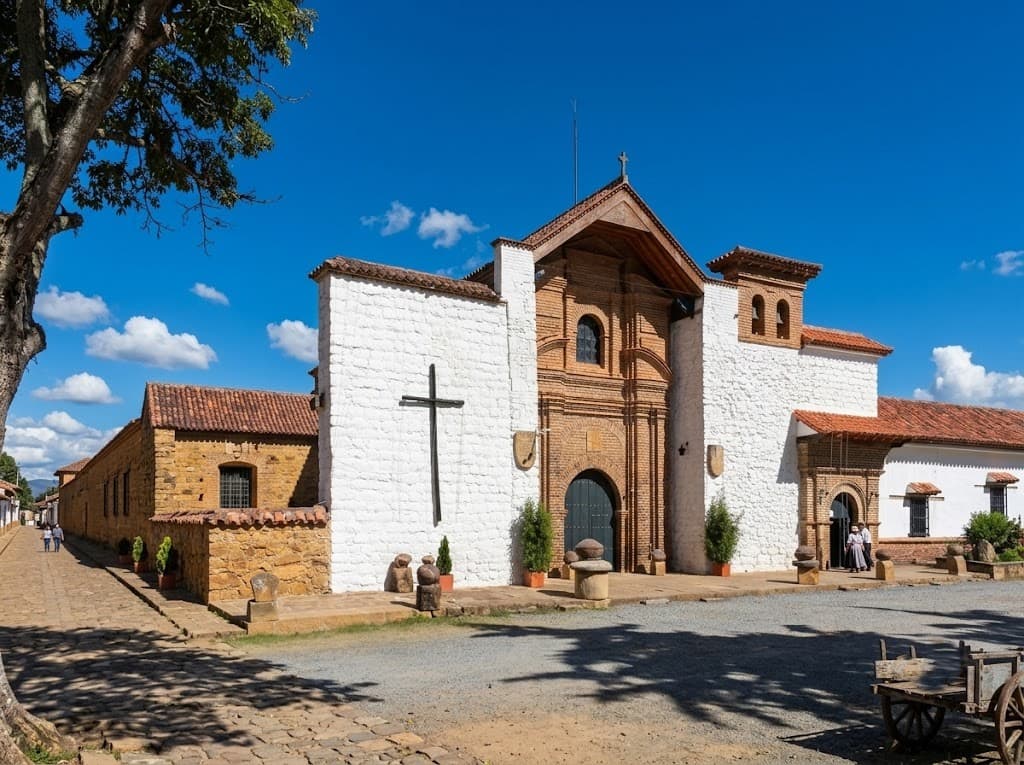
The first major institution after Plaza Mayor is the Holy Ecce Homo convent, constructed in the 17th century and considered one of the finest examples of Spanish colonial religious architecture in Colombia. The convent was founded by Dominican friars in 1620 and built over several decades from the local stone that gives Villa de Leyva its characteristic warm, sun-bleached color. The architectural details — the carved stone portal, the interior cloister with its low arches and central well, the proportions of the chapel — reflect the particular aesthetic that Spanish religious orders brought to the Americas and adapted to local materials and conditions.
What makes Ecce Homo significant beyond its architectural quality is its survival. Most of colonial Colombia’s religious infrastructure was altered, damaged, or destroyed across the centuries of independence, civil conflict, and modernization that followed the Spanish period. Ecce Homo has been maintained in a state of unusual integrity, which means that walking through it today gives you a physical sense of what a 17th-century colonial religious community actually looked like — not a restoration or a reconstruction, but the original space, still in use.
The House of Juan de Castellanos: The Longest Poem in the Spanish Language
From Ecce Homo, the tour moves to the House of Juan de Castellanos — a building that preserves the memory of one of the most significant and least-known figures in the literary history of the Spanish Americas. Juan de Castellanos was a Spanish priest who spent decades in the New World during the conquest period, first as a soldier and then as a cleric, and who devoted the later part of his life to documenting what he had witnessed in verse. His Elegías de Varones Ilustres de Indias — Elegies of Illustrious Men of the Indies — runs to over 150,000 lines and remains the longest poem written in the Spanish language.
The significance of Castellanos’s work goes beyond its length. Written from direct experience of the conquest, it is one of the primary first-person accounts of the early colonial period in the Americas — a document that historians, literary scholars, and indigenous rights researchers have returned to repeatedly for what it reveals about the violence, complexity, and cultural collision of that era. Castellanos spent his final years in Villa de Leyva, and the house where he lived is now a cultural institution that holds documents, editions of his work, and the physical memory of his presence in the town. Your guide places his life and work in the context of the broader colonial history you’ve been walking through.
The House and Museum of Antonio Nariño: The Man Who Translated Revolution
The House and Museum of Antonio Nariño honors one of the most politically consequential figures in Colombian history — and one whose significance is underappreciated outside the country. Antonio Nariño was a Bogotá-born intellectual and politician who, in 1793, translated the Declaration of the Rights of Man and of the Citizen into Spanish and printed and distributed it in Colombia. The Declaration had been adopted by the French National Assembly in 1789, and its circulation in the Spanish colonies was explicitly prohibited by the colonial government. Nariño translated and distributed it anyway.
The act got him arrested, tried for treason, and sentenced to ten years in African prison — a sentence he partially served, escaped from, and was eventually pardoned from. He went on to become one of the central figures of the Colombian independence movement, serving as president of the state of Cundinamarca and as a senator in the early republic. He died in Villa de Leyva on December 13, 1823, in the house that is now a museum, and his final years were spent in the same town that had been a center of colonial administration for the empire whose authority he had spent his life challenging.
The museum holds documents, portraits, and objects from the 18th and 19th centuries across several original colonial rooms. Your guide uses Nariño’s story to connect the colonial period you’ve been walking through to the independence era that followed it — the intellectual currents, the political risks, and the specific acts of individual courage that turned colonial subjects into citizens of a republic.
The Fossil and Paleontological Museums: 130 Million Years Beneath the Cobblestones
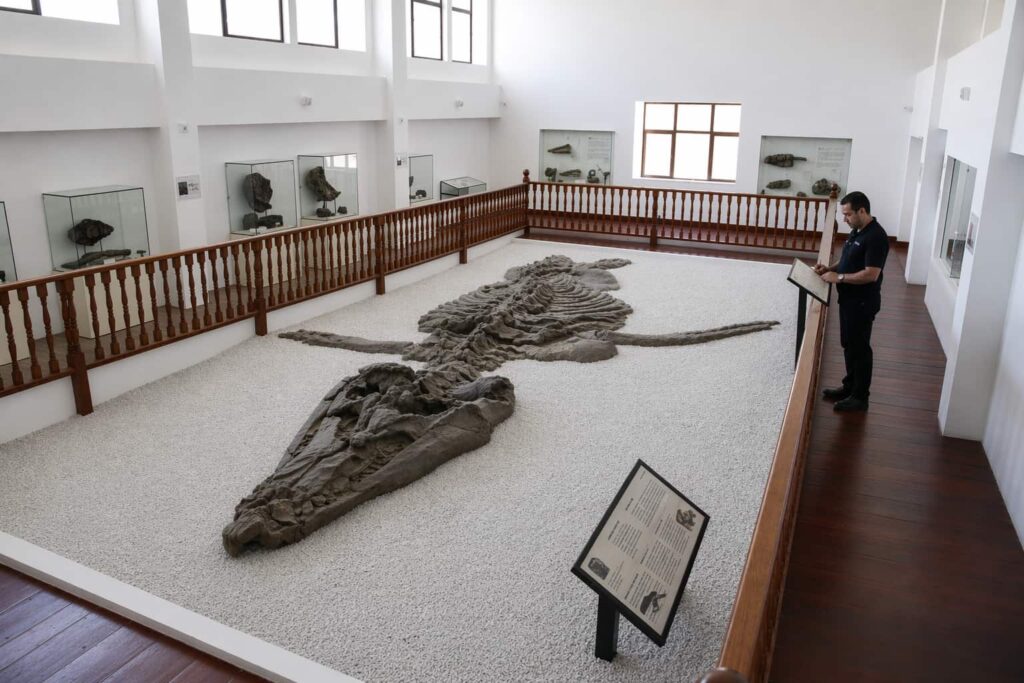
The tour closes at the fossil and paleontological museums — and this is where Villa de Leyva reveals a dimension that surprises most visitors. The region around the town sits on what was once the floor of a shallow tropical sea. One hundred and thirty million years ago, during the Cretaceous period, marine creatures lived and died here, and their remains have been surfacing from the surrounding landscape ever since. Local farmers turning soil in the fields outside town have been uncovering ammonites, marine mollusks, and vertebrate fossils for generations.
The most famous discovery is the kronosaurus — a massive marine reptile whose skeleton was found just outside town in the 1970s and is now displayed at the Paleontological Museum. The kronosaurus was an apex predator of the Cretaceous seas, comparable in size and ecological role to a large modern shark, and the Colombian specimen is one of the most complete ever recovered. The Fossil Museum adjacent to the Paleontological holds a broader collection of marine fossils from the region — ammonites, plesiosaur fragments, fish, and invertebrates — that collectively document the ecosystem that existed here long before any human being walked the Andes.
Walking through these collections immediately after the colonial center creates an experience of time that very few towns in the world can offer. You move from the Cretaceous period — 130 million years ago, when this valley was ocean floor — to the Spanish colonial period of the 16th and 17th centuries, to the independence era of the early 19th century, all within a few hours and a few kilometers. The compression of geological and human time into a single day is one of the things that makes Villa de Leyva genuinely unusual among colonial heritage destinations.
The Landscape Beyond the Historic Center
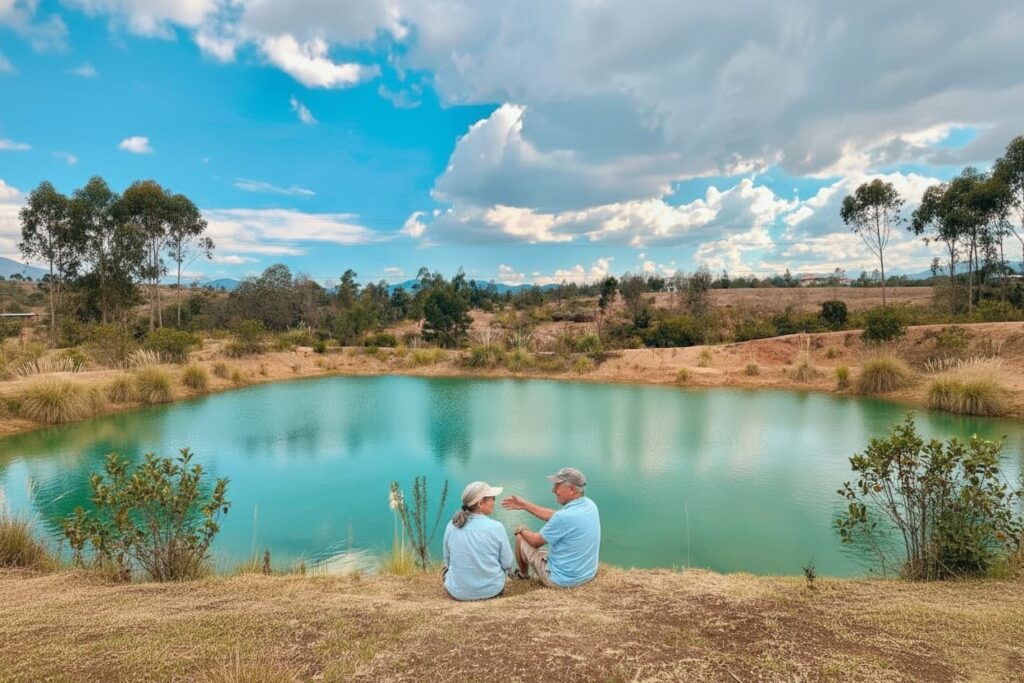
Villa de Leyva also has a landscape that contrasts sharply with what its colonial architecture suggests. The region transitions rapidly from the arid, sun-bleached terrain around the historic center to cloud forest in the surrounding hills — a range of ecosystems compressed into a small geography. The dry streets and whitewashed walls of Plaza Mayor look nothing like the green slopes visible from the square’s edge, and the transition between those two environments happens within minutes of leaving the center. Pozos Azules — the turquoise clay pools a short distance from town — add another visual register entirely: mineral-colored water set against the pale, arid hillside, a geological curiosity that has no obvious precedent in the colonial townscape you’ve spent the morning walking through. Your guide will point you toward the most worthwhile places to explore after the walking tour ends.
Practical Notes: What to Wear and When to Go
The tour runs five hours and operates as a walking experience throughout the historic center. Comfortable shoes with flat soles are essential — the cobblestones are uneven and cover the entire route. The climate in Villa de Leyva is mild and dry, sitting at around 2,100 meters above sea level, which means pleasant temperatures but a cooler start to the day. A light jacket for the pickup time is worth packing, particularly for early morning departures.
Continue Exploring the Region
For those who want to continue exploring after the city tour, the Villa de Leyva La Periquera Hiking Tour takes you into the landscape beyond the historic center — the trails, the cloud forest, and the natural terrain that surrounds the town. For a combination itinerary that brings Villa de Leyva together with one of Colombia’s most visited sites, the Salt Cathedral of Zipaquirá and Villa de Leyva 2 Days Tour covers both destinations across two days from Bogotá.
Ready to see Villa de Leyva properly? Book the private city tour above and your guide will take care of everything from hotel pickup to the final return — all you have to do is show up in good shoes and bring your curiosity.
Building a longer itinerary? Start with our Villa de Leyva tours.
Before you go: our Colombia guides
Written by the team that runs this tour.
FAQs
The price covers your private guide for the full 5 hours, hotel pickup and drop-off in private transportation, a gastronomic experience, entry to all activities on the itinerary, and all-risk insurance. Breakfast and lunch are not included. Confirm with us what the gastronomic experience covers specifically for your booking date.
The entire tour is on foot through the historic center of Villa de Leyva. Expect around 4 hours of walking total on cobblestone streets, with regular stops at each site. The pace is relaxed. Comfortable, flat-soled shoes are strongly recommended — the cobblestones are uneven.
Yes — the tour covers a range of sites that work well for mixed groups, including the fossil and paleontological museums, which tend to capture younger visitors' attention. Let us know the ages in your group when you book and your guide will adapt the pace and the storytelling accordingly.
Morning is ideal. Villa de Leyva's climate is mild and dry, but the midday sun on the cobblestoned Plaza Mayor can be warm. Starting early also means you finish with the rest of the day free to explore the outskirts, have lunch at your own pace, or continue to Pozos Azules and other nearby sites your guide will recommend.
The tour includes a visit to the fossil and paleontological museums. Pozos Azules — the blue clay pools on the road to Santa Sofía — is referenced in the source overview as part of the tour's context, and your guide can recommend it as a follow-up activity after the walking tour ends. Confirm the exact site list with us when booking.
Related Tours
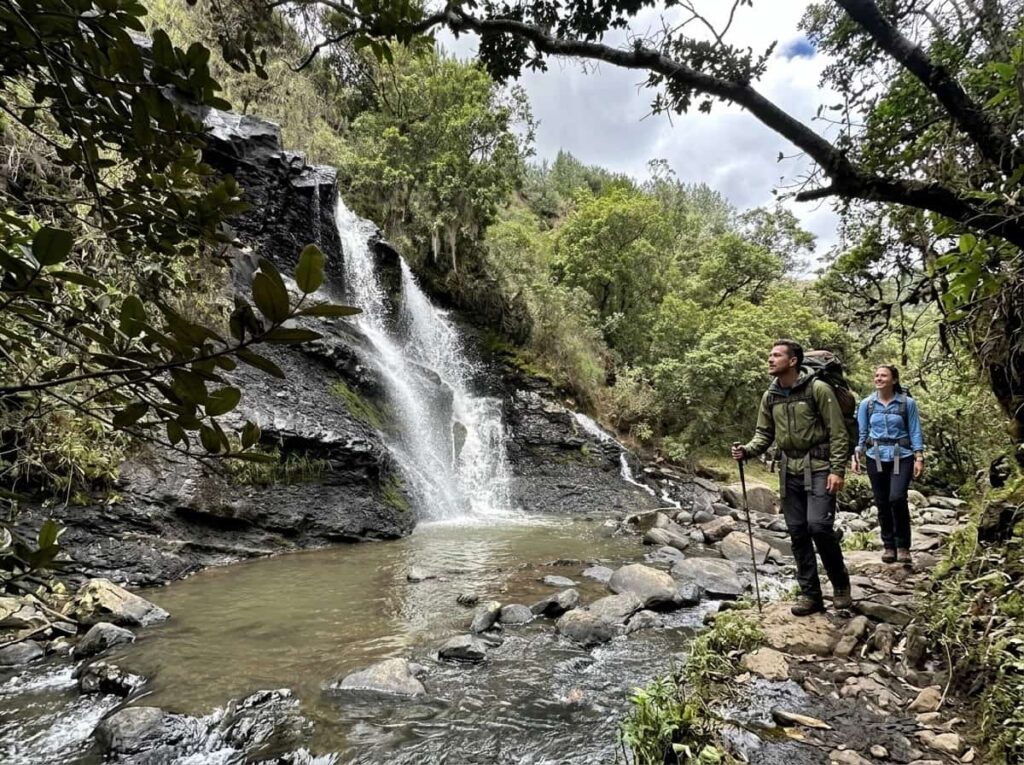

La Periquera Hiking Tour from Villa de Leyva: Three Waterfalls & Cebada River Swim
Villa de Leyva
Private
The La Periquera Hiking tour from Villa de Leyva takes you into one of the most striking aspects of this…
$$$
5 hours
-
Villa de Leyva Tour: Plaza Mayor, Fossil Museum & Colonial Historic Center
Villa de Leyva
Private
The Villa de Leyva tour gives you something that most visitors to this region never quite manage on their own:…
$$$
5 hours
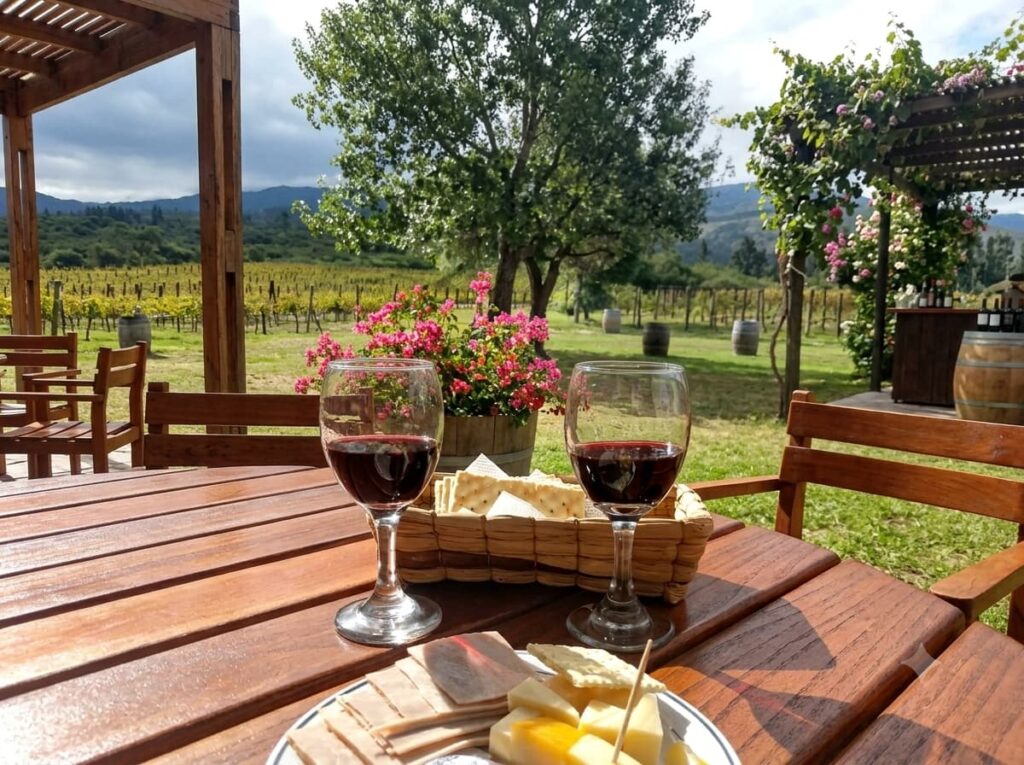
Villa de Leyva Vineyard Tour: Winery Visit, Grape-to-Glass Experience & Wine Pairing
Villa de Leyva
Private
The Villa de Leyva Vineyard Tour is one of the more surprising things you can do in this part of…
$$$
3 hours