
+ 1,200 verified five-star reviews for Cielo.Travel on Google and TripAdvisor.
Duration
Tour Type
Pricing
Languages
Overview
The Colombian Amazon holds the highest number of bird species on the planet, sits at the point where Colombia, Peru, and Brazil meet at the river’s edge, and contains indigenous communities whose knowledge of the forest represents thousands of years of systematic understanding of one of the most complex ecosystems on Earth. This day tour from Leticia moves through all three of those dimensions in eight hours: a four-hour jungle trek on foot with a guide whose knowledge comes from years on these specific trails rather than from a field guide, a swim in the Takana River at the end of the trail, and an afternoon at Maloka Cuchira — an indigenous community that hosts the group for a traditional lunch and a talk on the sacred plants of the Amazon, including the ceremonial uses of tobacco and mambe that have been practiced in these communities for generations.
The wildlife on the trek is not staged — howler monkeys heard before they’re seen, poison dart frogs appearing suddenly in the undergrowth, bird species so numerous that keeping up with your guide’s identifications is the challenge rather than spotting them. The community visit is not a cultural performance — it is an invitation into a living tradition from people who take that tradition seriously and have chosen to share aspects of it with visitors on their own terms. Yellow fever vaccination is mandatory at least two weeks before arrival. Long sleeves, long pants, waterproof clothing, and insect repellent are the right equipment. The guide handles the navigation, the introductions, and the context — you handle the curiosity.
Itinerary
Highlights
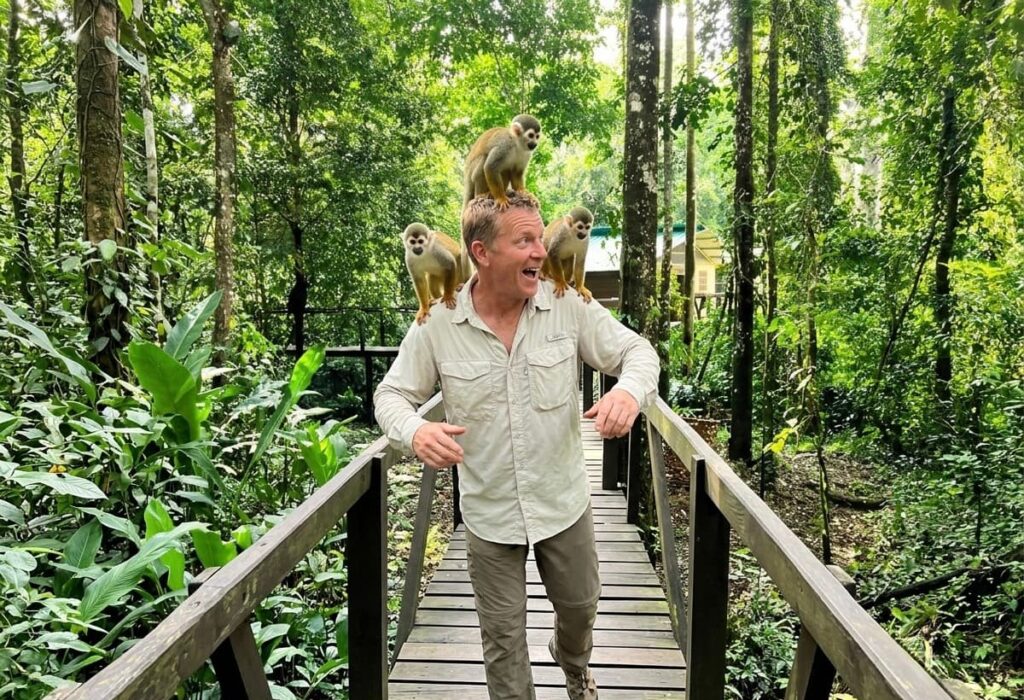
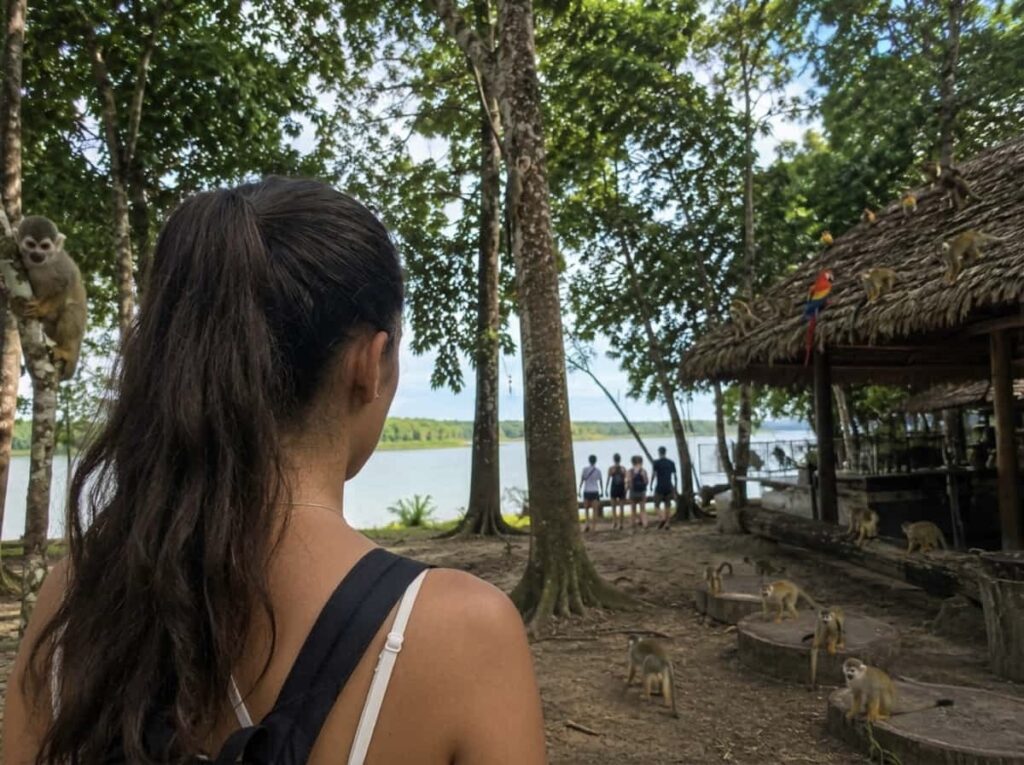
Discover different species of monkeys in their natural Amazon habitat — including the chance to encounter them along the jungle trails and at the Takana River.
Trek four hours through dense Amazon jungle with an expert private guide, spotting frogs, birds, monkeys, and other wildlife along the trail.
Walk lush jungle trails while your guide points out the species that make Colombia's Amazon the most biodiverse region on the planet.
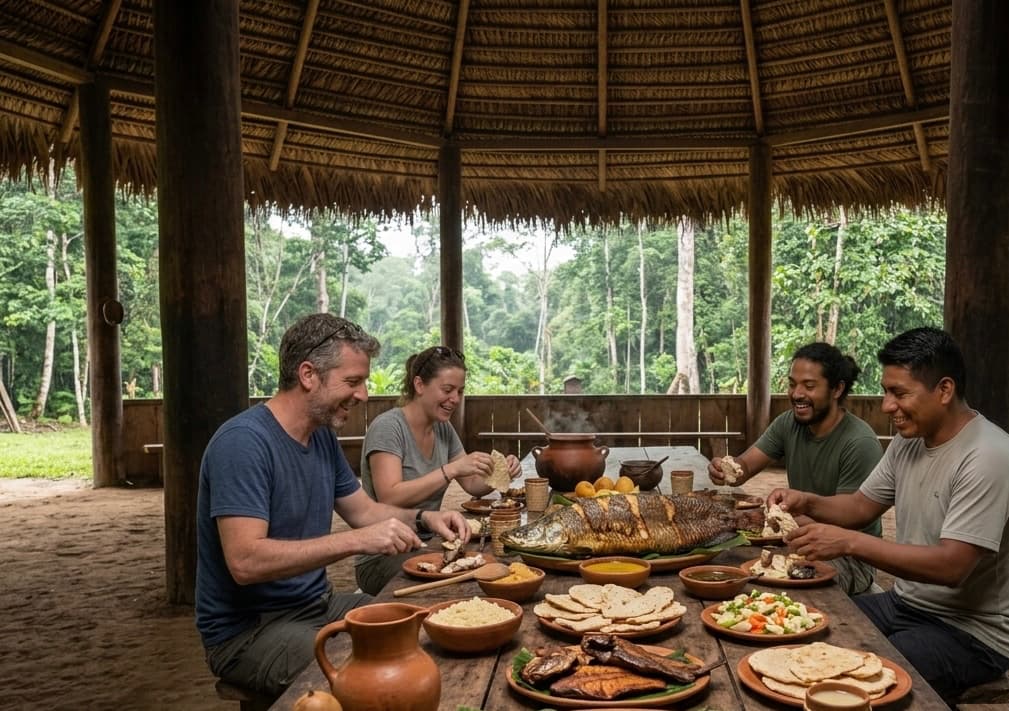
Experience the living culture of the Maloka Cuchira community — a traditional Amazonian indigenous community — through a shared lunch and a talk on ancestral traditions and sacred plants.
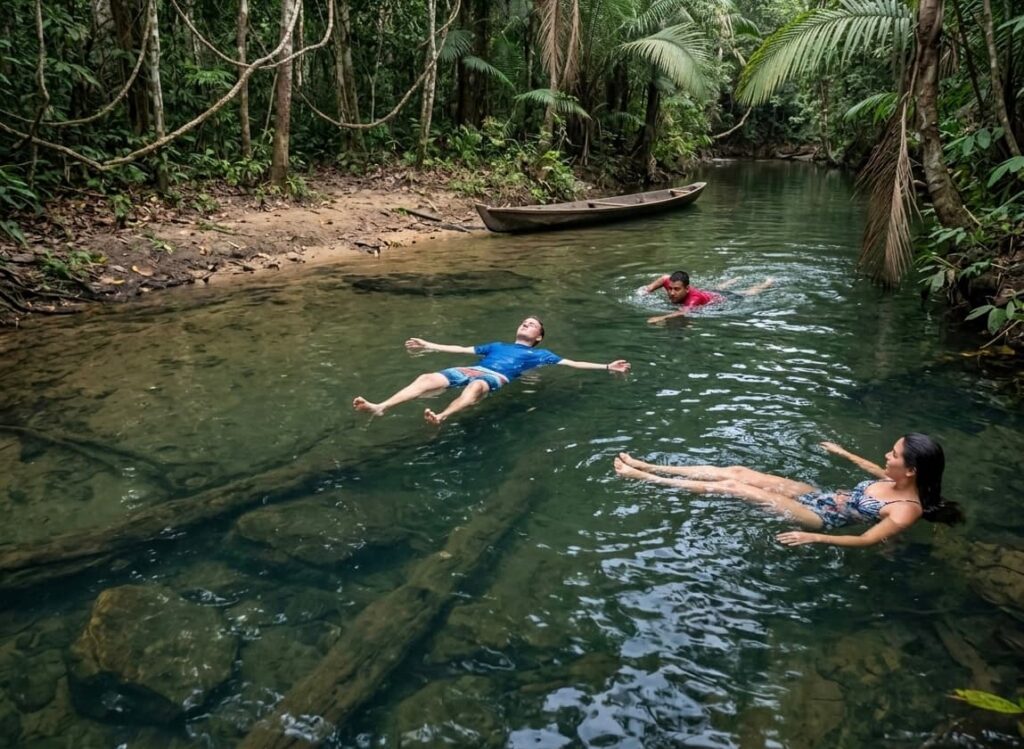
Cool off with a swim in the Takana River at the end of your jungle trek, surrounded by the Amazon rainforest.
What's Included
Private English-speaking guide.
Hotel pickup and drop-off.
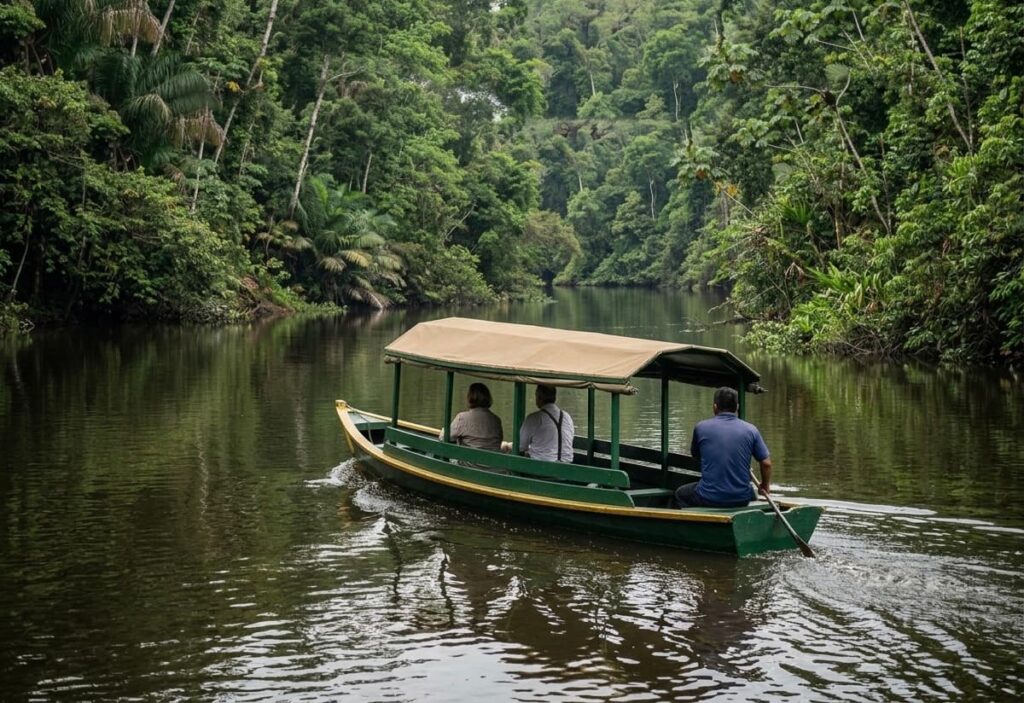
Water and land transportation.
Lunch.
All-risk insurance.
What's Excluded
Extra purchases.
Know before you book
Yellow fever vaccination is required to enter the Amazonas department. Get vaccinated at least two weeks before your trip — the vaccine takes that long to reach full effectiveness.
Long pants, long-sleeve shirts, waterproof clothing, and mosquito repellent are strongly recommended. You will be deep in the jungle for the majority of the day.
A hat or cap and sunglasses are advisable for sun protection, especially during the river section.
The tour is 8 hours in total. Wear comfortable walking shoes suitable for jungle trails — the terrain can be uneven and muddy depending on recent rainfall.
The Amazonas has a warm, humid climate year-round with frequent rain and an average temperature of around 25°C (77°F). Pack light but waterproof.
More Info
Cancellation Window
12 hours before starting date
Difficulty
Moderate
Cancellation policy
Free cancellation up to 12 hours before departure. Cancellations made within 12 hours of the tour start time are non-refundable.
Guest Reviews
Why Book With Cielo
1,200 five-star reviews from real travelers — read them before you book.
Best Price Guarantee — find this tour cheaper elsewhere and we'll match it.
Private transportation door-to-door — no shared shuttles, no waiting around for strangers.
Booking directly with us means your money stays with a Colombian-owned company, not a platform commission.
Our team coordinates everything — pickup timing, pilot briefing, and return logistics — so you focus only on the flight.
Other Info
The Amazon River and Monkey Island Day Tour from Leticia is one of the most direct ways to experience what the Colombian Amazon actually contains — and it is a very different experience from what most travelers expect. The Amazon is not a backdrop. It is a living system, and spending eight hours inside it with a guide who knows the trails, the communities, and the wildlife changes the way you see the whole region. This is not a boat tour with a viewpoint at the end. It is a day that moves through the Amazon at the pace the Amazon requires — on foot through dense rainforest, by water along the river channels, and seated at a table in an indigenous community that has agreed to share something of what it knows.
The Colombian Amazon: Why This Corner of the Basin Is Different
Colombia’s Amazon is exceptional even within the context of the broader basin. It holds the highest number of bird species on the planet — a distinction that draws ornithologists from across the world and that becomes viscerally meaningful the moment your guide starts pointing at the canopy and naming what you’re hearing. It sits at the precise point where three countries meet at the river’s edge: Colombia, Peru, and Brazil converge here in a geographic confluence that has no equivalent on the continent, and the cultural and ecological result of that convergence is visible in the communities, the markets, and the wildlife of the region surrounding Leticia.
The Colombian Amazon also holds a concentration of indigenous communities whose relationship with the forest predates any government or map. These communities — distributed across the Colombian, Peruvian, and Brazilian sides of the border — represent dozens of distinct language groups, material traditions, and cosmological frameworks, each one developed across thousands of years of intimate coexistence with one of the most complex ecosystems on Earth. Their knowledge of the forest is not folk wisdom or anecdote. It is a systematic understanding of relationships between species, seasons, and human needs that Western science has only recently begun to document and take seriously. This tour brings you into contact with one of these communities directly, in a context that is genuine rather than staged.
The Start: Leticia, the River, and What the Transfer Tells You
The day starts with a hotel pickup in Leticia and a transfer to the local community and reserve where the tour takes place. The transfer itself is worth paying attention to. Leticia is a city that exists because of the river — a port built on the margins of the Amazon where commerce, ecology, and three national cultures have been mixing for over a century. The streets near the waterfront hold the particular energy of a place that faces outward toward the forest and the water rather than inward toward a national capital. The boats at the dock, the market stalls selling jungle fruit and dried fish, the mix of indigenous faces and mestizo merchants and international researchers: all of it is context for the day ahead.
The transfer from Leticia to the reserve takes you out of the city and into the edge of the forest — the transitional zone where the urban infrastructure ends and the Amazon begins. For most travelers, this transition is the first clear signal that they have arrived somewhere genuinely different. The air changes. The sounds change. The scale of the vegetation on both sides of the road becomes, within a few minutes of driving, something that cannot be explained by any temperate-zone reference point.
The Jungle Trek: Four Hours on Trail Through Dense Rainforest
From the reserve, the jungle trek covers four hours of trail walking through dense rainforest with a guide who explains what you’re seeing as you go. Four hours on foot in the Amazon is not a long hike in the conventional sense — the terrain is not steep, and the pace is deliberately unhurried. What it is, is four hours of sustained attention to an environment that repays attention at every scale: the canopy overhead, the undergrowth at knee height, the leaf litter at your feet, and everything in between.
The Wildlife: What the Forest Shows You
The biodiversity you encounter during the trek is not guaranteed — this is wildlife in its natural habitat, not a controlled environment — but the Amazon has a way of rewarding patience and a knowledgeable guide. Howler monkeys are often heard before they’re seen, their calls carrying across the canopy in the morning before the heat builds. When they are seen, the encounter is specific and immediate — not a distant shape in a tree but an animal at close range, going about its life with complete indifference to your presence. Colorful frogs appear suddenly in the undergrowth, their brightness a warning to predators in a system where color means something precise. The birds overhead are often so numerous and various that the challenge is not spotting them but keeping up with your guide’s identifications — species names, behavioral notes, the ecological relationships that explain why a particular bird is in a particular tree at a particular time of day.
Your guide’s knowledge is not sourced from a field guide. It is the knowledge of someone who has spent years walking these trails and watching what the forest does across seasons, weather conditions, and times of day. The explanations you receive on the trail — the frogs that change color with humidity, the plants that indigenous communities use for specific medicinal purposes, the relationship between the fruiting cycles of the trees and the movement of the animal communities that depend on them — come from that accumulated knowledge rather than from a script.
The Takana River: A Swim at the End of the Trail
The trail leads to the Takana River, where a swim at the end of the trek is one of those simple pleasures that travel occasionally delivers without ceremony: cool water, the sound of the jungle on both banks, and the knowledge that you have been genuinely somewhere. The Takana runs clear in the dry season and moves fast enough in the wet season that the current is part of the experience. Swimming in it — rather than photographing it from a viewpoint or passing it by boat — is the difference between visiting the Amazon and being in it, at least for the duration of the swim.
Maloka Cuchira: Lunch and Living Tradition in an Indigenous Community
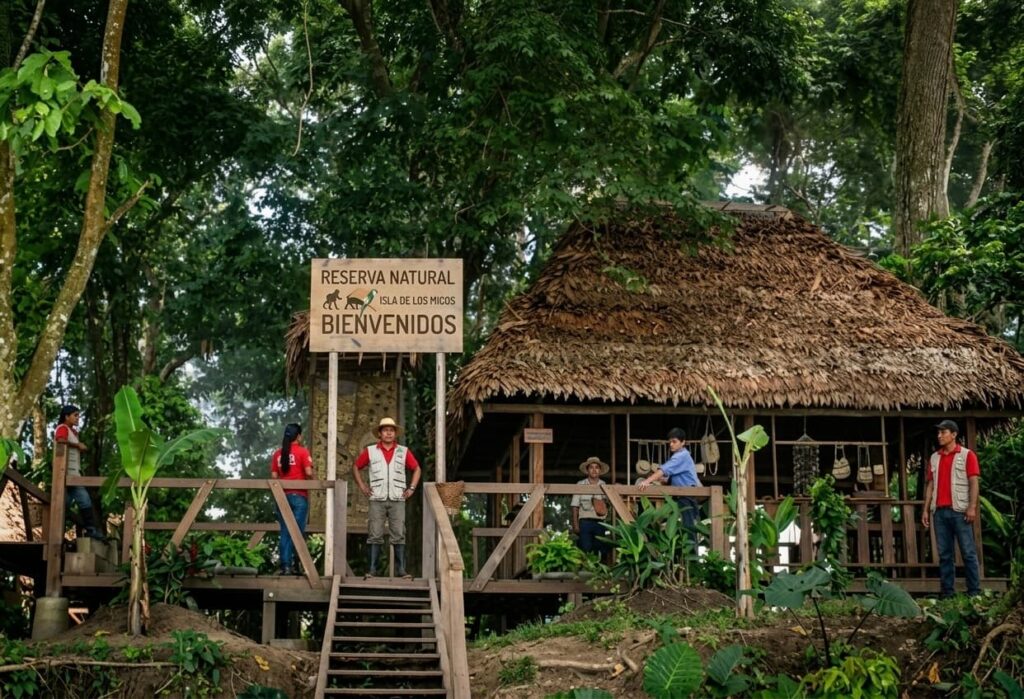
The second half of the day belongs to Maloka Cuchira. This indigenous community hosts the group for a traditional lunch — food prepared with local ingredients using methods that the community has been practicing for generations, shared in the way that food in these communities is meant to be shared: together, without rush, with conversation about what you’re eating and where it comes from.
Sacred Plants and Ancestral Knowledge
After eating, the community offers a talk on their ancestral traditions and the sacred plants of the Amazon. Tobacco prepared as mambe — a fine green powder made from coca leaves and mixed with ash from the yarumo tree — is one of the central plants in the talk. In Amazonian indigenous tradition, tobacco and mambe are not recreational substances. They are ceremonial tools, used to facilitate thought, communication, and spiritual practice in contexts that have specific protocols and meanings. The community explains these protocols directly, without simplifying them for tourist consumption.
Other plants covered in the talk include those used for fever, infection, pain management, and the treatment of conditions that Western pharmacology has developed synthetic equivalents for — often after isolating the active compounds that indigenous communities identified empirically over centuries of use. The relationship between the forest and the pharmacy, between traditional knowledge and pharmaceutical research, is one of the most significant and contested intellectual property issues in contemporary international law, and your guide and the community can speak to it from the perspective of people whose knowledge is at the center of that debate.
This is not a performance of culture for tourists. It is an invitation into a living tradition, offered by people who take that tradition seriously and who have made a deliberate decision to share aspects of it with visitors as a way of building understanding and supporting the economic sustainability of the community. The distinction between this and a staged cultural show is immediately clear to anyone who has experienced both.
The Wider Amazon: Context for What You’re Seeing
The Colombian Amazon holds nearly a third of all tropical rainforest remaining on Earth. It covers 1% of the planet’s surface and is home to roughly 10% of all known wildlife species. The Amazon River itself discharges approximately 20% of all freshwater that enters the world’s oceans — a volume so large that oceanographers can detect the Amazon’s freshwater plume hundreds of kilometers out to sea. These numbers are commonly cited in articles about the Amazon and genuinely difficult to process as lived experience until you are inside the forest and begin to understand what density of life actually looks and sounds and smells like.
The reason to come here is not a single highlight. It is the totality of the experience — the way the light moves through the canopy in the morning, the moment a guide picks up a plant and tells you exactly what it does and why they know, the sound of howler monkeys crossing the canopy at a distance you cannot estimate, the clarity of the Takana River and the silence that settles over the group when everyone stops talking at the same moment and just listens.
Before You Go: Vaccinations, Equipment, and What to Expect
Yellow fever vaccination is mandatory for the Amazonas department, and you need it at least two weeks before arrival — this is a hard requirement, not a recommendation, and you will be asked for your vaccination certificate. Long sleeves and long pants protect against insects in the morning and evening hours when mosquito activity peaks. Waterproof clothing or a light rain layer is essential — the climate averages around 25°C with frequent rain regardless of the season, and a dry afternoon in the Amazon is a variable, not a guarantee. Insect repellent, sunscreen for the river sections, and a dry bag for electronics complete the list.
Rubber boots may be available through the tour depending on conditions — confirm with your guide when booking. The trail sections involve uneven terrain and occasional mud, and footwear that provides grip and can get wet without being ruined is more practical than hiking boots that need to stay dry.
Planning More Time in the Colombian Amazon
The day tour is the most accessible introduction to what the Colombian Amazon offers, but the region rewards more time. The Overnight Jungle Tour from Leticia extends the experience into the nighttime forest — the night hike, the maloca or hammock overnight, and the Tarapoto Lake return that gives you the flooded forest environment in addition to the terra firme trail. For travelers with several days in Leticia, the combination of the day tour and the overnight provides the most complete picture of what the Colombian Amazon actually contains.
Ready to spend a day inside the Amazon? Book the river and monkey island tour above and your guide will handle everything from hotel pickup to the return drop-off — just bring your vaccination certificate and show up curious.
More of the Amazon: our private tours and day trips.
Before you go: our Colombia guides
Written by the team that runs this tour.
FAQs
Long sleeves and long pants are essential — they protect against mosquitoes and other insects throughout the day. A hat, cap, and sunglasses help with sun exposure. Bring waterproof clothing since you'll be deep in the rainforest, where rain can come at any time.
The Amazonas department has a warm, humid climate with high temperatures and frequent rain throughout the year. The average temperature stays around 25°C (77°F). Pack light, breathable layers and always plan for rain.
Yellow fever is endemic in tropical areas, and the Amazon is one of the primary risk zones. Vaccination is the most important preventive measure — it's safe, affordable, and offers effective immunity in 95% of vaccinated people within two weeks of the shot. Make sure you're vaccinated before you arrive.
The Amazonas contains nearly a third of all tropical rainforests remaining on Earth. It covers 1% of the planet's surface and is home to approximately 10% of all known wildlife species. Colombia's Amazon has the highest number of bird species on the planet. On this tour, you may spot macaws, toucans, freshwater dolphins, howler monkeys, and jaguars.
Yes — your guide will take you to the swimming spot along the Takana River at a point the team knows well. Swimming in the Amazon region is always done with a guide's oversight. If conditions on the day are not suitable, your guide will let you know.
Related Tours

Amazon Overnight Tour: Indigenous Reserve & Tarapoto Lake
Amazonas
Multi-Day, Private
An Amazon Jungle Overnight Tour from Leticia gives you something that a day trip to the rainforest never quite can:…
$$$
2 days

Amazon Three Borders 3-Day Tour: Leticia, Puerto Nariño & Cacao Island
Amazonas
Multi-Day, Private
The Amazon Three Borders Tour covers a piece of geography that very few travelers reach: the point where Colombia, Peru,…
$$$
3 Days
Private 5 Day Amazon Tour in Leticia
Amazonas
Private
Day 1: Arrival and the San Antonio Indigenous Reserve This five-day private tour starts the moment you land at Leticia’s…
$$$
5 days