
+ 1200 verified five-star reviews for Cielo.Travel on Google and TripAdvisor.
Duration
Tour Type
Pricing
Languages
Overview
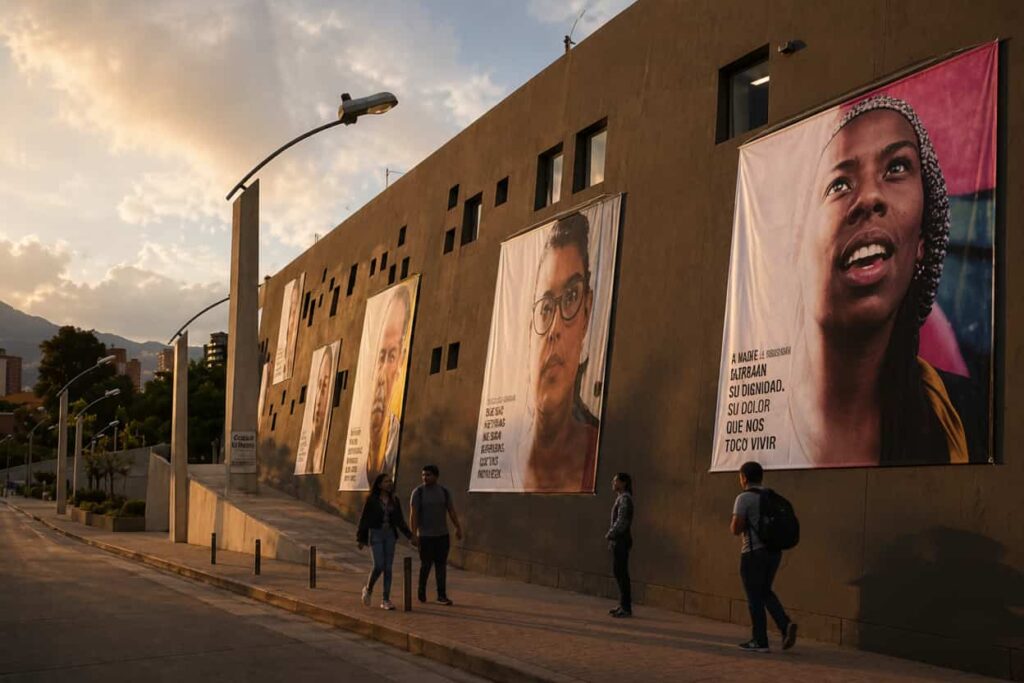
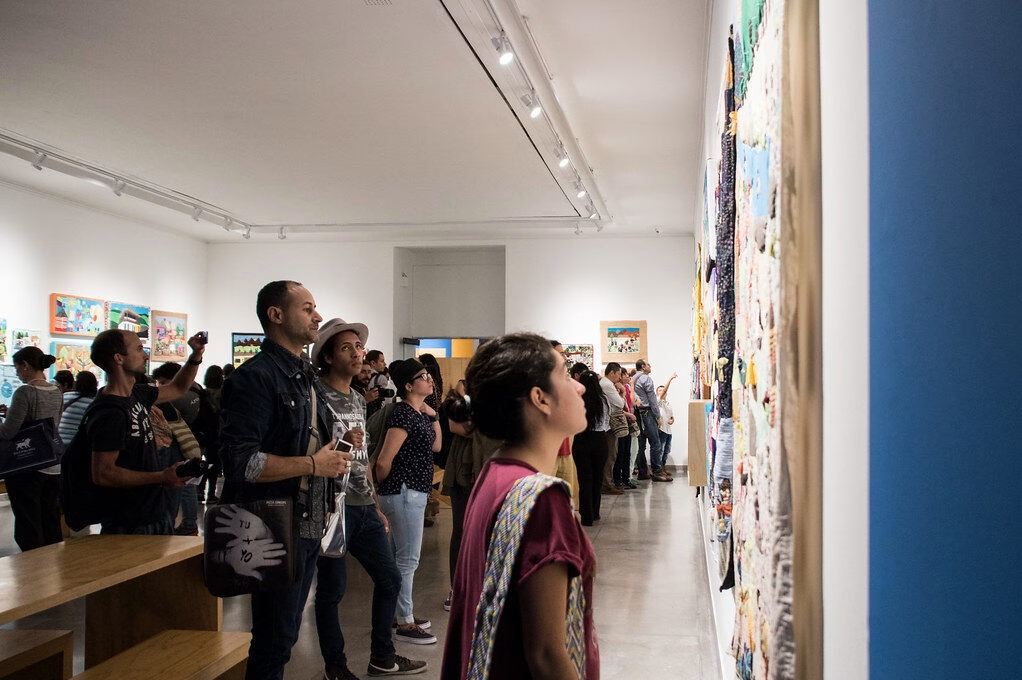
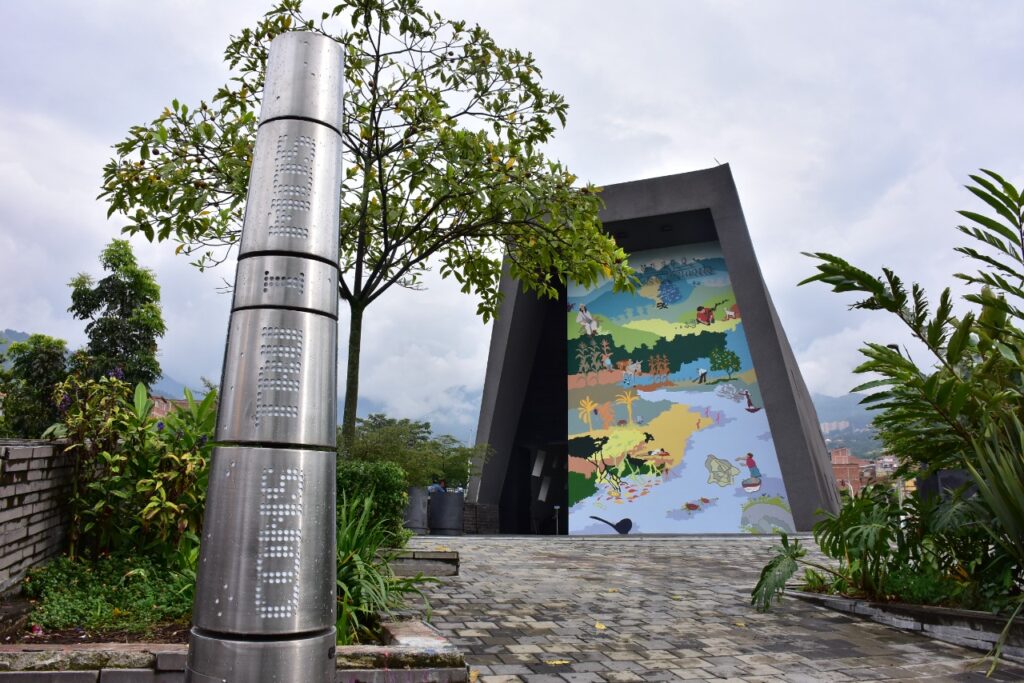
The Museo Casa de la Memoria — opened in 2012, free to enter, and constructed entirely from testimonies, documents, and the creative work of survivors — is one of the most complete accounts of urban armed conflict in Latin America. Your guide provides the context the exhibits assume you already have: the difference between the armed factions, the weight of Operation Orion, the reason the Wall of Memory outside the building is built the way it is. None of it lands the same way without that layer.
From the museum, the tour moves through Placita de Flórez — one of the oldest functioning markets in El Centro, a genuine neighborhood institution rather than a curated stop — and into San Antonio Park, where two Botero sculptures stand side by side: one intact, one bombed in 1995, both left there by deliberate civic decision. The tour ends at Plaza Botero, where 23 bronze figures donated by the artist occupy a completely open, completely free public plaza adjacent to the Museum of Antioquia. The progression from the Casa de la Memoria to the plaza is not accidental — it is the same arc the city has been living for thirty years, and walking it in order is the clearest way to understand where Medellín actually stands.
Itinerary
Highlights
Board the private boat at Muelle de los Pegasos just as the sky begins to change colour, and set sail into Cartagena Bay with a professional captain and your own group — no strangers, no shared schedule.
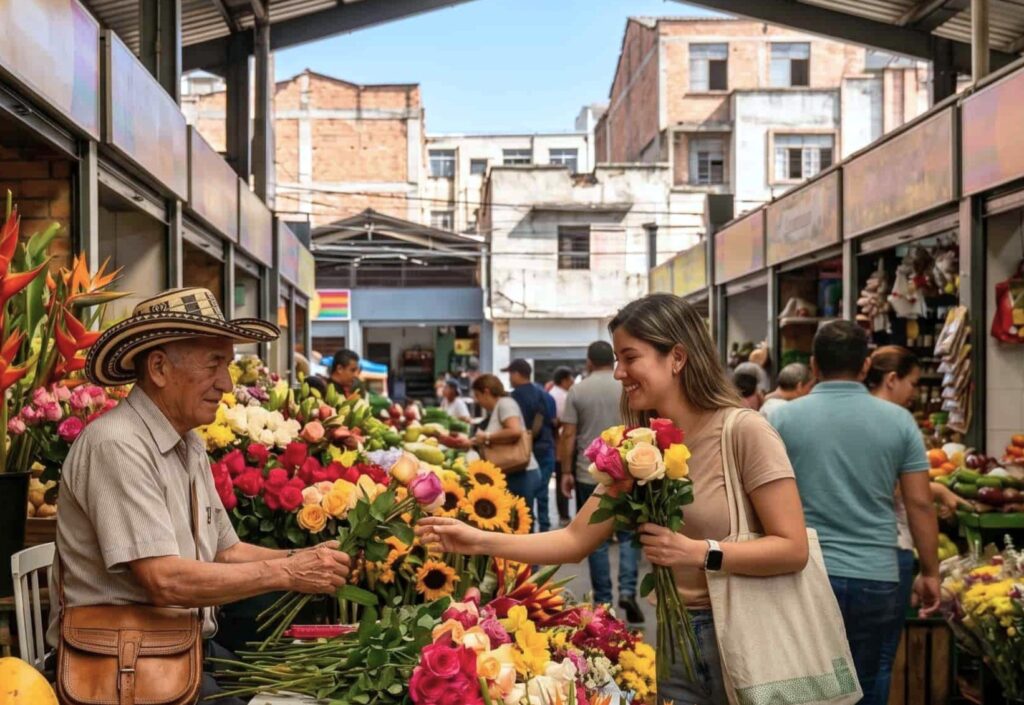
Walk through the Placita de Flórez — Medellín's traditional downtown market, one of the oldest in the city — where local vendors sell flowers, produce, food, and everyday goods in a space that has functioned as the commercial heart of the neighbourhood for generations.
Explore San Antonio Park, an open-air gallery that holds several of Botero's bronze sculptures — including the bombed figure from 1995, left in place beside an intact replacement as a deliberate monument to the violence — and learn the full account from your guide.
Wander through Plaza Botero, the only open-air space in the world where 23 sculptures by a single artist — Fernando Botero — are permanently installed in a free public plaza adjacent to the Museum of Antioquia.
Travel the whole experience privately — your guide manages the route, the context, and the pace from hotel pickup to hotel drop-off.
What's Included
Private English-speaking guide (full 4 hours).
Private hotel pickup and drop-off in Medellín.
Casa de la Memoria museum visit (free entrance — no ticket cost).
Local food tastings at gastronomic spots near San Antonio Park.
Risk insurance.
What's Excluded
Museum of Antioquia entry ticket (if added on the day — optional).
Meals and additional drinks.
Personal purchases at Placita de Flórez or elsewhere.
Gratuities (appreciated but not required).
Know before you book
The Memory House Museum (Casa de la Memoria) is closed on Mondays. If your tour falls on a Monday, your guide will offer an alternative museum according to your interests. If it falls on a public holiday, the museum may also be closed on the following Tuesday — confirm when booking.
Casa de la Memoria deals directly with the history of armed conflict, violence, and the victims of Medellín's most difficult decades. The content is powerful and at times confronting — it is not a dark tourism experience but a serious cultural institution. Visitors who prefer not to engage with this material should flag it when booking.
Wear comfortable, flat-soled shoes — this tour involves walking on downtown city pavements and cobbled streets for approximately 3 hours.
Wear fresh, light clothing and a light jacket in case the day turns cool. Medellín's average temperature is between 23°C and 30°C (73°F–86°F) but can shift during the afternoon.
This tour can be taken any day of the week (subject to museum availability on Mondays).
More Info
Cancellation Window
12 hours before starting date.
Difficulty
Easy
Cancellation policy
Free cancellation up to 12 hours before departure. Cancellations made within 12 hours of the tour start time are non-refundable.
Guest Reviews
Why Book With Cielo
1,200 five-star reviews from real travelers — read them before you book.
Best Price Guarantee — find this tour cheaper elsewhere and we'll match it.
Private tours only — your guide focuses entirely on you. Your pace, your questions, your day.
Booking directly with us means your money goes to a Colombian-owned company, not a platform commission.
: Our guides are English-speaking Colombian locals — people who can tell you Medellín's history from the inside, including the parts that require honesty to explain well.
Other Info
Medellín Downtown Historical Tour: The Memory House Museum, Placita de Flórez, and the Two Statues in San Antonio Park
The Medellín downtown historical tour puts the city’s transformation in front of you in the most direct possible way: you visit the institution that was built specifically to ensure the worst of it is never forgotten, and then you walk through the public spaces that the city has deliberately filled with art and culture as a statement about what it wants to become. The sequence matters. The Memory House Museum and Plaza Botero are not two random stops on a city tour — they are opposite ends of the same story, and walking from one to the other in a single morning is one of the most coherent ways to understand what Medellín has been through and what it has decided to do about it.
Museo Casa de la Memoria: One of Latin America’s Most Complete Accounts of Urban Armed Conflict
The Museo Casa de la Memoria began in 2006 as an initiative of the Victim Assistance Program of Medellín, four years after Operation Orion — the largest urban military operation ever conducted in Colombia, which ended the armed occupation of Medellín’s hillside comunas by guerrilla and paramilitary groups but left enormous damage to the communities caught between the factions. The three-floor museum that opened in 2012 was built from the source material collected during those years: oral testimonies, legal documents, photographs, newspaper archives, and the creative work of people who lived through the conflict and needed forms of expression that law and politics alone couldn’t provide.
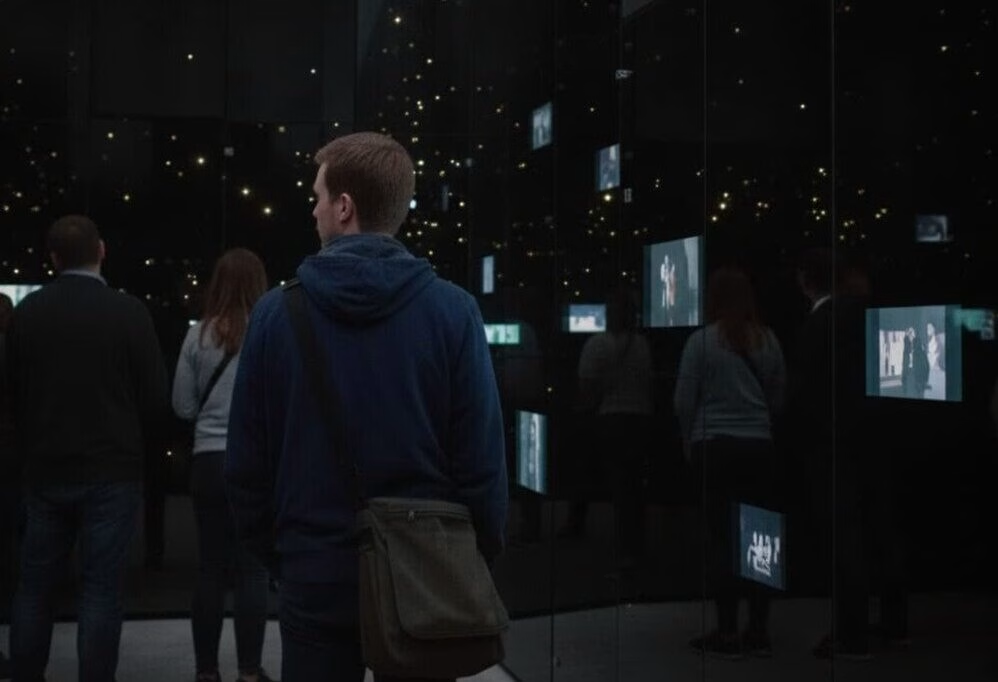
The permanent exhibition — Medellín: Memorias de Violencia y Resistencia — is one of the most complete accounts of urban armed conflict available anywhere in Latin America. Interactive maps show areas of Medellín affected by massacres. Twelve glass cases, each dedicated to a different actor in the armed conflict — women, journalists, human rights defenders, indigenous communities, schools — allow visitors to explore the conflict through specific lenses. Life-size video screens present survivor testimonials at speaking distance, which is a deliberate choice: the museum wants visitors to face the witnesses, not observe them. A public archive of newspaper articles from the conflict period is accessible by keyword on interactive screens. Outside the building, the Wall of Memory carries the names of local residents killed in the violence, engraved in the bricks surrounding the building. Entrance is free — another deliberate decision.
The conflict documented at the Casa de la Memoria is the same conflict whose street-level aftermath the Comuna 13 Graffiti Tour covers through the murals of the San Javier neighborhood — Operation Orion’s specific impact on one community, and the years of community art-making that followed. The Behind Pablo Escobar’s Steps Tour covers the cartel era that preceded the operation — the Escobar years, the prison deal, and the neighborhood he built for the poor. The Memory House Museum is where all of those stories are held together as a single documented account, accessible to anyone who walks through the door at no charge.
Your Guide at the Casa de la Memoria: Why Context Is Non-Negotiable
Your guide’s role at the Casa de la Memoria is to ensure that nothing you see is left without context. The museum’s design assumes a level of background knowledge that most international visitors don’t have, and the exhibits are dense. Understanding the difference between the FARC, the AUC, and the urban militias that operated specifically in Medellín — or understanding why Operation Orion was simultaneously necessary and traumatic — requires explanation. A guide who can provide that in real time, stopping at each exhibit and answering the questions that inevitably arise, produces a completely different visit from walking through alone. This is the same principle that applies across every tour in this series: the Bogotá Graffiti Tour gives you the artist’s name and the political argument behind the mural rather than a wall of color; the Cartagena City Tour gives you the actual engineering of San Felipe’s tunnel system rather than the persistent myth about it. A guide who knows the difference between the story visitors expect and the one that actually happened is what makes the difference.
Placita de Flórez: The Historic Centre Before and After
Placita de Flórez is one of downtown Medellín’s oldest functioning markets, located in the historic El Centro district a short walk from the museum. The market has operated in this space for generations and continues today as a genuine neighbourhood institution rather than a curated tourist experience: flowers, tropical produce, prepared food, household goods, and the daily commerce of a working-class urban community. Your guide uses the market to cover what the historic centre of Medellín looked like before the violence reshaped it and what the effort to recover it has looked like since.
The same connection between market culture and community identity runs through the Barranquilla Food Tour — where the historic centre around Calle 30 holds food stands run by families who know their regulars by name — and the Food Tour in La Candelaria in Bogotá, where the La Concordia market is one of the most direct introductions to Colombian biodiversity available anywhere in the capital. In each case, the market is not incidental to the neighborhood’s identity but central to it.
San Antonio Park: The Decision to Remember
San Antonio Park carries one of the most specific histories of any public space in Medellín. Two Botero sculptures stand in the park — one intact, one destroyed. The destroyed figure was bombed in June 1995 by a device hidden inside it; the explosion killed 23 people and injured more than 200. Rather than remove the damaged statue, the city made the decision to leave it in place and install an intact version beside it. Both remain there today — the intact and the destroyed — as a deliberate monument to the violence and the decision to remember it honestly rather than erase it.
Fernando Botero, who created the original sculpture, donated the replacement on the condition that the damaged one was never removed. That condition is itself worth understanding: an artist stipulating that his city must keep the evidence of what happened to his work is a statement about memory, honesty, and the role of public art in a city that has had to decide, repeatedly, what to do with its own history. The same Botero whose free public collection in Bogotá — covered on the Private Bogotá City Tour— reflects his belief that world-class art should be accessible to everyone, applied the same values here in a more difficult register.
Plaza Botero: Public Art at the Scale of a City’s Ambition
Plaza Botero, a short walk from San Antonio Park, holds 23 of Botero’s bronze sculptures in a free public plaza adjacent to the Museum of Antioquia — the institution that holds the largest permanent collection of his paintings and drawings. The plaza is one of the few places in the world where a significant collection of an internationally recognised artist’s work is displayed in a completely public, completely free, completely open urban space. Botero donated the collection to the city on precisely those terms. His figures — voluminous, formally precise, immediately recognisable — function as one of the most successful exercises in urban public art in Colombia.
The contrast between the bombed statue in San Antonio Park and the intact collection in Plaza Botero — both Botero, both in the same downtown district, both free — is one of the things your guide holds together as you move between them. The morning produces that contrast deliberately: from the Memory House Museum’s documentation of what the city suffered, through the market’s evidence of ordinary life continuing through it, to San Antonio’s honest monument and Plaza Botero’s affirmative statement. Two stops, one story — and the walk between them is how the story becomes legible.
Plan Your Time in Medellín
This tour works well as a first or second day in Medellín — the historical and cultural foundation before the city’s neighborhoods and natural landscapes. The Medellín City Tour with Comuna 13 extends into the Medellín Metro, the comunas, and the graffiti-covered streets of San Javier for travelers who want the full arc of the transformation story in a single day. The Arví Park Tour offers a complete change of register — cloud forest, cable car, and indigenous trails above the city — for travelers who want the natural counterpart to the urban history covered on this tour. The Guatapé and El Peñol Rock Tour is the strongest day trip option from Medellín — the massive granite monolith, the flooded town beneath the reservoir, and the zócalo-decorated streets of Guatapé — for travelers spending three or more days in the city.
Ready to understand the full arc of what Medellín has been through? Book the Downtown Historical Tour above and your guide will take care of everything from hotel pickup to the final return — all you have to do is show up ready to look.
Planning more time in Medellín? Browse our Medellín tours and experiences.
Before you go: our Medellín guides
Written by the team that runs this tour.
FAQs
Wear fresh, comfortable clothing and a light jacket in case the day turns cool. Cotton t-shirts, sneakers, sunglasses, and a cap are the most practical items for this activity. The tour involves approximately 3 hours of walking on flat city streets and cobblestones.
The weather in Medellín tends to be warm throughout the day, with average temperatures between 23°C and 30°C (73°F–86°F). Conditions can change — a light rain jacket is a sensible precaution, especially in the afternoon.
The most representative places on this tour are the Memory House Museum (Museo Casa de la Memoria), the traditional market of Placita de Flórez, San Antonio Park, and Plaza Botero with its 23 Botero sculptures. These are some of the most historically and culturally significant sites in the city's historic centre.
You can take this Medellín downtown tour any day of the week. The Memory House Museum is closed on Mondays — if your tour falls on a Monday, your guide will offer an equally good alternative museum according to your interests.
The Museo Casa de la Memoria deals directly with the history of armed conflict, violence, and its victims — it is a powerful and at times confronting experience. It is a serious cultural institution, not a dark tourism attraction. Most visitors find the context provided by a guide essential for processing what they see. If you have concerns, let us know before booking.
Yes — the Casa de la Memoria charges no entrance fee and is free to the public. The cost of the tour covers your private guide, hotel transport, and the gastronomic stops along the route.