
+ 1.200 verified five-star reviews for Cielo.Travel on Google and TripAdvisor.
Duration
Tour Type
Pricing
Languages
Overview
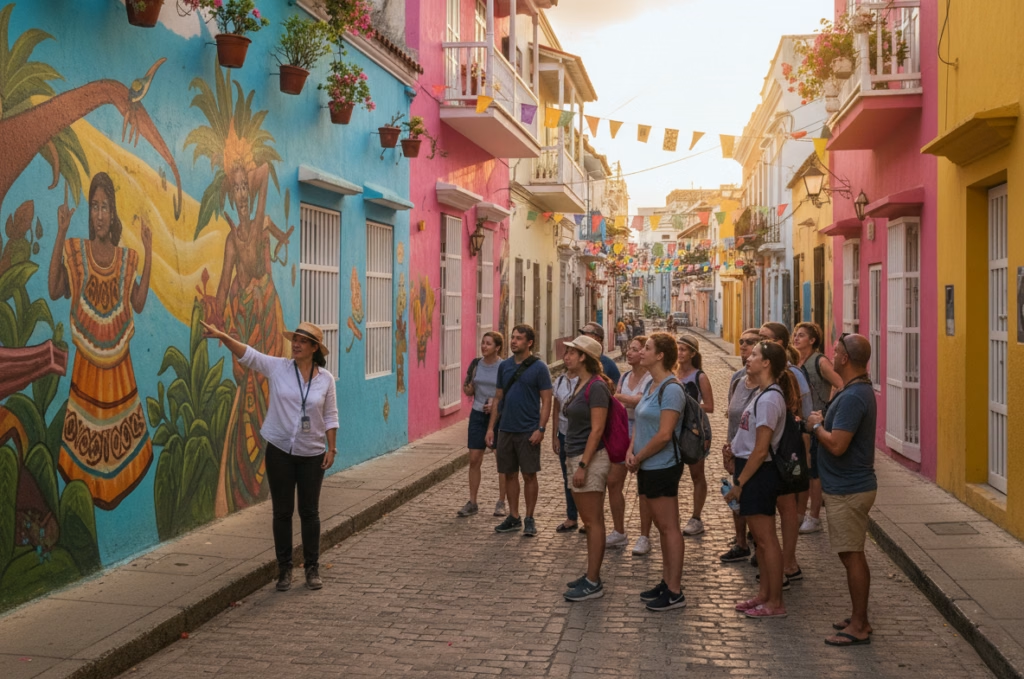
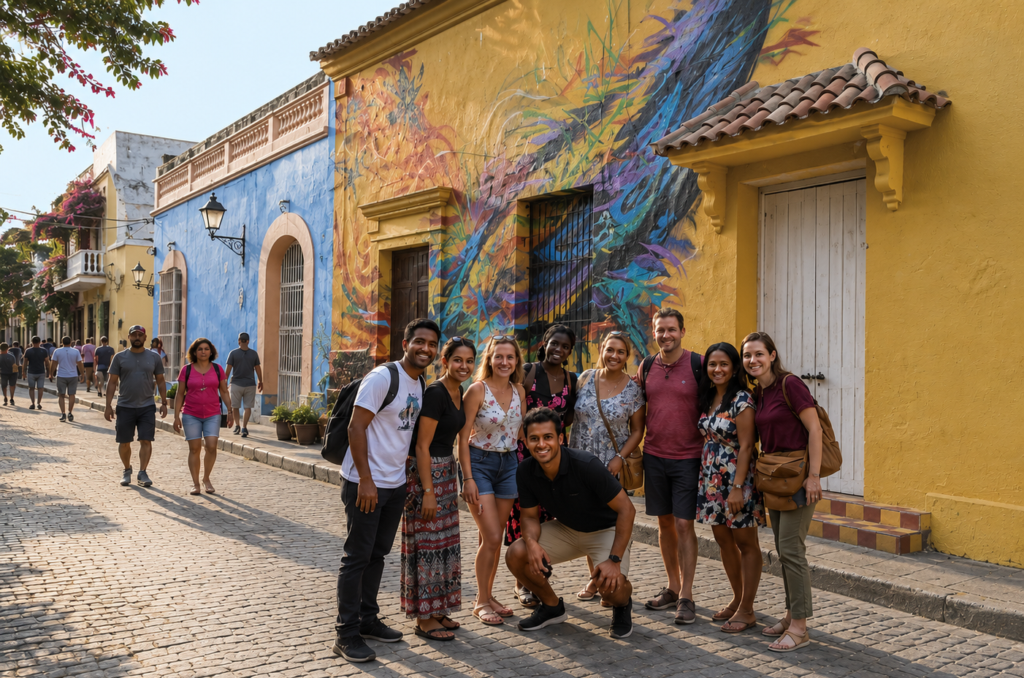
This walk begins where Cartagena’s other story lives. Plaza de la Trinidad, in the heart of Getsemaní, is where your guide sets the scene — a neighborhood that fought for its own independence and never quite let the world forget it. From there you move through streets where the walls themselves do the talking: murals that document decades of resistance, creativity, and cultural identity make Getsemaní one of the most visually and historically layered barrios in the Caribbean coast.
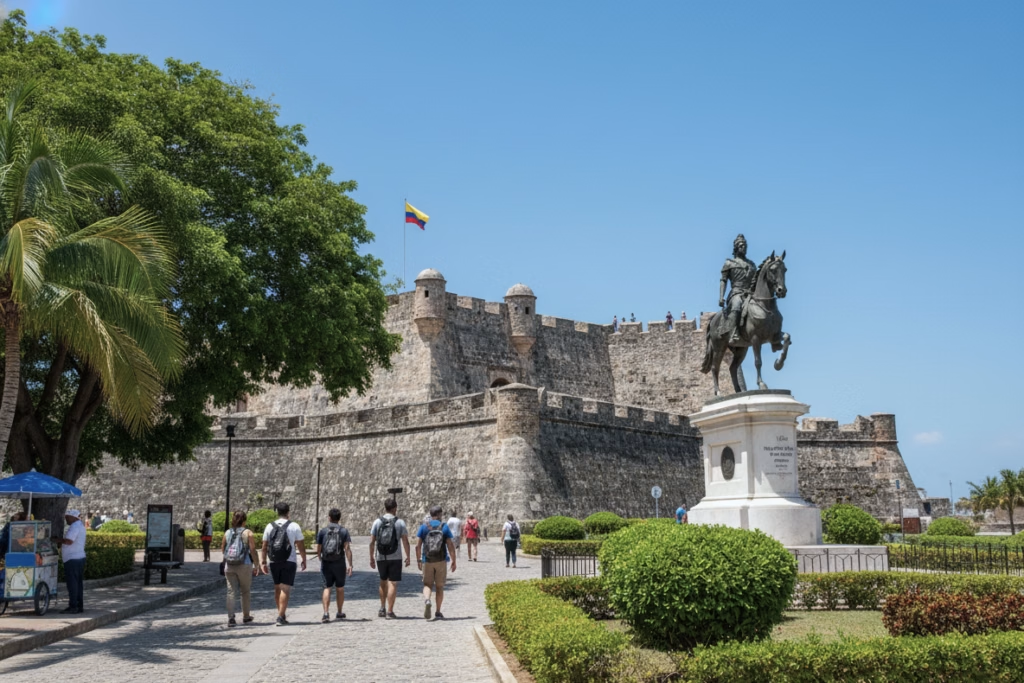
The route then follows the path to Castillo de San Felipe de Barajas, the largest Spanish fortress ever built in the Americas. Your guide narrates the story of the 1741 siege on the approach, so by the time you arrive, you already understand what was at stake. Inside, you descend into the tunnel network — a labyrinth built for communication and escape — before climbing to the observation points for panoramic views over Cartagena, the old city walls, and the Caribbean stretching out beyond.
Itinerary
Highlights
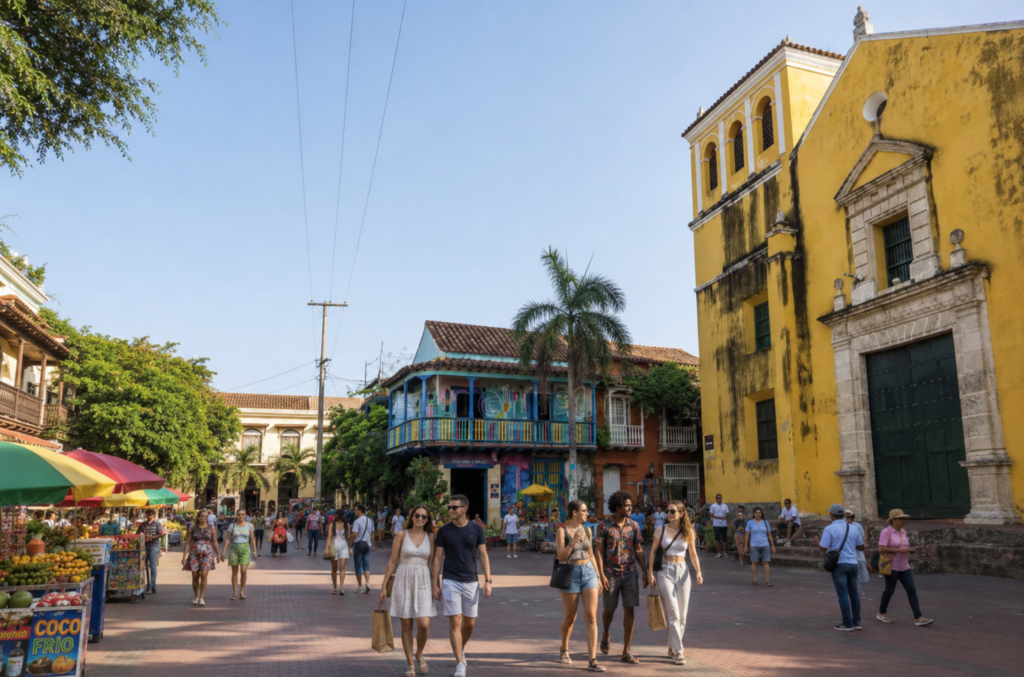
Meet your guide at Plaza de la Trinidad — the living heart of Getsemaní — where the neighborhood's fight for independence still feels present in every corner.
Walk the streets of Getsemaní and read its walls: the murals here document decades of resistance, creativity, and cultural pride in one of Cartagena's most authentic neighborhoods.
Follow the path to Castillo de San Felipe de Barajas, the largest Spanish fortress ever built in the Americas, as your guide tells the story of the 1741 siege on the approach.
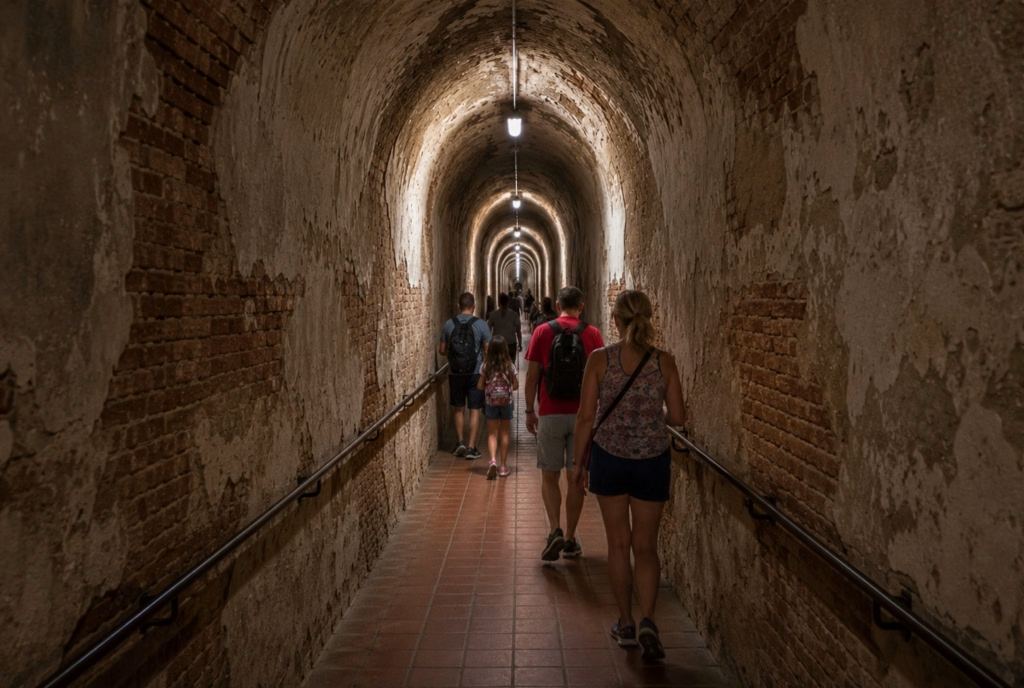
Descend into San Felipe's tunnel network — a labyrinth designed for communication and escape — and understand why this fortress has never been taken by force.
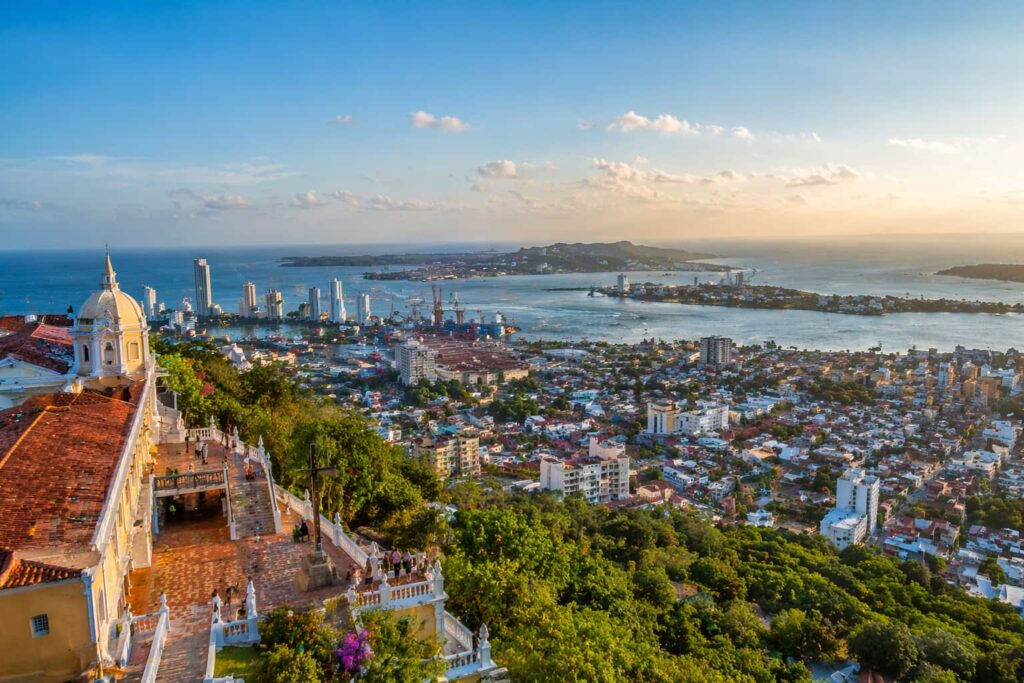
Climb to the observation points for panoramic views over Cartagena, the Caribbean coastline, and the old city walls spread below you.
What's Included
English-speaking local guide.
Walking tour of Getsemaní neighborhood.
San Felipe Castle entrance ticket.
Suggested tip for the guide included in price.
What's Excluded
Hotel pickup and drop-off (meeting point is Plaza de la Trinidad, Getsemaní).
Food and drinks.
Personal purchases and souvenirs.
San Felipe Castle entrance fee (tip-based option — purchasable on-site or in advance.
Know before you book
Wear comfortable, closed-toe walking shoes — both Getsemaní and San Felipe Castle involve uneven surfaces, cobblestone streets, and steep ramps inside the fortress.
Bring water and sunscreen — this is an outdoor walking tour in Cartagena's Caribbean climate, and temperatures can be high, especially at midday.
San Felipe Castle involves significant walking at an incline. The tour suits most fitness levels with a relaxed pace, but if you have mobility concerns, please contact us before booking.
Two booking options are available: tip-based (you pay your guide at the end based on your experience) and all-inclusive (castle entrance + suggested tip included in the upfront price). Choose the option that works best for you at checkout.
Castle entrance is optional on the tip-based option — you can purchase the ticket on-site if you decide to include it on the day.
The tour runs in all weather conditions. Cartagena's heat is most intense between 11am and 2pm — morning departure times are recommended.
More Info
Cancellation Window
12 hours before starting date.
Difficulty
Easy
Cancellation policy
Free cancellation up to 12 hours before departure. Cancellations made within 12 hours of the tour start time are non-refundable.
Guest Reviews
Why Book With Cielo
1,200 five-star reviews from real travelers — read them before you book.
Best Price Guarantee — find this tour cheaper elsewhere and we'll match it.
Private tours only — you're not sharing your guide with a group of strangers. Your pace, your questions, your day.
Booking directly with us means your money goes to a Colombian-owned company, not a platform commission.
Our guides are English-speaking Colombian locals — not hired contractors reading from a script. They know this region personally.
Other Info
Cartagena Walking Tour Through Getsemaní and San Felipe Castle: Two Neighborhoods, Three Centuries of History
A Cartagena walking tour through Getsemaní and San Felipe Castle covers more Colombian history in three hours than most visitors encounter across an entire trip — and it does it in two places that feel nothing like the polished tourism of the walled city. Getsemaní gives you the street-level political memory of a working community that forced Colombia’s independence and is now fighting to stay in its own neighborhood. San Felipe gives you the military engineering of the largest Spanish fortress ever built in the Americas, and the story of how a half-blind, one-armed, one-legged Spanish commander held it against the largest naval fleet the Western Hemisphere had ever seen.
Getsemaní: The Neighborhood That Remembered Everything
Getsemaní is one of those neighborhoods that took decades to be recognized for what it always was. While the walled city of Cartagena was drawing wealthy visitors and boutique hotels, Getsemaní was quietly preserving something rarer: the daily life of a working community with a long memory and something to say. The murals that cover its streets today are not decoration — they are a running record of the neighborhood’s history, its politics, and its refusal to be overlooked. Your guide reads them as a local, pointing out what each image references and why it was painted where it was. Walking with that context is a completely different experience from passing through on your own.
The murals of Getsemaní belong to the same tradition of community-authored street art covered on the Cartagena Graffiti Tour — a dedicated 2.5-hour walk through the neighborhood’s most painted streets with an artist-focused guide — and on the Bogotá Graffiti Tour and the Graffiti Tour through Medellín’s Comuna 13. In each case, a working-class neighborhood used public walls to say what official channels wouldn’t. Getsemaní’s version of that tradition is the oldest and the most politically specific — a neighborhood whose residents forced independence in 1811 and have been painting that fact on their walls ever since.
Plaza de la Trinidad: Where Independence Was Decided
The neighborhood’s place in Cartagena’s political history is equally significant. Getsemaní played a central role in the city’s declaration of independence from Spain on November 11, 1811 — a date that locals still mark with celebration. Plaza de la Trinidad, where the tour begins, was the gathering point for the community leaders who pushed the declaration forward. Standing in it today, surrounded by vendors, children, and the ordinary movement of neighborhood life, it is easy to miss that significance. Your guide makes sure you don’t.
The same independence story is told through a different lens on the Cartagena City Tour— which covers the Walled City’s architecture, San Felipe’s tunnels, and La Popa’s hilltop view alongside Getsemaní’s role. This walking tour focuses the lens more tightly: two hours in the neighborhood and one hour in the fortress, with the depth that a focused itinerary allows.
San Felipe Castle: The Fortress That Was Never Taken
San Felipe Castle — Castillo de San Felipe de Barajas — is the largest Spanish fortress ever constructed in the Americas. Building began in 1536 on the Lázaro Hill, chosen for its commanding view over the bay and the approaches to the city. Over the following two centuries, the fortress was expanded repeatedly — its walls thickened, its tunnels extended, and its cannon positions multiplied — as the Spanish crown recognised Cartagena’s importance as the principal port for silver and gold leaving South America for Spain.
The castle’s most famous moment came in 1741, during the Battle of Cartagena de Indias — the largest naval engagement in the Western Hemisphere before the 20th century. British Admiral Edward Vernon arrived with a fleet of 186 ships and an army of approximately 27,000 men, expecting a quick victory over a Spanish garrison outnumbered by nearly ten to one. The Spanish commander, Blas de Lezo, had lost an eye, an arm, and a leg in previous battles. He held the fortress. Vernon was forced to retreat after six weeks, having lost more than half his forces to combat and disease. Lezo died three months later from wounds sustained during the siege, largely forgotten in Spain despite the victory. Your guide tells this story with the kind of detail that makes you understand why Cartagena still talks about it nearly three centuries later.
Inside the Tunnels: Engineering Built Into the Architecture
The tunnel system beneath the castle is as impressive as the military history above it. The tunnels were designed not just for movement but for communication — their acoustic properties allowed defenders to hear the footsteps of approaching forces through the stone floors and walls, giving the garrison an early warning system built directly into the architecture. A persistent myth holds that the tunnels connected the fortress to the Walled City for emergency evacuation. The reality is more interesting: they were acoustic chambers and explosive charges, packed with gunpowder to collapse the ground beneath advancing infantry. Walking through them with a guide who understands the engineering is the difference between a dark corridor and a military technology lesson.
The View From the Top: What the Spanish Commanders Saw
From the observation points at the top of the fortress, you see what the Spanish commanders saw: the full sweep of Cartagena’s bay, the approach corridors that any naval fleet would have to navigate, and the city itself spread below the walls. On a clear afternoon, the view extends to the Caribbean horizon — the same horizon visible from the Cartagena Sunset Private Boat Tour when the boat is positioned between the fortress and the open sea. The bay view from the castle top and the fortress view from the bay are complementary perspectives on the same military geography — each one making the other more legible.
Who This Tour Is For
This tour is well-suited to travelers who want more than a surface reading of Cartagena. It works for first-time visitors who want the historical foundation before exploring independently, and for returning visitors who feel they missed the city’s deeper story the first time. The combination of Getsemaní’s street-level culture and San Felipe’s military history covers two completely different registers of what Cartagena is — and both are essential.
Plan Your Time in Cartagena
This walking tour pairs naturally with the city’s other experiences for travelers spending more than one day. The Cartagena Food Tour covers the Walled City’s street food culture — arepa con huevo, carimañola, cocadas, and the three-culture culinary history of the Caribbean coast — and works well as a morning before this afternoon walk. The Cartagena Graffiti Tour returns to Getsemaní with an artist-focused guide for a deeper read of the neighborhood’s murals — the right follow-up for travelers who want to spend more time in the streets this tour introduces. The Rosario Islands Day Trip takes you offshore to the coral islands of the national marine park for a full day on the Caribbean — a complete change of register from the urban history you’ve been walking through, and the best single-day beach experience available from Cartagena.
Ready to see the Cartagena that most visitors walk past? Book the Getsemaní and San Felipe Castle Walking Tour above and your guide will take care of everything from hotel pickup to the final return.
More of Cartagena: our private tours and day trips.
Before you go: our Cartagena guides
Written by the team that runs this tour.
FAQs
Yes — this is a walking tour that covers both Getsemaní and San Felipe Castle. The walk from Getsemaní to the castle takes approximately 10–15 minutes. Total walking time across the 3-hour tour is moderate; the pace is relaxed with regular stops.
The Cocora Valley section involves approximately 1 hour of walking on natural trails that can include uneven ground and mud after rain. The pace is relaxed and your guide adapts to your group's needs. Most fitness levels can manage the trail comfortably — if you have specific mobility concerns, contact us before booking.
Pickup is available from hotels and Airbnbs in Armenia, Salento, Filandia, or Pereira. Your guide meets you at your lobby or entrance — please be there 10 minutes before the scheduled time. Exact pickup time is confirmed at booking.
The tour runs in all weather conditions. Rain and mist are common in the Coffee Region and actually make the Cocora Valley look particularly dramatic. Bring a waterproof layer. The coffee farm portion of the experience takes place indoors.
Breakfast and lunch are not included, which gives you the freedom to choose from local restaurants in Salento during your free time. Your guide can recommend authentic spots. Budget for a meal if you plan to eat in town.
Booking must be confirmed at least 20 hours before the tour start time. We recommend booking as early as possible, especially during high season, to secure your preferred date. Free cancellation is available up to 12 hours before the tour.
Related Tours


Cartagena City Tour: San Felipe Fortress, Walled City, Getsemaní & La Popa
Cartagena
Private
A Private Cartagena City Tour: The Fortified City, the Independence Neighborhood, and the View That Makes It All Make Sense…
$$$
6.5 hours