
+ 1.200 verified five-star reviews for Cielo.Travel on Google and TripAdvisor.
Duration
Tour Type
Pricing
Languages
Overview
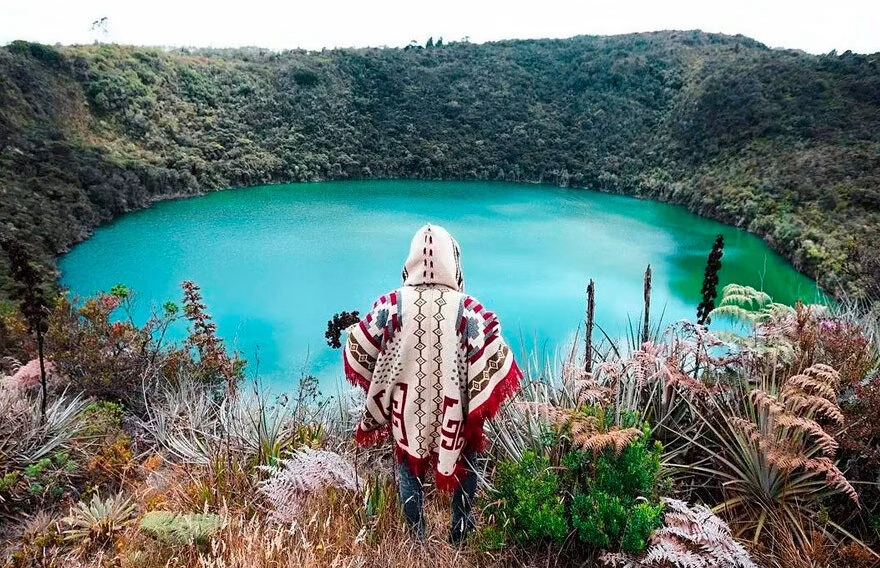
Hidden in the folds of the Colombian Andes at 3,100 metres, a near-perfect circular lake sits inside the crater of an ancient volcano — and guards the origin story of El Dorado. This is Lake Guatavita, the sacred site where Muisca caciques covered themselves in gold dust and offered fine goldwork to Chie, goddess of water, in a ceremony so extraordinary that it launched centuries of obsession, conquest, and failed expeditions across South America.
On this private day trip, you walk through high-altitude páramo draped in silver-leafed frailejones, reach the crater rim, and look down at the very waters that sparked one of history’s most enduring legends.
But Guatavita holds more than myth. You’ll discover the story of a colonial town deliberately drowned in 1967 to build a reservoir — and the replica village constructed from photographs and memory to house its displaced people. You’ll drive through the green highland plateau of Cundinamarca, past roadside stalls and high-altitude cattle farms, with a private guide who connects every layer of the landscape to the history beneath it. And if you stay for lunch, the ajiaco, arepas rellenas, and hot chocolate with cheese served in New Guatavita’s small restaurants will remind you that the best food in Colombia rarely comes from the places tourists already know.
Itinerary
Highlights
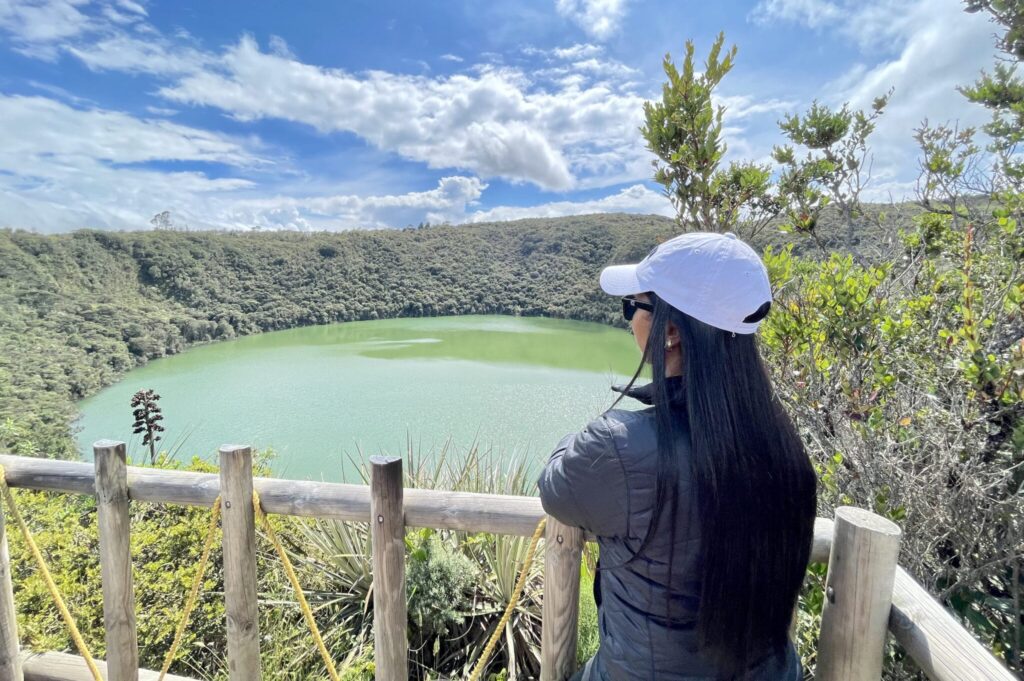
Hike to the rim of the Guatavita crater and look down at the lake where the Muisca performed the gold-offering ceremony that gave birth to the El Dorado legend — a story that sent Spanish conquistadors across an entire continent.
Stand at the viewpoint overlooking Tominé Reservoir and hear the story of what lies beneath it: the original town of Guatavita, flooded in 1967 to supply electricity and water to Bogotá, its inhabitants relocated to an entirely new village built to replicate what they lost.
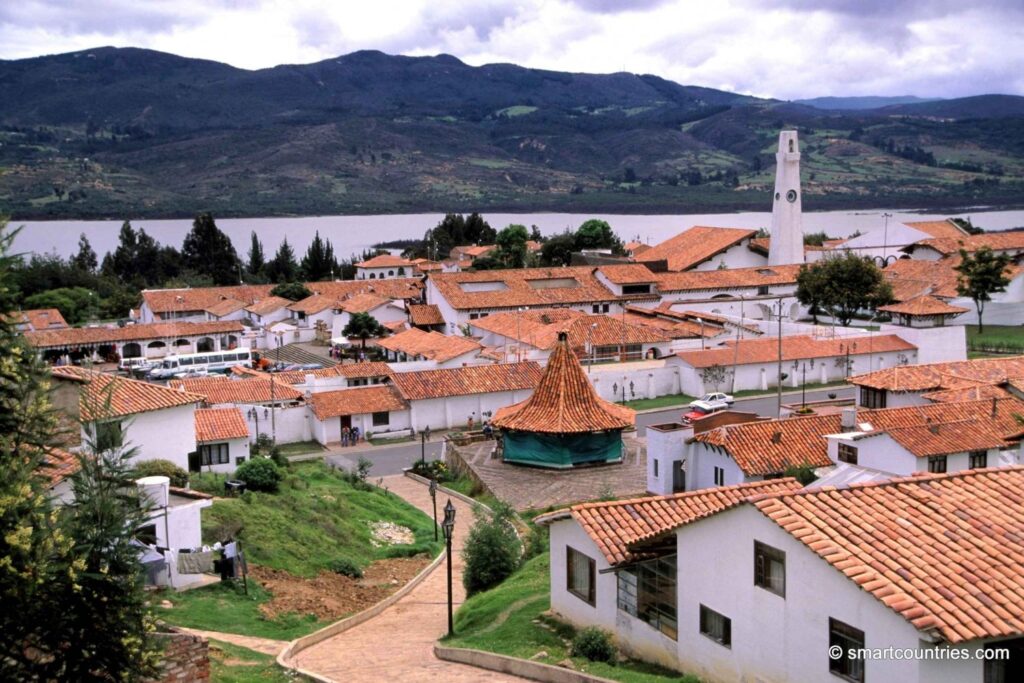
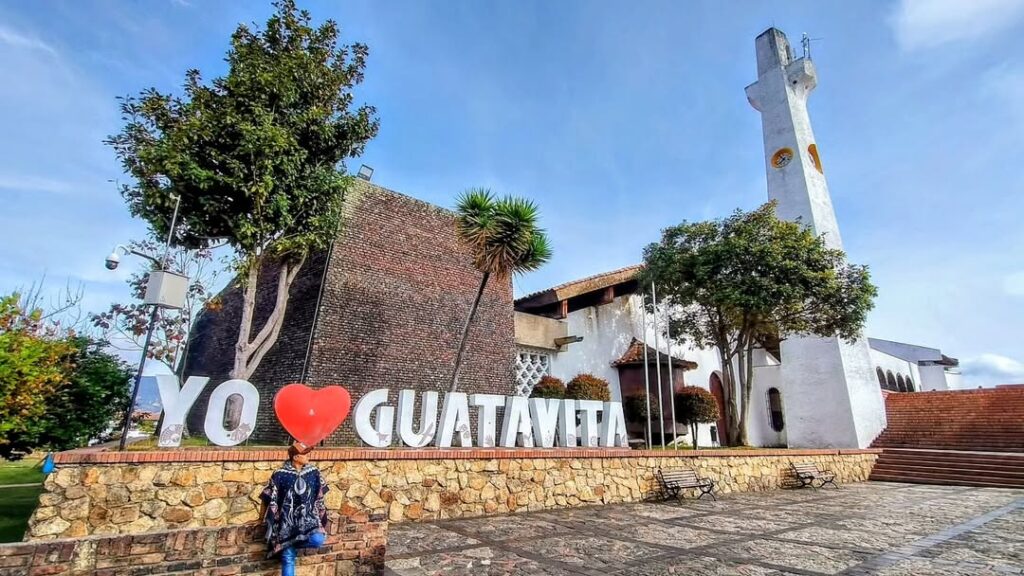
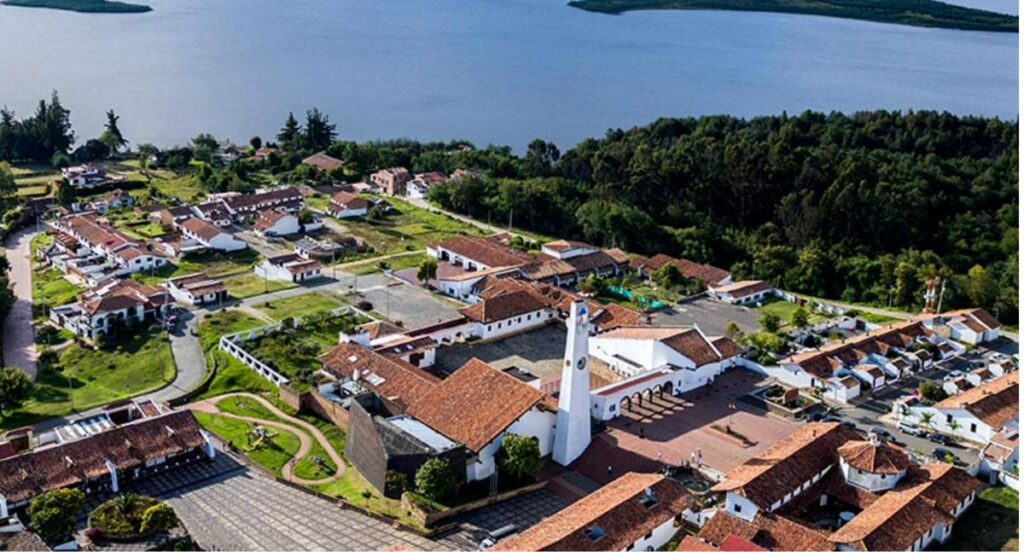
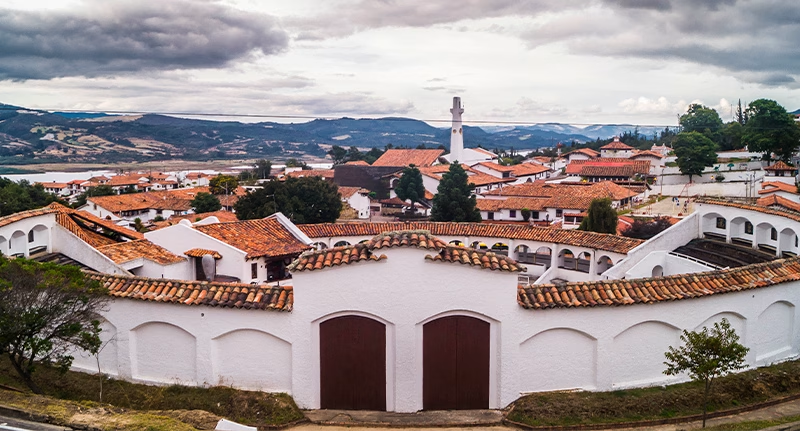
Walk the cobblestone streets of New Guatavita — a colonial-style town constructed in the 1960s as a deliberate replica of the one the government drowned — where white-façade houses, a central church, and a bullring give the place a presence that feels genuinely lived-in.
Learn about Muisca indigenous traditions directly from your guide on the shores of the lake — the ceremonies, the cosmology, and the real story behind one of history's most persistent myths.
Travel in a private vehicle with your own guide from hotel pickup to hotel drop-off — no shared buses, no fixed group pace, no strangers.
What's Included
Private English-speaking guide (full day).
Private hotel pickup and drop-off in Bogotá.
Entrance fee to the Guatavita Ecological Reserve.
Guided hike to Lake Guatavita with park guide.
Risk insurance.
Traditional lunch.
What's Excluded
Additional food and drinks no mentioned.
Personal purchases and souvenirs.
Gratuities (appreciated but not required)
Know before you book
This tour requires a moderate physical fitness level — the hike to the Guatavita crater rim involves climbing approximately 150 steps. Please tell your guide before the tour if there are any health conditions the team should know about.
Lake Guatavita is closed on Mondays, except when Monday is a public holiday — in that case it is closed on Tuesday. If your tour falls on a closure day, Cielo will contact you to reschedule or refund.
The maximum temperature in New Guatavita village is around 14°C (57°F). The lake itself is colder. Wear comfortable walking shoes and bring a warm jacket — even on sunny days, the temperature drops significantly at altitude
Dress in layers and bring rain protection. Weather at 3,100 metres changes quickly and the tour operates in all conditions.
Bring sunscreen and sunglasses — UV exposure at altitude is significantly higher than at sea level, even when clouds are present.
The drive from Bogotá is approximately 2 hours each way. The tour is a full day — plan accordingly
More Info
Cancellation Window
12 hours before starting date.
Difficulty
Moderate
Cancellation policy
Free cancellation up to 12 hours before the tour start time — no questions asked. Cancellations made within 12 hours are non-refundable. Booking must be made at least 12 hours in advance. Minimum age of participants is 2 years.
Guest Reviews
Why Book With Cielo
1,200 five-star reviews from real travelers — read them before you book.
Best Price Guarantee — find this tour cheaper elsewhere and we'll match it.
Private transportation door-to-door — no shared shuttles, no waiting around for strangers.
Booking directly with us means your money stays with a Colombian-owned company, not a platform commission.
Our team coordinates everything — pickup timing, the day’s logistics, and the return — so you focus only on the experience.
Other Info
A Lake Guatavita Day Trip from Bogotá: Where El Dorado Actually Came From
A Lake Guatavita day trip from Bogotá takes you to one of the most significant natural and cultural sites in Colombia — and one of the least understood. Most visitors to Bogotá have heard of El Dorado. Far fewer know that the legend has a specific place of origin, a precise lake in the Andes 75 kilometres from the city, and a real indigenous people whose ceremonies gave rise to a story that reshaped South American history. This tour is built around that lake, that story, and the extraordinary sequence of events that followed the Spanish conquest.
The Origin of El Dorado: Gold, Water, and the Muisca Legacy
Lake Guatavita is a circular body of water occupying the crater of an ancient volcano at 3,100 metres above sea level in the municipality of Sesquilé, Cundinamarca. The lake’s nearly perfect circular shape made it sacred to the Muisca people — one of the most sophisticated pre-Columbian civilisations in the region — who believed it was the home of Chie, their goddess of water. The ceremony that gave rise to the El Dorado legend took place here: a new Muisca cacique would cover his body in gold dust, sail to the centre of the lake on a ceremonial raft, and rinse himself off while throwing fine goldwork into the water as an offering to the goddess.
When Spanish conquistadors arrived in the 16th century and learned of this ritual from Muisca informants, the story transformed in transit. “El Dorado” — the golden one — became “the city of gold,” then “the land of gold,” and eventually the premise for decades of failed expeditions into the interior of South America. Three separate attempts were made to drain Lake Guatavita in search of its treasures. One succeeded partially, yielding a narrow ledge around the rim and a handful of gold pieces now held in Bogotá’s Gold Museum. The lake itself was never successfully emptied — its volcanic walls held.
The Muisca Raft at the Gold Museum in Bogotá — the tiny golden figure that archaeologists believe depicts the exact ceremony described above — is the object that connects the museum to the lake. If you’ve seen it before this tour, Guatavita is where its meaning becomes three-dimensional. If you haven’t, the Private Bogotá City Tour is worth adding to your itinerary for the day before or after.
Hiking the Páramo to the Crater Rim
The hike to the crater rim takes you through Andean páramo, one of the most ecologically distinctive ecosystems on earth. Páramo vegetation occupies the zone between the cloud forest and the permanent snowline, typically between 3,000 and 4,500 metres, and is found almost exclusively in the northern Andes. The plants here — frailejones with their rosettes of silver-grey leaves, low shrubs, mosses, and bromeliads — are unlike anything at lower altitudes, and the air has the particular clarity of high mountain environments.
Three viewpoints along the trail offer progressively closer looks at the lake as you approach the crater rim. Standing at the top and looking down at the water — which shifts between deep green and turquoise depending on the light — is one of those rare moments where a place lives up entirely to what you were told about it before you arrived. The páramo ecosystem you walk through on the ascent is the same ecosystem the Sumapaz Páramo Tour covers at greater scale and remoteness south of the city, and that the Chingaza Hiking Tour explores in the recovering reserve northeast of the capital. Guatavita gives you the páramo in its most accessible form — the cultural significance and the ecology combined in a single two-hour hike.
New Guatavita: The Town That Was Built Twice
The story of New Guatavita adds a layer to the day that most visitors don’t expect. The original Guatavita was a colonial town with a history stretching back to the 16th century — churches, a central plaza, cobblestone streets, the complete infrastructure of a small Andean municipality. In 1967, the Colombian government flooded it to create the Tominé Reservoir, which generates hydroelectric power and supplies water to Bogotá. The town’s 5,000 inhabitants were relocated to an entirely new village, built from scratch at a higher elevation by the state, designed as a deliberate replica of the town they had been forced to leave.
New Guatavita’s white-façade houses with terracotta roofs, narrow streets, central church, and bullring are all reconstructions — built to specifications drawn from photographs and memories of the original. The town now sits above the reservoir, its streets occasionally quiet enough that you can hear the water below through gaps in the conversation. Your guide explains the economics, the politics, and the personal dimension of what happened here — the kind of story that gets lost when a tour rushes past the surface. The same honesty about difficult history runs through the guide’s explanation of the Belalcázar statue debate in Cali on the Cali City Tour and through the Getsemaní independence story on the Cartagena City Tour. Colombia’s history is not uncomplicated, and the guides on these tours don’t pretend it is.
The Drive: Andean Plateau, Farming Towns, and the Road North
The drive between Bogotá and Guatavita passes through the Andean plateau of Cundinamarca, rising through small farming towns and mountain passes before descending into the valley where the reservoir and the village sit. The road itself is part of the experience — green slopes, cattle in high-altitude pastures, roadside stalls selling arepas de choclo and fresh cheese from the local farms. Your private guide is with you throughout, available for conversation and context as the city recedes behind you.
Traditional Cundinamarca Cuisine in the Mountains
The restaurants in New Guatavita serve traditional Cundinamarca cuisine — soups like ajiaco or changua, grilled meats, arepas rellenas, and hot chocolate served with cheese in the regional style. This is not tourist food. The cooking in small mountain towns like Guatavita reflects local produce and local custom, and it tastes different from what you’ll find in Bogotá’s restaurant circuit. For travelers who want the deeper food context of the Andean interior before or after this trip, the Food Tour in La Candelaria covers the arepa, the almojábana, the obleas, and the chocolate santafereño that define Bogotá’s culinary identity — the urban version of the same highland food tradition you encounter in Guatavita.
Plan Your Time Around Bogotá
Lake Guatavita pairs naturally with other day trips from the capital for travelers spending multiple nights in Bogotá. The Salt Cathedral and Guatavita Tour combines both sites in a single day — the underground cathedral at Zipaquirá and the lake in the same itinerary — for travelers who want to cover the most historically charged sites north of the city without spending two separate days. The Villa de Leyva Full Day Tour takes you three hours further north into the Boyacá highlands for colonial architecture intact since 1954, a fossil valley from the Cretaceous period, and the sapphire mineral pools of Pozos Azules — a natural follow-up for travelers who want to continue into the deeper Andean interior after the Guatavita lake. For those who want to understand the Muisca cultural context before arriving at the lake, the Private Bogotá City Tour covers the Gold Museum’s Muisca collection — including the Muisca Raft — in a full private day in the city.
Ready to see where El Dorado actually came from? Book the Lake Guatavita day trip above and your guide will take care of everything from hotel pickup to the final drop-off — all you have to do is show up and look down at the water.
Planning more time in Bogotá? Browse our Bogotá tours and experiences.
Before you go: our Bogotá guides
Written by the team that runs this tour.
FAQs
The maximum temperature in the village of Guatavita is around 14°C (57°F). The lake itself sits at 3,100 metres and is colder than the town. We recommend comfortable walking clothes, sturdy shoes, and a warm jacket. Weather can change quickly — bring a rain layer even on clear days.
Lake Guatavita is closed on Mondays, except when Monday is a public holiday — in that case, the lake is closed on Tuesday. If your booking falls on a closure day, we will contact you directly to reschedule or arrange a full refund.
The hike to the lake requires a moderate level of fitness — it involves climbing approximately 150 steps to reach the crater rim. The trail is manageable for most active travelers. If you have any health conditions or mobility concerns, please let us know before booking so we can advise honestly.
The guided hike within the Guatavita Ecological Reserve takes approximately 1 hour. The trail climbs to the crater rim and descends on the other side, with three viewpoints overlooking the lake along the route.
You will visit New Guatavita town with views over the Tominé Reservoir, the Guatavita Ecological Reserve, and Lake Guatavita itself. Your guide covers the story of the submerged original town, the Muisca indigenous traditions surrounding the lake, and the origin of the El Dorado legend throughout the day.
Related Tours
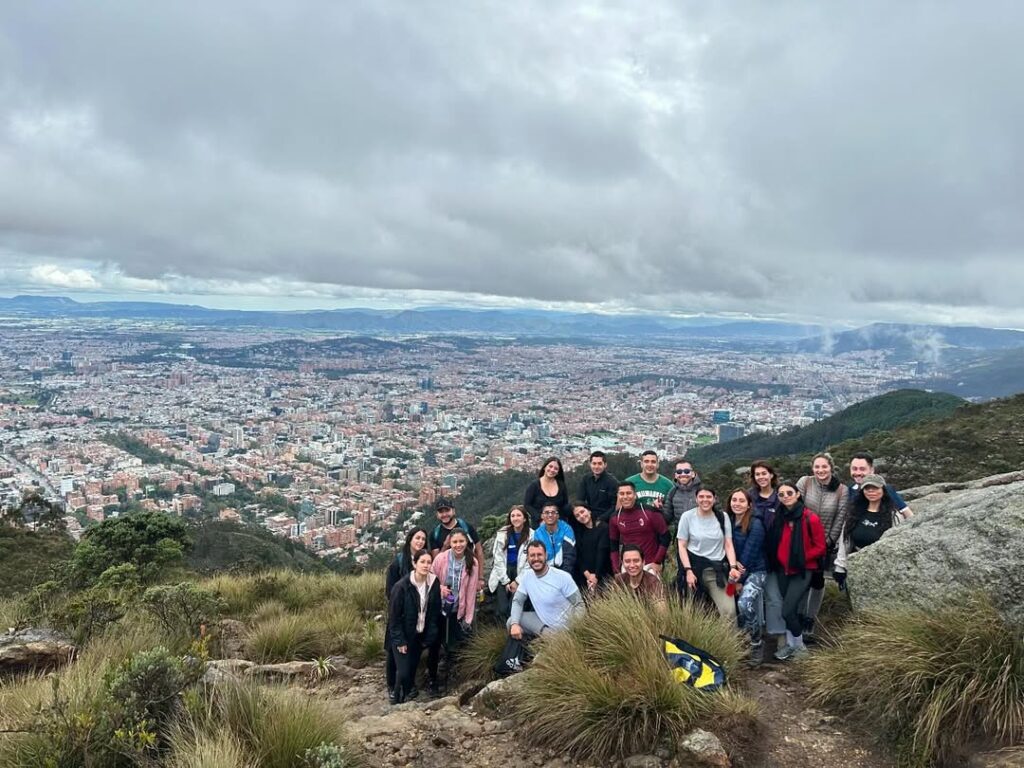

Las Moyas Hike Tours Bogota: Sunrise Trail Above the City
Bogota
Private
Las Moyas Hike: A Real Mountain Morning Ten Minutes from the City Las Moyas Hike gives you something most visitors…
$$$
3 - 4 Hours

Perfect Day in Bogotá: Private Tour of Must-See Highlights
Bogota
Private, Shared
A private Bogotá City Tour gives you something most travelers to Colombia never quite manage: the actual city, not just…
$$$
7 hours

Zipaquirá Salt Cathedral & Guatavita Lagoon Day Tour
Bogota
Private, Shared
Step inside one of Colombia’s most distinctive landmarks as you descend 180 meters into the Salt Cathedral of Zipaquirá.
$$$
10 hours