
+ 1,200 verified five-star reviews for Cielo.Travel on Google and TripAdvisor.
Duration
Tour Type
Pricing
Languages
Overview
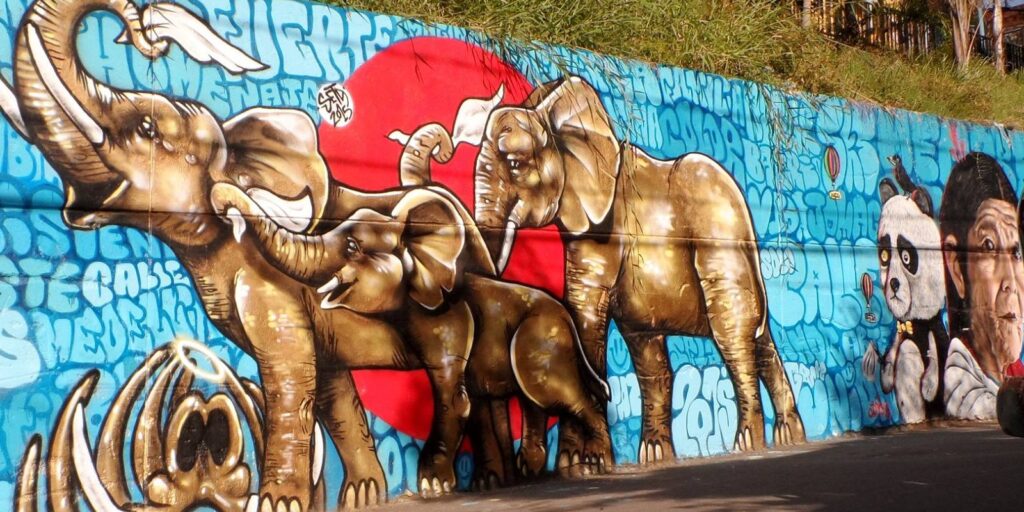
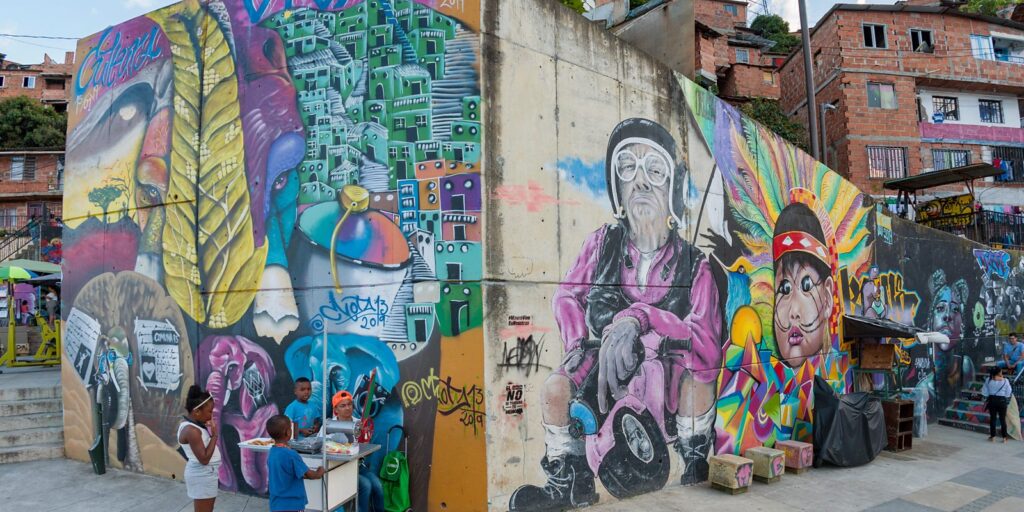
Comuna 13 was once one of the most dangerous neighborhoods in Latin America. Today, its walls tell a different story — one painted by the hands of people who refused to let violence have the last word. This five-hour private tour takes you through the steep streets of western Medellín, where every mural carries a name, a memory, or a declaration of survival. Your guide walks you through the art not as a tourist attraction, but as a living archive of a community that rebuilt itself from the inside out.
This is not a sightseeing loop. Between the murals, you move through a neighborhood that is still writing its own story: dancers on the street, musicians on corners, vendors selling food from carts, new art going up on walls that had none last week. Private transportation picks you up at your hotel and brings you back, and every stop along the way is yours to shape. What you leave with is not just a gallery of images — it is an understanding of how a city transforms, and what it costs the people who live through it.
Itinerary
Highlights
Walk through San Javier neighborhood with a local guide who explains the history behind each mural you pass.
Hear firsthand how art replaced violence in a community once labeled one of the most dangerous in Latin America.
Watch live cultural performances — dance, music, and storytelling — happening in the streets of Comuna 13.
Taste local food from neighborhood vendors while your guide shares the stories of the families who live here.
Ride Medellín’s metro system with your guide and learn how public infrastructure reshaped the city.
What's Included
Private English-speaking guide.
Private hotel pickup and drop-off.
All-risk insurance.
What's Excluded
Breakfast or lunch.
Extra purchases.
Know before you book
This is a walking tour — wear comfortable sneakers and be prepared for several hours on your feet.
Medellín’s temperature ranges from 23°C to 30°C but can change during the day. Bring a light jacket just in case.
Wear fresh clothing: cotton t-shirts, sunglasses, and a cap are recommended for comfort.
No breakfast or lunch is included. Eat beforehand or budget for local food vendors in the comuna.
This tour operates in all weather conditions, rain or shine. Your guide adjusts the pace to keep you comfortable.
More Info
Cancellation Window
12 hours before starting date.
Difficulty
Easy
Cancellation policy
Free cancellation up to 12 hours before departure. Cancellations made within 12 hours of the tour start time are non-refundable.
Guest Reviews
Why Book With Cielo
1,200 five-star reviews from real travelers — read them before you book.
Best Price Guarantee — find this tour cheaper elsewhere and we'll match it.
Private transportation door-to-door — no shared shuttles, no waiting around for strangers.
Booking directly with us means your money stays with a Colombian-owned company, not a platform commission.
Our team coordinates everything — pickup timing, the day’s logistics, and the return — so you focus only on the experience.
Other Info
A Graffiti Tour Through Medellín’s Comuna 13: The Neighborhood That Painted Its Way Back
The Graffiti Tour Medellín through Comuna 13 puts you on the streets where Colombia’s most powerful urban art movement started — not in a gallery, but on the walls of a neighborhood that fought its way back from decades of violence. This five-hour private experience picks you up at your hotel and takes you deep into the story behind the murals, the escalators, and the community that turned one of Latin America’s most dangerous neighborhoods into one of its most visited. Your guide grew up hearing these stories, and they share them with honesty — not as spectacle, but as context for everything you see on the walls.
A Neighborhood Shaped by Conflict
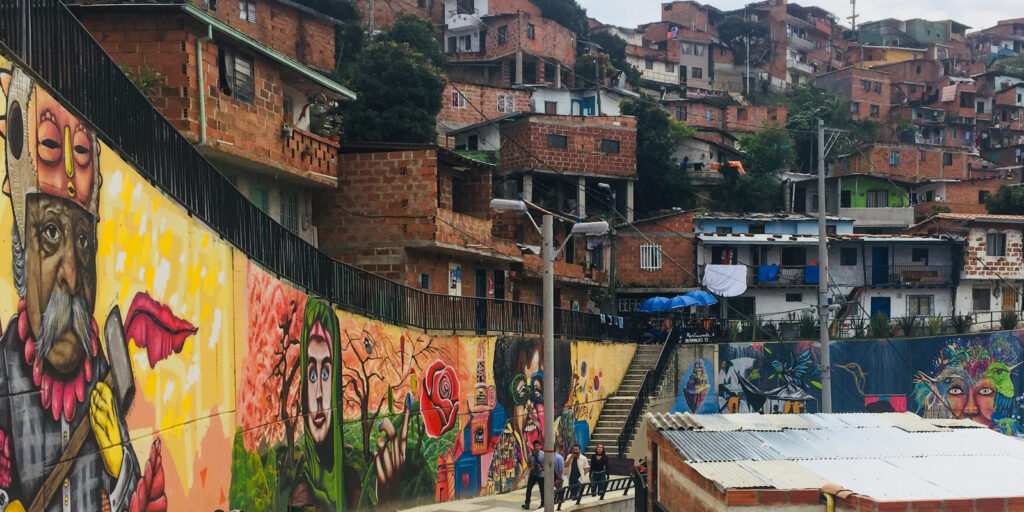
Comuna 13 sits on the steep hillside of western Medellín. For decades, this neighborhood was controlled by armed groups — guerrillas, paramilitaries, and gangs connected to narcotraffic. Families lived in fear, and leaving the house after dark could cost you your life. The combination of poverty and armed conflict made it one of the most dangerous places in Latin America during the 1990s and early 2000s.
The broader context of that violence — the cartel era, Operation Orion, the fragmentation of Escobar’s network after his death — is covered in depth on the Behind Pablo Escobar’s Steps Tour, which traces the arc of the drug trade across key sites in Medellín with a guide who has personal connection to the city’s transformation. The two tours cover the same history from different positions: one from the streets where the cartel operated, one from the neighborhood that bore the weight of what the cartel left behind.
When Paint Became Resistance
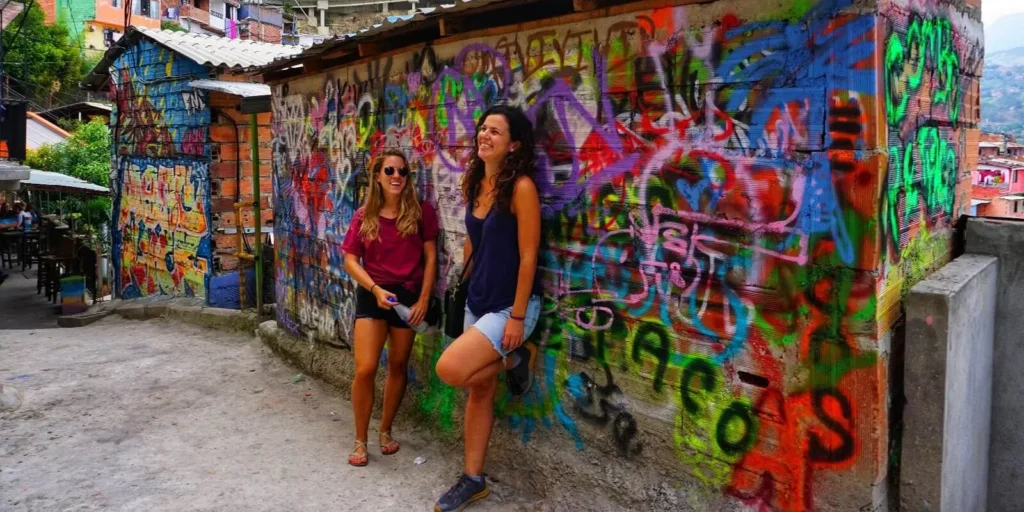
The street art in Comuna 13 began as an act of defiance. Graffiti was considered vandalism, and artists who painted on public walls risked jail time. But the community kept painting — using color, faces, and symbols to reclaim spaces that had been marked by bullets. Over time, what was once illegal became the neighborhood’s most recognized feature. Today, artists from across Colombia and the world travel to Comuna 13 to add their work to its walls. But the most important murals are still the ones created by locals — people who grew up in these streets and used paint to say what words could not.
The same dynamic is at work in the murals of La Candelaria in Bogotá — covered on the Bogotá Graffiti Tour — where artists like Bastardilla, Wosnan, and Carlos Trilleras have used 400-year-old colonial walls to make arguments about indigenous ancestry, political violence, and feminist identity. The difference is scale and urgency: La Candelaria’s murals respond to centuries of Colombian history; Comuna 13’s murals respond to events that happened in this specific neighborhood within living memory, painted by people who lived through them.
What You’ll See on the Walls
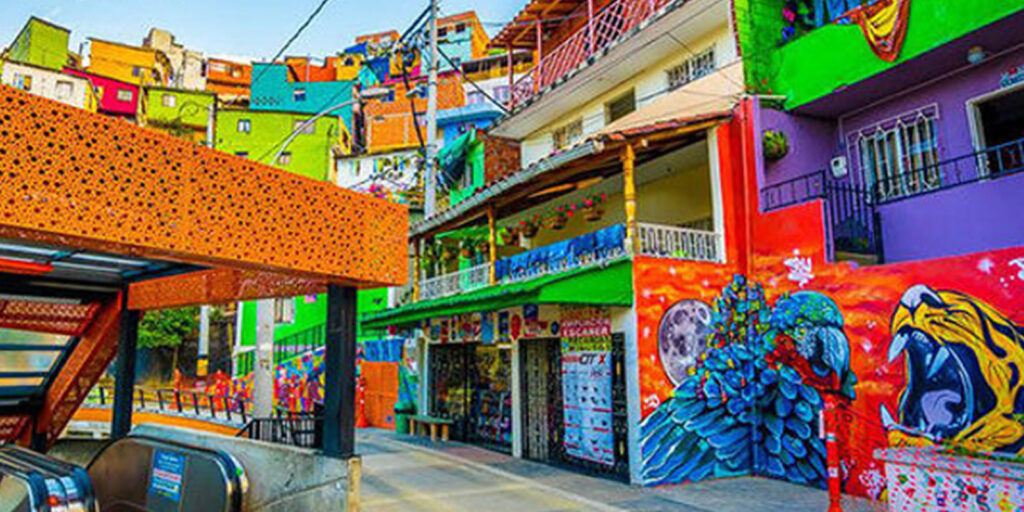
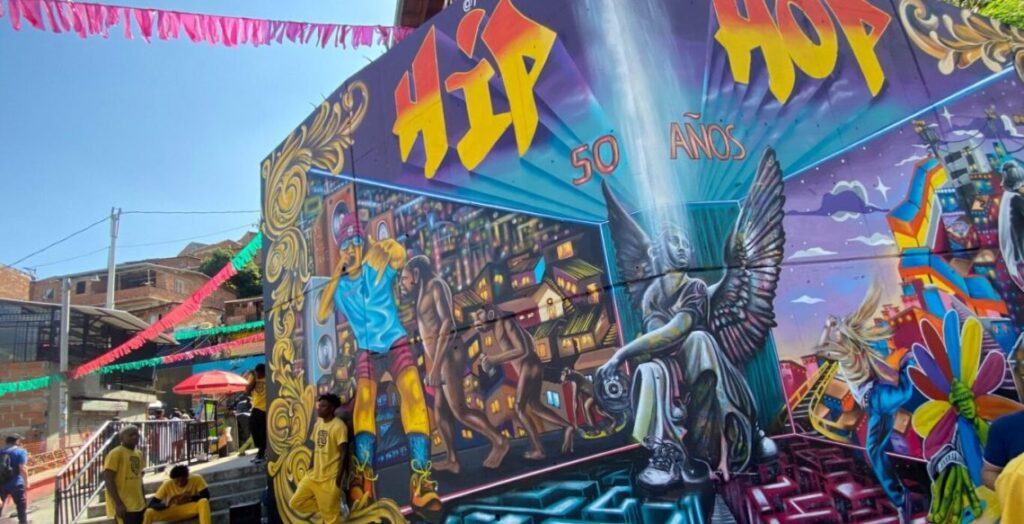
Your private guide walks you through the San Javier neighborhood at your pace, stopping at murals that carry specific stories. Some honor victims of the armed conflict. Others celebrate the resilience of mothers who held families together through the worst years. A few are purely joyful — bright colors and abstract shapes that exist because a young artist wanted to make their block beautiful. Your guide knows which murals matter most and why, and they connect each piece to a larger narrative about Medellín’s transformation. The same philosophy of reading public art as a text about a community’s history — rather than treating it as decoration — runs through every tour in this series, from the El Paraíso Favela Tour in Ciudad Bolívar to the Getsemaní murals covered on the Cartagena City Tour.
A Living Culture, Not a Museum
This is not just a visual experience. Comuna 13 is alive with culture — dance crews perform on the streets, musicians set up on corners, and storytellers gather small crowds near the escalators. You pass through it all on foot, and your guide helps you understand what you are watching. The dance styles have specific names and histories; the musical traditions connect to the African diaspora heritage that shaped Medellín’s popular culture; the food vendors selling local dishes from carts are part of the same community economy that the murals and the escalators were designed to support.
The outdoor escalators installed in 2011 — reducing a 30-minute hillside walk to a 6-minute ride — were the physical infrastructure that preceded the cultural flowering. The same logic behind the Arví Park Metrocable applied here: public infrastructure as social repair, mobility as a form of dignity. Your guide explains the sequence — conflict, military operation, infrastructure investment, community art — as a coherent process rather than a series of unrelated events. A Graffiti Tour Comuna 13 covers ground that no guidebook can replicate, because the neighborhood changes week to week as new art appears and new stories emerge.
How the Tour Works
The practical logistics are handled for you. Your guide picks you up at your hotel and takes you to the comunas by private transportation. Along the way, you learn about Medellín’s metro system and the role public infrastructure played in reconnecting neighborhoods that were isolated for years. The ride itself is part of the story — it shows you how the city moves and how geography shapes daily life in Medellín.
Once in Comuna 13, you walk for roughly three hours. The terrain is hilly and the streets are narrow, but the pace is yours to set. If you want to spend extra time at a particular mural or stop to photograph a view over the valley, your guide adjusts. If you want to hear more about the armed conflict or the economics of narcotraffic in the 1990s, they go deeper. That flexibility is what makes a private tour worth it — you are not following an umbrella through a crowd of thirty people.
Art Made by Neighbors, for Neighbors
Graffiti Medellín is more than a trend. It is a living document of what happens when a community decides that its walls should tell its own story instead of someone else’s. The art in Comuna 13 is not curated by a museum board or funded by a government grant. It is created by neighbors, for neighbors, and you are invited to see it through their eyes. Local street artists are often present during the tour, willing to talk about their work and their neighborhood — conversations your guide facilitates in a way that keeps the encounter genuine rather than transactional. The warmth of the community toward visitors who engage seriously is one of the consistent observations of people who do this tour rather than the alternatives that move you through the neighborhood at a distance.
After the Walk
After the walk, your guide brings you back to your hotel with time to process what you experienced. Many travelers say the return journey is when the full weight of the stories arrives — when the contrast between what the neighborhood was and what it is now becomes clear as a single arc rather than a sequence of stops. The tour does not try to resolve that contrast or arrive at a neat conclusion. The neighborhood is still working through its own history, and the murals that document that process are still being painted. What the tour gives you is the context to understand what you saw — which is more useful, and more honest, than a triumphant narrative about urban transformation.
Plan Your Time in Medellín
The Comuna 13 Graffiti Tour works well as a first full day in Medellín, giving you the framework for the city’s transformation before going deeper into its history and landscapes. The Medellín City Tour with Downtown and Botanical Garden covers the historic centre, the Botero sculptures at Plaza Botero and San Antonio Park, and the Botanical Garden — the institutional and cultural side of the same recovery story. The Behind Pablo Escobar’s Steps Tour goes into the cartel era in depth — the prison, the neighborhood Escobar built for the poor, and the competing theories about his death — with a guide whose personal connection to the city’s history makes the difference. The Arví Park Tour offers a complete change of register: cable car to protected cloud forest above the city, indigenous trails, and natural swimming pools in a reserve that exists because Medellín chose to protect its watershed. For a day trip out of the city, the Guatapé and El Peñol Rock Tour takes you to one of the most visually striking landscapes in Antioquia — the massive granite monolith rising from a reservoir surrounded by painted lakeside towns.
Ready to see Comuna 13 through local eyes? Book the Graffiti Tour Medellín: Private Comuna 13 Experience above and we’ll take care of everything.
More of Medellín: our private tours and day trips.
Before you go: our Medellín guides
Written by the team that runs this tour.
FAQs
Wear fresh clothing and a light jacket in case the day gets cool. Cotton t-shirts, sneakers, sunglasses, and a cap are the most commonly used items. Comfortable footwear makes a real difference since you’ll be walking for several hours.
Medellín’s weather tends to be warm but it can change during the day. Average temperature ranges between 23°C and 30°C. We recommend bringing a light jacket and staying hydrated. The tour operates rain or shine.
Comuna 13 is a place of renown where many national and international artists have intervened. The most important pieces are those made by locals — people who grew up in the comunas and took charge of transforming their native neighborhood. Your guide points out the most significant murals and shares the stories behind each one.
The entire tour takes place in Comuna 13 and the San Javier neighborhood. Your guide picks you up and drops you off at your hotel, so all transportation is included.
This is a walking tour through hilly terrain with stairs and uneven surfaces. It requires a moderate level of fitness. If you have mobility concerns, let us know when booking and we’ll advise on the best options for your situation.
Related Tours

Medellín Botanical Garden, Metrocable & Arví Park City Tour
Medellín
Private, Shared
A Medellín Botanical Garden and Arví Park Tour: The City’s Green Infrastructure, From Urban Core to Mountain Forest A Medellín…
$$
6 hours

Paragliding in Medellín: A Private Tandem Flight Over the Andes
Medellín
Private
Paragliding in Medellin: Fly Over the Aburra Valley Paragliding in Medellin is one of the most thrilling ways to experience…
$$$
4 hours
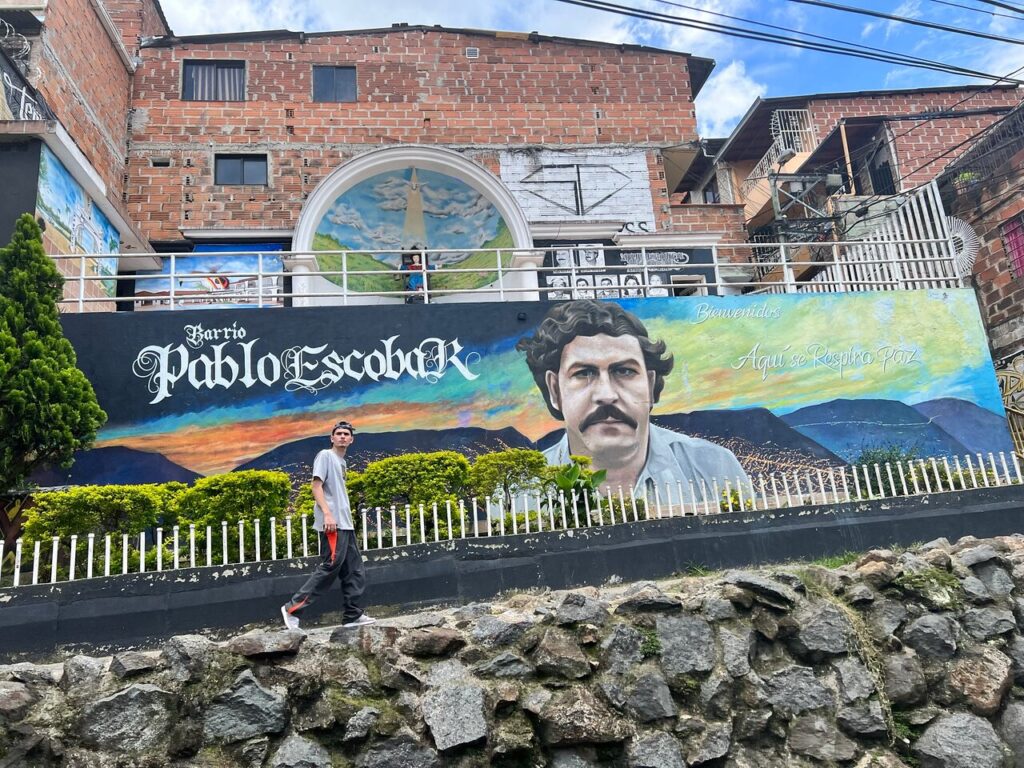
Pablo Escobar Medellín Tour: Behind the Real Story
Medellín
Private
Behind Pablo Escobar’s Steps: A Private Walking Tour Through Medellín’s Most Complex Modern History This tour takes you through five…
$$$
5 hours