
+ 1,200 verified five-star reviews for Cielo.Travel on Google and TripAdvisor.
Duration
Tour Type
Pricing
Languages
Overview
Step off Cartagena’s postcard-perfect plazas and into Getsemaní, where every wall has a story to tell. This private 2.5-hour walk puts you face to face with the murals, politics, and street art that have turned a once-overlooked working-class barrio into one of Latin America’s most compelling open-air galleries. Your English-speaking guide brings the neighborhood’s artists, its social movements, and its complicated debate over art versus vandalism to life, pausing along the way for a taste of authentic Caribbean street food shared with locals.
This is not a tour that follows a script — it moves at your pace, with no group to slow you down and no box left unchecked. Hotel pickup, private transportation, and full insurance mean the logistics disappear so you can focus on the walls, the stories, and the neighborhood’s pulse.
Itinerary
Highlights
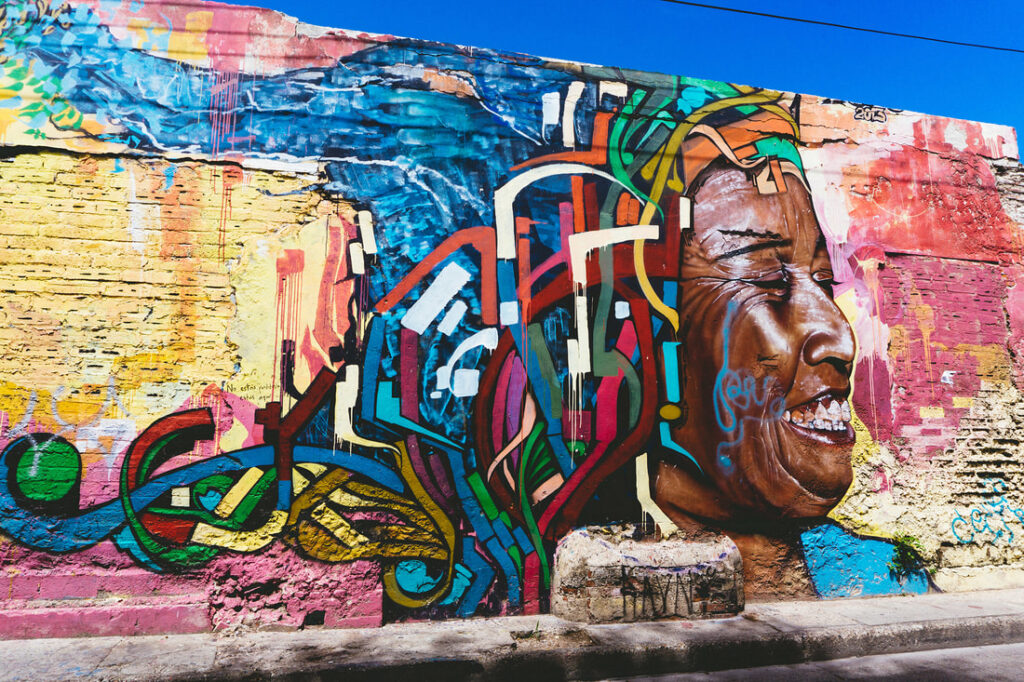
Walk through Getsemaní’s most iconic painted streets — Calle de la Sierpe, Calle San Juan, and Calle de la Media Luna — and learn the stories behind each mural.
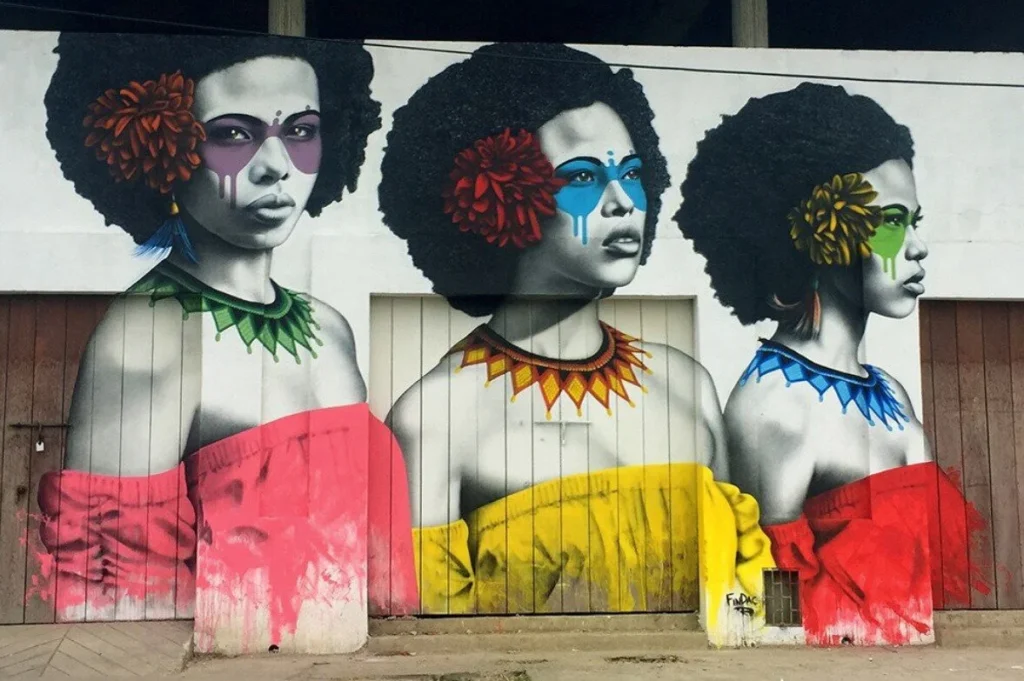
Discover works by recognized graffiti artists such as Showy and Bluny, whose pieces have shaped the neighborhood’s visual identity.
Taste a traditional Caribbean snack prepared by locals right in the heart of the neighborhood.
Explore Parque del Centenario and hear your guide break down the debate between graffiti as art and graffiti as vandalism.
Get personalized recommendations from your guide for cultural, gastronomic, and musical activities beyond the typical tourist circuit.
What's Included
Private English-speaking guide.
Private hotel pickup and drop-off.
Traditional gastronomic experience (Caribbean snack).
All-risk insurance.
What's Excluded
Breakfast and lunch.
Extra purchases.
Know before you book
This is a walking tour covering several blocks in Getsemaní. Wear comfortable sneakers and be prepared to walk for up to 2.5 hours.
Cartagena’s weather is warm year-round, typically above 27°C (80°F). Bring sunscreen, sunglasses, and a hat to stay comfortable
A bottle of water is recommended, especially during midday tours.
The tour includes a traditional Caribbean snack. Let your guide know about any dietary restrictions in advance
This tour operates in all weather conditions, rain or shine. A light rain jacket can be handy during rainy season.
More Info
Cancellation Window
12 hours before starting date.
Difficulty
Easy
Cancellation policy
Free cancellation up to 12 hours before departure. Cancellations made within 12 hours of the tour start time are non-refundable.
Guest Reviews
Why Book With Cielo
1,200 five-star reviews from real travelers — read them before you book.
Best Price Guarantee — find this tour cheaper elsewhere and we'll match it.
Private transportation door-to-door — no shared shuttles, no waiting around for strangers.
Booking directly with us means your money stays with a Colombian-owned company, not a platform commission.
Our team coordinates everything — pickup timing, pilot briefing, and return logistics — so you focus only on the flight.
Other Info
Graffiti Tour in Cartagena: The Neighborhood That Painted Its Own History
A graffiti tour in Cartagena is one of the best ways to experience the city beyond its colonial walls and postcard-perfect plazas. While most visitors stay within the historic center, the Getsemaní neighborhood sits just a few blocks south — and it tells a completely different story. This private 2.5-hour walking tour takes you through its most painted streets, where murals and spray-painted works cover nearly every surface. With a local English-speaking guide, you get the context behind each piece — not just the colors, but the reasons they ended up on these walls in the first place.
Getsemaní: The Neighborhood That Forced Independence
Getsemaní has long been known for its bohemian spirit, but its political significance runs deeper than its reputation for nightlife and street art. On November 10, 1811, it was not the wealthy criollos inside the Walled City who forced the break from Spain — it was the working-class residents of Getsemaní, outside the walls, who gathered in the streets that night and pressured the governing council to sign the declaration. The date is still celebrated as Cartagena’s independence day, and Getsemaní still identifies itself as the neighborhood that did it first. The Cartagena City Tour covers that independence story in full alongside San Felipe’s tunnels and La Popa’s hilltop view — this tour covers what happened to the same neighborhood two centuries later, when its residents chose paint instead of the streets to make their arguments.
For decades after independence, Getsemaní remained a working-class neighborhood where locals gathered outside their homes in the evenings, children played in narrow alleys, and the pace of life moved slower than in the tourist areas nearby. Artists and activists saw these walls as open canvases. They began painting murals that reflected political views, social struggles, and cultural identity — and that tradition continues today with new pieces appearing regularly.
Walking Through Cartagena’s Most Painted Streets
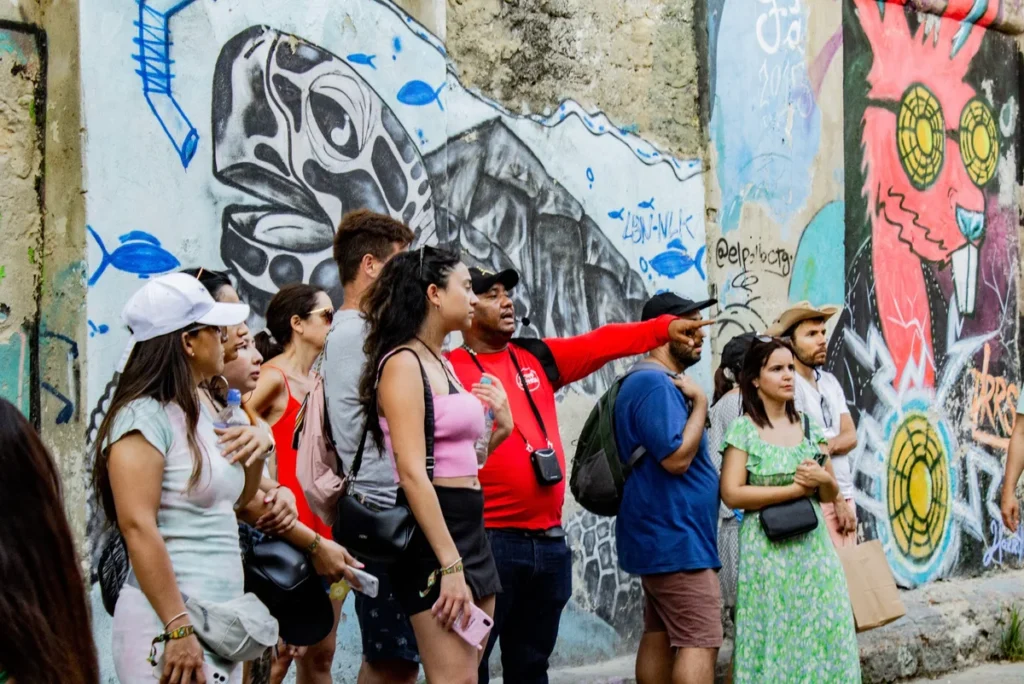
On this Cartagena culture walk, your guide takes you through streets like Calle de la Sierpe, Calle San Juan, Calle de la Media Luna, and Calle Larga. Each block brings new works to discover. Some are massive, spanning entire building facades with vivid scenes of local life and political symbolism. Others are smaller, tucked into doorways or wrapped around corners where you might miss them without a guide pointing them out.
Your guide explains who created each piece, what it represents, and why graffiti became such a powerful form of expression across Latin America — particularly in Colombia, where social movements and art have been deeply intertwined for decades. The same conversation about community authorship and political memory runs through the murals of La Candelaria in Bogotá — covered on the Bogotá Graffiti Tour — and through the murals of Comuna 13 in Medellín, covered on the Graffiti Tour through Comuna 13. Getsemaní’s version of that argument is the oldest: a neighborhood with a 200-year history of using its streets to say things that power structures would prefer left unsaid.
The Artists: Showy, Bluny, and the International Conversation
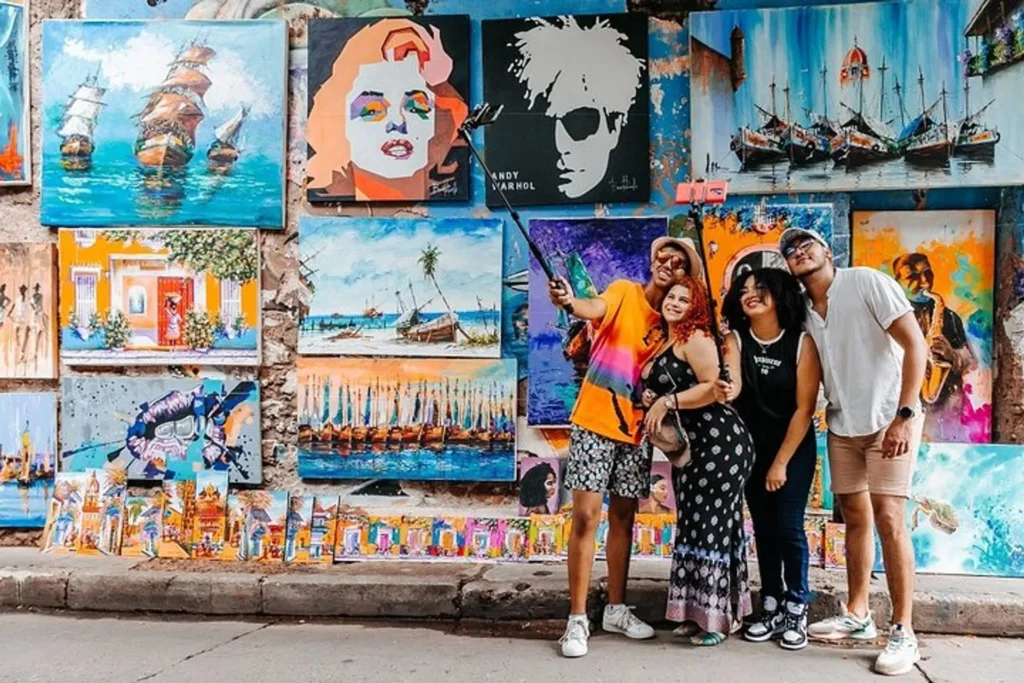
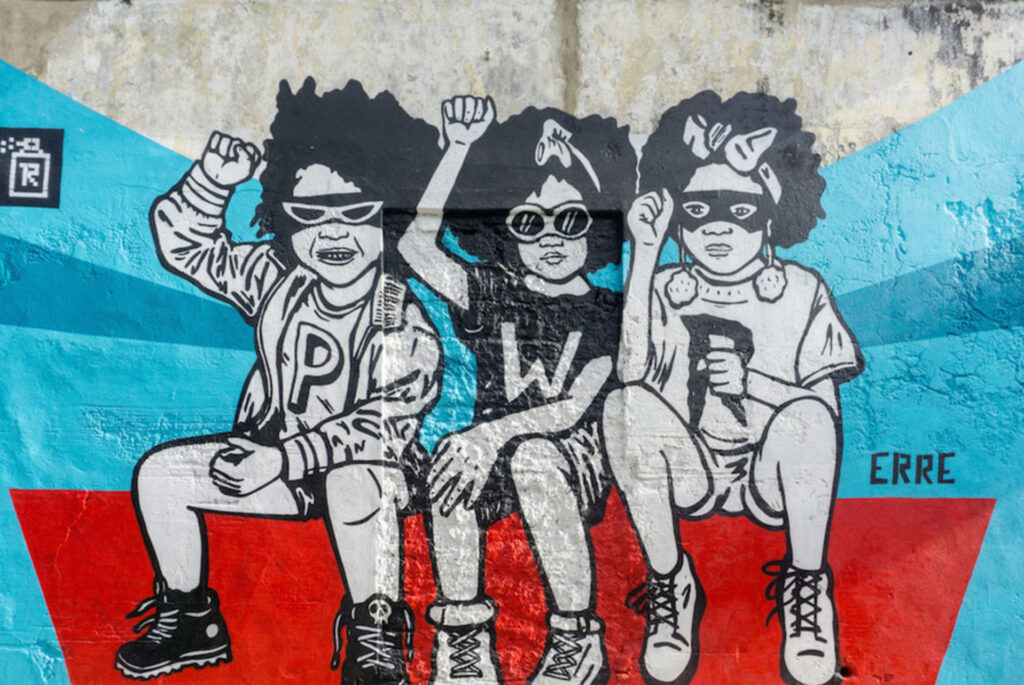
You will see works by artists who have become closely associated with Getsemaní’s visual identity, including Showy and Bluny. Their pieces range from abstract compositions to sharp political commentary, and they have helped define the neighborhood’s reputation as one of the most visually striking in all of Colombia. The area also attracts international artists who leave their mark alongside locals, creating a layered visual conversation that shifts and evolves with every visit. Art galleries and handmade craft shops dot the same streets, offering another dimension to the creative energy that defines this part of Cartagena.
The tension between international recognition and local displacement is one of the most important things your guide addresses on the tour. Rising property values driven by tourism are pushing out the residents whose families painted the walls — the same families whose independence action in 1811 the murals commemorate. Getsemaní’s gentrification story is one of the most visible in Colombia, and the murals that document it are being painted on walls whose rent the artists can no longer afford. Your guide reads those murals with you in that context.
Art or Vandalism? A Conversation at Parque del Centenario
The tour also passes through Parque del Centenario, where your guide opens up a broader discussion: is graffiti art or vandalism? In Colombia, this question carries real weight. Many cities across the country have gone through social and artistic transformation projects that use muralism and street art to reclaim public spaces, build collective memory, and spark community dialogue. Getsemaní is one of the clearest examples of this movement — and also one of the most complicated, because the art that reclaimed the neighborhood from armed groups and neglect has also made it attractive enough to price out the community that produced it. Your guide shares how this specific neighborhood fits into that wider cultural shift, and invites you to form your own opinion as you take in the walls around you.
A Taste of Local Life: The Caribbean Snack Stop
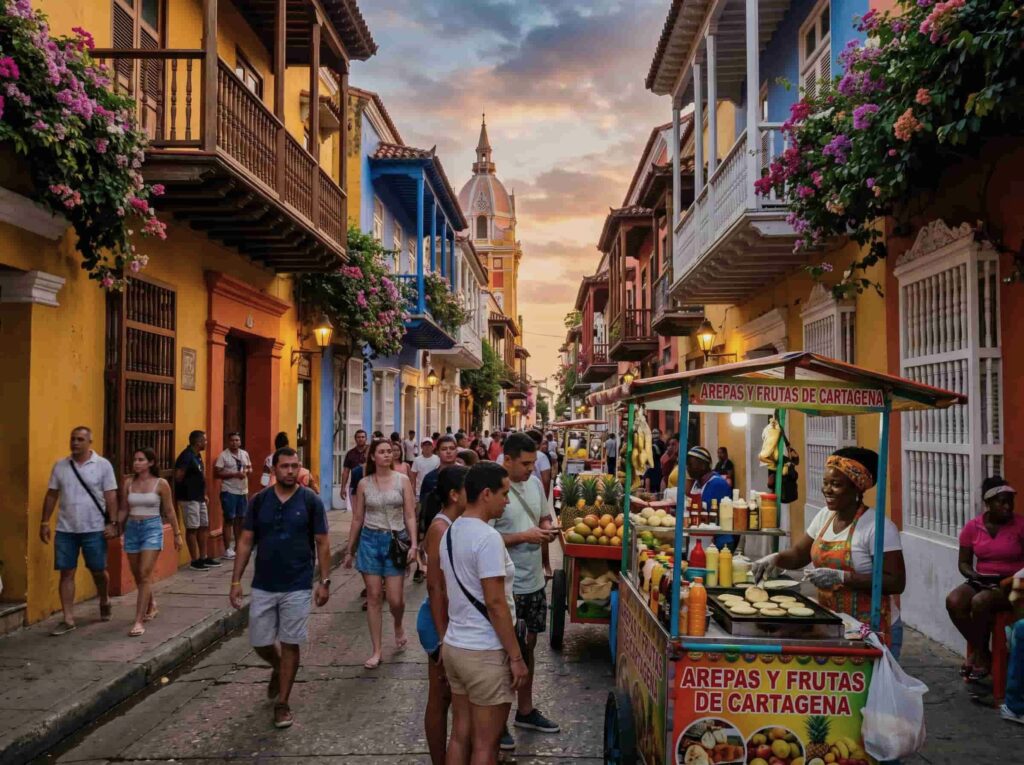
Partway through the walk, you stop for a traditional Caribbean snack prepared by locals in the neighborhood. It is a small but meaningful pause — a chance to taste something homemade, chat with your guide about what you have seen so far, and absorb the atmosphere of a neighborhood that still feels genuinely lived-in despite its growing popularity with visitors. The food of Getsemaní is the same Afro-Caribbean culinary tradition covered in depth on the Cartagena Food Tour — the yucca-based carimañola, the cocadas with their family recipes, the arepa con huevo that defines the coast. The snack stop on this tour is a taste of that tradition in its neighborhood context rather than a dedicated culinary itinerary.
Beyond the Murals: Local Recommendations
Getsemaní is home to small venues for live music, independent restaurants, and cultural events that most tourists never hear about. Your guide wraps up the experience with personal recommendations — places to eat, things to hear, and experiences to seek out during the rest of your stay. These tips come from someone who knows the city personally, not from a guidebook.
A Private Tour, Set to Your Pace
Because this is a private tour, the pace is entirely yours. You can spend extra time photographing a particular mural, ask deeper questions about a piece that catches your eye, or move quickly through sections that interest you less. There is no group to keep up with, no fixed itinerary beyond the key stops, and no rush. The experience includes hotel pickup and drop-off in private transportation, and the tour is covered by all-risk insurance. Your guide speaks both English and Spanish.
Plan Your Time in Cartagena
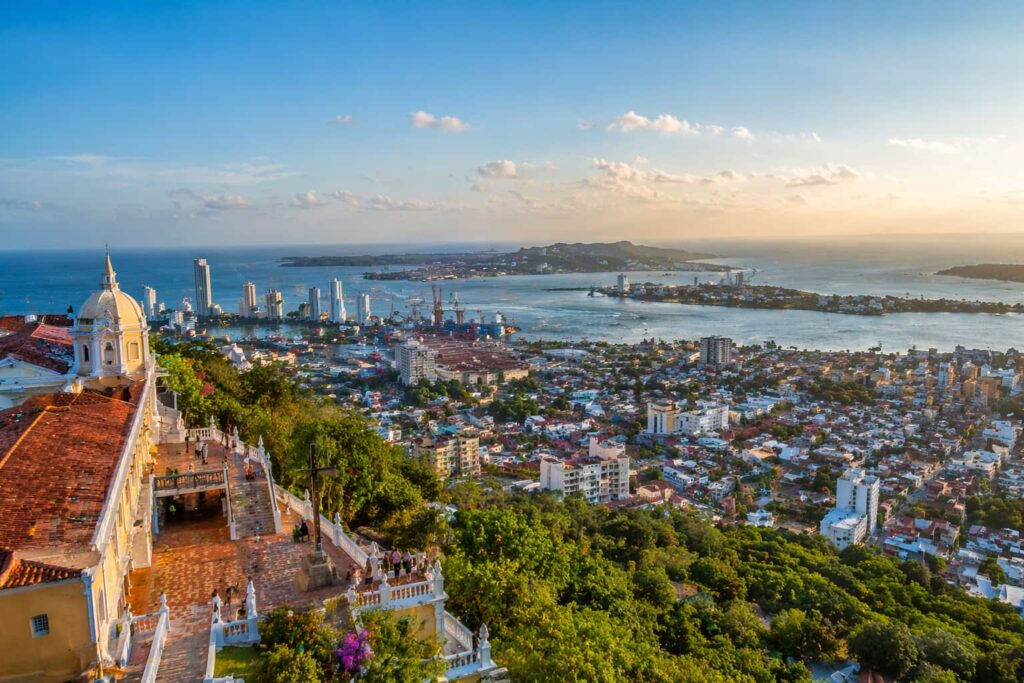
The Getsemaní graffiti tour works best as a complement to the city’s colonial and culinary experiences rather than a standalone. The Cartagena City Tour covers San Felipe’s fortress tunnels, the Walled City’s layered colonial architecture, and La Popa’s hilltop panorama — the historical foundation that makes Getsemaní’s murals more legible. The Cartagena Food Tour covers the same streets from a culinary angle — the arepa con huevo, the carimañola, the cocadas, and the three-culture food history that makes Caribbean cooking what it is. For travelers spending more than one day in the city, the Rosario Islands Day Trip takes you offshore to the coral islands of the national marine park — clear water and white sand an hour from the Walled City — and the Cartagena Sunset Private Boat Tour closes the day from the water, where the colonial stone turns orange and the bay goes gold before the first stars appear.
Ready to explore the street art of Getsemaní? Book the Graffiti Tour in Cartagena above and we’ll take care of everything.
Planning more time in Cartagena? Browse our Cartagena tours and experiences.
Before you go: our Cartagena guides
Written by the team that runs this tour.
FAQs
Cartagena is warm year-round, so wear light, breathable clothing that also offers some sun protection. Comfortable sneakers are a must since you’ll be walking for about 2.5 hours. Sunglasses, a hat, and sunscreen are highly recommended.
You’ll see large-scale murals and graffiti by both Colombian and international artists, including well-known names like Showy and Bluny. The neighborhood also has art galleries and handmade shops where you can browse paintings and crafts by local creators.
Yes, this tour operates in all weather conditions. Cartagena is typically warm (above 27°C), but rain can happen. If you’re visiting during rainy season, a compact rain jacket or umbrella is a good idea.
The tour walks through Getsemaní’s main streets and alleys, including Calle de la Sierpe, Calle San Juan, Calle de la Media Luna, and Calle Larga. You’ll also pass through Parque del Centenario.
Yes. The pace is relaxed and the content is visual and cultural. Children who enjoy art and colorful surroundings tend to have a great time. The traditional snack stop is usually a highlight for younger travelers too.
Related Tours


Cartagena City Tour: San Felipe Fortress, Walled City, Getsemaní & La Popa
Cartagena
Private
A Private Cartagena City Tour: The Fortified City, the Independence Neighborhood, and the View That Makes It All Make Sense…
$$$
6.5 hours

Food Tour in Cartagena Walled City
Cartagena
Private
Food Tour in Cartagena’s Walled City: Three Cultures, Five Centuries, and the Streets Where It All Still Lives A food…
$$
4 hours

Getsemaní & San Felipe Castle Walking Tour in Cartagena
Cartagena
Shared
Cartagena Walking Tour Through Getsemaní and San Felipe Castle: Two Neighborhoods, Three Centuries of History A Cartagena walking tour through…
$$$
3 hours