
+ 1,200 verified five-star reviews for Cielo.Travel on Google and TripAdvisor.
Duration
Tour Type
Pricing
Languages
Overview
The Colombian Amazon holds nearly a third of all tropical rainforest remaining on Earth and is home to roughly 10% of all known wildlife species — numbers that are commonly cited and genuinely difficult to process until you are inside the forest and begin to understand what density of life actually looks and sounds like. This overnight tour from Leticia takes you into the KM7 indigenous reserve, 20 minutes from the city, where multicultural communities from across the Amazon basin live together in a functioning settlement that is not organized around tourism. Arriving as a small private group and staying the night changes what the visit is — you are a guest in a place where people live, not a visitor moving through a cultural exhibition.
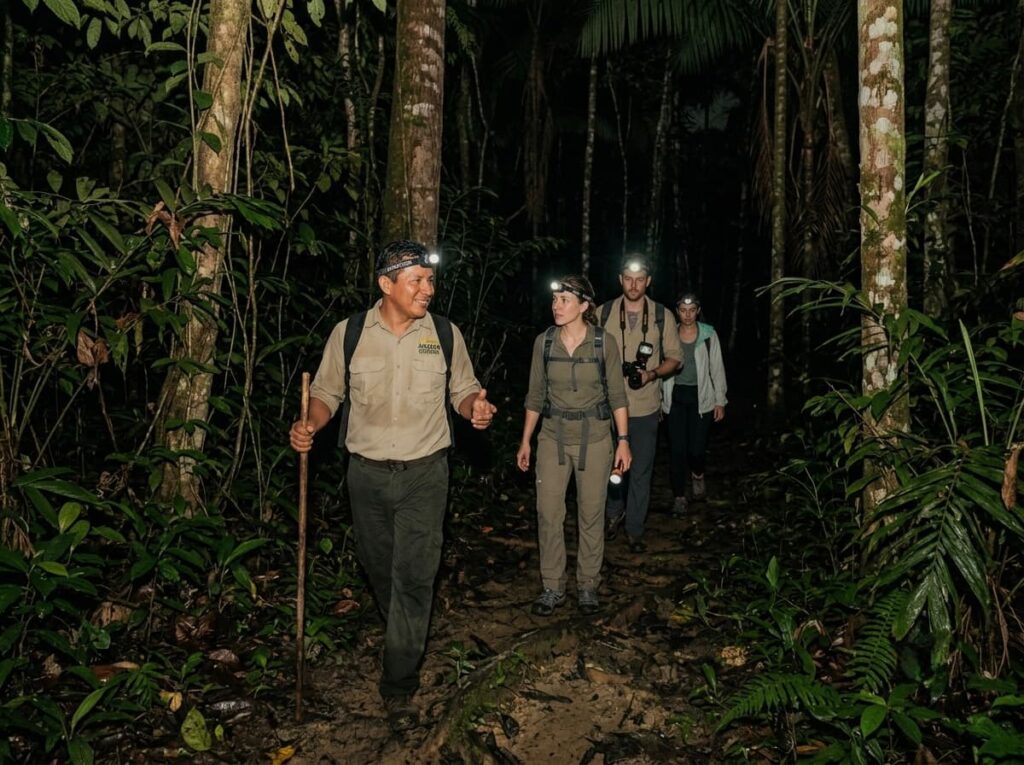
Day one covers the same jungle trail twice: by day, with a guide whose plant knowledge comes from growing up inside this ecosystem rather than reading about it — medicinal tobacco, fever treatments, insect repellents growing from the bark of trees — and by night, when the same trail becomes a different forest entirely. Complete darkness, tarantulas at eye level, poison dart frogs in the undergrowth, and nocturnal birds moving through the canopy overhead. You sleep in a maloca or a hammock under the canopy with no electricity and no city behind the treeline, and the sounds that wake you at 2 AM are real. Day two returns through Tarapoto Lake by canoe or trail depending on the season, with time for fishing, birdwatching, and swimming before the late afternoon drive back to Leticia. Yellow fever vaccination is mandatory at least two weeks before arrival — plan accordingly.
Itinerary
Highlights
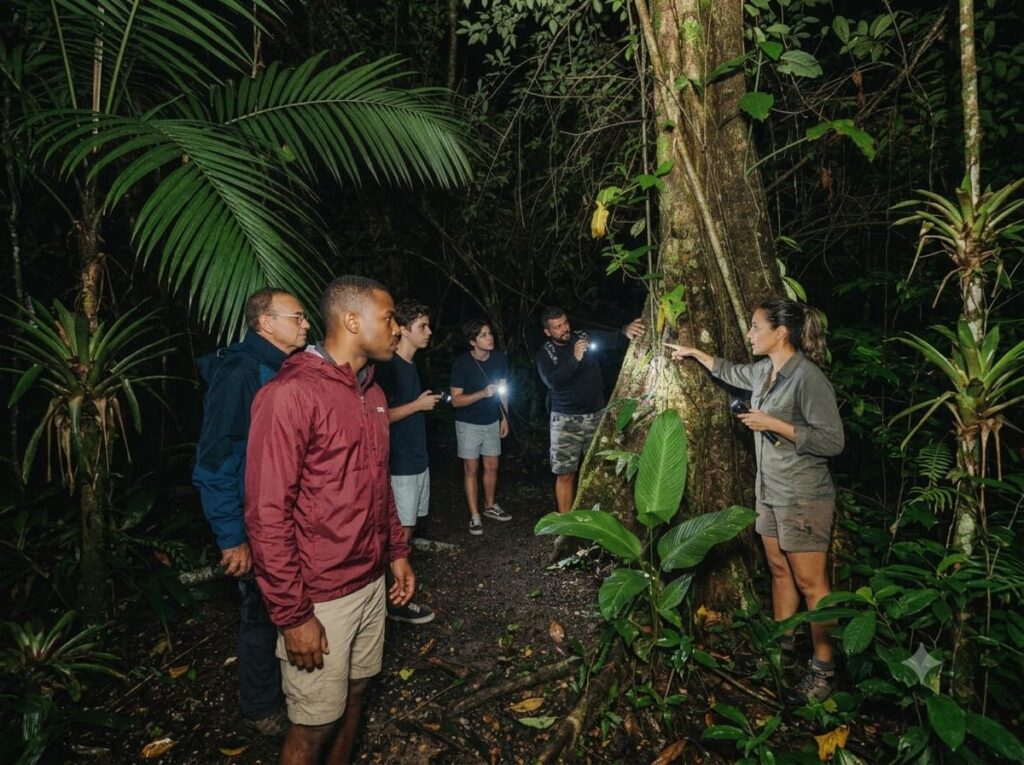
Trek jungle trails both day and night at the KM7 indigenous reserve — spotting primates, exotic birds, tarantulas, and colorful frogs while your guide explains the medicinal uses of native plants like tobacco and mambe.
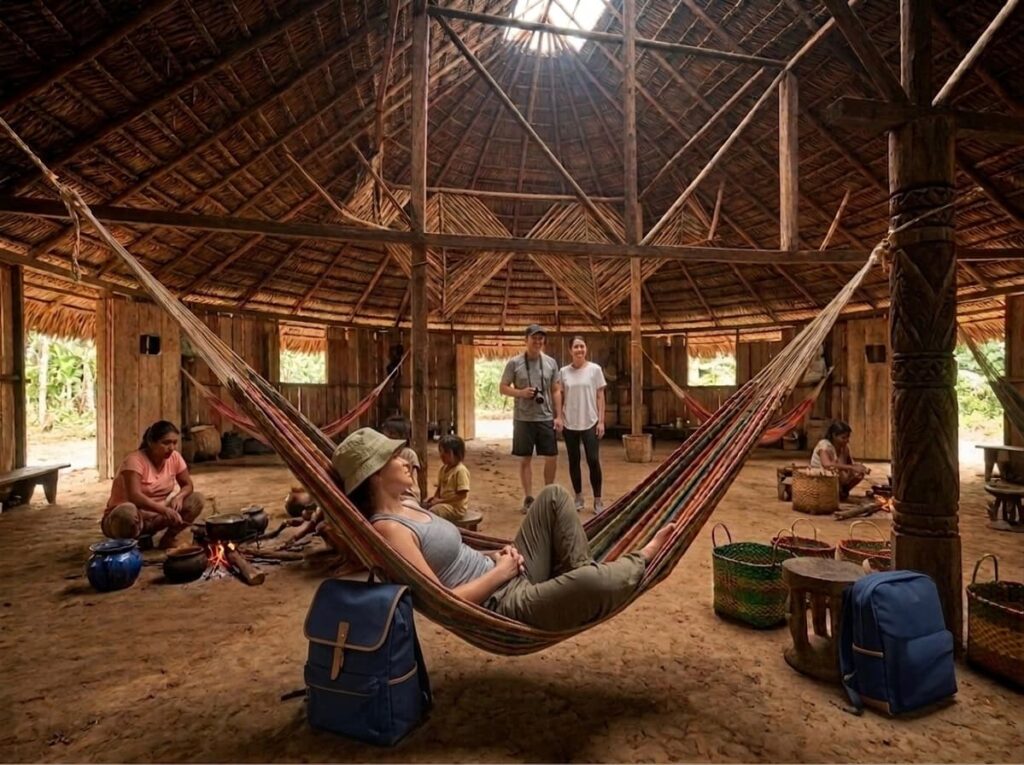
Sleep in a traditional maloca or in hammocks under the jungle canopy, spending a full night inside the Amazon without the noise or light of a city — an experience that very few travelers ever have.
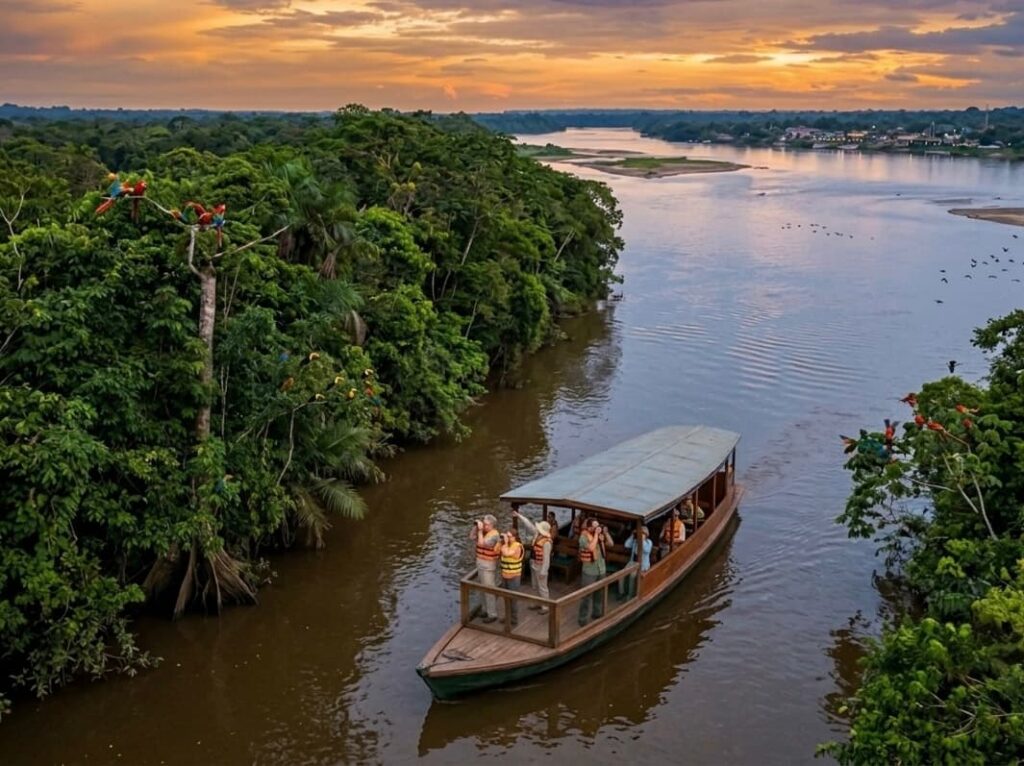
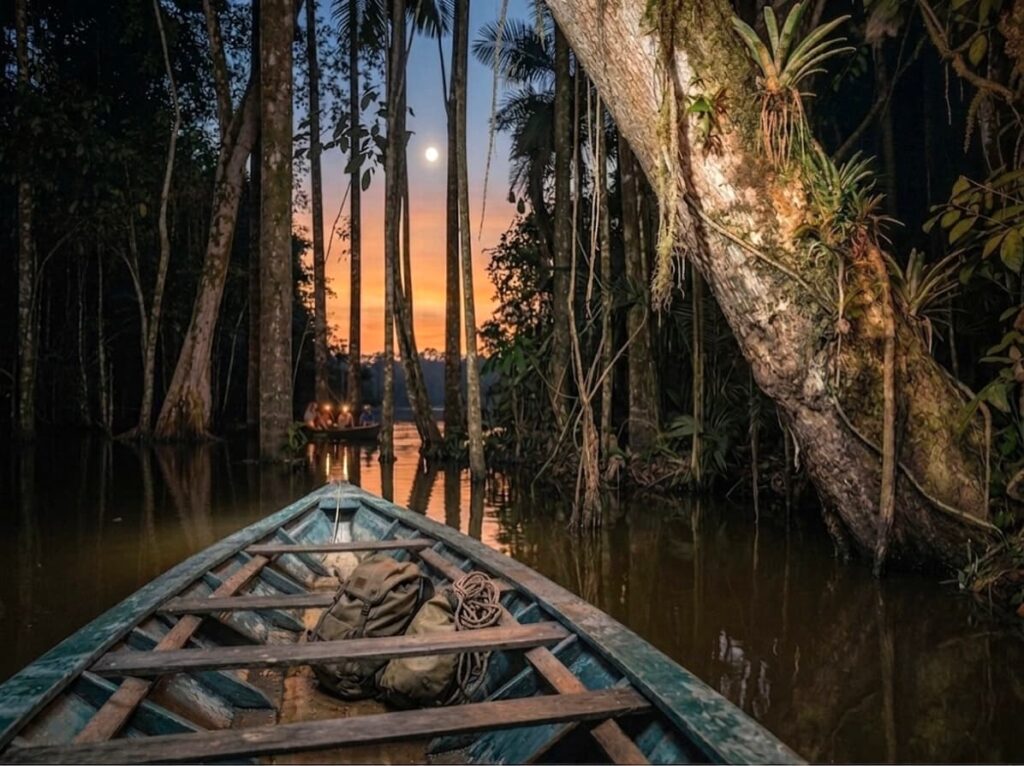
Canoe or kayak through flooded Amazon rainforest on Day 2, navigating the water channels around Tarapoto Lake while birdwatching, fishing, and taking in the untouched landscape.
Share traditional food with the indigenous community at the multicultural reserve, learning about the living cultures that have been in relationship with this forest for generations.
Experience the diversity of peoples and communities living together peacefully — the Amazon is not just a place, it's a society, and this tour takes you inside it.
What's Included
Private English-speaking guide.
Hotel pickup and drop-off.
Land and water transportation.
All meals.
Accommodation (maloca or hammocks).
Entrance to all activities.
Rubber boots.
What's Excluded
Turismo Tax at the airport (each passenger pays on arrival).
Flight tickets.
Extra purchases.
Know before you book
Yellow fever vaccination is required to visit the Amazonas department. If you are not yet vaccinated, get it at least two weeks before your trip — it takes that long to become fully effective.
Rubber boots are provided for the jungle walks. Please give us your shoe size when you book so we can prepare the right pair.
Bring your own lantern or flashlight — you will use it often. The reserve has no electric power, so a reliable personal light is essential for the night hike and for moving around camp after dark.
There is no electric power at the accommodation. Charge your devices before leaving Leticia. A night safari is available as an optional activity.
Long pants, long-sleeve shirts, waterproof clothing, and mosquito repellent are strongly recommended. The jungle is warm and humid, and insects are active throughout the day and especially at night.
More Info
Cancellation Window
12 hours before starting date
Difficulty
Easy
Cancellation policy
Free cancellation up to 12 hours before departure. Cancellations made within 12 hours of the tour start time are non-refundable.
Guest Reviews
Why Book With Cielo
1,200 five-star reviews from real travelers — read them before you book.
Best Price Guarantee — find this tour cheaper elsewhere and we'll match it.
Private transportation door-to-door — no shared shuttles, no waiting around for strangers.
Booking directly with us means your money stays with a Colombian-owned company, not a platform commission.
Our team coordinates everything — pickup timing, pilot briefing, and return logistics — so you focus only on the flight.
Other Info
An Amazon Jungle Overnight Tour from Leticia gives you something that a day trip to the rainforest never quite can: the forest after dark, the sounds of the jungle without a city behind them, and the experience of waking up inside it. Most people who come to the Colombian Amazon see it from a boat or a viewpoint. This tour takes you into a living indigenous reserve and leaves you there overnight — which is the only way to understand what the Amazon actually is.
Leticia and the Colombian Amazon: The Context Before You Go In
Leticia sits at the southernmost tip of Colombia, in a corner of the country where Colombia, Peru, and Brazil meet at the banks of the Amazon River. It is the only city in Colombia with direct access to the Amazon basin, and it is a city that exists entirely because of its relationship with the river — a port town built on commerce, ecology, and the particular energy of a place where three countries and several dozen indigenous cultures converge in a small urban space.
The Colombian Amazon is not a single ecosystem but a mosaic of them: flooded forests along the river margins, terra firme forest on the higher ground, lakes and channels that shift with the seasonal rise and fall of the river, and the communities of people who have built their lives around understanding and navigating all of it. The region holds nearly a third of all tropical rainforest remaining on Earth, covers roughly 1% of the planet’s surface, and is home to an estimated 10% of all known wildlife species. These numbers are commonly cited and genuinely difficult to process until you are inside the forest and begin to understand what density of life actually looks and sounds like. This tour is designed to give you that understanding.
The KM7 Indigenous Reserve: A Living Community, Not a Cultural Exhibition
The KM7 indigenous reserve, 20 minutes from Leticia by land, is a multicultural community where indigenous groups from across the Amazon region live together. The name comes from its position on the road that runs south from Leticia — kilometer seven — and it is a functional settlement, not a tourist attraction. The reserve was established to provide land and community infrastructure for indigenous families who had relocated to the Leticia area from their original territories across the Colombian, Peruvian, and Brazilian Amazon. The groups represented in KM7 bring different languages, different material traditions, and different relationships with the forest — and those differences are visible in the community if you know what to look for.
Arriving there as a small private group changes the nature of the visit entirely. In a large group tour, the reserve functions as a backdrop — you move through it, see what has been prepared for visitors, and leave. In a private overnight format, you are a guest in a place where people live. The interactions are different. The explanations are more personal. The pace is slower and more genuine, and the distinction between what is performed for visitors and what is simply daily life becomes much less clear.
Day One: The Jungle Walk by Day and by Night
Day one in the reserve begins with a guided jungle walk that covers the same terrain in two completely different registers — daytime and nighttime. The difference between these two experiences is not just visual. It is the difference between two different forests.
The Daytime Trail: Medicinal Plants and Indigenous Knowledge
By day, the trail introduces you to the medicinal and practical plant knowledge that indigenous communities have used for centuries. Tobacco prepared as mambe — a fine powder mixed with ash and held against the gum, used in ceremony and for its stimulant properties — is one of the first plants your guide explains. Others treat fever, manage pain, repel insects, or provide the raw materials for the construction and craft traditions that the community still practices. Your guide explains what each plant is and what it does from personal knowledge — this is not information sourced from a pamphlet or a botany textbook. It is knowledge that has been transmitted through generations of people who have lived inside this ecosystem and learned to read it as a resource rather than a landscape.
The trail also introduces the structure of the forest itself: the layering of canopy, understory, and forest floor, the relationship between the trees and the epiphytic plants that grow on them, the animals that use each layer and why. The density of life in the Amazon is not evenly distributed — it is concentrated in specific relationships between specific species, and understanding those relationships is what transforms a walk in the jungle from a sensory experience into a legible one.
The Night Hike: Tarantulas, Frogs, and Complete Darkness
By night, the same trail reveals a different forest. The darkness in the Amazon is complete in a way that has no urban equivalent — there is no ambient light from a nearby city, no reflected glow from clouds, no streetlights visible through the treeline. Your flashlight is your world, and everything it illuminates is close. Tarantulas on tree trunks at eye level. Colorful poison dart frogs in the undergrowth, their brightness serving as a warning to predators in a darkness they can navigate and you cannot. Nocturnal birds moving through the canopy overhead, their calls identifying species that your guide can name without looking. Insects in quantities and varieties that the daytime forest keeps largely hidden.
The night hike is one of the most viscerally memorable parts of the experience for most guests — not because it is frightening, but because the sensory environment is so completely different from anything available in an urban or suburban context. The darkness forces attention. The sounds are not background — they are the primary information. The forest at night is awake in a way that the daytime version, for all its density and beauty, is not.
Sleeping in the Reserve: A Maloca or a Hammock Under the Canopy
Sleeping in the reserve means choosing between a bed in a maloca — the traditional open-sided communal structure that is the architectural center of Amazonian indigenous communities — or a hammock under the jungle canopy. The maloca is the more sheltered option: a large, high-roofed structure built from local materials, open to the forest air on all sides, with beds or hammocks strung inside. The canopy hammock option puts you more directly inside the nighttime environment — exposed to the sounds, the temperature changes, and the particular experience of being suspended in the forest at 2 AM when something in the canopy changes and you open your eyes to complete darkness.
Neither option involves electricity. There is no ambient light, no phone signal, and no infrastructure between you and the forest. The sounds that wake you in the night are real — not recordings, not the distant traffic of a city, but the Amazon in its actual nocturnal state. Most guests report that this is the part of the experience they remember most clearly afterward, and that the memory is specific: not a general impression of the forest, but a particular sound at a particular hour that they could not identify and that they are still thinking about weeks later.
Day Two: Tarapoto Lake, Canoe, and the Return Through the Amazon
Day two brings the return journey via Tarapoto Lake — a natural reserve within the broader Amazon ecosystem that the seasonal rhythm of the river shapes directly. Depending on the water levels when you visit, you either travel through flooded forest by canoe — paddling between the trunks of trees whose lower sections are submerged — or reach the lake by trail through terra firme forest. Both routes are genuine expressions of the Amazon’s seasonal character, and neither is a compromise.
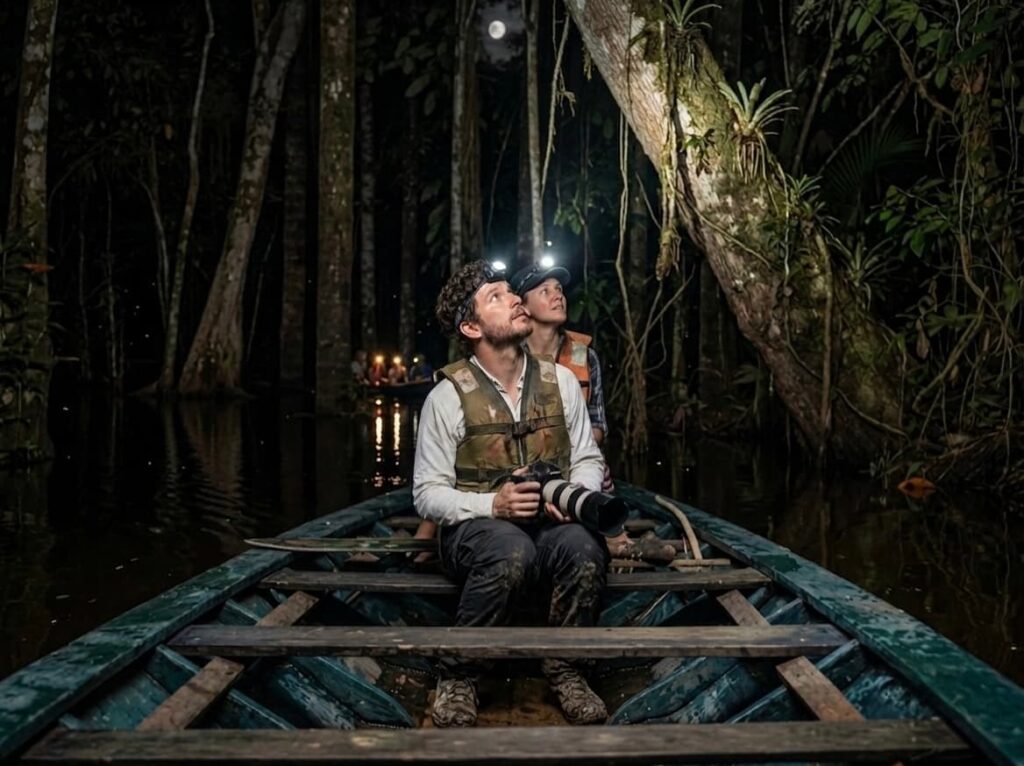
At the lake, the pace shifts from active to exploratory. Canoeing and kayaking through the water channels gives you the intimate, water-level perspective on the flooded forest that motor boats cannot provide — quiet enough to hear the birds, slow enough to watch the water surface for the movement that indicates fish or caiman below. Artisanal fishing with local methods is available for those who want to try it; your guide demonstrates the technique and provides the equipment. Birdwatching along the forest edge is one of the most rewarding activities the lake environment offers — the transition between water and forest is where species concentrate, and the Amazon’s bird diversity is extraordinary even by the standards of a continent famous for its ornithology.
Swimming is available in the lake and, depending on conditions, in the Amazon River itself. The hammock area at the reserve provides a quieter alternative for anyone who wants to stop moving and simply be in the environment — watching the light on the water, listening to what the forest does in the middle of the day when the heat is at its peak and everything slows down. The return to Leticia is in the late afternoon, with time to decompress before the next day’s departure if your schedule allows.
What the Amazon Actually Is: A Note on Scale
The reason to come to the Colombian Amazon is not a single highlight. It is the totality of the experience — the way the light moves through the canopy in the morning, the moment a guide picks up a plant and tells you exactly what it does and why they know, the clarity of the water at Tarapoto and the silence that comes over a canoe when you stop paddling. The Colombian Amazon holds nearly a third of all tropical rainforest remaining on Earth. It covers 1% of the planet’s surface and is home to roughly 10% of all known wildlife species. These numbers are commonly cited and genuinely difficult to process until you are inside the forest and begin to understand what density of life actually looks and sounds and smells like. This tour gives you that understanding.
Before You Go: Vaccinations, Equipment, and Practical Preparation
Yellow fever vaccination is mandatory for entry to the Colombian Amazon, and you need it at least two weeks before arriving — plan accordingly. Rubber boots are provided by the reserve; bring your shoe size when you book. A personal flashlight is essential for the night hike and the overnight stay — the reserve has no electric power, so charge everything in Leticia before you go. Long sleeves and long pants protect against insects in the evening and early morning hours. Bring mosquito repellent, waterproof clothing or a light rain layer, and a dry bag for any electronics or documents. Pack light — you are carrying everything into the reserve and back out again.
Planning Your Time in Leticia
The overnight tour is the most complete way to experience the Colombian Amazon, but Leticia and its surroundings offer additional experiences for travelers with more time. The river communities accessible by boat from Leticia, the Puerto Nariño natural reserve further upstream, and the Amacayacu National Natural Park all extend the range of what the region offers beyond what a single overnight can cover. Your guide can advise on how to sequence additional days in the Amazon depending on your interests and schedule.
Ready to spend a night in the Amazon? Book the overnight jungle tour above and your guide will handle everything from Leticia pickup to the return drop-off — just bring your vaccination certificate, your flashlight, and your rubber boot size.
See the rest of what we run there: all our tours in the Amazon.
Before you go: our Colombia guides
Written by the team that runs this tour.
FAQs
Long sleeves and long pants are essential — they protect against mosquitoes and other insects throughout the day and especially during the night hike. A hat or cap and sunglasses help against the sun. You should bring waterproof clothing since you'll be deep in the rainforest. Rubber boots are provided, so you don't need to bring your own.
The Amazonas department has a warm, humid climate with frequent rain throughout the year. Temperatures stay relatively constant at an average of around 25°C (77°F). Pack light, breathable layers and expect some rain regardless of the season — it's the Amazon.
Yellow fever is endemic in tropical areas, and the Amazon is one of the primary risk zones. Vaccination is the most important preventive measure available. It's safe, affordable, and offers effective immunity in 95% of vaccinated people, typically within two weeks of the shot.
The Amazonas contains nearly a third of all tropical rainforests remaining on Earth. It covers 1% of the planet's surface but is home to approximately 10% of all known wildlife species. On this tour, you may encounter macaws, toucans, freshwater dolphins, howler monkeys, tarantulas, and more — all in their natural habitat.
The team provides rubber boots and all meals. You should bring your own flashlight or lantern — there is no electric power at the reserve, and you will need it for the night hike and for moving around after dark. Charge all your devices before leaving Leticia. Insect repellent, sunscreen, and a small dry bag for valuables are also advisable.
Related Tours

Private Birding Amazon Tour in Leticia
Amazonas
Private
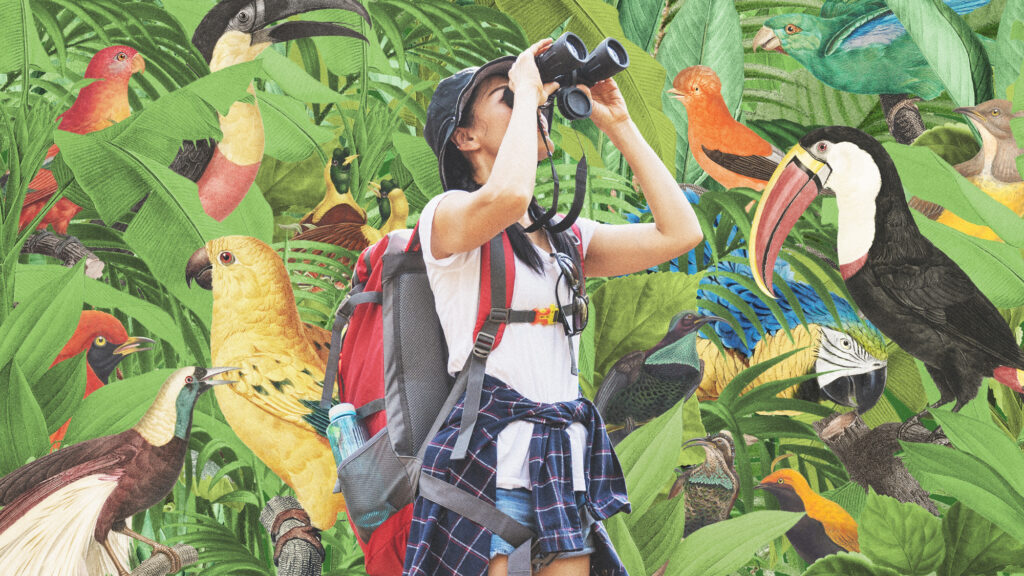
A Birding Amazon Tour through Colombia’s southern jungle is one of the most rewarding experiences a nature lover can have…
$$$
10 hours

City Tour Leticia Tabatinga – Private 3-Hour Border Walk
Amazonas
Private
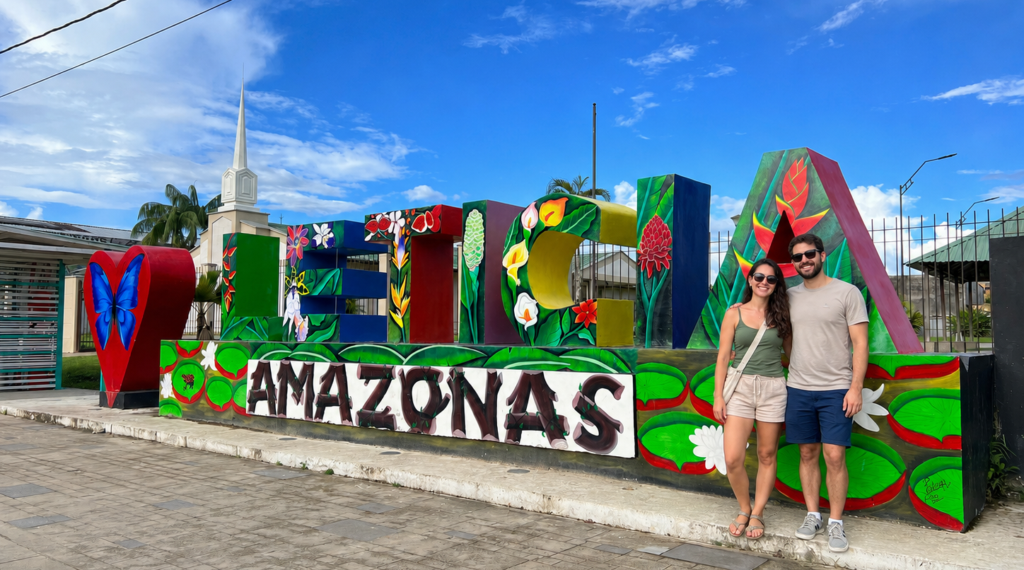
A City Tour Leticia Tabatinga is the fastest way to understand what daily life looks like where Colombia, Brazil, and…
$$
3 hours
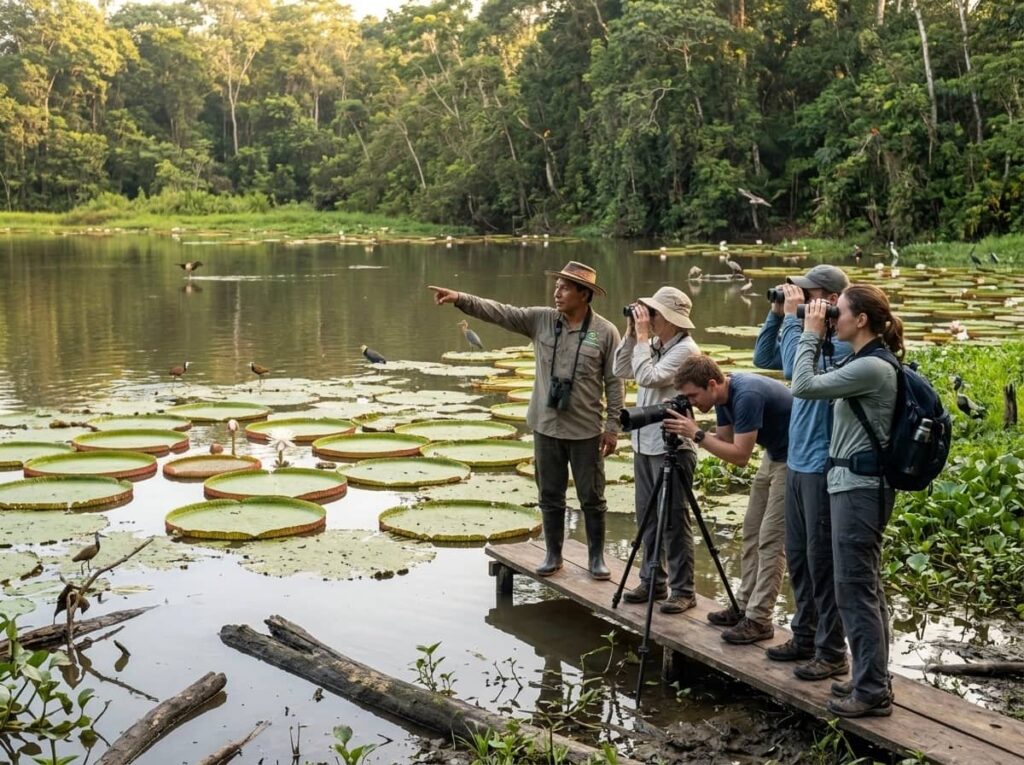

Flor de Loto Nature Reserve Day Tour from Leticia: Victoria Regia, Birdwatching & Jungle Trek
Amazonas
Private
The Flor de Loto Nature Reserve Day tour from Leticia is one of the most complete single-day experiences available in…
$$
7 hours