
+ 1,200 verified five-star reviews for Cielo.Travel on Google and TripAdvisor.
Duration
Tour Type
Pricing
Languages
Overview
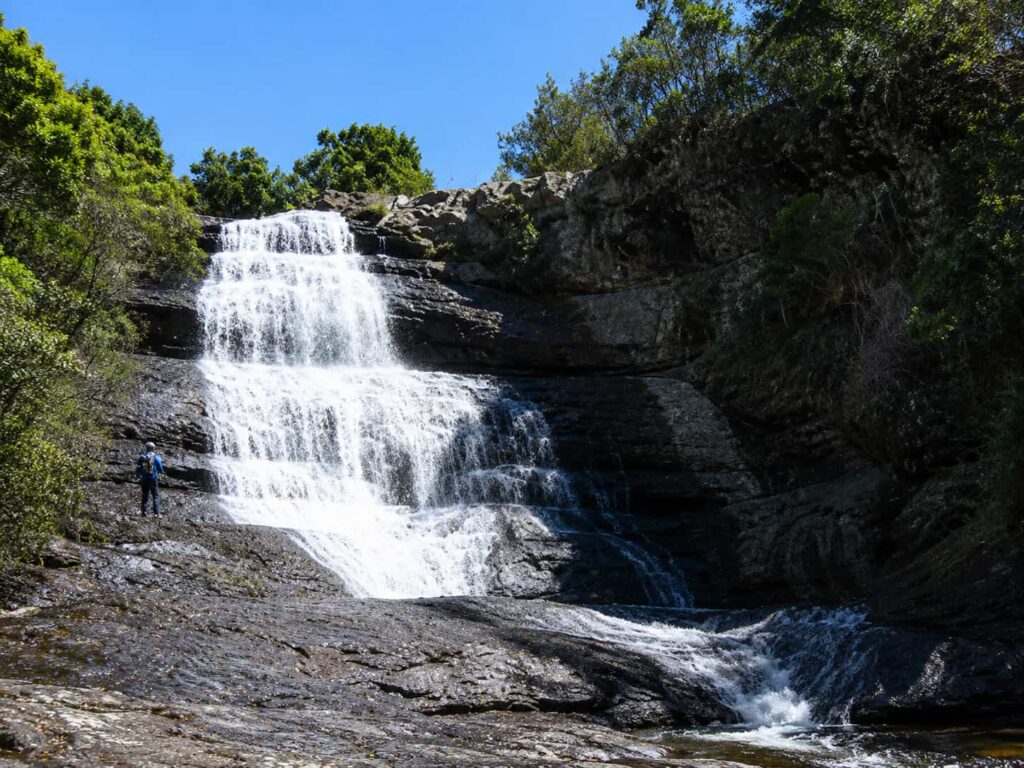
The landscape around Villa de Leyva transitions rapidly from the arid high plateau that the colonial town sits on to the fog forest edge in the surrounding hills — a shift in ecosystem that happens within a few kilometers and that most visitors never see because they spend their time in the historic center and leave. This tour is for the day when you want to understand what lies beyond the cobblestones. La Periquera Ecological Park, 45 minutes from town, is organized around the Cebada River, which originates in the páramo watershed above and carries highland water down through three distinct waterfalls into the valley below. The three-hour trail follows the river through the full transition — dry scrub near the trailhead, endemic plants in the fog forest zone, open Andean views from the upper sections back across the Boyacá plateau — ending at La Periquera waterfall, a 15-meter drop into a clear natural pool cold enough to matter after three hours of walking.
The hike is low difficulty and requires no prior experience — what it requires is footwear with grip and a willingness to be on uneven terrain for a few hours. The swimming section at the base of the main waterfall is the natural close to the trail, and a change of dry clothes for the 45-minute drive back to town is the most important practical decision you make besides the shoes. The tour operates in all weather, runs five hours door to door, and pairs naturally with the Villa de Leyva City Tour if you want both the colonial history and the landscape in the same trip. Bring a swimsuit, a light waterproof layer, and a jacket for the waterfall pool.
Itinerary
Highlights
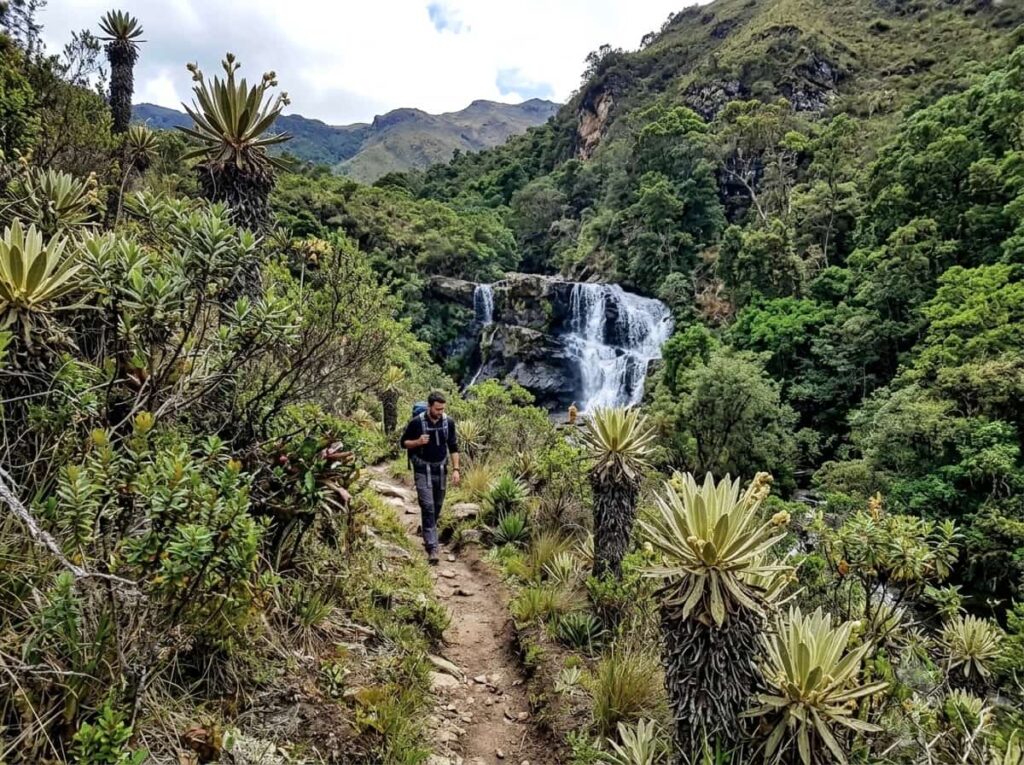
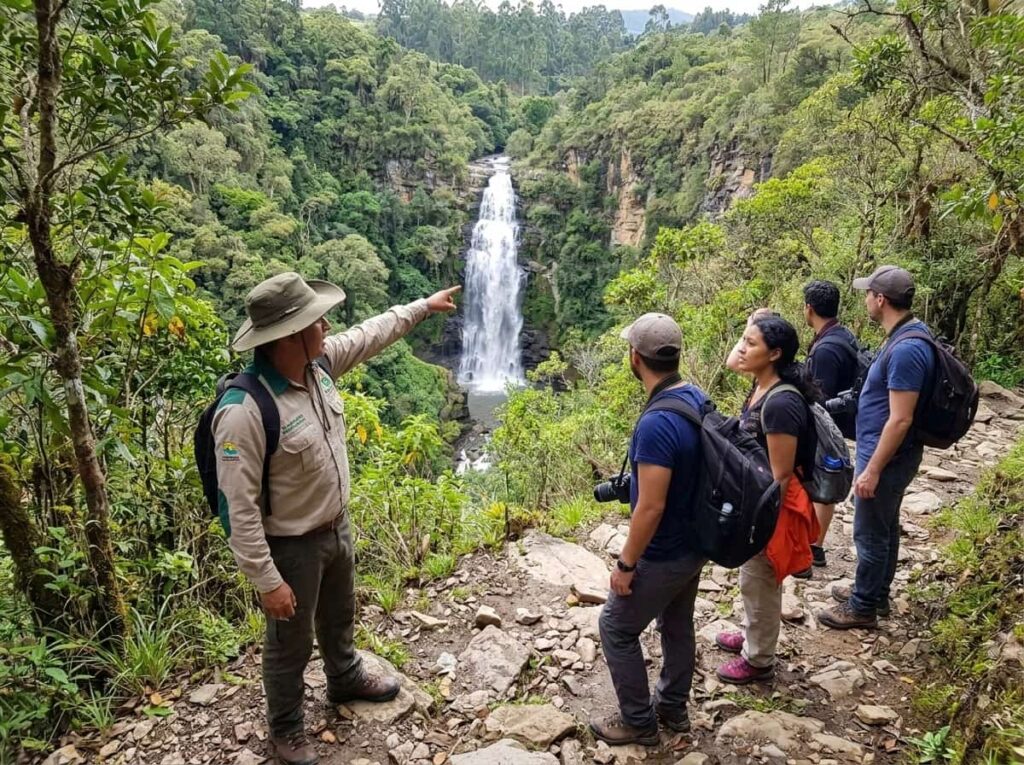
Hike through La Periquera Ecological Park surrounded by the Boyacá landscape — arid plateau transitioning to fog forest, with endemic plants your guide identifies and explains along the trail.
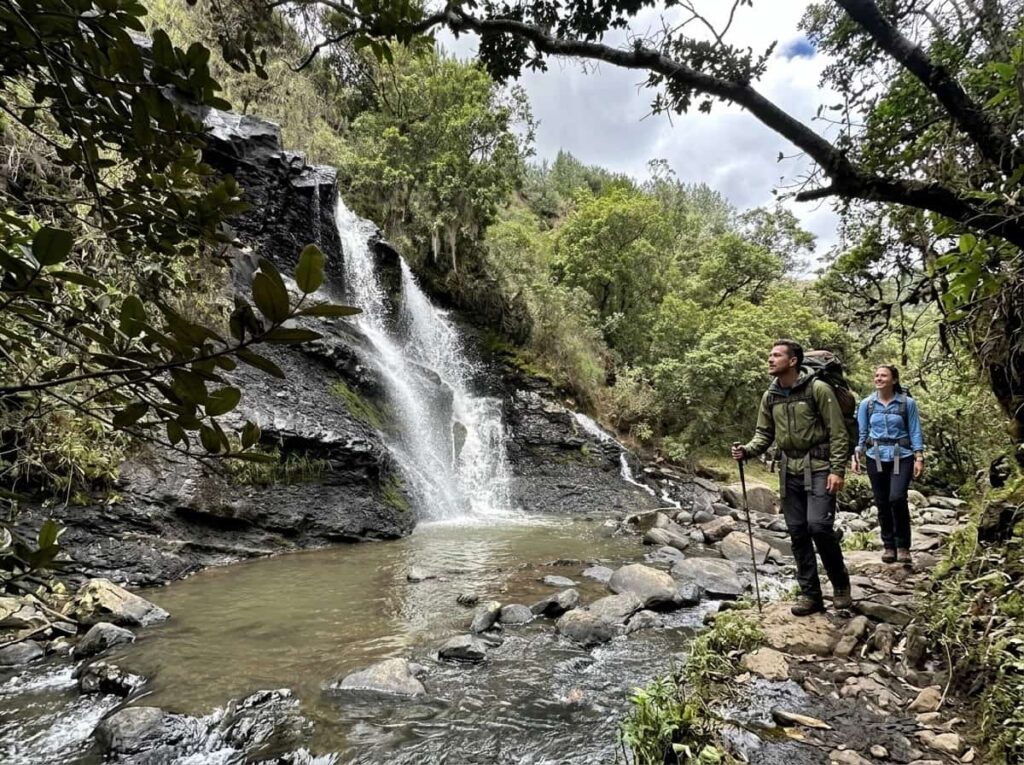
Visit La Periquera Ecological Park and its network of three waterfalls formed by the Cebada River, including the centerpiece La Periquera waterfall at 15 meters — one of the most accessible falls in the region.
Get a brief lesson on the endemic flora and fauna of the Boyacá highlands from your private guide — plants and animals found in this specific transition zone between desert and cloud forest.
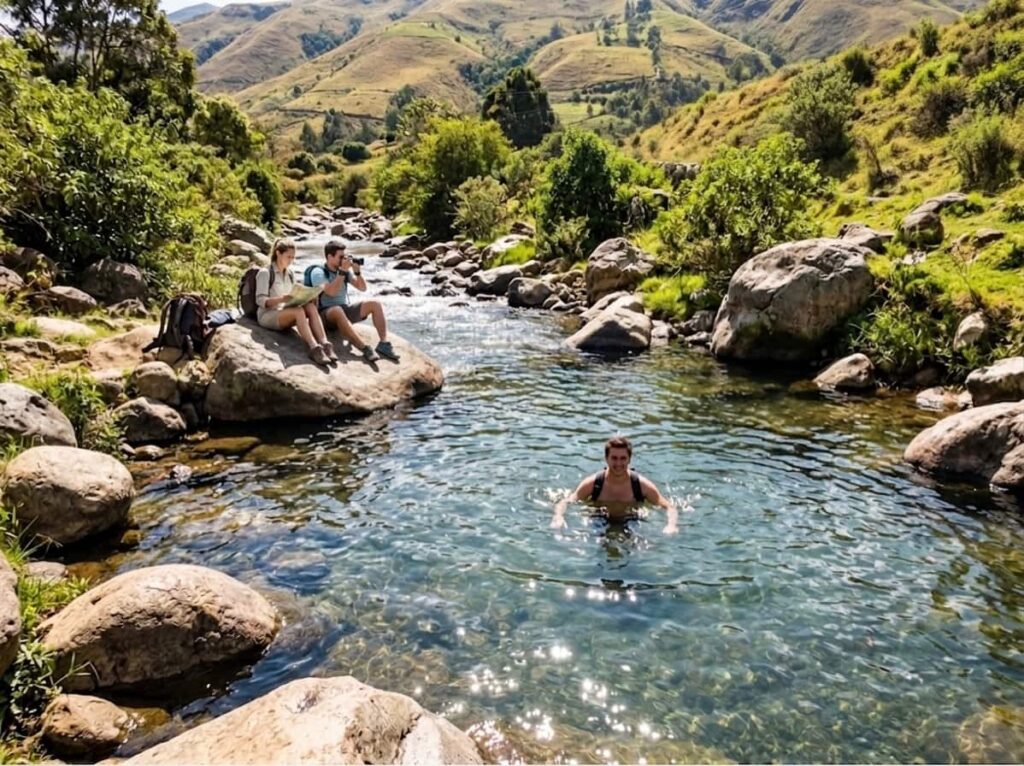
Swim in the clear, cold water of the Cebada River at the base of the falls — bring a change of clothes and make the most of it.
Photograph the Boyacá landscape from multiple angles across the trail — the park offers a variety of viewpoints and natural compositions that are rare within easy reach of a colonial town.
What's Included
Private English-speaking guide.
Hotel pickup and drop-off in private transportation.
Entry to La Periquera.
All-risk insurance.
What's Excluded
Breakfast and lunch.
Extra purchases.
Know before you book
Most of this tour involves hiking. The trail is rated low difficulty, but wear proper hiking shoes or sturdy trainers — the terrain is uneven and can be wet near the waterfalls and riverbed.
Bring a change of clothes and a swimsuit — you will have the opportunity to swim in the Cebada River, and a dry set of clothes for the return trip makes the journey more comfortable.
The tour operates in all weather conditions. Villa de Leyva's weather is cloudy with occasional showers. Dress in layers, bring a light waterproof jacket, and don't forget sunscreen for the open sections of the trail.
Bring water and a light snack — breakfast and lunch are not included. The hike is 3 hours and the full day is 5 hours from pickup to drop-off.
The park transition from arid plateau to fog forest means temperatures can shift quickly. What starts as a warm morning at the trailhead may become considerably cooler near the waterfall. Layer accordingly.
More Info
Cancellation Window
12 hours before starting date
Difficulty
Moderate
Cancellation policy
Free cancellation up to 12 hours before departure. Cancellations made within 12 hours of the tour start time are non-refundable.
Guest Reviews
Why Book With Cielo
1,200 five-star reviews from real travelers — read them before you book.
Best Price Guarantee — find this tour cheaper elsewhere and we'll match it.
Private transportation door-to-door — no shared shuttles, no waiting around for strangers.
Booking directly with us means your money stays with a Colombian-owned company, not a platform commission.
Our team coordinates everything — pickup timing, pilot briefing, and return logistics — so you focus only on the flight.
Other Info
The La Periquera Hiking tour from Villa de Leyva takes you into one of the most striking aspects of this region’s geography: the rapid transition from arid high plateau to fog forest that happens within a few kilometers of the colonial town. Most visitors to Villa de Leyva spend their time in the historic center — Plaza Mayor, the museums, the whitewashed streets — and leave without seeing the landscape that surrounds and explains the town’s setting. This tour is for the day after that, or the afternoon before it, when you want to understand what lies beyond the cobblestones.
Boyacá’s Geography: What the Landscape Is Actually Doing
Villa de Leyva sits at approximately 2,100 meters above sea level on the high plateau of Boyacá, a department whose geography is defined by the compression of radically different ecosystems into a small horizontal distance. The arid terrain immediately around the town — dry scrub, pale rock, the sun-bleached color palette that the town’s colonial architecture reflects — transitions within a few kilometers into the cooler, wetter vegetation of the Andean foothills and the fog forest edge. Above that, the terrain continues rising toward the páramo: the high-altitude moorland ecosystem that begins around 3,000 meters and that serves as the primary water source for the rivers and communities of the department below.
This vertical compression is unusual even by Andean standards, and it is what makes the landscape around Villa de Leyva more ecologically diverse than its famous colonial center suggests. The Cebada River that runs through La Periquera Ecological Park originates in that highland watershed and carries the temperature and clarity of the páramo water down through the fog forest and into the valley. The trail you walk follows its course through the middle of this transition — which means that the ecosystem changes around you as you move, and the guide’s commentary tracks those changes in real time.
La Periquera Ecological Park: The River as Organizing Principle
La Periquera Ecological Park sits in the hills surrounding Villa de Leyva, about 45 minutes from town by car. The park takes its name from its main waterfall — La Periquera, 15 meters of white water dropping into a clear natural pool — and the Cebada River is the organizing principle of everything within it. The river crosses the terrain forming three distinct waterfalls at different heights and intensities, and the hiking trail follows its course through a landscape of endemic plants, open Andean views, and the gradual shift from dry scrub to the cooler, greener vegetation of the fog forest edge.
The park is a protected natural space managed with conservation as the primary objective, which is visible in the condition of the trail, the quality of the water, and the density of the vegetation in the sections furthest from the road. The endemic species that grow in the park’s transitional zone — plants specific to this elevation and climate, found nowhere else in the world — are here because the park’s management has protected the habitat they require. Your guide knows what these plants are, where to find them, and what their presence indicates about the health of the ecosystem around them.
The Trail: Three Hours Through Changing Terrain
The hike runs approximately three hours at a relaxed pace. The difficulty rating is low — this is not a technical trail, and it does not require prior hiking experience or a high level of physical fitness. What it requires is comfortable footwear with grip and a willingness to be on uneven terrain for a few hours. The trail surface changes as you move through the park: packed earth in the drier sections near the trailhead, stones and exposed roots near the river channels, and occasionally wet ground around the waterfall pools where the mist keeps the ground permanently damp.
The Lower Trail: Dry Scrub and the First River Crossing
The lower sections of the trail move through the drier terrain that transitions between the plateau around Villa de Leyva and the moister environment of the river valley. The vegetation here reflects the aridity of the Boyacá plateau — low shrubs, flowering cacti, and the pale, sun-adapted plants that characterize the high-altitude dry zones of the Eastern Andes. The first river crossing, which your guide manages safely regardless of water level, marks the point where the ecosystem begins to shift. The air becomes cooler. The vegetation on the banks thickens. The sound of the water becomes a constant rather than an occasional presence.
The Middle Trail: Endemic Plants and the Fog Forest Transition
The middle section of the trail is where the botanical interest concentrates. Boyacá’s transitional zone between the páramo and the lower Andean forest produces a specific set of plant species that exist in this elevation band and nowhere else. Your guide identifies the most significant ones along the trail — the bromeliads anchored to rocky outcroppings, the orchids in the shadier sections near the water, the medicinal plants that local communities have used for generations — and explains their role in the ecosystem and, in some cases, their relationship with the animal species that depend on them.
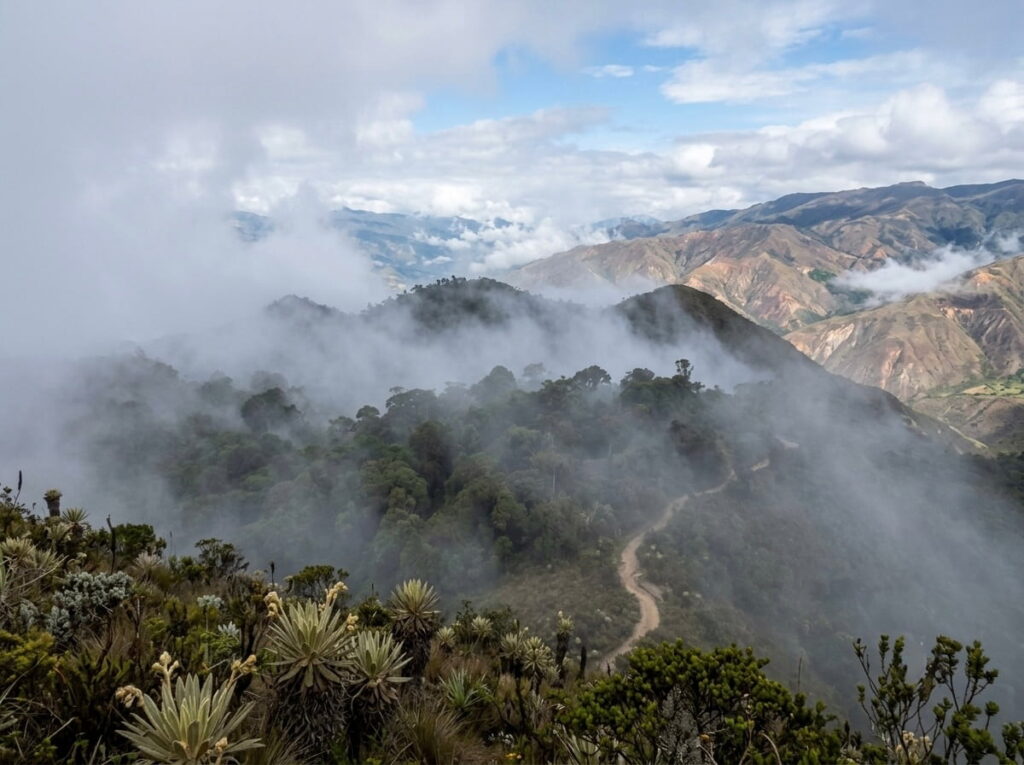
The fog forest edge, which the trail enters in the upper sections, is visually distinct from the terrain below. The trees are taller, the canopy more complete, the light coming through in the particular diffuse way that characterizes forest environments where cloud cover is frequent and humidity is permanent. The temperature drops noticeably. The soundscape changes — fewer insects, more birds, the constant movement of water somewhere nearby.
The Upper Trail and the Views Back to the Plateau
From the higher sections of the trail, on clear mornings, the views back toward Villa de Leyva take in the full extent of the Boyacá plateau — a landscape that stretches until it meets the mountain ranges on the horizon, with the colonial town’s terracotta rooftops visible in the middle distance. The contrast between the green of the fog forest immediately around you and the arid brown of the plateau below is one of the most visually striking aspects of the hike, and one of the most useful for understanding the geography of the region. You are standing at the exact boundary between two different climatic and ecological worlds, and both of them are visible from where you stand.
La Periquera Waterfall: The Destination and the Swimming Pool
The main waterfall — La Periquera — is the destination the trail has been building toward. At 15 meters, it is not a thundering cascade visible from a distance. It is a falls you arrive at: a white curtain of water dropping into a clear natural pool at the base of a dark rock canyon, surrounded by the dense vegetation of the fog forest, loud enough to fill the immediate space with sound and cold enough to lower the temperature of the air around the pool by several degrees.
The natural pool at the base is large enough to swim in comfortably, fed continuously by the falls and the Cebada River. The water is cold — genuinely cold, in the way that water from a highland watershed filtered through rock is always cold — and the swim after three hours of trail walking is one of those simple physical pleasures that requires no explanation. Bring a swimsuit and a towel. A change of dry clothes for the return journey makes the 45-minute drive back to Villa de Leyva considerably more comfortable than arriving in wet hiking clothes.
The two additional waterfalls along the Cebada River — smaller than La Periquera but each with their own pool and character — are encountered on the trail before the main falls. Your guide uses each one as a natural stopping point for rest, explanation, and photography before continuing to the main waterfall. The progression through the three falls gives the hike a structure that builds toward the final arrival in a way that a single-destination trail doesn’t provide.
Photography: What the Light Does Here
The landscape around La Periquera offers some of the best photography conditions in the Villa de Leyva region, and for reasons that are not obvious from the town itself. The contrast between the dark canyon walls, the white of the waterfall, and the deep green of the surrounding fog forest creates a visual environment that is very different from the arid, sun-bleached terrain most visitors associate with Boyacá. The light in the canyon — diffuse, directional, filtered through the forest canopy — is the kind of light that makes water and rock photograph well regardless of the time of day. The views from the upper trail back toward the plateau reward a wide lens and a clear morning. The endemic plants in the mid-trail section reward patience and a close-up.
Practical Notes: Weather, Clothing, and What to Bring
The tour operates in all weather conditions, including light rain — the trail is manageable in wet conditions, and the waterfall is more dramatic after recent rainfall. Dress in layers: the temperature near the waterfall is typically several degrees cooler than in the town, and wet conditions can make it feel colder still. A light waterproof layer is worth packing regardless of the morning forecast. Breakfast and lunch are not included — eat before pickup or bring a snack for the trail. The full day runs five hours from hotel pickup to drop-off.
Footwear with grip and ankle support is the most important practical decision you make before the hike. The cobblestones of Villa de Leyva’s historic center require flat soles; the La Periquera trail requires something with traction on wet rock and roots. If you’re doing both on the same trip, plan your footwear accordingly.
Continue Exploring the Villa de Leyva Region
For those who want to combine the hiking experience with a look at the historic center, the Villa de Leyva City Tour covers Plaza Mayor, the fossil museums, the Ecce Homo convent, and the colonial architecture in a separate half-day itinerary — the two tours together give you the complete picture of what the Villa de Leyva region contains. For a different kind of afternoon in the region, the Villa de Leyva Vineyard Tour visits the local winery with a guided tasting — a quieter close to a day that has already covered considerable ground.
Ready to see the other side of Villa de Leyva? Book the La Periquera hiking tour above and your guide will handle everything from hotel pickup to the final return — bring good shoes, a swimsuit, and a jacket.
More of Villa de Leyva: our private tours and day trips.
Before you go: our Colombia guides
Written by the team that runs this tour.
FAQs
Villa de Leyva's weather is mild and dry with occasional cloudy days and light showers. The tour operates in all weather conditions, so dress appropriately — bring a light jacket, comfortable hiking shoes, water, and don't forget sunscreen. The area around La Periquera can be cooler and wetter than the town itself.
The hike is rated low difficulty and is accessible to most fitness levels. The trail is approximately 3 hours long and covers uneven terrain along the Cebada River and through the park's forest sections. Sturdy, comfortable shoes are essential. If you have any mobility concerns, contact us before booking and we'll advise honestly.
Yes — the Cebada River forms natural pools at the base of the falls, including La Periquera itself, and swimming is part of the day. Bring a swimsuit and a towel. The water is cold and clear. A change of clothes for the return journey is strongly recommended.
Wear proper hiking shoes or sturdy trainers. Bring a swimsuit, a towel, a change of clothes, water, a light snack, sunscreen, and a light waterproof jacket. All-risk insurance and park entry are included in the tour price. Breakfast and lunch are not included.
The trail is low difficulty and the landscape is visually engaging for younger visitors — endemic plants, waterfalls, and a river swim. Let us know the ages in your group when you book and your guide will adapt the pace accordingly. Children who are comfortable on uneven trails and around water should do well here.
Related Tours

2-Day Tour: Zipaquirá Salt Cathedral & Villa de Leyva
Bogota
Multi-Day, Private
Two Days From Bogotá to Colombia’s Highlands A 2-day tour from Zipaquirá to Villa de Leyva takes you from Bogotá…
$$$
2 Days


Villa de Leyva Tour: Plaza Mayor, Fossil Museum & Colonial Historic Center
Villa de Leyva
Private
The Villa de Leyva tour gives you something that most visitors to this region never quite manage on their own:…
$$$
5 hours
Villa de Leyva Vineyard Tour: Winery Visit, Grape-to-Glass Experience & Wine Pairing
Villa de Leyva
Private
The Villa de Leyva Vineyard Tour is one of the more surprising things you can do in this part of…
$$$
3 hours