
September 12, 2026
Bogotá and Medellín are 247 kilometers apart in a straight line, an hour apart by air, and eight to nine hours apart by a mountain road that drops from the plateau to the Magdalena River and climbs back into Antioquia. The flight between them is the busiest domestic route in Latin America, with 6.2 million scheduled seats in 2025 by OAG’s count, and it is the way almost every traveler makes the trip; the road is the way to see the country between the two cities, and the bus is the way to do it for the price of a dinner. We run tours in both cities, we fly this route with our own guides every week, and our transfer company drives it door to door, so this is the decision as we would make it for a guest: the three ways, what each costs on the day we checked, how long each really takes from hotel to hotel, not gate to gate, which of Medellín’s two airports you want, which city to do first, and what changes the moment you land 1,160 meters lower.
The short version
Fly. Avianca, LATAM, Wingo and JetSMART flew 46 non-stops between El Dorado and José María Córdova on the October day we checked, scheduled at an hour to an hour and six minutes, with the cheapest one-way fare at 160,790 pesos, about 52 US dollars at the official rate; Clic flew nine more into Olaya Herrera, the small airport inside Medellín, at an hour and a quarter. Count four to five hours door to door for the flight, because José María Córdova is on a plateau 45 minutes to an hour above the city and El Dorado asks you to arrive two hours before a domestic departure. The bus is nine to eleven hours from the Salitre terminal for 100,000 to 110,000 pesos on the standard fares; the private car is eight to nine hours for 214 dollars per vehicle one way, tolls included, and it is the only version of the trip that shows you Honda, the Magdalena valley and, if you want, Hacienda Nápoles. Do Bogotá first and go down to Medellín, not up. Sit on the left.
The distance, and why it lies
The two cities are 247 kilometers apart center to center and their airports 216 kilometers apart, which sounds like a train ride; there is no passenger train, and there is a mountain range in the way. Bogotá sits on its plateau at about 2,640 meters, with El Dorado at 2,547; Medellín lies in the Aburrá valley at 1,479, by its own mayor’s office, with José María Córdova above it at 2,142 on the Rionegro plateau, roughly 660 meters higher than the city and on the far side of a mountain from it. Between the two the road has to cross the Cordillera Oriental down to the river at Honda, about 230 meters above the sea, and climb the Cordillera Central again, which is why 247 kilometers on the map become about 420 on the road and eight to nine hours in a car. The temperature does the same thing in reverse: Bogotá averages 14 degrees and Medellín 24, so the sweater you needed at breakfast is in the bag by lunch.
Flying: the busiest route in Latin America
OAG, the airline schedules company, ranked Bogotá to Medellín the busiest domestic route in Latin America for 2025, with 6,219,202 scheduled seats. On a Tuesday in October 2026, chosen at random, Google Flights listed 46 non-stop flights from El Dorado to José María Córdova on four airlines, Avianca, LATAM, Wingo and JetSMART, scheduled between an hour and an hour and six minutes gate to gate, with the cheapest at 160,790 pesos one way including taxes; Avianca’s own route page was advertising round trips from 227,000 pesos the day we looked. The same search into Olaya Herrera, the second airport, gave nine flights on Clic’s regional aircraft at an hour and ten to an hour and fifteen minutes, from 212,138 pesos. Fares move with the day and the hour, and the school holidays, Holy Week and the second half of December are the expensive weeks; on the day we checked the cheapest departure was the 9:35 p.m. flight and the mid-morning ones cost more. Sit on the left flying to Medellín: the track runs northwest, and the Cordillera Central, with the snow of the Nevado del Ruiz about 85 kilometers off the left side, is on that side on a clear morning.
The hour in the air is the small part of the day. El Dorado’s own advice is to be at the airport two hours before a domestic flight, and in the 2026 high seasons it has repeated the advice in the press because the queues have grown with the traffic; domestic flights leave from gates C and D of Terminal 1 or from Terminal 2, the Puente Aéreo, a separate building with gates G and H, so check the terminal on your booking before you tell a driver where to meet you. The ride to El Dorado from Chapinero or La Candelaria is a matter of the hour you leave, and the rush hours double it. At the other end, José María Córdova is not in Medellín: every passenger comes down into the valley through the Túnel de Oriente, 8.2 kilometers long, with a toll, 45 minutes to an hour to El Poblado at any hour. Add it up and a mid-morning flight is a four-to-five-hour move from one hotel to the other, which is still the fastest way, and the reason we book guests on the earliest flight that does not cost them sleep: a 7 a.m. departure has you at lunch in Medellín. The details of both airports, the taxis, the apps and the buses, are in our El Dorado guide and our José María Córdova guide.
Which Medellín airport
José María Córdova, MDE, takes every jet and every international flight, and it is the right answer for almost everyone, because the fares are lower, the frequencies are high and the airlines are the ones you know. Olaya Herrera, EOH, sits inside the city in the southwest, a short ride from Laureles and El Poblado, and handles regional flights on small turboprops; on this route that means Clic, at a higher fare and a slightly longer flight, but with no tunnel, no plateau and no hour on the road at the end. If your hotel is in Laureles or you are traveling with someone who dreads a long transfer after a flight, it is worth the difference; if you are connecting from an international arrival, look at the airport code on the second ticket before you book, because the two airports are an hour apart and a connection between them is a connection you make by road. Both are in our Medellín airport guide.
The bus
The buses leave Bogotá from the Salitre terminal, on the Diagonal 23 at Carrera 69 in the west of the city, and arrive at Medellín’s Terminal del Norte or Terminal del Sur. Terminales Medellín, the company that runs both, lists six operators on the route: Expreso Bolivariano at 101,000 pesos, Rápido Tolima at 100,000, Empresa Arauca at 110,000, and Rápido Ochoa, Flota Magdalena and Expreso Brasilia with published ranges that run from 30,000 or 40,000 pesos in their promotions to 230,000 at the top of their fleets, with departures through the day and into the night, Bolivariano from 6:40 in the morning to 10:45 at night from the Terminal del Sur. The booking sites, which are not official sources, put the average journey at about ten hours and forty minutes and count some 36 departures a day; our own rule is nine hours on a good day and eleven when the Magdalena valley is under roadworks or the holiday traffic is heading home, which it is on every Sunday afternoon and every holiday Monday. The overnight buses save a hotel night and cost you a day’s scenery; the morning buses show you the descent to Honda and the climb into Antioquia, which is the only reason to take the bus if the price is not one.
The road, by private car
The drive is the version of this trip we would take once, with a stop or two, and it is the one our transfer company, Safe Transfers, sells door to door: about 420 kilometers out of Bogotá through Villeta and Guaduas, down to the Magdalena at Honda, north along the river, then up through Puerto Triunfo and San Luis and the towns of eastern Antioquia before the descent into the Aburrá valley, eight to nine hours with an early start, 214 dollars per vehicle one way in an SUV with the tolls in the price. Leave between 5 and 6:30 in the morning and the Calle 80 corridor out of the city is clear; leave at ten and it costs you an hour before the first mountain. With a lunch in Honda, the colonial river port with its bridges and its heat, and a stop at Hacienda Nápoles, the estate near Puerto Triunfo that is now a safari park, the day runs to ten or twelve hours and is worth planning as a day rather than a transfer. Going the other way, a Sunday or holiday-Monday return into Bogotá from about two in the afternoon is the slowest traffic of the week. The corridor is under constant maintenance and single-lane sections are normal, which is the argument for a driver who does it every week and a team on WhatsApp that knows when a section has closed. The route, the stops and the vehicles are on Safe Transfers’ Bogotá to Medellín page.
Book the drive to Medellín
Eight to nine hours off the plateau, down to the Magdalena and back up into Antioquia. If you are driving it rather than flying, the car is the decision.
Tolls and the corridor are on Safe Transfers: Bogotá to Medellín.
What it costs
On September 12, 2026, for one adult, one way, at the official exchange rate of 3,101 pesos to the dollar published for September 11: the cheapest flight to José María Córdova on the October date we checked was 160,790 pesos, about 52 dollars, and the cheapest to Olaya Herrera 212,138, about 68; the bus was 100,000 to 110,000 pesos on the three operators with a single published fare, 32 to 35 dollars; the private car was 214 dollars for the vehicle, which is 107 a head for two and 71 for three. Add the ground legs: from a Chapinero hotel to El Dorado by app or taxi, and from José María Córdova to El Poblado, where Safe Transfers' fixed-price airport transfer starts at 49 dollars and the official taxi is a flat 132,000 pesos, about 43 dollars, from the queue outside arrivals, and the flight's real price for two people is close to the car's. The car wins on scenery and on luggage, the flight wins on time and on a bad-weather day, and the bus wins on price and on nothing else.
If you are driving it, the car is the decision. Bogotá transfers has this route and every other road out of the capital on one page, with the booking widget on it, and Medellín transfers has the same list from the other end.
Which city first
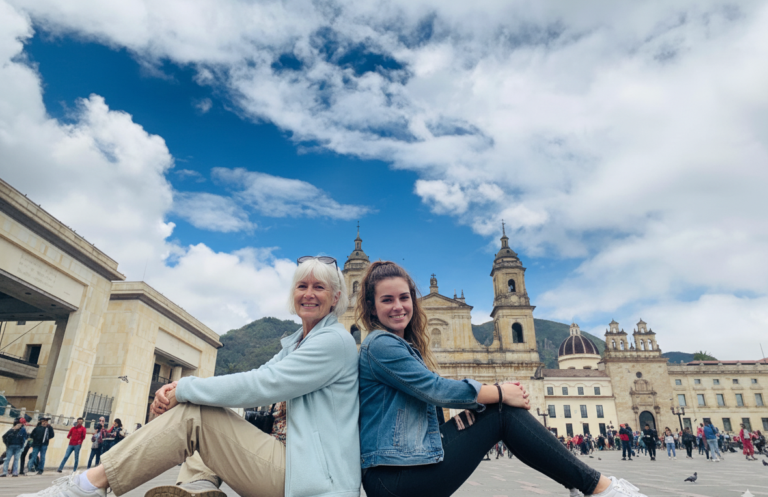
Bogotá first, then down to Medellín, for three reasons that all point the same way. The altitude is the first: Bogotá's 2,640 meters are the highest place most visitors will sleep on a Colombia trip, and it is easier to spend the first two nights high, acclimatize with the museums and the walls, and descend to a valley at 1,479 than to get comfortable in Medellín's spring and then climb into Bogotá's thin air on day four; what the altitude does to a first day, and how we plan around it, is in our Bogotá altitude guide. The mood is the second: Bogotá is the capital, older, cooler, grey in the afternoons, the museums and the food and the politics, and Medellín is warm, easy and outgoing, the metro, the cable cars and Guatapé, and a trip that runs from the serious city to the warm one ends on a rising note. The geography is the third: from Medellín the coffee region is a morning's drive or a short flight, and the coast is an hour by air, so Bogotá, Medellín, then the coffee region or Cartagena is the shape of most of the itineraries we build, and it is the shape of our Colombia itinerary for 7, 10 and 14 days. What each city is, in one page, is in our Bogotá guide, and the comparison of the two, which is that you should see both, is in its Bogotá-or-Medellín section.
Medellín to Bogotá, the same trip in reverse
Everything above works in both directions, with two differences. The first is the altitude: arriving in Bogotá from Medellín is a climb of 1,160 meters in an hour, and the first afternoon in the capital should be the museums and an early night, not Monserrate, which is for the second morning. The second is the clock at El Dorado: if the Bogotá leg ends with an international flight home, land at least three hours before it and do not book the last Medellín flight of the evening against a midnight departure, because a delay on the domestic leg has nowhere to go; the airport's own advice is three hours before an international flight. By road the same rule applies as above, backwards: leave Medellín early, and avoid arriving into Bogotá on a Sunday afternoon.
What changes when you land
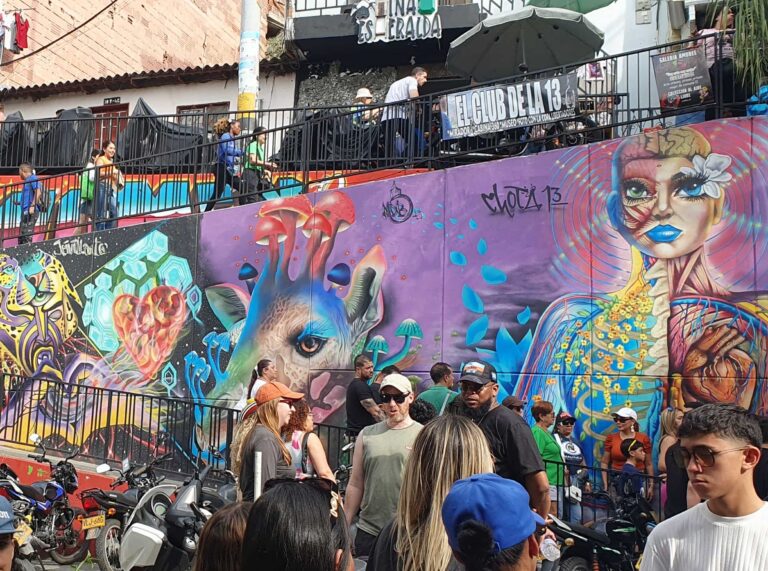
The thermometer, first: from a Bogotá average of 14 degrees, with mornings near 8, to Medellín's 22 to 24 by the airport's own normals, warm enough for a T-shirt by day and a light layer at night, with two rainy seasons that put the wettest months in April and May and again in October, which our Medellín weather guide has month by month. The pace, second: Medellín's metro and cable cars make it the easiest big city in Colombia to move around on your own, while Bogotá is a city you take by car and on foot in daylight. And the air itself: the flight down feels like a weight off the chest, which is the altitude leaving, and the flight up feels like a slow first evening, which is the altitude arriving. Pack for both cities in one bag: a real jacket for Bogotá's nights and its afternoon rain, and nothing heavier than a shirt for Medellín's days.
What we do differently
We book the flight for the earliest hour that does not cost a night's sleep, on the airline that lands at José María Córdova unless the hotel is in Laureles, and we put our own transfer company at both ends, a driver to El Dorado and a host at arrivals at José María Córdova, so the four hours between hotels have no queue at a taxi rank and no negotiation at the tunnel. When a guest wants the road, we build the day around Honda and the river and hand it to the same company, which drives it every week and knows which stretch is closed this month. What we cannot change is the plateau above Medellín or the two hours El Dorado asks for; what we can promise is a driver at both ends who has your flight number and moves when it does.
Questions travelers ask
How far is Bogotá from Medellín?
247 kilometers in a straight line between the city centers, 216 between the airports, and about 420 by road, because the road descends to the Magdalena River at Honda and climbs back into Antioquia. An hour in the air, eight to nine hours in a car, nine to eleven on the bus.
How long is the flight from Bogotá to Medellín?
Airlines schedule it at an hour to an hour and six minutes into José María Córdova, and an hour and ten to fifteen minutes into Olaya Herrera on Clic's turboprops. Door to door it is four to five hours once you add two hours at El Dorado and the 45-minute to one-hour descent from the Rionegro plateau into the city.
Is there a train from Bogotá to Medellín?
No. There is no passenger rail between the two cities, or between any of Colombia's big cities; the choice is the plane, the bus or a car.
Which airport is better in Medellín, MDE or EOH?
José María Córdova, MDE, for almost everyone: the jets, the low fares and every international flight land there, 45 minutes to an hour above the city through the Túnel de Oriente. Olaya Herrera, EOH, is inside the city and reached from Bogotá on Clic's regional aircraft at a higher fare; choose it if you are staying in Laureles or want no transfer at the end of the flight.
How much does it cost to get from Bogotá to Medellín?
On the day we checked: from 160,790 pesos for the cheapest flight on an October date, about 52 dollars at the official rate; 100,000 to 110,000 pesos on the bus operators with a single published fare, 32 to 35 dollars; 214 dollars for a private SUV, door to door, tolls included. Airport transfers at both ends add to the flight; the bus terminals are in the cities.
Is the bus from Bogotá to Medellín safe?
The operators on this route are the big national companies, the road is the country's main corridor, and the buses run day and night. The risks are the ones of any long mountain road: roadworks, a slow Sunday return, and a long day in a seat. Keep valuables on you, not in the hold, and take a day bus for the scenery if you take one at all.
Should I visit Bogotá or Medellín first?
Bogotá first: sleep high on the first nights, acclimatize with the museums, then go down to Medellín's 1,479 meters and on to the coffee region or the coast. Doing it the other way means climbing into the thin air in the middle of the trip.
Plan it with us
The two cities are the first half of almost every trip we build: the Perfect Day in Bogotá before the flight, the private city tour of Medellín after it, and Safe Transfers' door-to-door car for travelers who want the road. Write to us on WhatsApp with your dates, or start with our Bogotá tours and our Medellín tours.
Sources
The figures on this page were checked on September 12, 2026 against the following sources: OAG's busiest routes report for 2025; Google Flights, one-way searches from BOG to MDE and to EOH for October 6, 2026 (46 and 9 results), and Avianca's Bogotá to Medellín route page; Terminales Medellín's Bogotá destination page for the bus operators, fares and hours, and the Terminal de Transporte de Bogotá for the Salitre terminal's address; the booking site Busbud for the average bus journey and daily departures, which is not an official source; Safe Transfers' Bogotá to Medellín page for the road, the times and the price; the Alcaldía de Medellín for the city's altitude and temperature, IDEAM's 1991 to 2020 normals for the Olaya Herrera and El Dorado stations, and our own El Dorado and José María Córdova guides, each sourced in place, for the airports. Straight-line distances are calculated from the coordinates of the two city centers and the two airports; peso amounts are converted at the official TRM of 3,101 pesos to the dollar published for September 11, 2026.