

+ 1.200 verified five-star reviews for Cielo.Travel on Google and TripAdvisor.
Duration
Tour Type
Pricing
Languages
Overview
Thirty kilometers southwest of Bogotá, Chicaque Natural Park holds 300 hectares of seven distinct ecosystems, and a bird list that serious ornithologists come from across the region. Most visitors to the capital never find it — and that’s exactly what makes a full day here feel like a genuine discovery rather than a tour stop.
Colombia holds more bird species than any other country on earth, and the cloud forests of the Eastern Andes contain a subset of that diversity found nowhere at lower elevations. A private guide makes this forest legible in ways solo exploration doesn’t — identifying species by calls that preceded any visible movement, explaining why a mixed flock means you should look three canopy levels higher, and connecting the ecology to the Muisca geography that surrounds it. Chicaque, whose name means powerful and great mountain in Muisca, sits at the less-visited edge of the same landscape that gave rise to the El Dorado legend.
Itinerary
Highlights
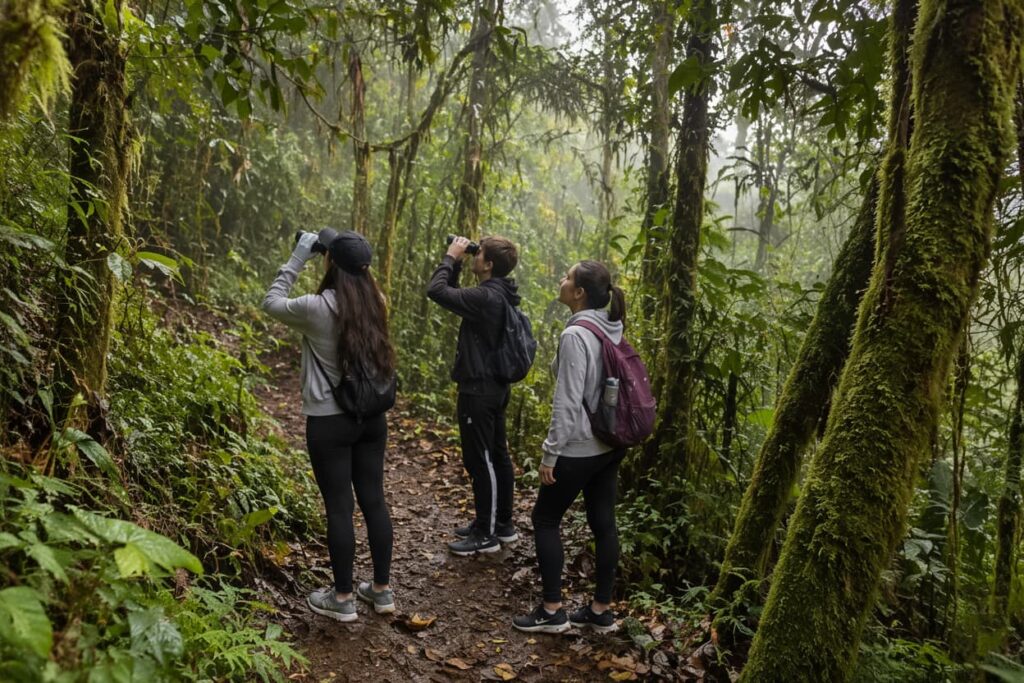
Hike deep into Chicaque's cloud forest — a private reserve with seven distinct forest types, 20 km of ecological trails, and three crystal-clear streams running through it.
Spot more than 100 bird species in a single day, guided by an expert who knows every call, nest, and feeding spot in the park.
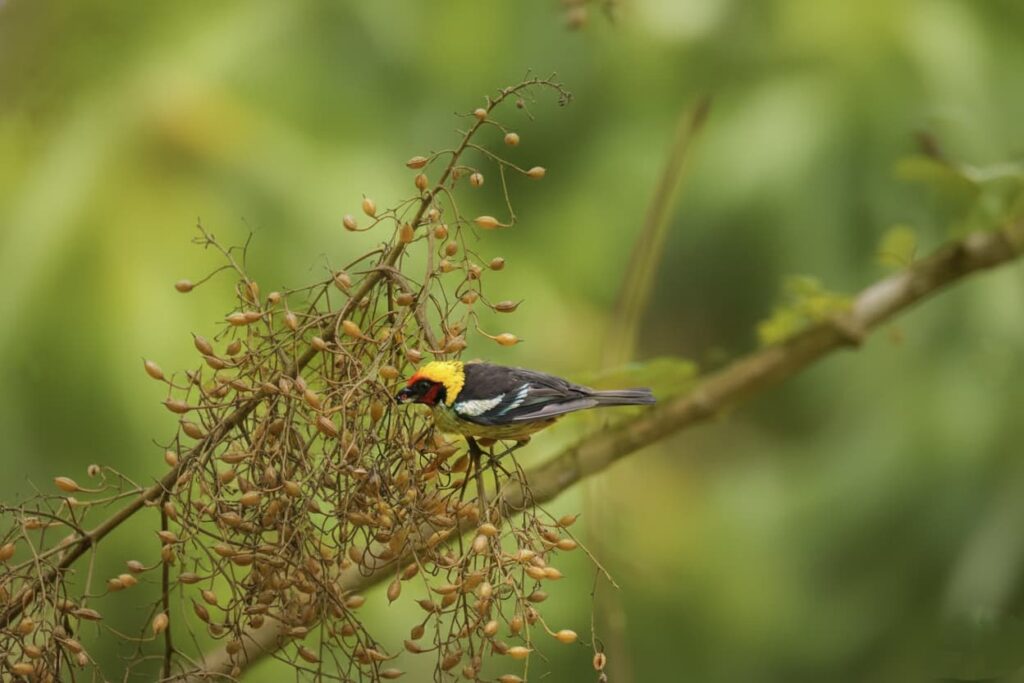
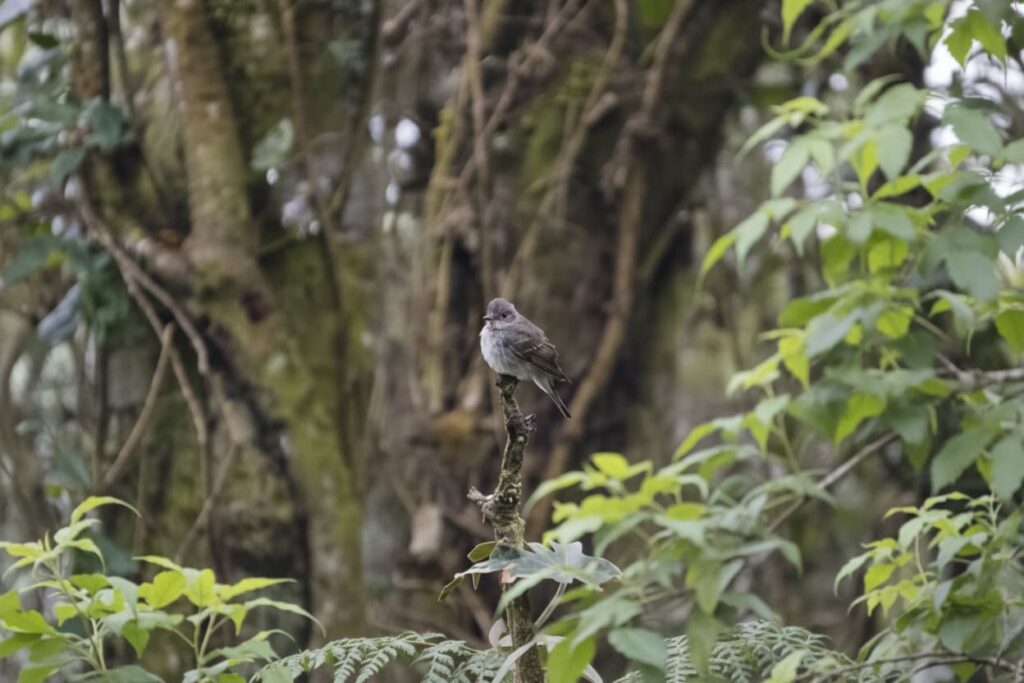
Look for the Collared Inca, Beryl-spangled Tanager, Slate-throated Redstart, and Green-and-black Fruiteater — species that thrive in this high-altitude cloud forest and nowhere near the city.
Learn the ecology of the Bosque de Niebla — the fog forest — from a guide who explains not just what you're seeing, but why this ecosystem exists here and what keeps it alive.
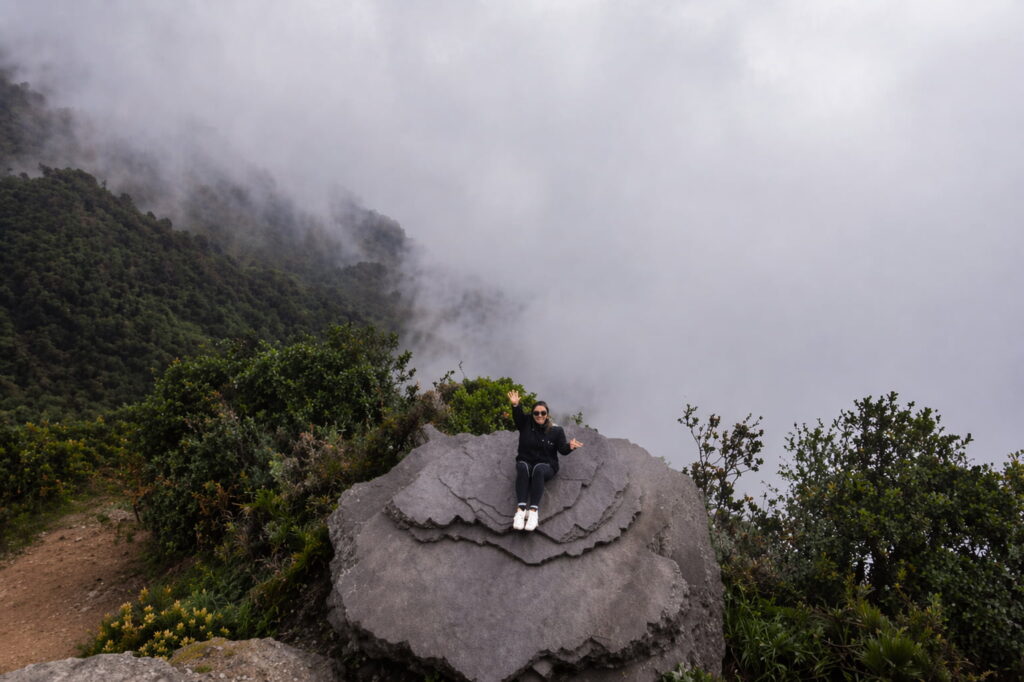
Escape the city entirely for a full day — Chicaque sits between 2,000 and 2,700 meters, with views of the snow-capped Tolima, Santa Isabel, and Ruiz volcanoes on a clear morning.
What's Included
Private English-speaking expert birding guide (full day).
Private hotel pickup and drop-off.
Round-trip transportation to Chicaque Natural Park.
Park entrance fee.
Risk insurance.
What's Excluded
Lunch and additional food or drinks.
Photography equipment.
Gratuities.
Know before you book
This is a full-day hiking tour — wear comfortable clothes suitable for forest walking and waterproof hiking footwear. Avoid bright colors, which can disturb the birds.
Bring a warm jacket. Chicaque reaches temperatures around 18°C (65°F) inside the park, and the cloud forest stays cool and damp throughout the day. Rain gear is recommended.
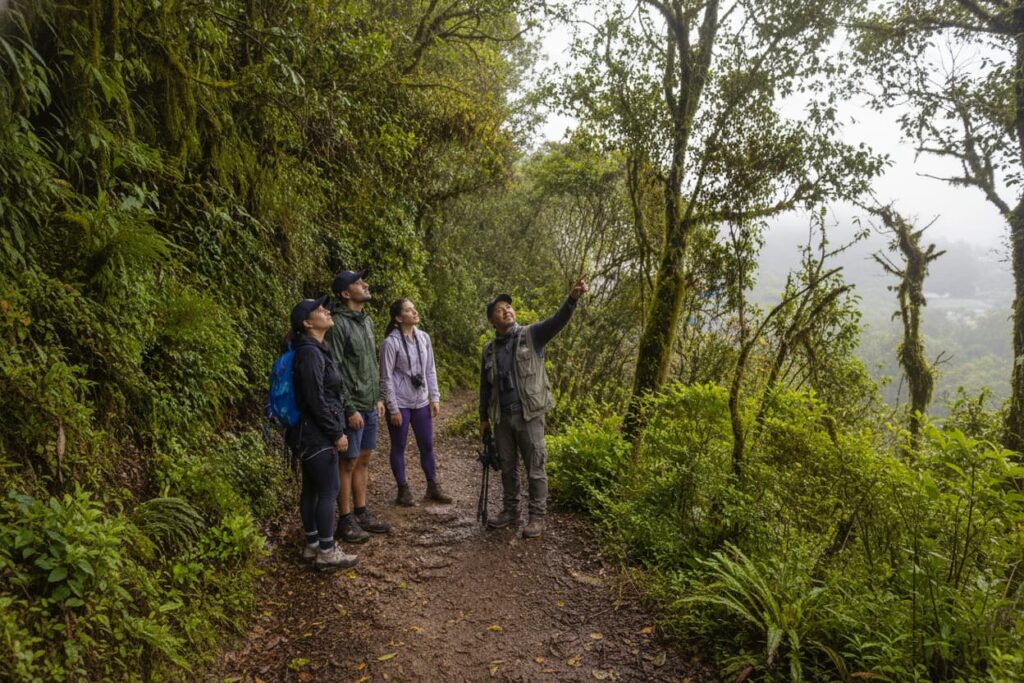
The tour involves approximately 3 hours of hiking on forest trails of easy to moderate difficulty. A walking cane is welcome if you use one. Note your fitness level or any health conditions when booking so your guide can plan accordingly.
This tour departs early in the morning — birdwatching requires the first hours of daylight when species are most active. Your guide will confirm your exact pickup time the day before.
Lunch is not included. The park has a traditional restaurant on-site where you can eat surrounded by forest. Budget for a meal before you go.
Binoculars are available to borrow — confirm at booking. If you own a pair, bring them. A zoom camera is ideal for the bird species you'll encounter.
More Info
Cancellation Window
12 hours before starting date
Difficulty
Moderate
Cancellation policy
Free cancellation up to 12 hours before departure. Cancellations made within 12 hours of the tour start time are non-refundable.
Guest Reviews
Why Book With Cielo
1,200 five-star reviews from real travelers — read them before you book.
Best Price Guarantee — find this tour cheaper elsewhere and we'll match it.
Private transportation door-to-door — no shared shuttles, no waiting around for strangers.
Booking directly with us means your money stays with a Colombian-owned company, not a platform commission.
Our team coordinates everything — pickup timing, the day’s logistics, and the return — so you focus only on the experience.
Other Info
Birdwatching Day Trip from Bogotá to Chicaque Natural Park
This day trip to Chicaque Natural Park takes you somewhere most visitors to the city never find — and that’s exactly the point. Chicaque sits just 30 kilometers southwest of the capital, but the moment you enter the cloud forest, Bogotá is gone. What replaces it is 300 hectares of high-altitude Andean forest with seven distinct ecosystems, 20 kilometers of ecological trails, and a bird list that serious ornithologists come specifically to work through. Colombia holds more bird species than any other country on earth — over 1,900 recorded — and the cloud forests of the Eastern Andes around Bogotá contain a specific subset of that diversity that you won’t find at lower elevations. Chicaque’s combination of altitude, sustained fog, and dense native forest creates conditions where birds that need very particular habitats to survive have found somewhere to stay.
A Protected Forest: Why Chicaque Exists
The park is privately owned — Manuel Escobar Lozano, the owner, chose to make it accessible to visitors rather than develop it, which has preserved a cloud forest that by rights should have been cleared decades ago. There’s something worth knowing in that before you arrive: Chicaque exists because someone decided it was worth protecting. The experience you have on the trail is partly a function of that choice. The same principle of private conservation underlies the Chingaza Hiking Tour at Ecopalacio Reserve — a former cement quarry now recovering into Andean ecosystem, managed by a community that chose restoration over extraction. Both reserves offer something that publicly managed parks often can’t: a more intimate trail network, a more personal relationship with the landscape, and a more direct connection between your visit and the conservation it supports.
What a Cloud Forest Actually Is
The Bosque de Niebla — the fog forest — is a specific ecological category. It forms where persistent cloud cover keeps humidity extraordinarily high year-round, supporting a density and diversity of plant life that in turn supports everything above it in the food chain. Chicaque’s seven forest types include cloud forest proper, transition forest, and sections of high Andean forest that feel nothing like what you’d associate with a park a short drive from a capital city. More than 3,000 plant species have been catalogued within the reserve, alongside 20 species of mammals — including the spectacled bear, which also ranges through the Chingaza Reserve to the northeast — and the birds that move between all of it.
The altitude range — between 2,000 and 2,700 meters — places Chicaque in the transitional zone between the lower Andean forest and the cloud forest proper, which is precisely where bird diversity peaks in the Eastern Andes. The species assemblage here is distinct from what you find at the Monserrate Birdwatching Trail at 3,152 meters — the two trails operate in adjacent but different ecological zones, and doing both gives you a comparative picture of the Andean highland bird community that neither provides alone.
Birding With a Guide
A guide makes this forest legible in a way that solo exploration doesn’t. The species you come to see are often invisible until someone who knows the forest points to a movement in the mid-canopy and identifies it by the call that preceded it by three seconds. The Collared Inca, the Beryl-spangled Tanager, the Slate-throated Redstart, the Green-and-black Fruiteater — these are birds that reward the kind of slow, attentive walking that is difficult to sustain without someone shaping your attention. Your guide explains behavior as well as identity: why a particular species feeds at this height rather than another, what the presence of a mixed flock means for where to look next, how the fog affects activity patterns through the day.
The same guide-dependent depth applies across Bogotá’s highland birding experiences. At the Monserrate Birdwatching Trail, the guide’s ability to name birds by call adds an entire layer of species to the morning that a self-guided visit at the same feeders would miss entirely. At Chicaque, the forest is dense enough and the species subtle enough that the guide’s knowledge is not an enhancement but a precondition for a productive day.
The Full Day: Drive, Trail, Panorama, and Lunch
The tour runs as a full day because Chicaque earns it. The drive south from Bogotá crosses the Sabana — the high plateau that surrounds the capital — and begins descending toward the park through a landscape that shifts from urban to agricultural to forest in stages. On a clear morning, the viewpoint at the park entrance delivers one of the better panoramas available within striking distance of Bogotá: the snow-capped peaks of the Tolima, Santa Isabel, and Ruiz volcanoes visible across the plateau to the west. These are the same peaks visible from the summit of the Chingaza Reserve on clear afternoons — the Los Nevados volcanic range that defines the western horizon of the Bogotá savanna.
The hike covers approximately three hours of active trail time, with the afternoon reserved for deeper ecology and a traditional lunch to close the day. The meal is the right close to a morning of sustained attention in the forest — simple, local, and served at a pace that matches the day rather than rushing you back to the city.
The Muisca Geography: A Name Worth Understanding
The name Chicaque comes from the Muisca language — the indigenous people who occupied the Bogotá savanna for centuries before Spanish colonization arrived in 1538. In Muisca, it means “powerful and great mountain.” The Muisca were the civilization that gave rise to the El Dorado legend — the ritual that spawned it took place at a sacred lake not far from this forest, the same lake you stand above on the Salt Cathedral and Guatavita Tour when you reach the rim of the Guatavita crater. Coming to Chicaque is, in a small way, entering the geography of that story from its least-visited side: the forest rather than the lake, the ecological present rather than the colonial past, the mountain rather than the gold.
The Muisca context runs through Bogotá’s highland geography consistently. The Private Bogotá City Tour covers the Muisca Raft at the Gold Museum — the golden figure that depicts the ceremony the Guatavita lake was built for — and the founding of the city on Muisca territory at Chorro de Quevedo. Chicaque adds the landscape dimension to that story: the forest, the altitude, the water systems that the Muisca understood as sacred and that modern Bogotá still depends on.
Plan Your Time in Bogotá’s Highland Ecosystems
Chicaque is the most ecologically immersive of Bogotá’s highland day trips — a full day in a privately protected cloud forest with a documented bird list that rewards repeat visits. For travelers building a multi-day highland itinerary from Bogotá, it pairs naturally with the Monserrate Birdwatching Tour as consecutive mornings covering two different altitude bands of the same Andean ecosystem. The Las Moyas Hike offers a shorter, earlier-morning option on the Eastern Hills directly above the city — access limited to the 6 to 8 AM window, back before lunch, with ridge views and cloud forest that complement rather than duplicate what Chicaque provides. For those who want the páramo ecosystem rather than the cloud forest, the Sumapaz Páramo Tour covers the world’s largest páramo just south of the city — a full day at high altitude through one of Colombia’s most extraordinary and least visited landscapes.
Ready to spend a day in a cloud forest 30 kilometers from a capital city? Book the Chicaque Natural Park Birdwatching Tour above and your guide will handle everything from hotel pickup to the return to Bogotá — bring binoculars, a rain layer, and an unhurried morning.
Planning more time in Bogotá? Browse our Bogotá tours and experiences.
Before you go: our Bogotá guides
Written by the team that runs this tour.
FAQs
Chicaque sits between 2,000 and 2,700 meters above sea level and stays around 18°C (65°F) inside the forest. The cloud forest is damp and often foggy — that's what makes it a cloud forest. Bring a warm jacket, waterproof hiking footwear, and a light rain layer regardless of the forecast. The weather can shift quickly.
Yes, though keep in mind this tour involves active hiking through forest trails — it's more physical than the Monserrate trail. Your guide moves at your pace, and there's no pressure to rush. If you have any health conditions your guide should know about, note them when booking or mention them at pickup. The activity takes place at considerable altitude.
Birdwatching requires the early hours of the day because that's when most species are feeding, calling, and most visible. By midday the forest quiets down considerably. The tour departs early to make the most of peak activity — your guide will confirm the pickup time the evening before.
The park is privately owned by Manuel Escobar Lozano, who chose to open it to visitors rather than develop the land — a decision that has preserved 300 hectares of cloud forest a short drive from one of South America's largest cities.
In the Muisca language — the indigenous people of the Bogotá savanna — 'Chicaque' means powerful and great mountain. The Muisca were the civilization that gave rise to the El Dorado legend, and this region was at the center of their territory for centuries before Spanish colonization.
Related Tours
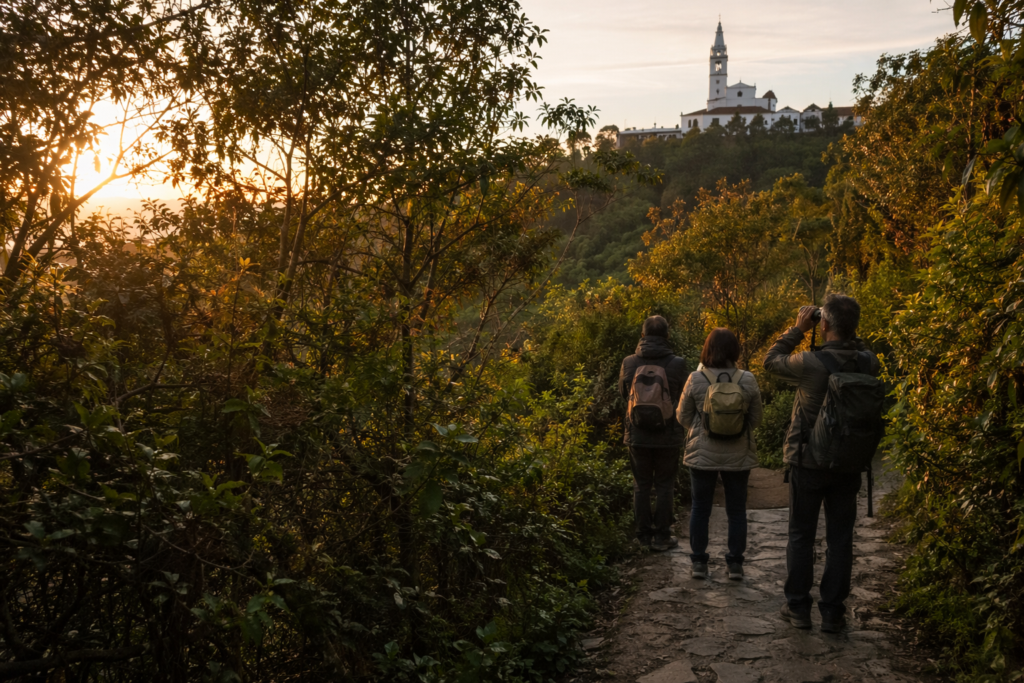

Birdwatching Tour in Bogotá: A 4-Hour Private Trail at Monserrate
Bogota
Private
Birdwatching at Monserrate: Colombia’s Most Underrated Birding City, at 3,152 Meters Birdwatching in Bogotá surprises most visitors — not because…
$$
4 hours
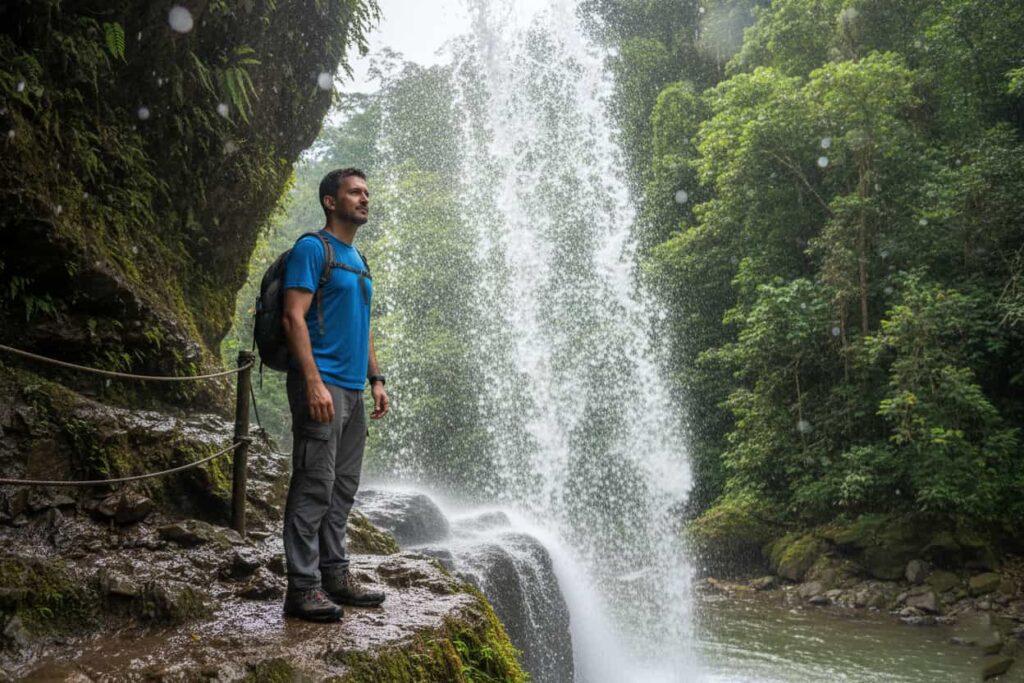
La Chorrera Waterfall Hike from Bogotá: Private Day Trip to Colombia’s Tallest Waterfall
Bogota
Private
La Chorrera Waterfall Hike from Bogotá: Colombia’s Tallest Waterfall and the Eastern Hills Most Visitors Never Cross La Chorrera waterfall…
$$
8 hours
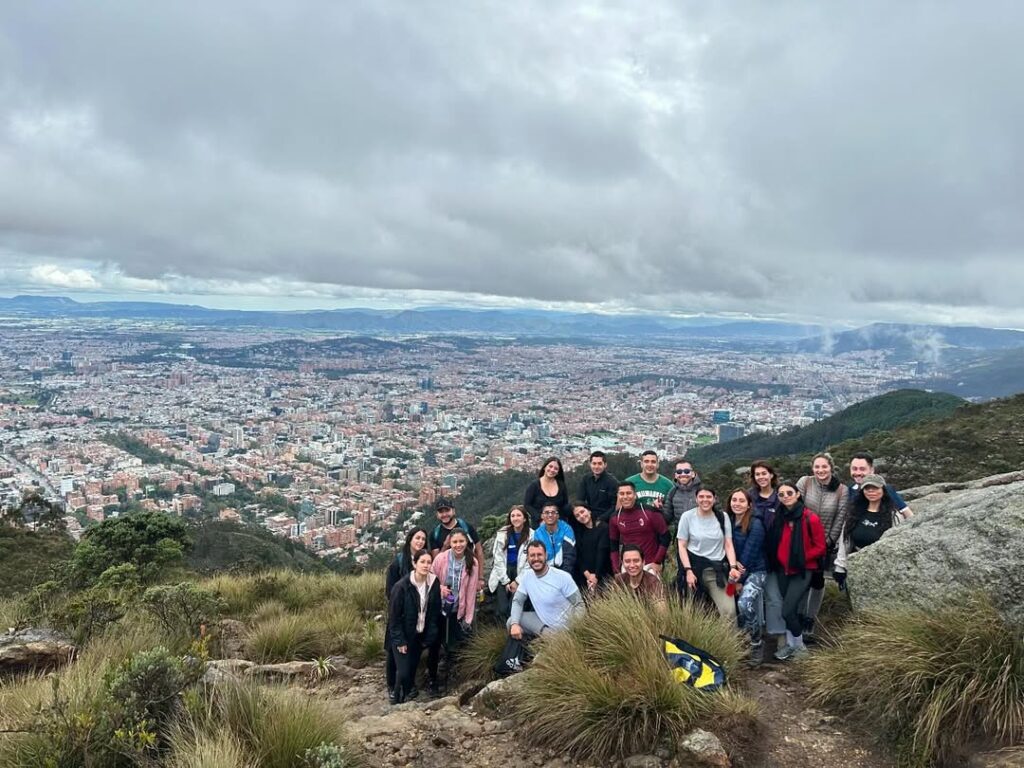

Las Moyas Hike Tours Bogota: Sunrise Trail Above the City
Bogota
Private
Las Moyas Hike: A Real Mountain Morning Ten Minutes from the City Las Moyas Hike gives you something most visitors…
$$$
3 - 4 Hours