
+ 1.200 verified five-star reviews for Cielo.Travel on Google and TripAdvisor.
Duration
Tour Type
Pricing
Languages
Overview
La Candelaria is Bogotá’s oldest neighborhood — founded in 1538, layered with four centuries of architectural and social history — and its food culture runs just as deep. Pre-Columbian crops prepared in colonial-era techniques, sold from corners that have served the same foods for generations, eaten by university students, artists, government workers, and visitors all from the same carts. A private guide who knows the vendors and the history makes the difference between eating and understanding what you’re eating.
The tour moves through the full arc of the Andean interior’s culinary identity: arepas that predate the Spanish by centuries, almojábanas that arrived with the colonial administration and never left, obleas filled with arequipe assembled to order by vendors whose practice goes back to the 19th century, and chocolate santafereño — Bogotá’s defining hot drink, made from ground cacao tablets and served with firm cheese for dunking — at La Puerta Falsa, the oldest restaurant in the city, open since 1816. It ends at Chorro de Quevedo, the founding plaza of Bogotá, with a cup of Colombian coffee at the spot where the city began.
Itinerary
Highlights
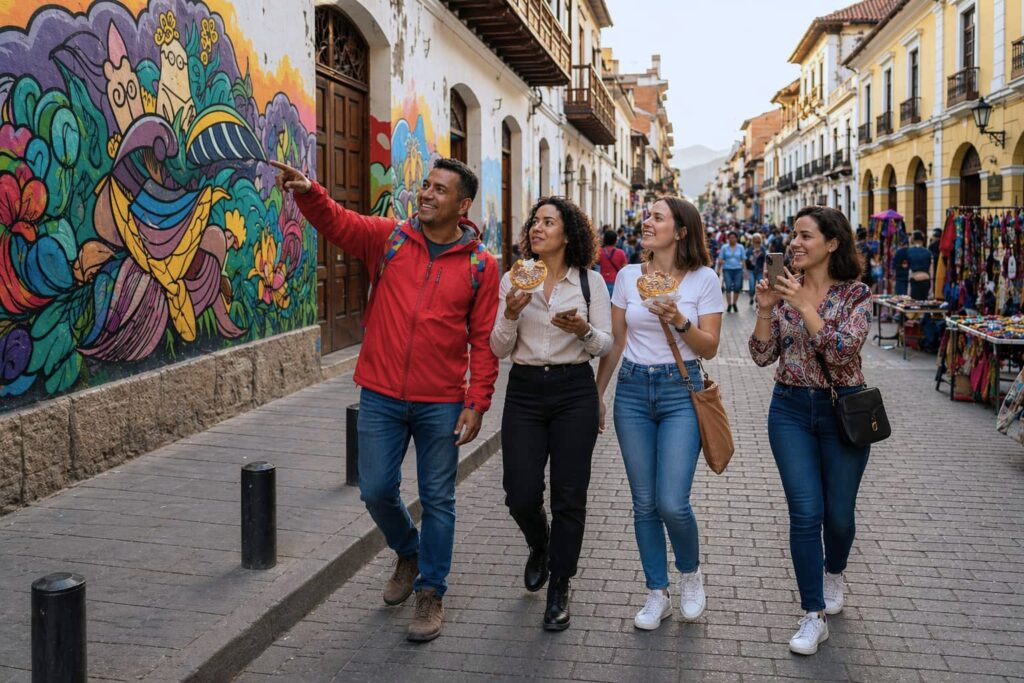
Walk through La Candelaria — Bogotá's oldest and most historically layered neighbourhood — with a local food guide who knows which vendors have been in the same spot for decades and why each food they sell is specific to this city.
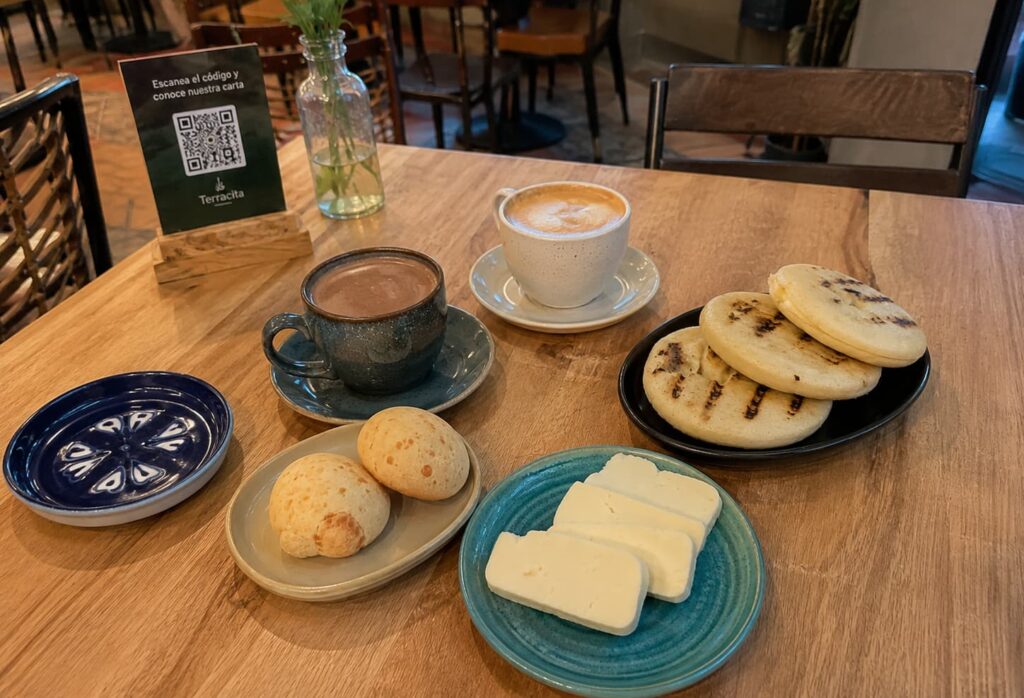
Taste the arepa in its Bogotá form — a grilled corn tortilla with hundreds of regional variations — alongside the almojábana, a baked cheese and cornmeal bread that is one of the most characteristic morning foods of the Colombian interior highlands.
Move to the sweet section of the tour with obleas: two thin flat wafers filled with arequipe (Colombian caramel) — a street dessert with colonial-era origins that is still assembled by hand at permanent vendor spots across the neighbourhood.
Try chocolate santafereño — Bogotá's traditional hot chocolate, served with a piece of cheese for dunking — at one of La Candelaria's historic establishments, following a practice that has been common in the city since the colonial period.
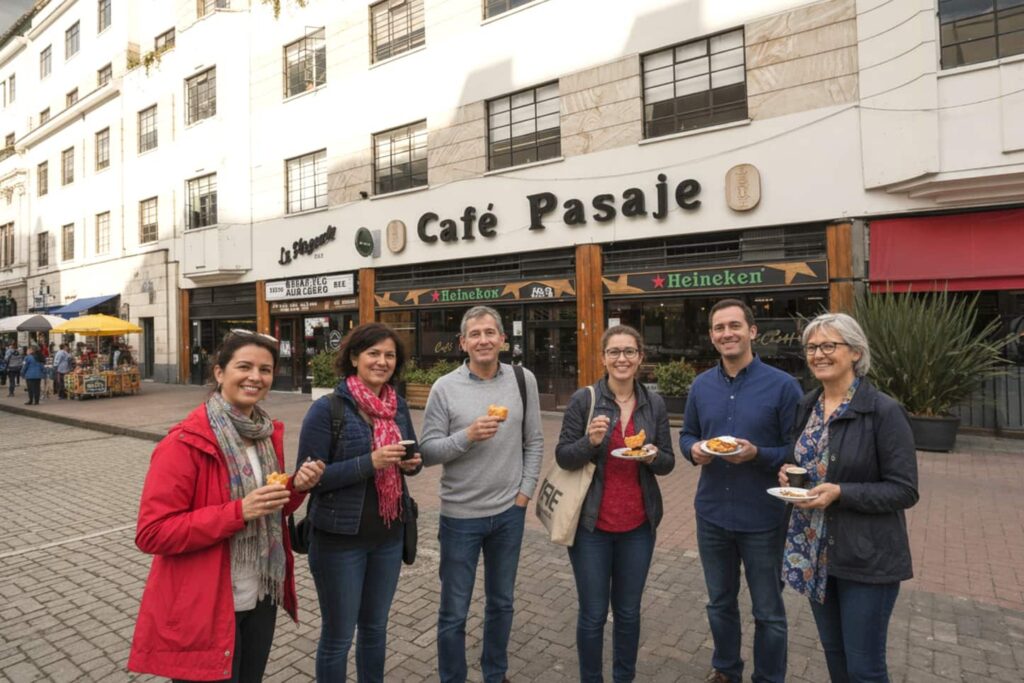
Finish at Chorro de Quevedo Square, the founding square of Bogotá, with a cup of Colombian coffee and a final account from your guide of the local culinary traditions you've just tasted.
What's Included
Private English-speaking guide (full 4 hours).
Private hotel pickup and drop-off in Bogotá.
5 food and drink tastings: salty snacks (arepa, almojábana), local desserts (obleas, chocolate with cheese), and Colombian coffee.
Risk insurance.
What's Excluded
Additional food and drinks beyond the included tastings.
Personal purchases.
Gratuities (appreciated but not required).
Know before you book
If you have any food restrictions or allergies, please tell your guide or write them in the booking notes before the tour. Colombian street food frequently contains wheat, dairy, corn, and egg.
This tour is suitable for most people but note that some foods may not suit vegetarians or people with lactose intolerance. Contact us before booking if you have specific requirements so we can advise.
Wear comfortable, flat shoes — the tour involves walking on cobblestones in La Candelaria for approximately 3 hours.
Bogotá sits at 2,640 metres above sea level. If you have recently arrived from a lower altitude, pace yourself, stay hydrated, and let your guide know if you feel any altitude discomfort.
Dress in layers — La Candelaria is cooler than lower-altitude cities, with temperatures typically between 7°C and 19°C (45°F–66°F). A light jacket is always a good idea.
The tour visits multiple stops and covers a good amount of ground on foot. Come with an appetite but don't eat a large meal beforehand — you'll want room for everything.
More Info
Cancellation Window
12 hours before starting date
Difficulty
Easy
Cancellation policy
Free cancellation up to 12 hours before departure. Cancellations made within 12 hours of the tour start time are non-refundable.
Guest Reviews
Why Book With Cielo
1,200 five-star reviews from real travelers — read them before you book.
Best Price Guarantee — find this tour cheaper elsewhere and we'll match it.
Private transportation door-to-door — no shared shuttles, no waiting around for strangers.
Booking directly with us means your money stays with a Colombian-owned company, not a platform commission.
Our guides are English-speaking Colombian locals — people who know the vendors by name, know the history of each food, and can explain it in a way that makes the meal more interesting.
Other Info
A Food Tour in La Candelaria: Bogotá’s Culinary Identity, One Dish at a Time
A food tour in La Candelaria is one of the most direct ways to understand Bogotá as a city rather than as a collection of monuments. The neighborhood where the city began in 1538 is also where its most enduring food traditions are most concentrated — the arepa vendors, the almojábana bakeries, the oblea carts, the hot chocolate served with cheese in the oldest restaurant in the city. Walking through La Candelaria with a guide who knows the difference between a food tradition and a tourist performance gives you a layer of the city that the Gold Museum and Monserrat, essential as they are, simply cannot provide.
The Arepa
The arepa is the starting point for most Colombian food conversations, and La Candelaria is one of the best places in Bogotá to encounter it in its proper context. The corn-based staple has been eaten in what is now Colombia since before the arrival of the Spanish — clay grilling slabs dating to pre-Columbian times have been found across the country — and it has survived every transformation of Colombian culture since then. Each region has its own version, shaped by local corn varieties, climate, and culinary tradition. In Bogotá and the surrounding Andean plateau, the typical arepa is thinner and lighter than the thick corn cakes of the coast or the egg-stuffed fried versions of the Caribbean.
Your guide explains these regional differences as you eat, which turns a simple corn cake into an entry point for understanding the geography of Colombian food. The same regional logic applies to what you taste on the Santa Marta Food Tour — bollo, carimañola, coconut rice — and on the Barranquilla Food Tour, where Lebanese-influenced kibbe sits beside Caribbean seafood on the same street stall. The La Candelaria food tour is the Andean interior version of the same argument: every dish is a geography lesson.
The Almojábana
The almojábana is less internationally known than the arepa but equally embedded in the culinary identity of the Colombian interior highlands. Made from cornmeal flour and cheese — kneaded until the cheese is fully incorporated, formed into rounds, and baked — it is a food that arrived with the Spanish colonial administration and has been adapted so thoroughly into the local diet that it no longer reads as imported. It is traditionally a breakfast food, sold in the mornings from small bakeries and vendors across La Candelaria, and it pairs naturally with the hot beverages that characterize Andean food culture: coffee, hot chocolate, or agua de panela.
The almojábana is one of the clearest examples of the colonial culinary fusion that defines Bogotá’s food identity — Indigenous corn and technique, Spanish cheese and oven-baking, combined into something that belongs entirely to the Andean interior. Your guide traces these origins as you eat, connecting the food in your hand to the same colonial history visible in the architecture around you. The Private Bogotá City Tour covers that architecture — La Candelaria’s churches, Plaza de Bolívar, the founding fountain at Chorro de Quevedo — in depth; the food tour covers what was being eaten in those buildings across the same centuries.
The Obleas
The obleas section of the tour engages a completely different set of flavors. The wafers themselves are neutral and almost papery — their function is structural, and the experience is in the arequipe that fills them. Arequipe is Colombia’s name for what the rest of Latin America calls dulce de leche: milk and sugar cooked together at low heat for hours until the proteins caramelize and the liquid thickens into a dense, amber paste with a flavor that is sweet but not simple. The traditional oblea vendor assembles the dessert to order, layering arequipe — and sometimes bocadillo or fruit — between the two wafers and pressing them together.
The practice goes back to the 19th century and is one of the most specifically Bogotano food experiences available to a visitor. Unlike the arepa, which exists in recognizable form across the entire country, the oblea in its La Candelaria context is a neighborhood food — tied to this plaza, this vendor, this particular version of arequipe that has been made the same way for generations. It is the kind of food that does not survive translation to a restaurant menu or a hotel breakfast buffet, which is part of why the tour is built around finding it where it actually lives.
Chocolate Santafereño
Chocolate santafereño is made from ground cacao tablets rather than processed powder — thicker and darker than most international versions of hot chocolate, with a flavor closer to unsweetened baking chocolate than to a European drinking cocoa. The tradition of serving it with a piece of firm Colombian cheese for dunking is specific to the Andean interior and dates to the colonial period — it was the standard breakfast drink of Bogotá’s households for centuries and remains so in many families today.
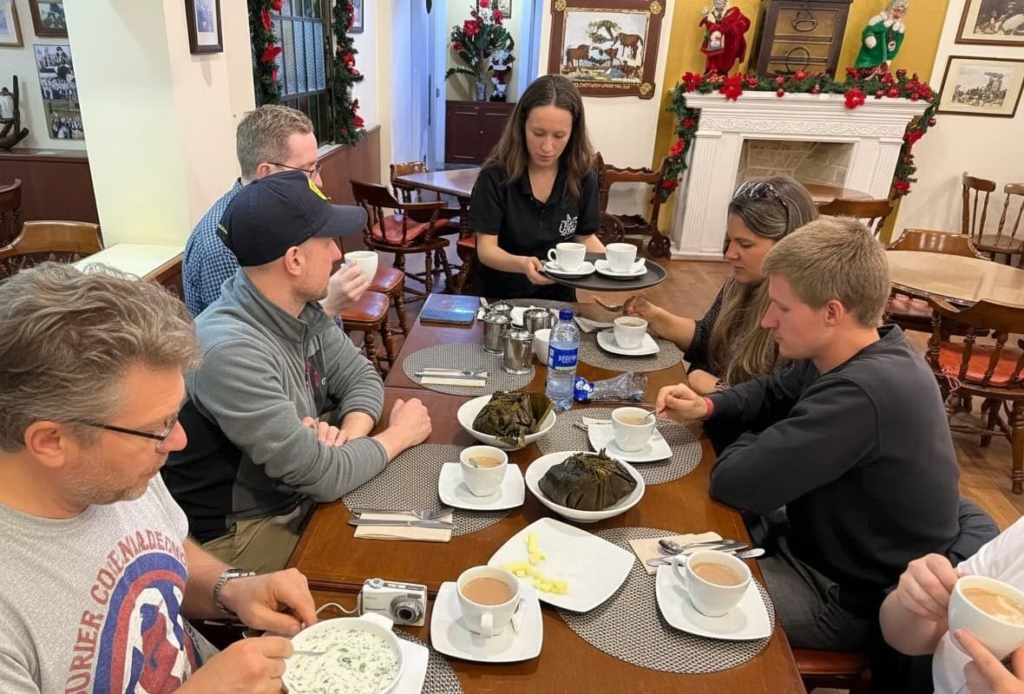
La Puerta Falsa, the oldest restaurant in Bogotá, open since 1816 and located just off Plaza de Bolívar, is famous for its chocolate santafereño. The combination of the drink and the neighborhood gives it a context that nowhere else can replicate. Sitting in a restaurant that has been serving the same drink in the same building since two years before Simón Bolívar crossed the Andes to liberate the continent is not a tourist experience — it is the kind of continuity that cities accumulate over centuries and that most travelers walk past without knowing it’s there. Your guide makes sure you don’t.
Chorro de Quevedo: Where the Tour Ends
The tour ends at Chorro de Quevedo Square, the founding plaza of Bogotá and its oldest public space. Today it is one of the most lively corners of La Candelaria — street musicians, artisans, university students from nearby faculties, and vendors who have been selling food and drinks in the square for decades gather here throughout the day. A cup of Colombian coffee in this square — at the end of a tour that has moved through the full arc of the neighborhood’s food culture — is a specific pleasure that the food tour is designed to arrive at.
The coffee itself is worth a note. Colombia’s coffee-growing regions — the Eje Cafetero, Huila, Nariño — produce some of the most complex and regionally varied coffee in the world, and the specialty coffee movement now bringing high-quality Colombian beans back into domestic consumption means that a cup in La Candelaria can be genuinely exceptional. For travelers who want to go deeper into that story, the Secret Coffee Tour in Quindío covers three towns, three farms, and three brewing methods in a single day in the heart of the Coffee Triangle — the origin story of the cup you are drinking in Chorro de Quevedo.
Plan Your Time in Bogotá
The food tour works well as a second half of a day that begins with the city’s cultural sites — or as a standalone morning that orients you to La Candelaria before you explore it further on foot. The Private Bogotá City Tour covers the Gold Museum, Monserrate, Plaza de Bolívar, and the Botero Museum in a full private day — the historical and artistic layer of the same neighborhood the food tour covers through its kitchens and street vendors. The Bogotá Graffiti Tour covers La Candelaria’s murals and street art in a dedicated three-hour walk — the contemporary political layer of the same streets. For travelers heading out of the city on day trips, the Salt Cathedral and Guatavita Tour and the Villa de Leyva Full Day Tour are the strongest single-day options from the capital.
Ready to eat your way through La Candelaria? Book the Bogotá Food Tour above and your guide will handle everything from hotel pickup to the final coffee in Chorro de Quevedo — all you have to do is show up hungry.
Building a longer itinerary? Start with our Bogotá tours.
Before you go: our Bogotá guides
Written by the team that runs this tour.
FAQs
In Colombian gastronomy there is a mixture of various international cuisines, from indigenous ingredients, Spanish seasoning, and African influences. You will be tasting 5 types of food, including salty snacks (arepa, almojábana), local desserts (obleas with arequipe, chocolate santafereño with cheese), and typical beverages including Colombian coffee.
Yes, any person can take part in this food tour in La Candelaria, Bogotá. If you have any food restriction or allergy, please tell the guide or write it in the booking form so it can be taken into account when planning the route.
The arepa is a corn-based tortilla that is one of the most fundamental foods in Colombian cooking — eaten at breakfast, lunch, and as a snack, in hundreds of different regional versions. In Bogotá, the most common versions are thin, grilled, and served with white cheese or butter. The arepa has been eaten in the region since pre-Columbian times and is recognised by UNESCO as part of Colombia's cultural heritage.
Chocolate santafereño is Bogotá's traditional hot chocolate — thick, made from ground cacao tablets rather than powder, and darker than most international versions. The tradition of serving it with a piece of firm Colombian cheese for dunking dates to the colonial period and is specific to the Andean interior. The cheese softens in the hot chocolate and adds a savory counterpoint to the sweet drink. It is one of the most distinctly Bogotano food experiences available anywhere in the city.
Obleas are two thin, flat wafers assembled into a sandwich with arequipe — a thick Colombian caramel made from milk and sugar cooked slowly until the mixture thickens and deepens in colour. They are sold by dedicated street vendors across Bogotá and have been a fixture of the city's sweet food culture since at least the 19th century. The tradition is related to similar wafer confections across Latin America with Spanish colonial roots.
Yes — this is one of the best first activities to do in Bogotá. La Candelaria is where the city's history and culture are most concentrated, and approaching it through food gives you immediate context for what you're seeing. By the time the tour ends at Chorro de Quevedo Square — the founding plaza of the city — you'll have a working understanding of Colombian food culture and a sense of the neighbourhood that takes most visitors much longer to develop.
Related Tours
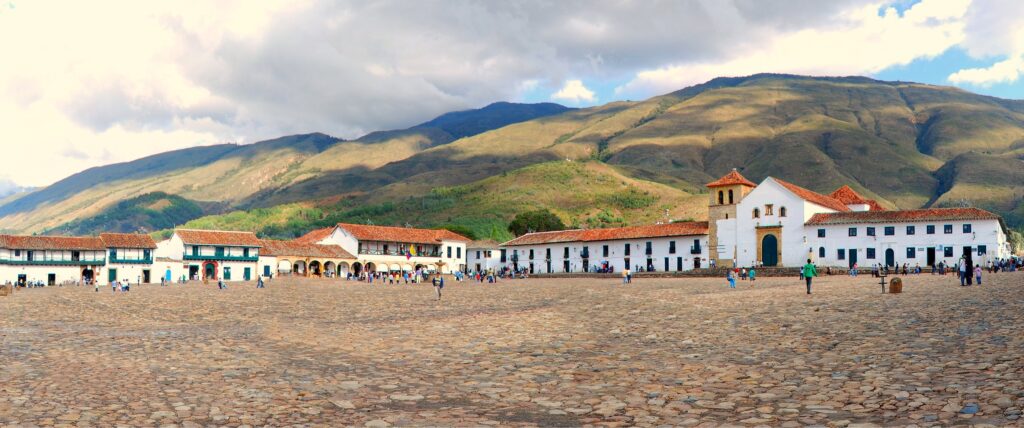

Villa de Leyva Tour from Bogotá: Sisga, Ráquira, Fossils & Pozos Azules
Bogota
Private, Shared
A Villa de Leyva Day Trip from Bogotá: Colombia’s Colonial Heart, Geological Past, and Living Craft Tradition A Villa de…
$$$
12 hours
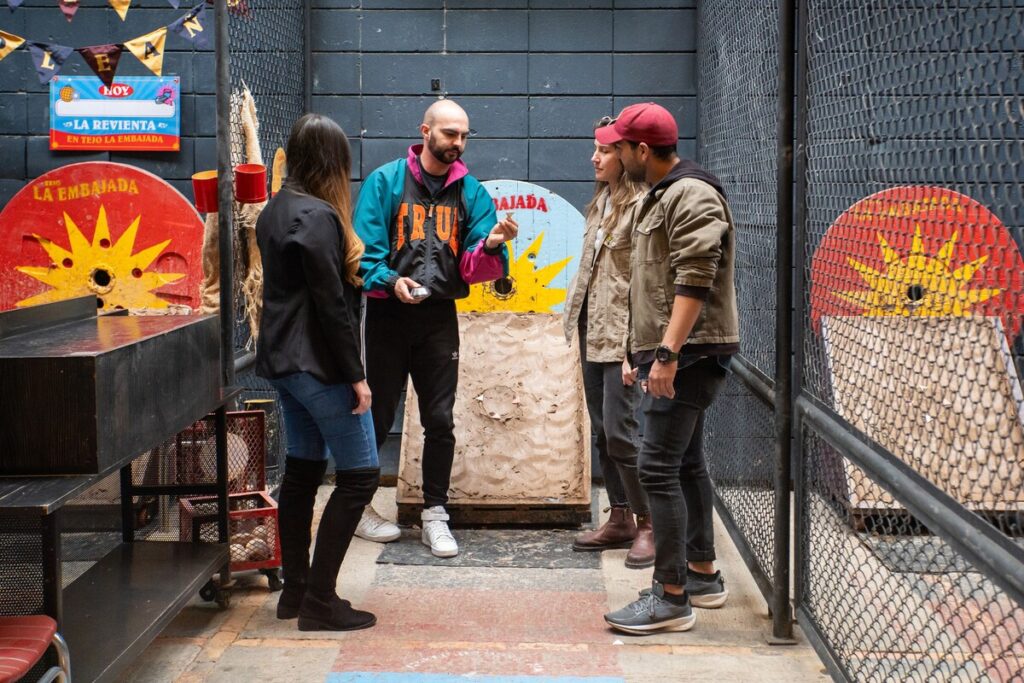

Tejo Tour Bogota: Private Beer and Colombian Sport Experience
Bogota
Private
Tejo and Beer in Bogotá: Colombia’s National Sport A tejo tour in Bogotá is the fastest way to go from…
$$$
3 hours
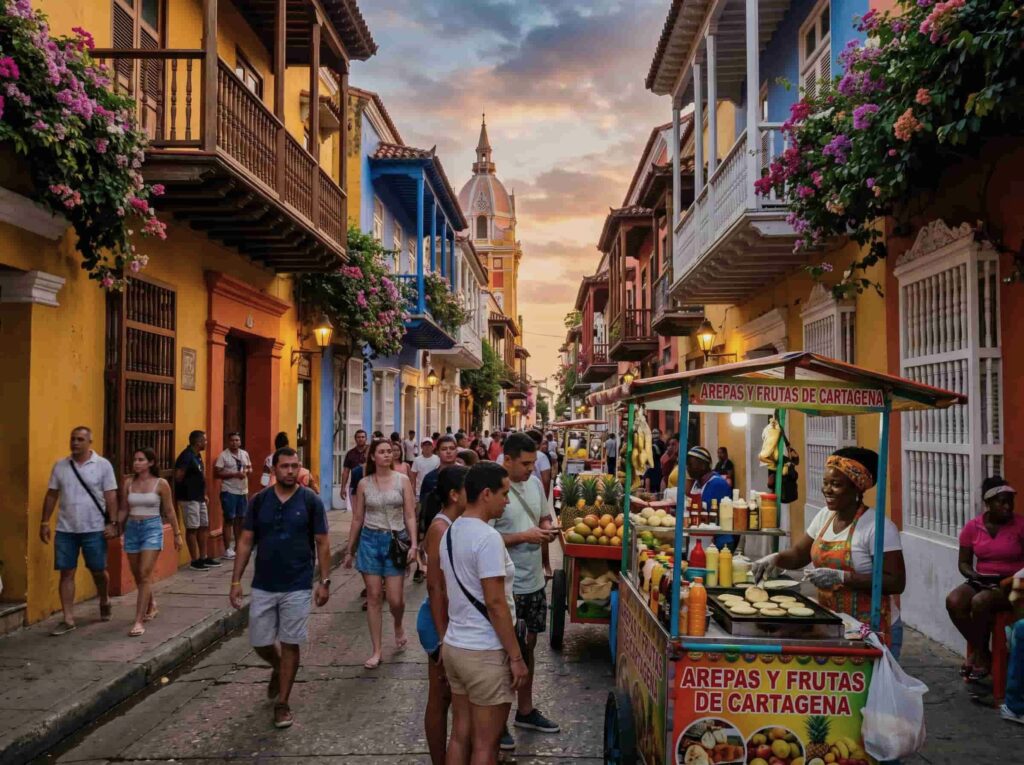

Food Tour in Cartagena Walled City
Cartagena
Private
Food Tour in Cartagena’s Walled City: Three Cultures, Five Centuries, and the Streets Where It All Still Lives A food…
$$
4 hours