September 6, 2026
Seven days in Colombia is two cities done properly and one day trip from each. Ten days is the classic first trip: Bogotá, Medellín, the coffee region and Cartagena, in that order, with a flight between each. Fourteen days is when the trip stops being a checklist and you get the Caribbean beyond Cartagena, or the Amazon, or a colonial town nobody in your group had heard of. We run private tours in eleven destinations across the country, all year, so this is the order we would do it in, with the flights, the closures, the altitude and the weather already built in, and with our own tours slotted where they save you the most time.
How many days do you need in Colombia?
Seven is the minimum for a trip that does not feel rushed, and it means choosing: Bogotá, Medellín and Cartagena is the version most people want the first time. Ten days is what we recommend to anyone who can manage it, because it adds the coffee region, which is the part of Colombia people talk about most when they get home. Fourteen days is two weeks well spent: everything in the ten-day plan, plus Santa Marta and Tayrona, or a swap for the Amazon, La Guajira or the Lost City. Colombia is big and mountainous, and the distances that look short on a map are not short by road, so every version below moves between regions by air and saves the driving for the day trips.
Two numbers shape every plan. Bogotá sits at 2,640 meters above sea level, and Monserrate, which most people climb on their first day, is at 3,152. Land there first, walk slowly, drink water and leave the hikes for later. Cartagena, by contrast, runs between 28 and 34 degrees Celsius all year, so on the coast the day starts early and the middle of the afternoon is for shade or the sea. What the altitude does and how we order the first days is in our Bogotá altitude guide.
Six things that change any Colombia itinerary
There are no seasons, but there are wetter months. The sun rises and sets at the same time all year. According to Colombia’s official tourism portal, the drier periods run from December to January and from July to August, and the rainier ones from April to May and from October to November. The temperature is set by altitude, not by the calendar: Bogotá is temperate at 12 to 17 degrees, the Caribbean coast is above 24, the Amazon above 27, and Medellín and Cali sit in between. Rain can arrive on any afternoon in any month in the Andes. Pack layers for the highlands and light clothes for the coast, and do not plan the trip around avoiding rain.
Fly between regions, drive within them. Bogotá to Medellín is about an hour in the air. Medellín to Cartagena is a little over an hour. Pereira, in the coffee region, has direct flights to Cartagena of roughly an hour and a half, and Santa Marta to Bogotá takes about the same. Avianca flies all of these routes, and LATAM and the low-cost carriers Wingo and JetSMART cover most of them; we have written reviews of Avianca, LATAM, Wingo and JetSMART so you know what to expect from each. Book the domestic legs early in the day: an afternoon that starts with a delayed flight is an afternoon lost.
Mondays close things. Bogotá’s Gold Museum, Medellín’s Botanical Garden and Arví Park, the Casa de la Memoria museum in Medellín and the Tayrona Gold Museum in Santa Marta are all closed on Mondays. Lake Guatavita outside Bogotá closes on Mondays too. Chicamocha National Park in Santander is closed on Mondays and Tuesdays. Whichever day of your trip is a Monday, make it a travel day, a beach day or a day trip.
Tayrona National Park closes three times a year. The park suspends all tourism for about two weeks in February, in June and between October and November, a program the national parks authority calls Respira Tayrona, so the indigenous communities of the Sierra Nevada can carry out their ceremonies and the ecosystem can recover. If Tayrona is on your list, confirm the dates for your year before you fix the order of your trip.
The Amazon needs a yellow fever vaccination. Colombia’s health ministry requires foreign travelers heading to high-risk areas to be vaccinated at least ten days before travel; our Amazon tours ask for the certificate, and we tell guests to get the shot at least two weeks ahead. One dose protects most people for life. Read our guide to vaccines and health precautions before you book that leg.
Getting around, paying and staying safe are simpler than the headlines suggest. Before you land, read our honest take on safety, how cards and cash work here, how tipping works and the practical things to know before you visit. If you are comparing companies to organize the trip, our guide to the best travel agencies in Colombia explains how to check any agency’s registration in two minutes.
Colombia in 7 days: Bogotá, Medellín and Cartagena
The first-trip triangle. Two full days in Bogotá, two in Medellín, three in Cartagena, one flight between each city, and a day trip from each of the first two. It covers the capital’s history, the country’s most talked-about urban story and its most beautiful colonial city, and it ends on the Caribbean.
Day 1: Bogotá. La Candelaria, the Gold Museum, Botero and Monserrate
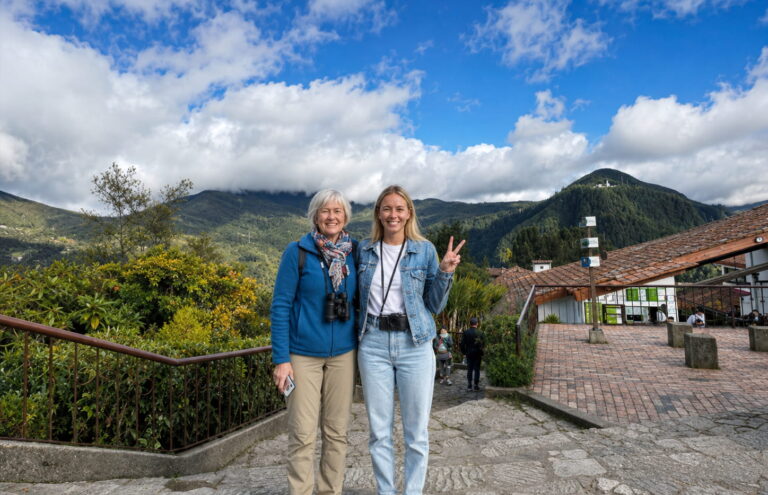
Start where the country’s capital did. La Candelaria was founded in 1538 and its cobblestones, painted colonial walls and courtyard doorways are still the densest concentration of history in Colombia. Walk from Chorro de Quevedo, the founding square, down to Plaza de Bolívar. Two museums sit a few blocks apart: the Gold Museum, which holds the Muisca Raft, the object that sent Spanish expeditions across a continent looking for El Dorado, and the Botero Museum, the collection Fernando Botero gave the country, which never charges admission. Finish with the cable car up to Monserrate at 3,152 meters and the whole city below you. Our seven-hour Perfect Day tour does all four with one private guide, hotel pickup, the tickets and the transport included, which on a first day at altitude is exactly what you want.
Most trips start with a landing at El Dorado; for the ride in, with 2026 fares, our El Dorado airport guide.
If you have more time in the capital, our Bogotá itinerary for 3, 5 or 7 days lays out the whole week, with the Sundays, the closures and the neighborhoods to eat in.
Day 2: Bogotá. Underground at Zipaquirá, then the lake that started El Dorado
The one day trip to take if you take only one. The Salt Cathedral of Zipaquirá is carved inside a working salt mine, and it is not a reconstruction: mass is still held there. From Zipaquirá the road climbs to Lake Guatavita, a near-perfect circle inside a crater at 3,100 meters, where Muisca chiefs covered themselves in gold dust and made the offerings that became the El Dorado legend. Our Zipaquirá and Guatavita day does both in ten hours, private, with lunch, the entrance fees and the drive included. The lake is closed on Mondays; if your day two is a Monday, swap it with day one. Tickets, hours and the train are in our Salt Cathedral of Zipaquirá guide; the lake is in our Lake Guatavita guide.
If a ten-hour day is not how you want to spend your second day at altitude, eat instead. Our four-hour food tour of La Candelaria walks the city’s oldest food in the right order, arepas and almojábanas from the first vendors, obleas filled with arequipe to order, chocolate santafereño with cheese at La Puerta Falsa and a Colombian coffee tasting to finish, and the afternoon is free for the three-hour graffiti tour. Either way, end the night the most Colombian way there is: a private tejo night on a downtown court, steel discs, gunpowder targets and four beers per person included in the rules.
Day 3: Fly to Medellín. Downtown, Plaza Botero and Comuna 13
Take the morning flight; it is about an hour in the air. Medellín is warm, and the change from Bogotá is immediate. Spend the afternoon on the story the city is known for. Our six-hour city tour starts in San Antonio Park, where two Botero birds stand side by side, one intact and one destroyed by a bomb in 1995, left there by deliberate civic decision. It continues through the chessboard facade of the Palacio de la Cultura and into Plaza Botero, where twenty-three bronze figures donated by the artist fill a completely open, completely free public space, and then rides the metro cable car up into Comuna 13, the hillside neighborhood that went from one of the most dangerous in Latin America to the symbol of the city’s transformation. Hotel pickup, the cable car tickets and food tastings near San Antonio Park are included. The flight, the bus and the road between the two cities, with what each cost on the day we checked, are in our Bogotá to Medellín guide.
For the rest of what the city offers, and the order that works, see our guide to things to do in Medellín; for the ride down from the airport, our Medellín airport guide.
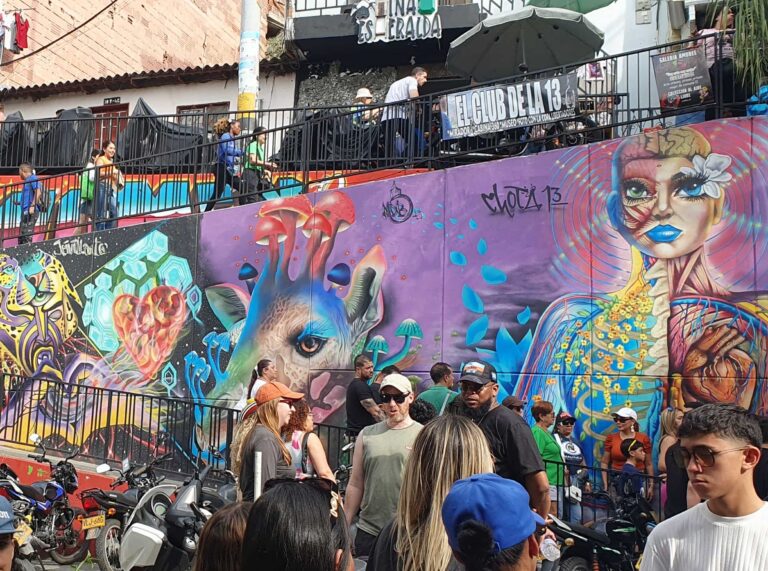
If you would rather give Comuna 13 the whole afternoon, our five-hour private graffiti tour walks its murals with a local guide, and the four-hour downtown tour with the Casa de la Memoria is the version for people who want the history before the art. The Casa de la Memoria is closed on Mondays. In the evening, Medellín has its own tejo court.
Day 4: Guatapé and El Peñol
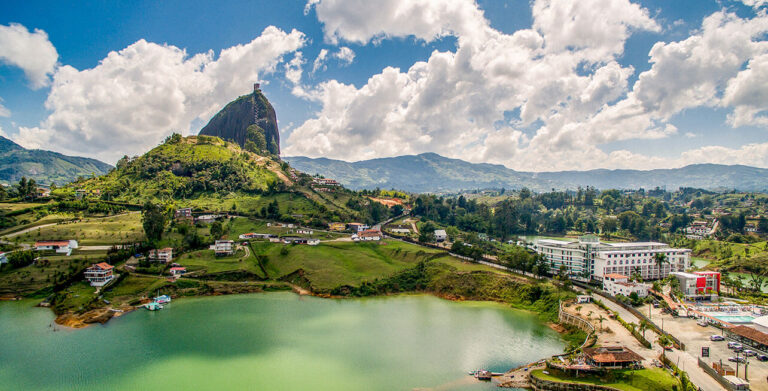
Two hours east of Medellín, a bare granite monolith rises out of the Antioquia highlands with a staircase of 740 steps cut into its face. From the top, the reservoir spreads in every direction, green peninsulas and water where a town was submerged in the 1970s to power the country. Below it, Guatapé’s facades are covered in hand-painted bas-relief panels called zócalos, folk art that predates tourism here. Our private Guatapé day is ten hours and adds a boat ride on the reservoir and a traditional lunch to the climb and the town. Bring shoes with grip and water for the stairs.
We wrote a full guide to the Guatapé day: the ticket price, the bus, the boat, and why the climb has to happen before ten.
If you have seen Guatapé or want coffee country without going to the coffee region, Jardín is 130 kilometers southwest of the city: a heritage town with a neo-Gothic basilica on its plaza, a working coffee farm with a tasting, and a three-hour drive back, which is why the day starts early. Santa Fe de Antioquia, two hours away and noticeably hotter, was the region’s capital for nearly three centuries and is the colonial alternative.
Day 5: Fly to Cartagena. Sunset from the water
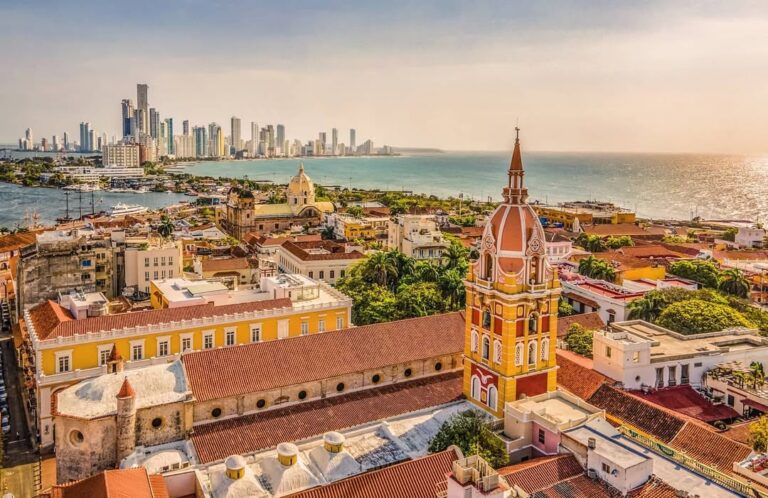
A little over an hour in the air, and the temperature jumps again. Cartagena is hot and humid all year, so we build the first afternoon around rest and the bay rather than the streets. Our three-hour private sunset boat leaves from Muelle de los Pegasos with your own captain and crew, colonial stone on one side of the bay and glass towers on the other, and a fridge with ice for whatever you bring aboard. It is the right first evening, and it shows you the walls you will walk inside the next morning.
The airport is inside the city, ten minutes from the walls; for the ride in, our Cartagena airport guide.
Day 6: Cartagena. San Felipe, the Walled City and Getsemaní
Start early, before the heat. Cartagena was the most important port in Spain’s Caribbean empire, and every rival power tried to take it, which is why the fortifications are still standing. Our six-and-a-half-hour private city tour goes through the tunnels of Castillo San Felipe, along the Walled City and into Getsemaní, the neighborhood that fought for its own independence and now paints it on its walls, with the option of the Convent of La Popa above the city. The ticket to San Felipe, private transport and an arepa de huevo with coconut water are included. Rest through the afternoon; Getsemaní’s plazas come alive after dark.
The whole city by the hour, with the museum times and ticket prices, is in our guide to things to do in Cartagena.
Day 7: Cartagena. The sea, or the food
If you fly out the next morning, spend the last full day on the water. Our private Rosario Islands boat is eight hours with your own captain and crew: snorkeling over living coral at Playa Grande, the floating bars of Cholón, and four unhurried hours under a reserved palm-shaded spot on Playa Blanca on Barú. Lunch is fresh seafood on the beach, paid on the spot. If you fly out that evening, our four-hour food tour of the Walled City fits the morning: arepa con huevo from a street stand where it is made the way it always has been, coastal sweets, and the market food that feeds the neighborhoods rather than the tourism circuit. Cartagena’s Rafael Núñez airport handles international flights, so check for a direct flight home before you book a return through Bogotá.
Choosing between the beaches? Our guide to Cartagena beaches compares Bocagrande, Playa Blanca, Playa Tranquila and the islands.
Colombia in 10 days: add the coffee region
Ten days is the itinerary we would give a friend. Keep days one to four exactly as above, then fly from Medellín to the coffee region instead of straight to the coast, spend three days among wax palms and coffee farms, and fly from Pereira to Cartagena for the last three. The coffee region is the UNESCO-listed Coffee Cultural Landscape, and it is what people describe first when they get home.
Day 5: To the coffee region. Two painted towns
Medellín has direct flights to Pereira and Armenia of about an hour, and our tours pick up in Pereira, Armenia, Manizales, Salento and Filandia, so the choice of base is yours; Salento is the natural base for the two days that follow. Since the August 10, 2026 earthquake, which hit Pereira hardest and left Matecaña running with two of its six gates after a sixteen-day closure, fly into Armenia’s El Edén for the rest of 2026. Arrive, settle in, and spend the afternoon on our private tour of Filandia and Salento: Filandia’s hilltop viewpoints and quiet streets, then Salento’s Calle Real and its viewpoint facing the Los Nevados peaks, with time for trout and coffee in the square. From Salento or Filandia the pickup is by traditional Willys jeep.
Day 6: Cocora Valley and a working coffee farm
The landscape that stops people. The wax palms of the Cocora Valley rise over 60 meters out of the Andean mist, Colombia’s national tree in one of its last intact groves, at around 1,900 meters where the average temperature is 15 degrees and a light rain is normal. Our private Cocora Valley and coffee farm day walks the valley first, then takes you to a traditional farm where you do not watch but participate, walking the rows, picking cherries by hand and following the process through to a tasting of coffee roasted minutes before it reaches your cup, and finishes with a walk through Salento. Eight to ten hours, private, with pickup from Armenia, Salento, Filandia or Pereira. Bring shoes with grip; the trails are muddy after rain.
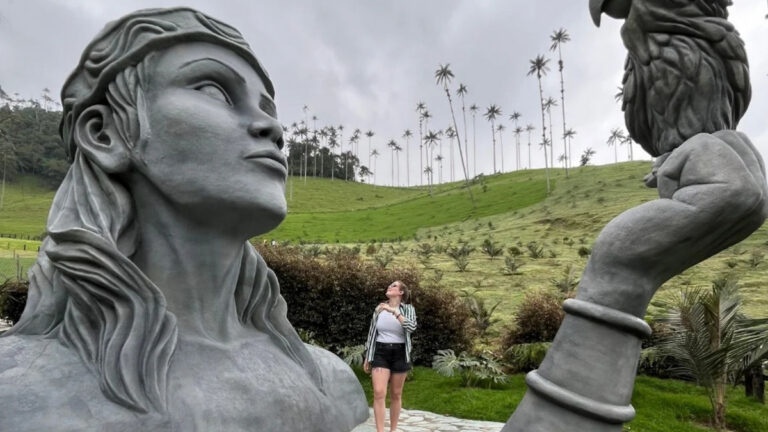
Riders can do the valley on horseback instead: our seven-hour Cocora horseback day needs no riding experience, and the horses have been working this terrain for two centuries.
Day 7: Your hands in the coffee, or the hot springs
Finca Luger has grown coffee for a hundred years, and for four and a half hours it is yours to work: you plant a seed, pick ripe cherries, follow the harvest through pulping, drying and roasting, and taste what you made, then walk Salento with the guide. If you have already had your farm day, the Santa Rosa de Cabal hot springs are the reward: a traditional town known for its chorizo, then a forest trail to two waterfall-fed thermal pools at different temperatures, six to seven hours with a private driver. Coffee purists should look at the Secret Coffee Tour, three hidden towns in Quindío, three farms and three brewing methods in a private eight-hour day with lunch. And if your base is Manizales, our Manizales city tour climbs the cathedral tower and rides the city’s working cable car to the Chipre viewpoint.
Days 8 to 10: Cartagena
Fly from Pereira to Cartagena, a direct flight of roughly an hour and a half, or, while Matecaña runs at reduced capacity after the August 2026 earthquake, connect through Bogotá from Armenia, and take days five to seven of the seven-day plan: the sunset boat on arrival, the city tour early the next morning, and the Rosario Islands or the food tour on the last day. With an extra afternoon, San Basilio de Palenque is an hour and a half from the city: the first free town in the Americas, founded by people who escaped slavery, recognized by UNESCO in 2005 for a living culture that includes Palenquero, the only Spanish-based creole language in Latin America. Our seven-hour private tour pairs a Cielo guide with a local Palenquero guide and includes a homemade lunch of fish, coconut rice and plantains.
For the valley, the coffee farm and the town in detail, read our Salento and Cocora Valley guide; the whole region, with the hot springs and Manizales, is in our Colombia coffee region guide; the airport city is in our Pereira guide.
Colombia in 14 days: add Santa Marta and Tayrona
Two weeks lets you slow down and add the coast beyond Cartagena. Give Bogotá a third day, Medellín a third day, keep two full days in the coffee region and three in Cartagena, then move along the Caribbean to Santa Marta for the last three. That is Bogotá days one to three, Medellín four to six, the coffee region seven and eight, Cartagena nine to eleven and Santa Marta twelve to fourteen.
Day 3 in Bogotá: eat, then read the walls
Use the extra Bogotá day for the food tour and the graffiti tour described on day two, or ride the TransMiCable, Bogotá’s cable car, over the southern hills on the El Paraíso tour, six hours guided by locals from the neighborhood, using TransMilenio and the cable car the way residents do. Land on a Sunday and our Bogotá itinerary tells you what changes.
Day 6 in Medellín: Jardín, or the Botanical Garden and Arví
Take the Jardín coffee farm day described on day four, or stay in the city for the Botanical Garden, the Metrocable and Arví Park, fourteen hectares of living biodiversity research, one of the most significant orchid collections in South America, then the cable car lines up over the hillside neighborhoods to a forest park above the city. Both the garden and the park are closed on Mondays.
Days 7 and 8 in the coffee region
Fly to Armenia, or to Pereira once Matecaña is back to full capacity after the August 2026 earthquake, in the morning and do the Filandia and Salento afternoon, then give the full second day to Cocora and the coffee farm. If you can only keep one, keep Cocora.
Days 9 to 11 in Cartagena
Sunset boat, city tour, islands, exactly as above, with Palenque as the extra half day if you want it.
Day 12: Along the coast to Santa Marta
Santa Marta is a road transfer along the coast from Cartagena; when we design the trip, that transfer is planned with everything else, so nobody is negotiating at a bus terminal in the heat. Founded in 1525, it is the oldest surviving European city in Colombia, thirteen years older than Bogotá. Spend the late afternoon on our three-hour walk through the Old City: the Tayrona Gold Museum in the first building the Spanish completed here, Bolívar Square, the Malecón and the Cathedral, where the tomb of the city’s founder still rests. The museum is closed on Mondays; on a Monday take the five-hour city tour instead, which adds the Quinta de San Pedro Alejandrino, the hacienda where Simón Bolívar spent his final days. The city, its beaches and its hotel zones are in our Santa Marta guide.
Day 13: Tayrona National Park to Cabo San Juan
Less than an hour from Santa Marta, Tayrona runs from the foothills of the Sierra Nevada down to the sea. Our Tayrona hike enters at El Zaino and walks through jungle to Arrecifes, the park’s largest beach, then along coves ranked among the most beautiful in South America to Cabo San Juan and its thatched kiosk on a rocky point between two beaches. It is a ten-hour day with about four hours of hiking over uneven ground, private with hotel pickup or shared from Rodadero, and the entrance is included. Check the park’s closure dates first: it shuts for about two weeks in February, June and October to November. The gates, the 2026 fees and the closure calendar are in our Tayrona guide.
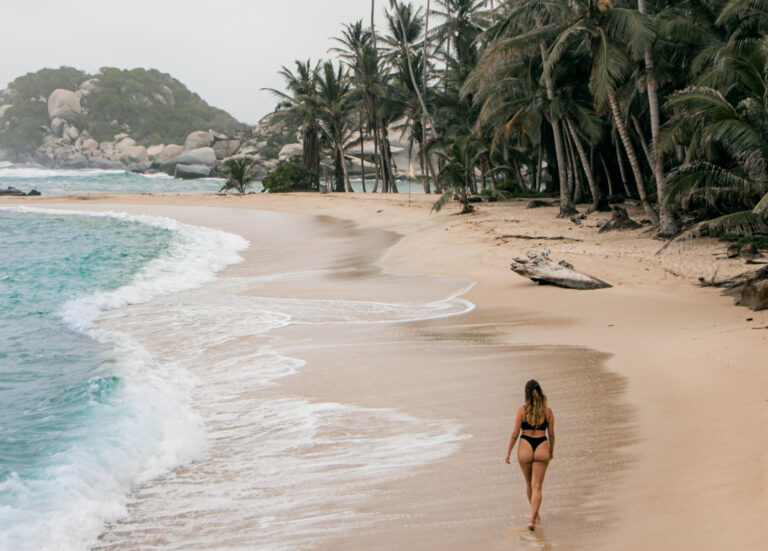
Day 14: Minca, or a private boat to three beaches
Cool down in the mountains. Minca sits in the Sierra Nevada foothills less than an hour from the city: Hacienda La Victoria, one of the country’s oldest coffee farms, then the cold mountain pools of Pozos Azules and the Marinka waterfalls, eight hours with a private guide and lunch on your own in the village. If you would rather stay at sea level, our private boat to Santo Cristo, Inca Inca and Playa Blanca spends the day on beaches you can only reach by water. Santa Marta has direct flights to Bogotá of about an hour and a half for the connection home. The village, the waterfalls and the road up are in our Minca guide.
Swaps and add-ons: the Amazon, the Lost City, La Guajira, Villa de Leyva and Santander
The Amazon, three or four days from Bogotá. Leticia is a direct flight of about two hours from the capital, and it is a different country inside the country. Our three-day Three Borders tour moves from the Flor de Loto reserve, with birdwatching, canoeing through flooded forest and a night without electricity, to Puerto Nariño, one of the few car-free towns in the Colombian Amazon, where a Tikuna family hosts you for dinner, and across to Cacao Island in Peru, with all meals, two nights and rubber boots included. The four-day version adds Tabatinga in Brazil, a night in a jungle maloca and the search for pink dolphins at the Correo Lakes. It replaces Santa Marta in the two-week plan or the coffee region in the ten-day one, and you need the yellow fever certificate. Leticia, the two seasons of the river, the tax at the airport and the vaccine are in our Colombian Amazon guide.
The Lost City, four days on foot. Ciudad Perdida was built by the Tayrona between the sixth and tenth centuries, hidden in the Sierra Nevada until 1972, and today access is managed by the Kogi, Arhuaco, Kankuamo and Wiwa communities, with no way in except four days of hard hiking through river crossings and jungle. Our four-day trek includes the guide, the entry and every meal on the trail. It replaces the Santa Marta days for anyone in good physical condition who wants the trip’s defining story.
La Guajira, three days from Santa Marta. Our La Guajira tour goes north through Riohacha, the Manaure salt flats and Uribia to Punta Gallinas, the northernmost point of the South American mainland, and the Taroa dunes, which drop straight into the sea. Nights are in hammocks at working Wayuu ranches and meals are Wayuu dishes of goat, seafood and corn. It is an authentic desert trip, not a hotel stay. The desert, the Wayuu and the weather are in our La Guajira guide.
Villa de Leyva, one long day or two from Bogotá. Three hours north of the capital, Villa de Leyva was founded in 1572, has been a national monument since 1954, and its Plaza Mayor is one of the largest cobblestone squares on the continent. Our twelve-hour private day adds the Sisga reservoir, the potters’ village of Ráquira, the fossil museum and the mineral pools of Pozos Azules; the two-day version joins it to the Salt Cathedral with a night in town and a stop at the Puente de Boyacá, where independence was decided on August 7, 1819. Either one extends the Bogotá leg of any plan above. The town, the fossils, Iguaque, Ráquira and the festivals are in our Villa de Leyva guide.
Santander, for canyon and colonial stone. Barichara and San Gil pair one of Colombia’s official heritage towns, with its stone streets and the Camino Real trail above the Suárez canyon, with the country’s adventure capital, and Chicamocha National Park puts you in a 6.3-kilometer cable car over a canyon whose walls drop more than 2,000 meters. The park is closed on Mondays and Tuesdays. The two towns, the park’s 2026 prices and the four windows the cable car runs in, where to sleep and what the weather does are in our Santander guide. Tell us if Santander is on your list and we will fit it into the routing.
Cali, for the dancing. Colombia’s salsa capital has a four-hour private lesson with a professional local dancer that starts with the history and ends on the floor, and a city tour from the Cristo Rey viewpoint down to the colonial streets of San Antonio. It suits travelers on a second trip, or anyone for whom the music is the point.
Hot country, for the nights. Everything most itineraries put near Bogotá is cold. Drop off the plateau instead and the trip changes temperature: Honda, a Magdalena river port three hours down whose colonial centre has been protected since 1977; Girardot, the weekend city with a market hall that is a national monument; and the Tatacoa, a full day each way, a Miocene fossil bed under a Starlight-certified sky. The first two are add-ons of a day or two. The Tatacoa needs a night, and earns it.
Where to base yourself
In Bogotá, stay in Chapinero to walk to dinner, in Zona T for nightlife at your door, in Usaquén for quiet streets and the Sunday market, or in La Candelaria if history matters more than nightlife; families should start with our family-friendly hotels. In Cartagena, our tours pick up in the Centro Histórico, Getsemaní, Bocagrande, Castillogrande and Laguito, which is also the shortlist of where to stay: inside the walls or in Getsemaní for the streets, Bocagrande for the beach towers. In the coffee region, Salento and Filandia put you inside the landscape and our pickups run by Willys jeep; Pereira, Armenia and Manizales are the city options with the airport nearby. In Medellín and Santa Marta, every private tour above includes hotel pickup, so choose the hotel for the hotel.
How the days are priced, and how to book them
Every tour in these itineraries is a real product with its own page, a stated duration and a price shown per person for two travelers, with discounts for larger groups. Nothing is hidden behind a quote. Private tours include the guide and, on almost all of them, hotel pickup; the day trips include the vehicle and the driving. What is not included is written on each page, usually meals on the beach days and personal purchases. Our guide to what Colombia really costs covers the rest of the budget, from hotels to dinner.
You can book every day above yourself from our tours in Colombia. If you would rather hand us the whole thing, our Colombia trip design package is a 99-dollar phone consultation that turns into a day-by-day itinerary with the transfers, the routing and transparent USD pricing, with one round of revisions; the 99 dollars is credited in full to your first booking payment if you go ahead with us. We do not ticket flights, but we tell you exactly which legs to book and when.
Frequently asked questions
Is one week enough for Colombia?
Yes, for two cities and the coast: Bogotá, Medellín and Cartagena with a day trip from each of the first two. You will leave the coffee region for the next trip, and many people come back for it.
What is the best month to visit Colombia?
There is no wrong month. December to January and July to August are the drier periods across the country, and April to May and October to November are the wetter ones. The coast is hot all year, Bogotá is cool all year, and the coffee region is somewhere in between with regular light rain. If Tayrona is on your list, avoid its closure weeks in February, June and late October to early November.
The month-by-month detail for the whole country, with the 2027 holidays and the festivals, is in our guide to the best time to visit Colombia.
Should I fly or drive between cities?
Fly. Bogotá, Medellín, the coffee region and the Caribbean are separated by mountains, and the flights are short. Drive only within a region: the day trips above are between under an hour and three hours each way, and they are built as private tours with the vehicle included so the drive is part of the day, not the whole of it.
Do I need to speak Spanish?
Not on our tours, which run in English or Spanish with a bilingual guide. Elsewhere it helps. Our guide to how much English to expect is written for Bogotá and applies broadly.
Which order should the cities go in?
Start high and end at the sea. Bogotá first, because you land there and because the altitude is easier to manage at the start when you are fresh; Cartagena or Santa Marta last, because ending on a beach is better than starting on one and because the Caribbean coast has its own airports for the flight home.
Can this itinerary work with children or older parents?
Yes, with swaps. Keep the Perfect Day, the Medellín city tour, the Cartagena city tour, the sunset boat and the Filandia and Salento afternoon, and replace the Tayrona hike with Minca or the beaches boat. The private tours above include the transport, and the pace is yours. Our guides to Bogotá with children and Bogotá for seniors cover the capital in detail.
Do I need a visa or vaccinations?
Entry requirements depend on your passport; our visa guide explains how to check yours. The yellow fever vaccination is required for the Amazon and recommended for other lowland areas; the details are in our health guide.
Plan it with us
Every tour in these three itineraries is ours, private in almost every case, in English or Spanish, and most include hotel pickup. Send us your dates and the cities you have in mind on WhatsApp, browse all our tours in Colombia and put the days together yourself, or start with the trip design package and let us put them in the right order.